


Key Points and Summary – The U.S. Navy’s MQ-25 Stingray unmanned tanker is set to transform aircraft carrier aviation.
-By refueling F-35Cs, Super Hornets, and EA-18G Growlers at range, it pushes the carrier air wing far beyond China’s anti-ship missile envelope, directly undercutting Beijing’s A2/AD strategy.
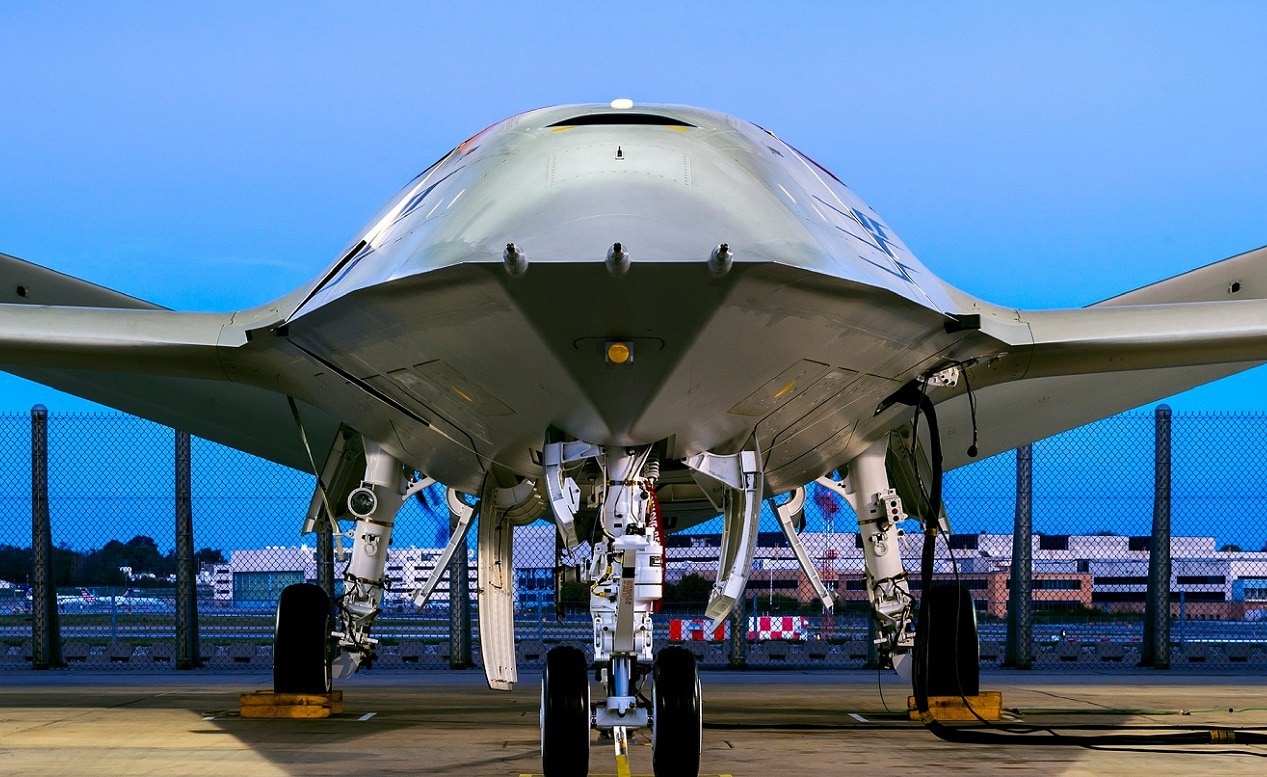
MQ-25. Image Credit: Creative Commons.
-Born from DARPA’s carrier drone experiments, the Stingray can haul 14,000–16,000 pounds of fuel out to 500 nautical miles and also perform ISR after tanking.
-Though the program’s acquisition cost approaches $16 billion, its ability to extend combat radius, support future F/A-XX and CCA concepts, and keep carriers alive in a “kinetic missile fight” makes it a true force multiplier.
MQ-25 Stingray: The Drone Tanker That Could Save U.S. Carriers From China’s Missiles
The MQ-25 Stingray carrier-borne unmanned tanker is one of the best ideas and concepts the U.S. Navy has ever devised. The drone refueler will extend the range of F-35C Lightning IIs and F/A-18 E/F Super Hornets, allowing American aircraft carriers to stay out of range of Chinese aircraft and ship-killing missiles.
The MQ-25 can also gather intelligence, surveillance, and reconnaissance data after it refuels an aircraft. This makes it one of the most versatile Navy drones in the fleet. Aerial refueling will make aviators smile, as it will extend their missions to protect carrier strike groups. Air policing by the fighters can keep the defensive bubble created by the Aegis Weapon System working to great effect.
Extension of Combat Radius Around the Globe
The Stingray is thus extremely important for future combat operations. It is not just East Asia where the MQ-25 will be effective. The carrier air wing will also thrive in the Middle East and Europe, where more protection from enemy threats is needed.

MEDITERRANEAN SEA (Feb. 21, 2017) The aircraft carrier USS George H.W. Bush (CVN 77) transits the Mediterranean Sea in support of Operation Inherent Resolve. The George H.W. Bush Carrier Strike Group is conducting naval operations in the U.S. 6th Fleet area of operations in support of U.S. national security interests. (U.S. Navy photo by Mass Communication Specialist 3rd Class Daniel Gaither/Released)

Souda Bay, Crete, Greece (Feb. 22, 2006)
Nimitz-class aircraft carrier USS Theodore Roosevelt (CVN 71) heads to sea following a brief logistics stop on the Greek island of Crete. Roosevelt and Carrier Air Wing Eight (CVW-8) are currently underway on a regularly scheduled deployment supporting maritime security operations.
Roosevelt is the fourth ship in the NIMITZ – class of nuclear powered aircraft carriers and is homported in Norfolk, VA.
U.S. Navy photo by Mr. Paul Farley
An aircraft carrier equipped with the MQ-25 is better able to address range concerns inherent in future combat in the 2030s.
One airplane that will also benefit from the Stingray is the EA-18G Growler. This airplane is one of the most underrated platforms in the Navy. This is a Hornet variant that excels at electronic warfare and radar jamming, helping protect the F-35Cs and F/A-18 E/Fs more effectively.
This is another asset that will bolster the effectiveness of the carrier strike group. The Stingray can also refuel the Growler, giving the Navy more combat options.
Quick History of the MQ-25
The Stingray was successfully tested in 2021 in a flight off the USS George H.W. Bush. Boeing won the contract in 2018, and the first test flight happened in 2019. The program dates back to 1999, when DARPA worked on a drone concept for the U.S. Navy that could take off from aircraft carriers.
Throughout the 2000s, DARPA and the Navy worked on the idea called the Unmanned Carrier Launched Surveillance and Strike program.
The Navy preferred to pursue what was later called the Carrier-Based Aerial Refueling System because an unmanned tanker was an irresistible idea for extending the strike range of its fighters and electronic warfare aircraft.
A Large Load of Jet Fuel
The MQ-25 can carry 14,000 to 16,000 pounds of fuel for 500 nautical miles. The aircraft will have beyond-line-of-sight communication with the carrier. Another great aspect of the Stingray program is that it can integrate well with future drones.
The next-generation F/A-XX fighter jet, should it be approved, will be able to conduct manned-unmanned teaming operations. This means it can control a Collaborative Combat Aircraft (CCA) that could launch surface-strike hypersonic missiles to take out enemy ships.

F/A-XX U.S. Navy Fighter. Image Credit: Creative Commons.
The MQ-25 could refuel the F/A-XX and the CCA. This is an incredible development for the Navy and will make U.S. adversaries take notice as carrier aviation grows over the next two decades. This gives Naval battle planners many options in what will be a kinetic environment that emphasizes the use of enemy anti-ship missiles and especially the carrier killers used by China. These would include the DF-21D and DF-26.
Keeping the Chinese from Enjoying a Military Advantage
China employs a defensive and offensive gambit called anti-access/ area denial, which is designed to keep the Americans out of the First Island Chain and especially configured to stop the Navy from sailing aircraft carrier strike groups in the Taiwan Strait.
American aircraft carriers are aware of the gambit and continue to conduct freedom-of-navigation missions in international waters. The Stingray will extend the range of friendly aircraft carriers, putting a crimp in anti-access/area denial concept operations.
China may also attack Taiwan someday, perhaps as soon as 2027, but they may blockade or quarantine the island. Should the United States intervene in any dangerous operation involving China and Taiwan, it will involve long-range sorties from the carrier-borne fighters. The Stingray will be instrumental in keeping carriers out of range of ship-killing missiles, while also giving the fighter jets increased combat radius.
Stinging the Naval Budget
However, the MQ-25 Stingray doesn’t come cheap.
It had high research and development costs since it dates back around 25 years.
“The Government Accountability Office (GAO), in its 2025 Weapon Systems Annual Assessment, estimated the total acquisition cost of the MQ-25 Stingray program at approximately $15.9 billion and the acquisition unit cost at $209 million, a 4% increase from a prior estimate. The GAO report cited the Navy’s plan to begin LRIP before it completed testing the production-representative aircraft as a potential risk for future ‘cost increases and further delays,’” the Congressional Research Service wrote.
The investment will be worth it, though. The Stingray needed a long lead time and ample monetary costs, but what an epoch-shifting system it will be. The MQ-25 has success built into its DNA. DARPA and the Navy should be given credit for peering into the future and imagining the need for range extension for its carrier-borne aircraft.
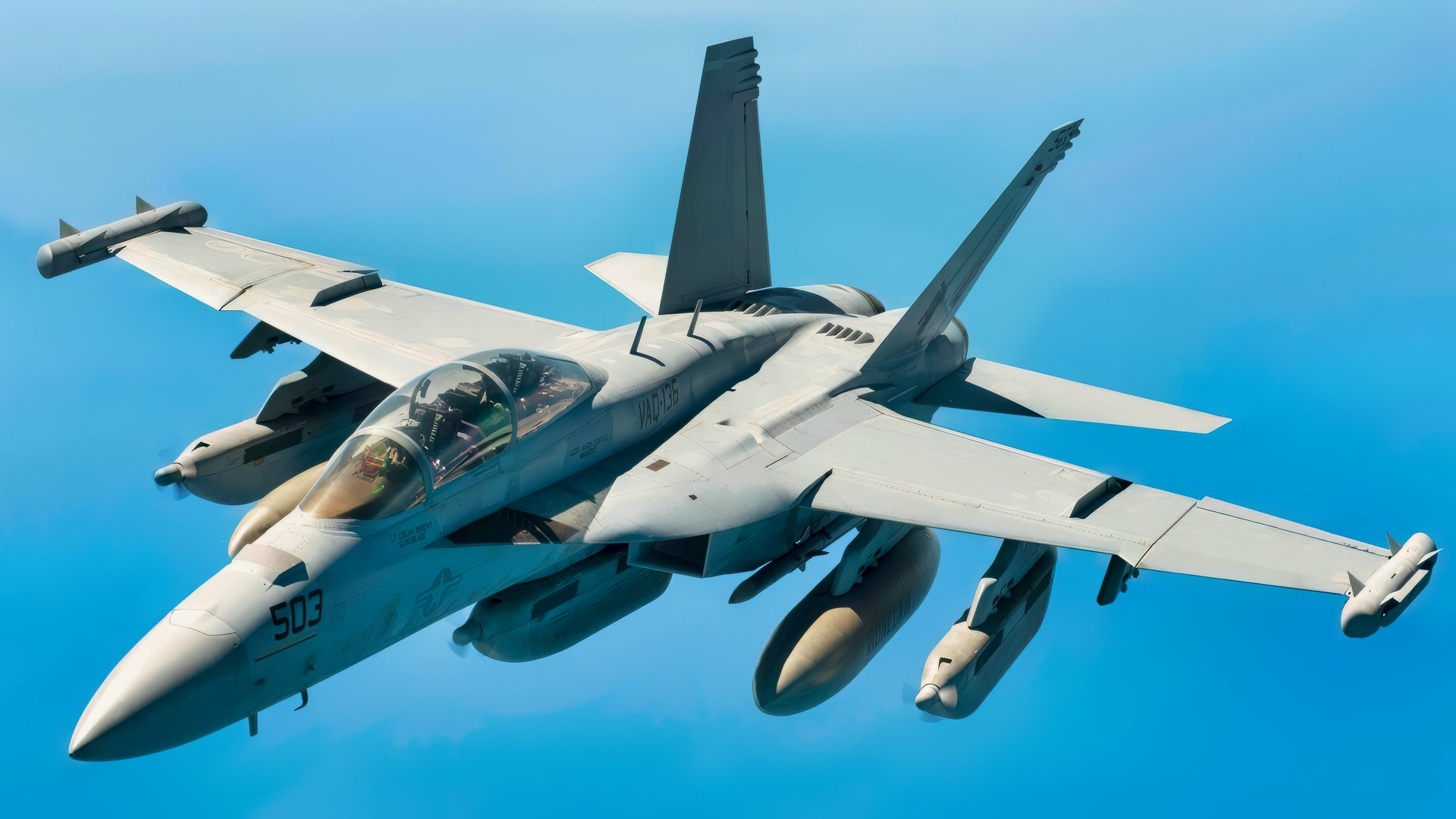
A U.S. Navy EA-18G Growler assigned to the USS Carl Vinson breaks away from a U.S. Air Force KC-135 Stratotanker from the 909th Air Refueling Squadron after conducting in-air refueling May 3, 2017, over the Western Pacific Ocean. The 909th ARS is an essential component to the mid-air refueling of a multitude of aircraft ranging from fighter jets to cargo planes from different services and nations in the region. (U.S. Air Force photo by Senior Airman John Linzmeier)
The MQ-25 is a force multiplier that comes during a significant era of warfare. A potential conflict in the Indo-Pacific will entail what I call the “Kinetic Missile Fight.”
China believes its newer hypersonic anti-ship missiles will be decisive, but that assumes that American carriers will be in range of the projectiles.
The MQ-25 Stingray should be fully operational and in serial production, outfitting all carriers with the drone.
This is a pivotal development for the Navy and will maintain the U.S. naval advantage in the region. The Stingray provides the effectiveness of unmanned flight while executing the critical missions of refueling and intelligence collection. This will be a significant heading into the future naval fight around the globe.
About the Author: Brent M. Eastwood
Author of now over 3,000 articles on defense issues, Brent M. Eastwood, PhD is the author of Don’t Turn Your Back On the World: a Conservative Foreign Policy and Humans, Machines, and Data: Future Trends in Warfare plus two other books. Brent was the founder and CEO of a tech firm that predicted world events using artificial intelligence. He served as a legislative fellow for US Senator Tim Scott and advised the senator on defense and foreign policy issues. He has taught at American University, George Washington University, and George Mason University. Brent is a former US Army Infantry officer. He can be followed on X @BMEastwood.


Steve S
December 8, 2025 at 3:36 pm
If the Stingray design is enhanced so that one Stingray could also refuel another then a squadron of Stingrays could theoretically extend the range of carrier aircraft to multiple thousands of nautical miles.