


Key Points and Summary – The U.S. Army is misaligned with a battlefield transformed by drones, AI, and precision fires. Commanders now face total surveillance, compressed decision cycles, and logistics that are directly targeted.
-To stay relevant, the Army must treat AI as foundational to command-and-control, disperse and harden headquarters and supply nodes, and train units to fight under constant observation and degraded communications.
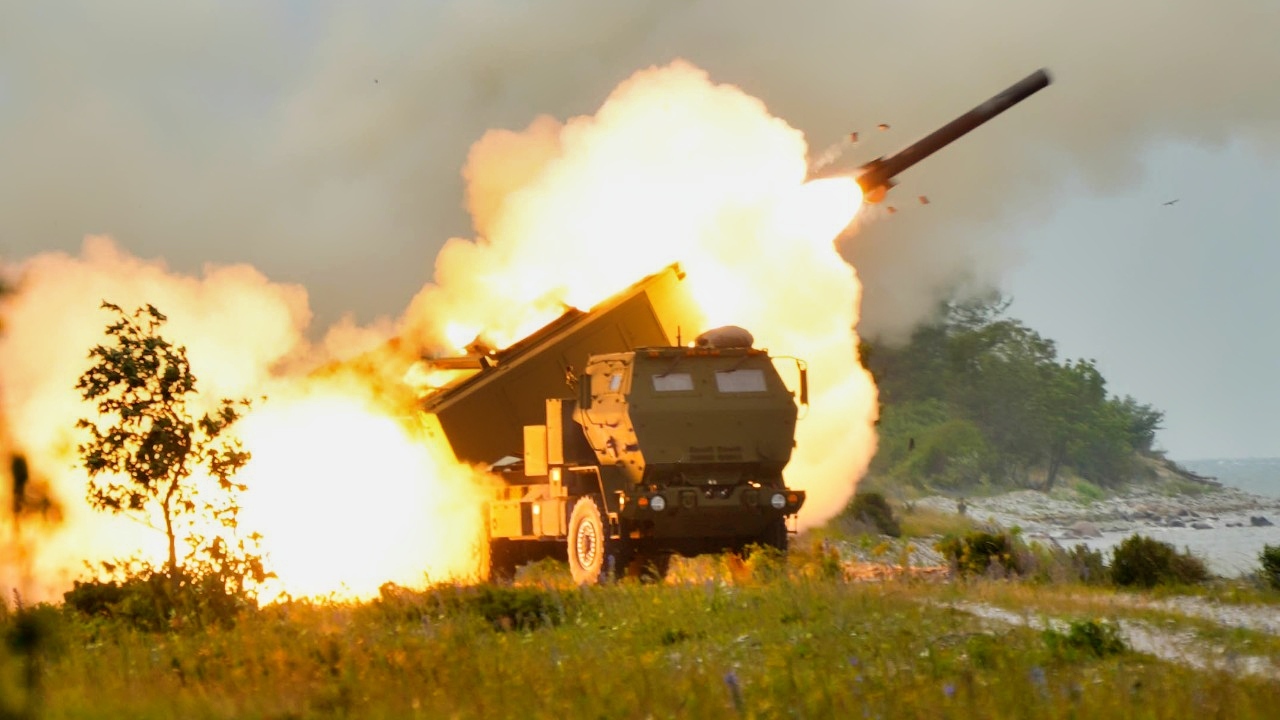
An Estonian Defense Forces M142 High Mobility Artillery Rocket System (HIMARS) fires a training rocket during a live-fire exercise in Undva, Estonia, July 11, 2025. U.S. Army elements from Bravo Battery, 1st Battalion, 14th Field Artillery Regiment, 75th Field Artillery Brigade, supporting Task Force Voit, assisted in the training process. The task force was originally formed in 2023 to support the Estonian Defense Forces in the creation of a HIMARS unit. Task Force Voit works closely with the Estonian Armed Forces, sharing critical defense strategies, training, and military readiness support. The presence of U.S. troops in the region serves as a cornerstone of NATO’s commitment to security in the Baltic region. The task force provides combat-credible forces to V Corps, America’s only forward-deployed corps in Europe. (U.S. Army photo by Staff Sgt. Rose Di Trolio)
-Sustainment must become agile, predictive, and survivable under fire. Looking at Russia, China, and Iran, the author concludes that redesigning how the Army commands, maneuvers, and sustains is more urgent than buying the next marquee platform.
Drones, AI and Total Surveillance: Why the U.S. Army Must Reinvent Itself
The U.S. Army’s structure and organization are in a period of transition—one defined less by routine modernization cycles and more by combat experience and the unvarnished realities of modern land warfare.
The conflicts of the past three years have made it impossible to ignore a fundamental truth: the Army’s design assumptions about command-and-control, maneuver, and sustainment no longer match the reality of modern battle.

The 1-148th Field Artillery Regiment is the latest unit in the Idaho Army National Guard to upgrade its combat capability as modernization efforts across the U.S. Army and Army National Guard take shape.
The Russia-Ukraine war has made visible a changed battlespace in which transparency is total, precision fires are massed and penetrating, drones of all types are ubiquitous, and decision cycles are counted in seconds, not minutes or hours.
At the same time, artificial intelligence is on the cusp of becoming a centerpiece of battlefield decision-making, logistics, deception, and maneuver.
These aren’t ancillary trends.
There are changes to the fundamentals of land warfare, and they demand that the Army not just acquire new capabilities but think through how it will fight with them.
For senior leaders tasked with defining what the Army of the future must become, the critical question is less about which platform has technological superiority than the ability of the Army to command, sustain, and maneuver in an environment of continuous observation, accelerated tempo, and contested logistics.
The U.S. Army must change its internal culture and its design of operations to be more aligned with these conditions of competition and conflict.
Command-and-Control in an Era of Machine-Speed Warfare
The battlespace of the future overloads commanders with data but gives them less time to act on it.
In Ukraine, targeting cycles have collapsed to minutes; in a future fight with a peer adversary, they will collapse further.
This C2 environment is only tenable with networks that can fuse information from multiple inputs, identify patterns, and feed commanders a continually updated distilled picture at machine spee, far faster than humans can process.

A member of 2nd Battalion, The Parachute Regiment fires a Next-generation Light Anti-tank Weapon (NLAW)…Paratroopers have demonstrated the firepower that they could bring to bear during combat missions as the British Army’s global response force. ..As the culmination of a course in support weapons skills, paratroopers staged a firepower demonstration on Salisbury Plain. ..The Next-generation Light Anti-tank Weapon (NLAW) is the first, non-expert, short-range, anti-tank missile that rapidly knocks out any main battle tank in just one shot by striking it from above…NLAW utilises predicted line of sight guidance and has overfly top and direct attack modes, and it is easy to use, making it a valuable tank destroyer for light forces that operate dismounted in all environments, including built up areas…It also has night vision capability and is designed for all climate conditions and environments..
The Army’s approach to C2 in the coming decades must therefore start with a view of AI as foundational to command—not an augmentation of it. C2 nodes must be smaller, lighter, more mobile, more distributed, and designed to function with degraded connectivity.
Mission command itself must become a practice more relevant to a transparent, data-saturated battlespace: decentralized execution based on a shared understanding informed by a continuously updated operating picture that AI helps create and refine.
Senior leaders must drive an institutional mindset that is more comfortable with adaptability and rapid problem-solving. Agility can no longer be treated as a nice-to-have; it must be seen as a strategic imperative. The adversary who can adapt more quickly will set the terms of engagement.
Battlespace Transparency and the Loss of Assumed Concealment
The Army must also confront the reality that it will fight in an environment in which old advantages of concealment and sanctuary have been lost. Commercial satellite networks provide constant overhead coverage.
Drones—from affordable quadcopters to more advanced ISR platforms—strip away the possibility of concealment at every echelon. Electronic warfare systems are rapidly approaching the ability to geolocate emitters with near-real-time precision.
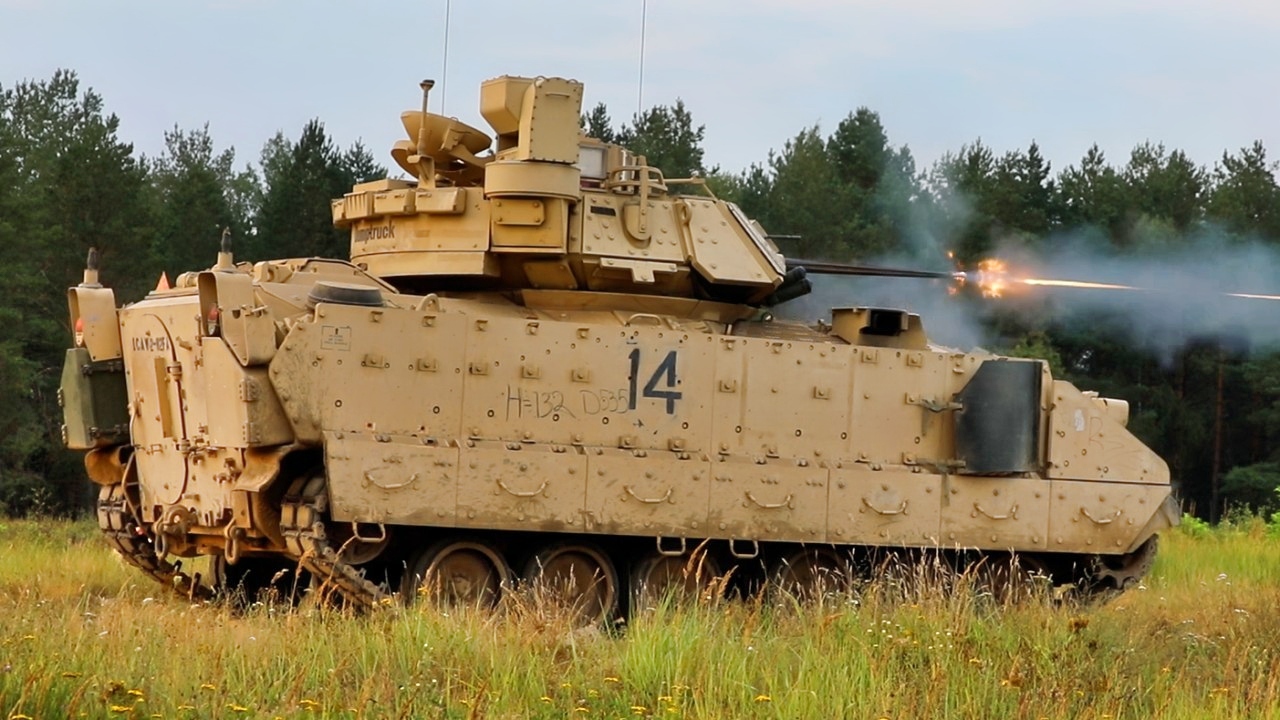
Troopers with 3rd Armored Brigade Combat Team, 1st Cavalry Division firing the 25mm canon on a Bradley fighting vehicle in order to zero the vehicles weapons systems at a range in Poland. Ranges such as these familiarize troopers with the vehicles systems in order to ensure combat readiness. US Army Photo.
Artillery and long-range precision fires can strike fixed positions, logistics nodes, and command posts within minutes of detection.
The implications for senior staff members designing future concepts and the force to execute them is stark.
Maneuver will only be successful if it is dispersed, unpredictable, and based on formations capable of rapid displacement.
Signature management must be an integrated discipline—not a specialty. Emissions control, decoys and deception, camouflage, and false target generation must be designed into operations by default. Units must also be trained to fight, assuming their location is discovered and targeted immediately.
The U.S. Army can no longer assume concealment; it must design for survivability under constant observation.
Sustainment Under Fire as an Operational Imperative
Sustainment is no longer a supporting activity—it is a decisive function of operations.
Drones, sensors, ammunition, and the spare parts necessary to keep modern equipment in the fight are consumed at unprecedented rates in Ukraine, under conditions in which enemy logistics hubs and lines of communication are key asymmetric targets.
AI is one path to turning sustainment from a centralized, linear, and vulnerable activity into a more dynamic and resilient capability. Predictive logistics can anticipate demand before shortages are felt. Automated maintenance systems can reduce turnaround times and extend service life under combat conditions. Algorithms can dynamically route supply lines and balance risk versus need across dispersed formations.

Soldiers with 1st Battalion, 68th Armor regiment, 3rd Armored Brigade Combat Team, 4th Infantry Division execute platoon live fire exercises Dec. 7, 2021, Fort Carson, Colorado. Platoon live fire exercises prove a platoon’s ability to engage targets and maneuver together on their M1A2 Abrams main battle tanks. (U.S. Army photo by Capt. Tobias Cukale)
Senior leaders must internalize that sustainment in a peer fight will look far less like supply lines emanating from central depots on predictable, static distribution schedules.
The future will demand smaller, more mobile, more frequently repositioned stocks, and a larger number of autonomous resupply systems; sustainment networks designed to function under contested communications and surveillance terrain.
The Army’s ability to keep fighting under fire will depend as much on the resilience and adaptivity of its logistics under direct attack as anything else.
What the U.S. Army Must Do: Aligning the Force to the Threat Environment
Russia, China, and Iran each highlight distinct aspects of the challenge. Russia shows the rapidity with which ISR fires networks can create lethal effects.
China’s demonstrations of joint kill chains show how integrated sensors and precision fires can hold U.S. forces at risk at extreme ranges. Iran and its proxies illustrate the potential for massed, cheap drones and long-range rockets to be used as a disruptive force even against a high-tech military.
These threats drive a single, inescapable conclusion: the Army must build a force that can fight under the conditions of persistent threat, degraded connectivity, and attritional pressure. Units will have to be designed to maintain tempo under loss, to regenerate combat power quickly, and to operate with a degree of autonomy that allows them to continue the mission even when higher HQ is disrupted.
The Army This Moment Requires
The U.S. Army of the future will be comfortable fighting in a transparent, high-tempo, and contested battlespace. It must be a force that couples smart mass (autonomous systems and networked sensors) with agile, distributed, and survivable C2 structures. It must be capable of fielding dispersed units that can maneuver and strike under continuous observation.
And its sustainment networks will need to be robust and resilient enough to support long-duration operations in a battlespace where every single node is a potential target.
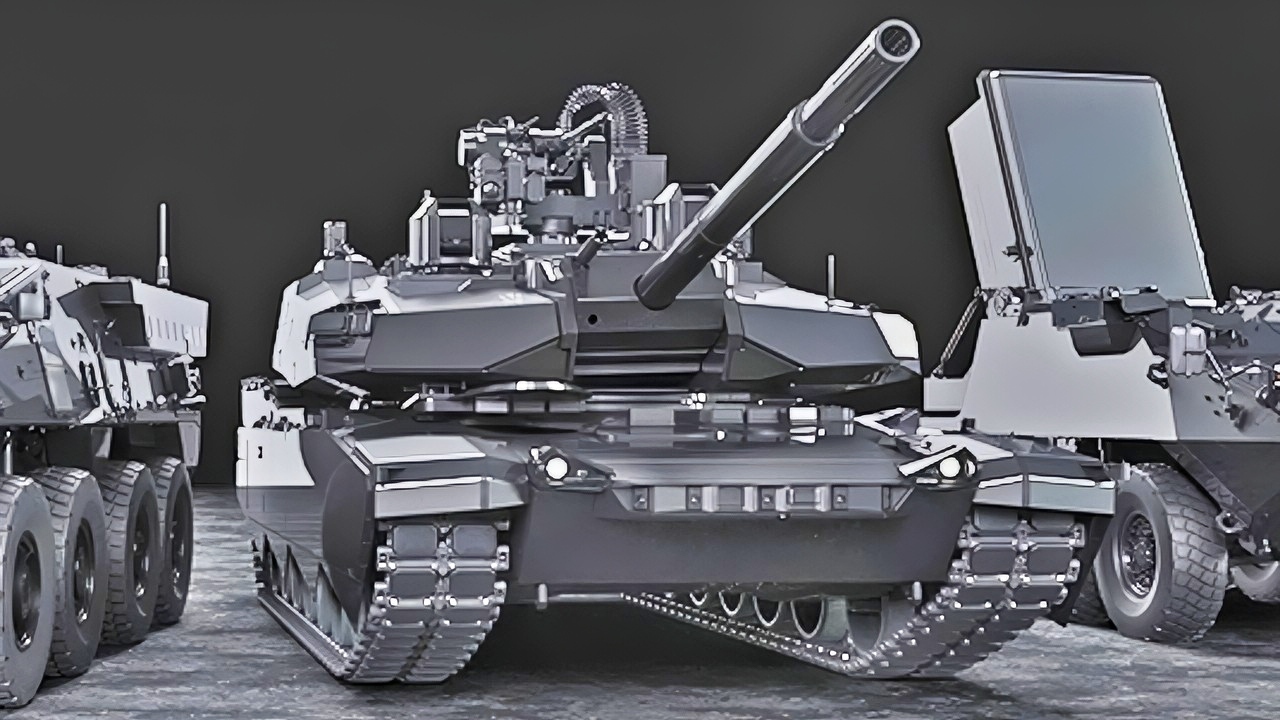
AbramsX Tank U.S. Army Image.
This isn’t a point to debate. It’s a reality to internalize. The Army’s ability to adapt to this operating environment is not optional—it is central to its future warfighting relevance.
Senior leaders tasked with defining what the future Army must become need to internalize a new set of priorities: the needs of the battlespace that already exists over and against the acquisition of platforms; the redesign of how the Army commands, maneuvers, and sustains to a changed and changing environment over and against the next major modernization initiative.
The U.S. Army that internalizes these lessons today will shape and win the conflicts of the future. The Army that doesn’t will cede initiative to an adaptive and innovative competitor.
About the Author: Dr. Andrew Latham
Andrew Latham is a non-resident fellow at Defense Priorities and a professor of international relations and political theory at Macalester College in Saint Paul, MN. You can follow him on X: @aakatham. He writes a daily column for the National Security Journal.


