

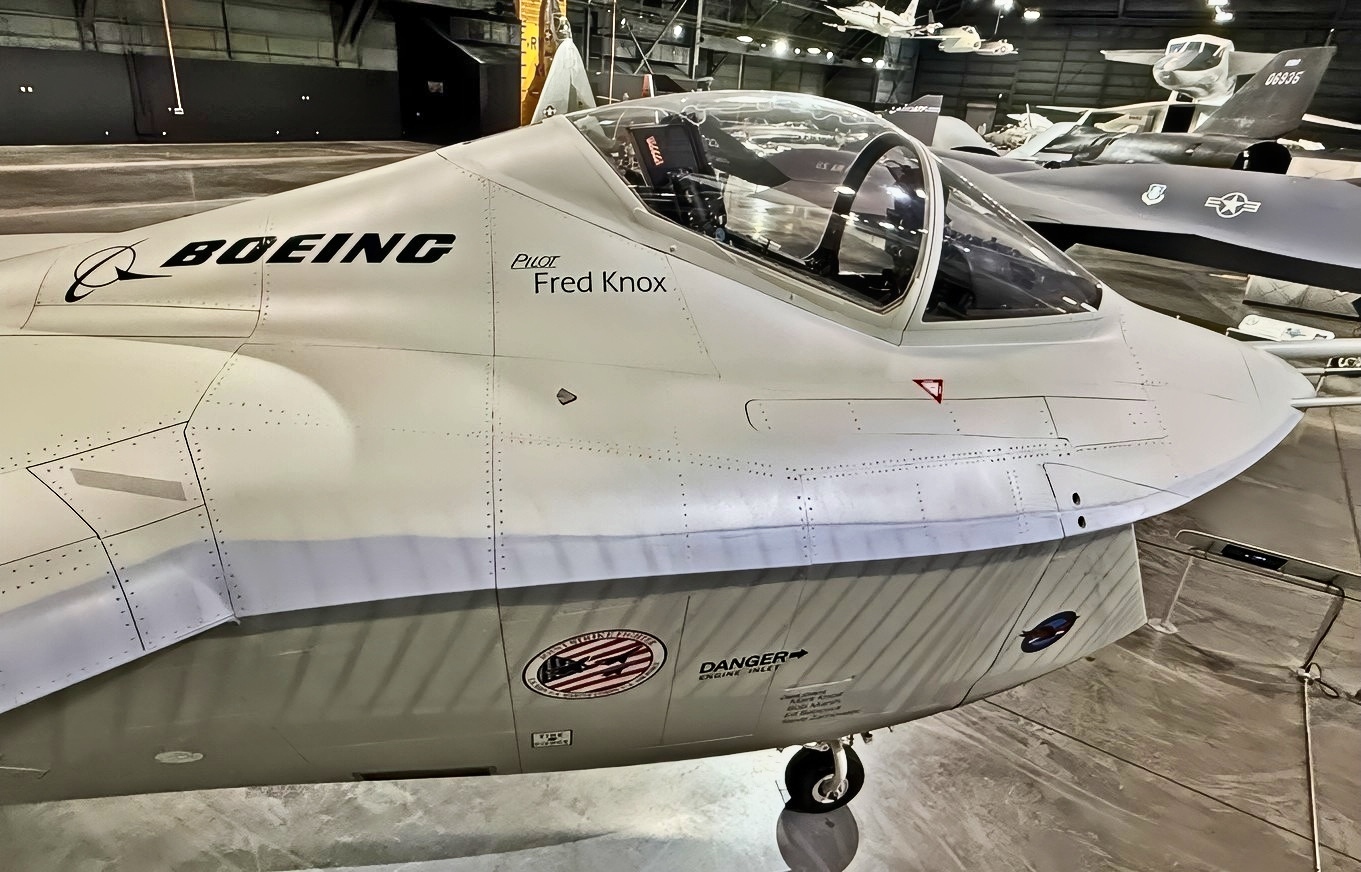
The Boeing X-32 was a stealth fighter that flew 66 times, hit Mach 1.6, and carried 20,000 pounds of internal fuel—a serious contender to win the largest defense contract in history. It lost to the Lockheed Martin X-35 because of one critical flaw: its vertical landing system pulled hot exhaust air back into the engine, causing thrust loss and overheating that the X-35 simply didn’t have.
I Found Out the 1 Reason Boeing’s X-32 Lost the Joint Strike Fighter Contract
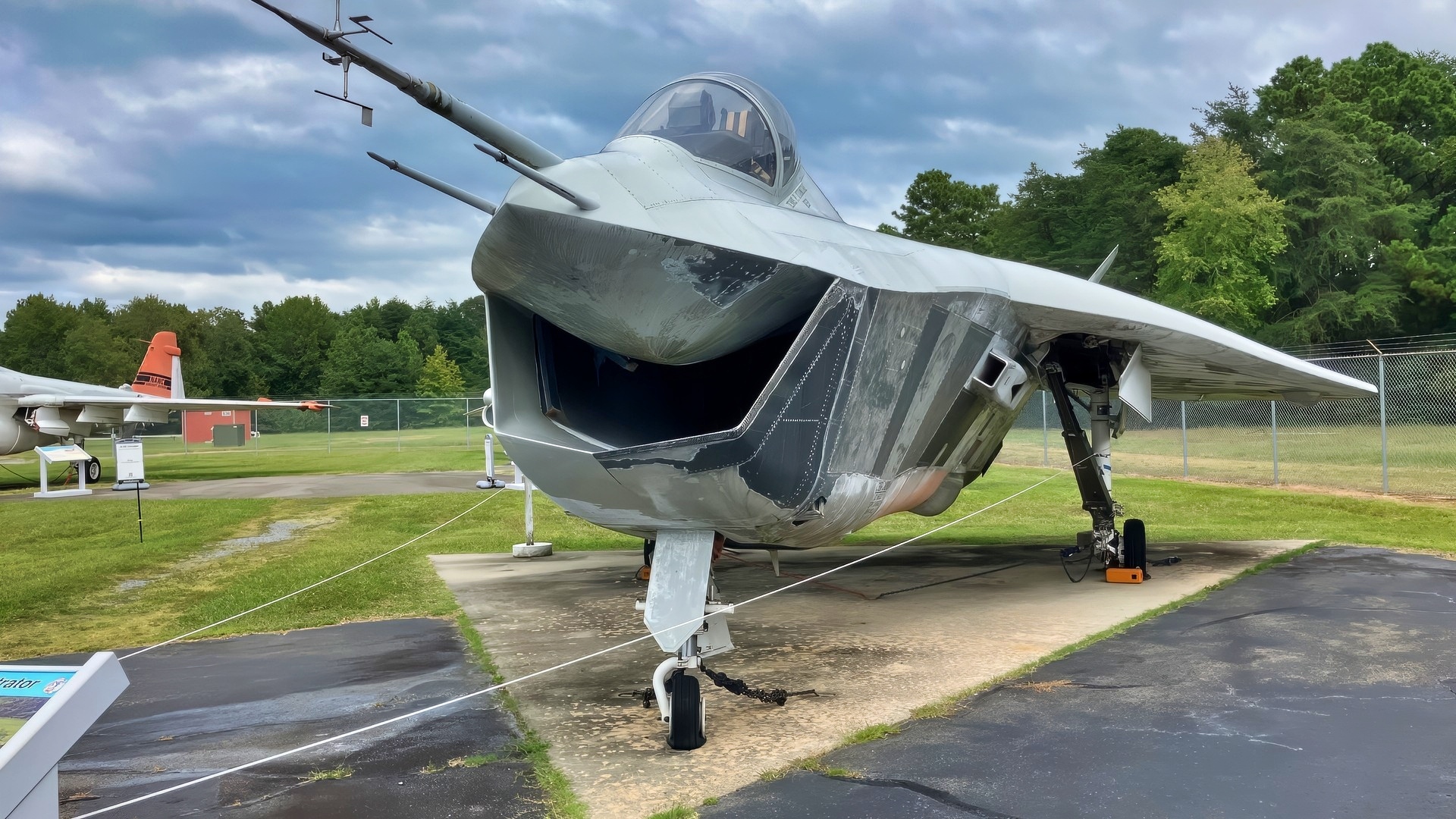
Boeing X-32 in Maryland NSJ Image September 2025. Image by Christian D. Orr.
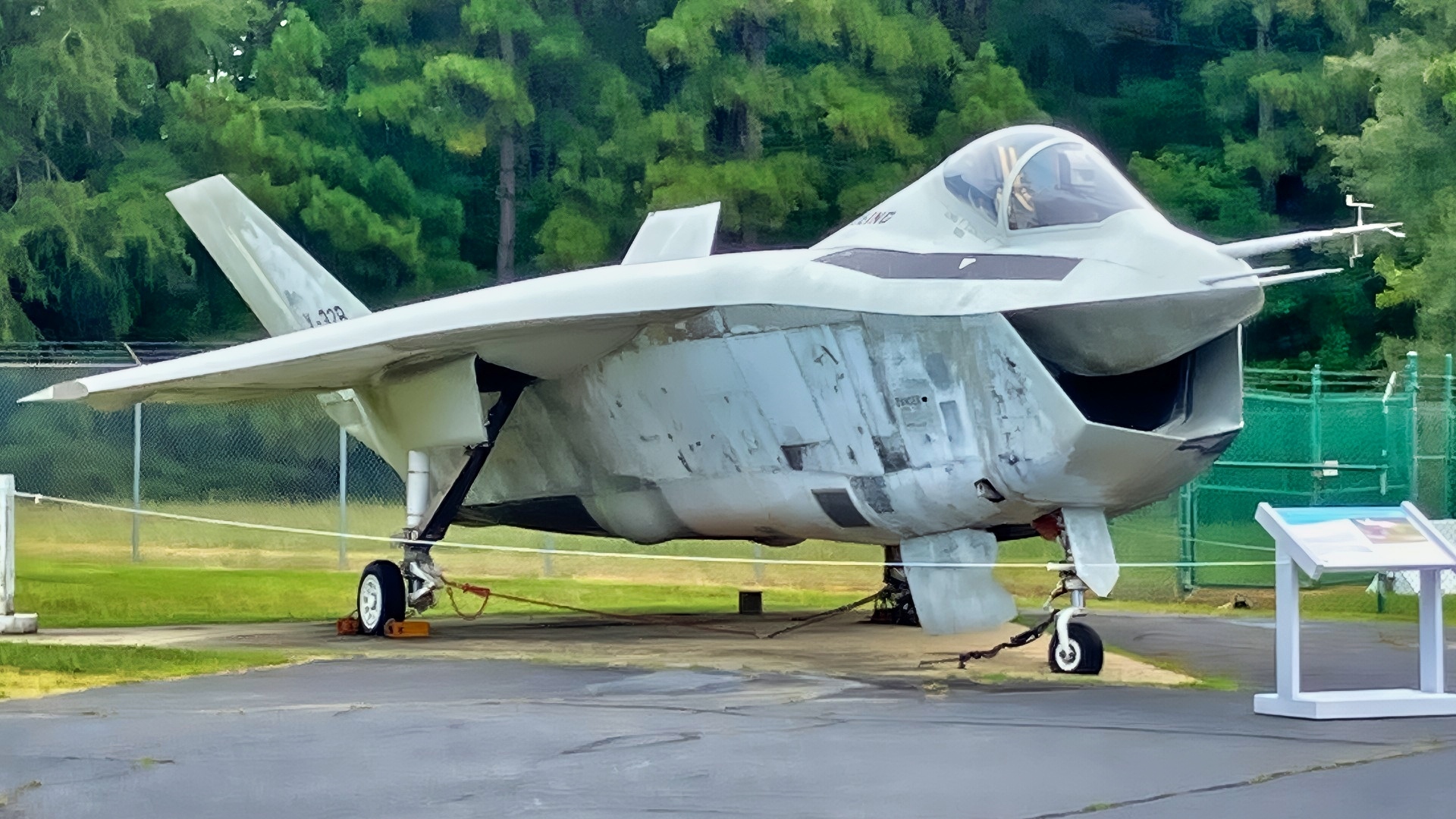
Boeing X-32 in Maryland National Security Journal Photo. Image Credit: Christian D. Orr.
The Boeing X-32 was an unsuccessful contender in the Joint Strike Fighter (JSF) program. However, the aircraft featured several notable design and performance characteristics, particularly a single-piece, large delta wing that offered significant structural efficiency and large internal fuel capacity.
Its best features were simplicity, cost-effectiveness, and, in some respects, superior performance in specific areas compared to its rival, the X-35.
We got an up close and personal look at Boeing’s X-32 at the National Museum of the Air Force and the Patuxent River Naval Air Museum, which is where many of the photos in this article are from.
Boeing Competed With Lockheed In The Joint Strike Fighter Program:
During the Department of Defense’s Joint Strike Fighter (JSF) program in the 1990s, Boeing and Lockheed Martin presented the X-32 and X-35 concept demonstrators, respectively, for the Air Force to choose a final design.
Lockheed won the competition and has now built over 1,310 F-35s, with more still in production today. The F-35 is in use with the US and 20 countries.
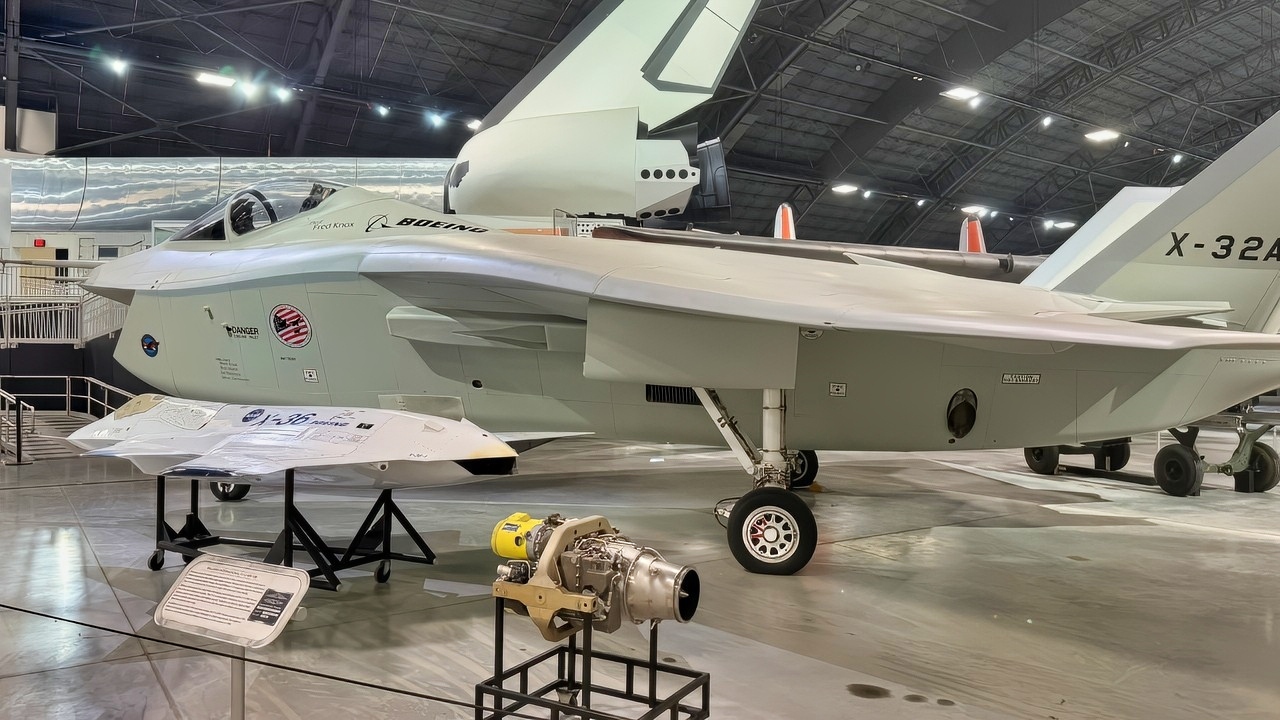
Boeing X-32 Full View. Image Credit: National Security Journal.

A Sideview of the Boeing X-32 JSF. Image Credit: Harry J. Kazianis/National Security Journal.
But what about the Boeing X-32? Boeing built two variants, the X-32A and X-32B, which performed Conventional Take-Off and Landing (CTOL), Short Take-Off and Landing (STOVL), and Carrier Variant operations.
But why did the X-32 lose to the F-35? Let’s take a look at Boeing’s prototype for the Joint Strike Fighter Program and examine its best attributes.
Meet the Boeing X-32, Joint Strike Fighter Prototype:
The Joint Strike Fighter Program (JSF) was the Department of Defense’s (DoD) effort to define affordable, next-generation strike aircraft for the Navy, Air Force, Marines, and our allies.
The DoD created this joint program charter to bring the Navy, Air Force, and Marine Corps together to reduce the costs of future strike warfare concepts by maturing and transitioning advanced technologies, components, and processes.
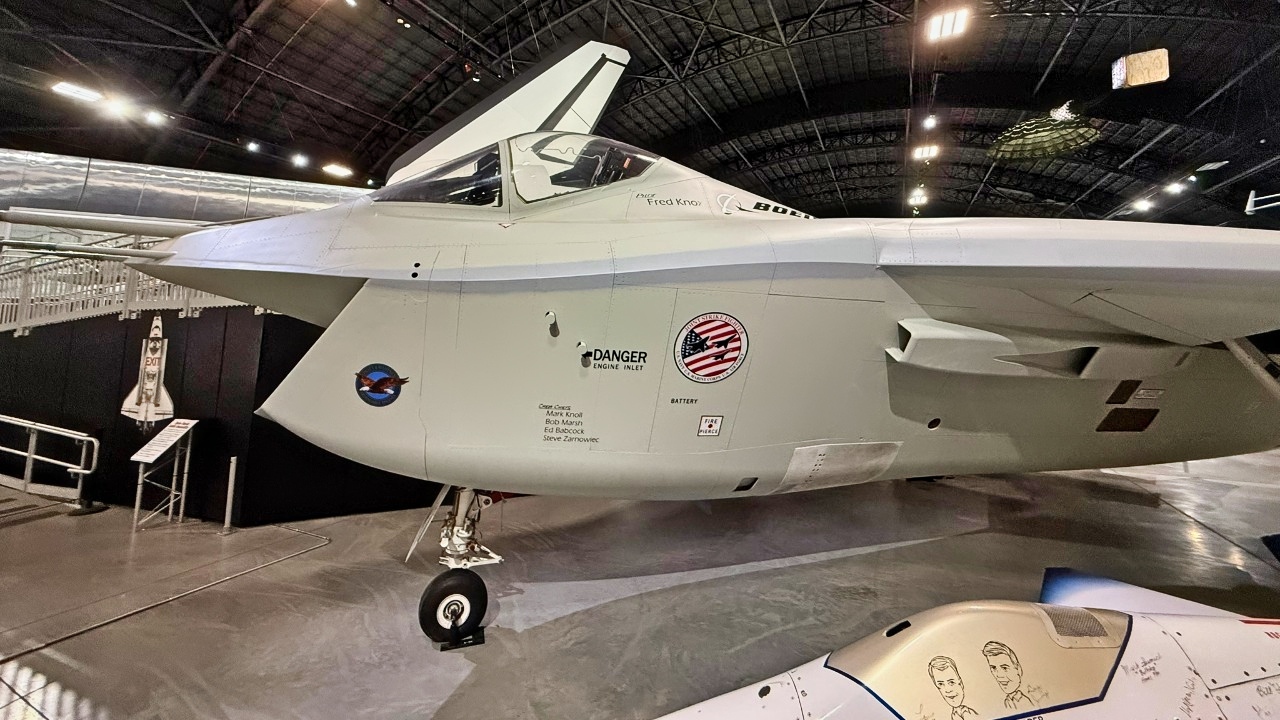
Boeing X-32 Fighter USAF Museum Dayton Ohio. Image Credit: National Security Journal.
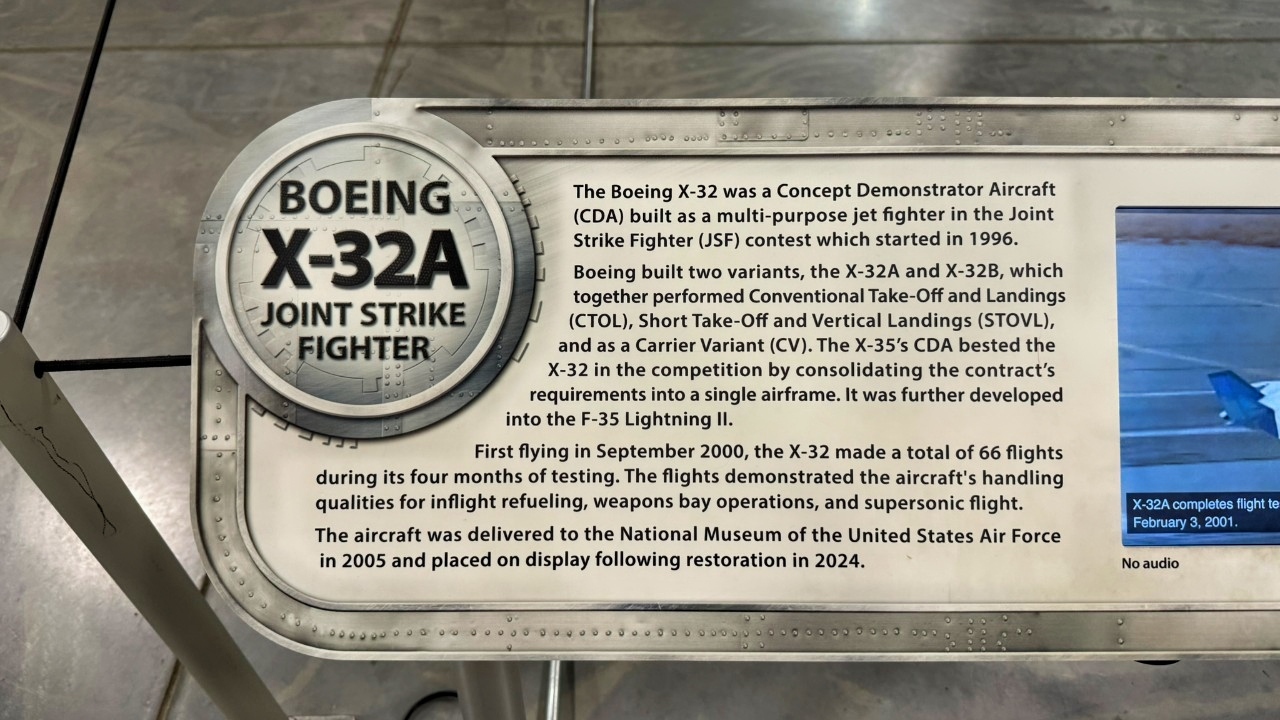
Boeing X-32 Fighter at USAF Museum July 2025. Image Credit: National Security Journal.
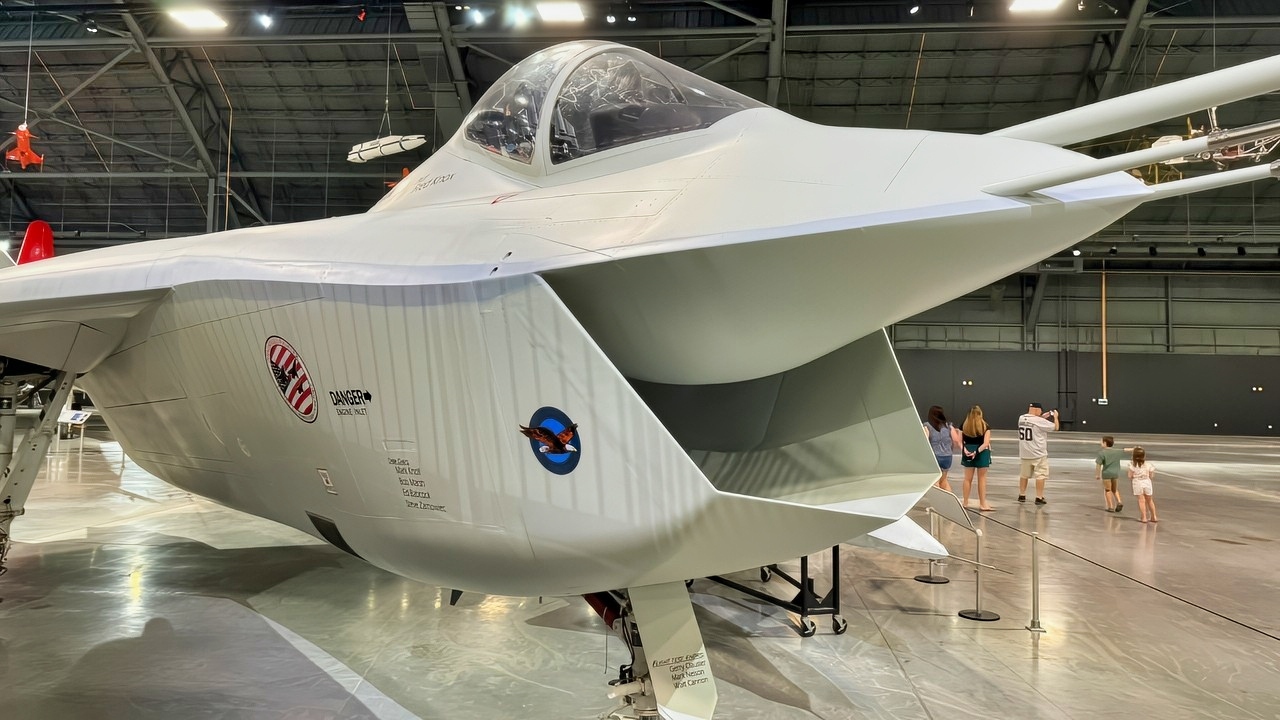
Boeing X-32 Fighter at USAF Museum July 2025. Image Credit: National Security Journal.
First flying in September 2000, the X-32 made 66 flights during its four months of testing. These flights demonstrated the aircraft’s handling qualities for in-flight refueling, weapons bay operations, and supersonic flight.
The X-32 was crewed by a single pilot and powered by a Pratt & Whitney JSF119-614 afterburning turbofan with approximately 50,000 pounds of thrust, pushing the aircraft to a top speed of Mach 1.6, about 1,200 mph.
X-32 Armament
The aircraft would carry either the 20 mm M61A2 cannon, or the 27 mm Mauser BK-27 cannon, 6 AIM-120 AMRAAM air-to-air missiles, 2 AIM-9X Sidewinder missiles, 2 x 2,000 lb (900 kg) class guided bombs, 15,000 lb (6,800 kg) of a full range of external stores, as well as Anti-radiation missiles for enemy suppression missions, Air-to-surface weapons, and Auxiliary fuel tanks
So, what were the X-32’s best attributes?
Simple and Cost-Effective Design
The X-32 was designed with fewer moving parts to lower production, maintenance, and lifecycle costs.
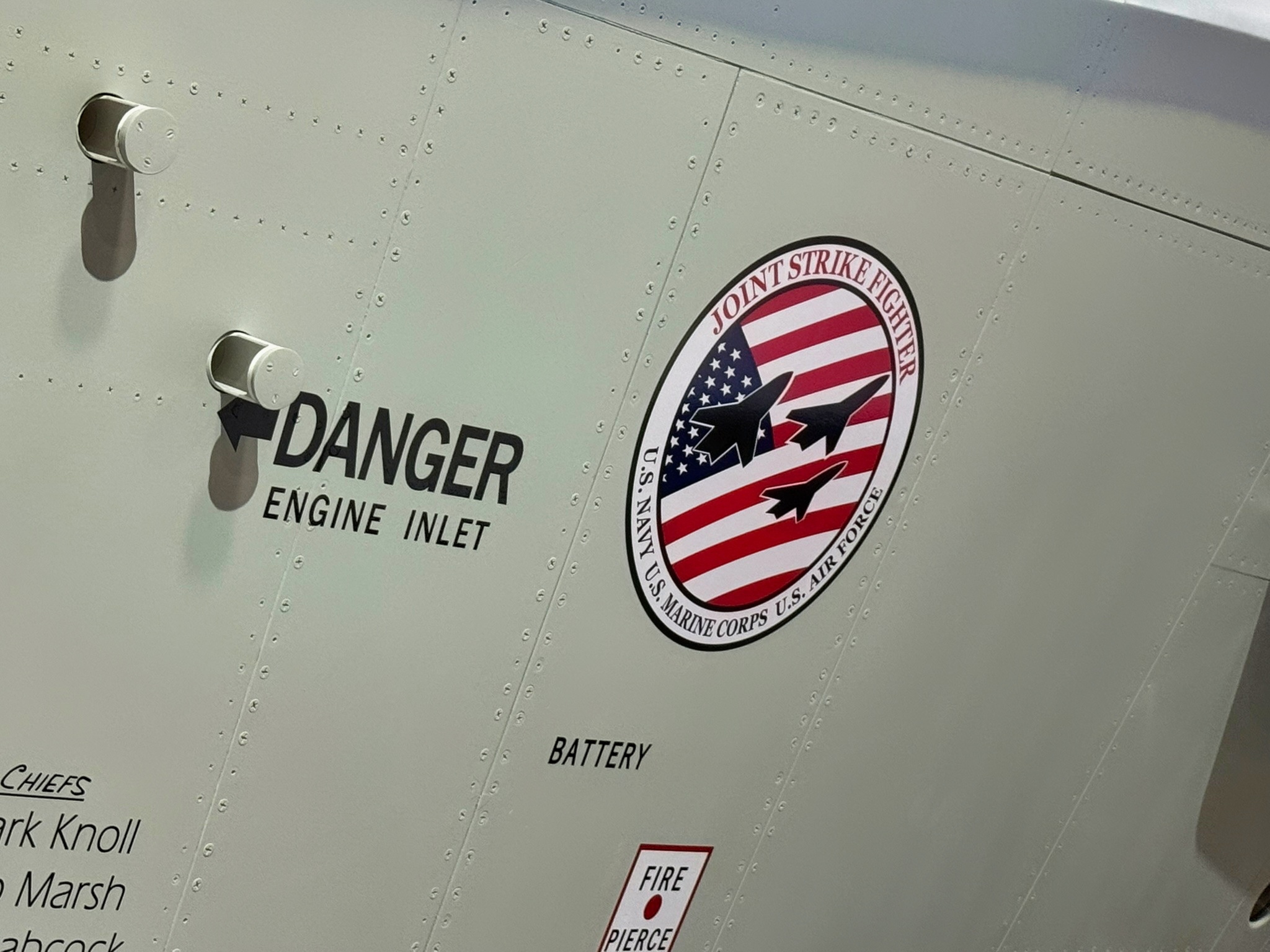
Boeing X-32 Side Shot. Image by National Security Journal.
The focus of Boeing’s X-32 was on maximizing affordability, manufacturing efficiency, and structural simplicity.
The X-32’s design aimed to drastically reduce production and life-cycle costs by minimizing variations across different service variants and reducing the overall number of parts.
Large Delta Wing for Heavier Fuel and Payload
One of X-32’s most distinctive features was its large, one-piece carbon fiber composite delta wing.
This wing design reduced production complexity and costs while allowing the aircraft to carry a substantial amount of internal fuel.
The wing had a 55-degree leading-edge sweep and could carry up to 20,000 pounds of fuel, which was advantageous for range and endurance.
Superb Handling Qualities
Test pilots lauded the X-32 for its handling, comparing its stability and control responsiveness to the F/A-18 Hornet.
Commander Phillip “Rowdy” Yates, a Navy test pilot, praised the aircraft’s smooth and precise control responsiveness, comparing it favorably to the F/A-18.
“They had leveraged F-18 handling qualities and control laws extensively for the X-32. Having flown the F-18 at the ship, that was the comment I made after just a couple of FCLP [Field Carrier Landing Practice], what we could call bounce periods, that I would take that aircraft to the ship tomorrow.
“It was handling that smoothly and precisely. I could make fine corrections, I could make gross corrections back to the centerline, back to the glide path. There were no issues with the handling qualities of the X-32 that I flew,” Yates said to TWZ.
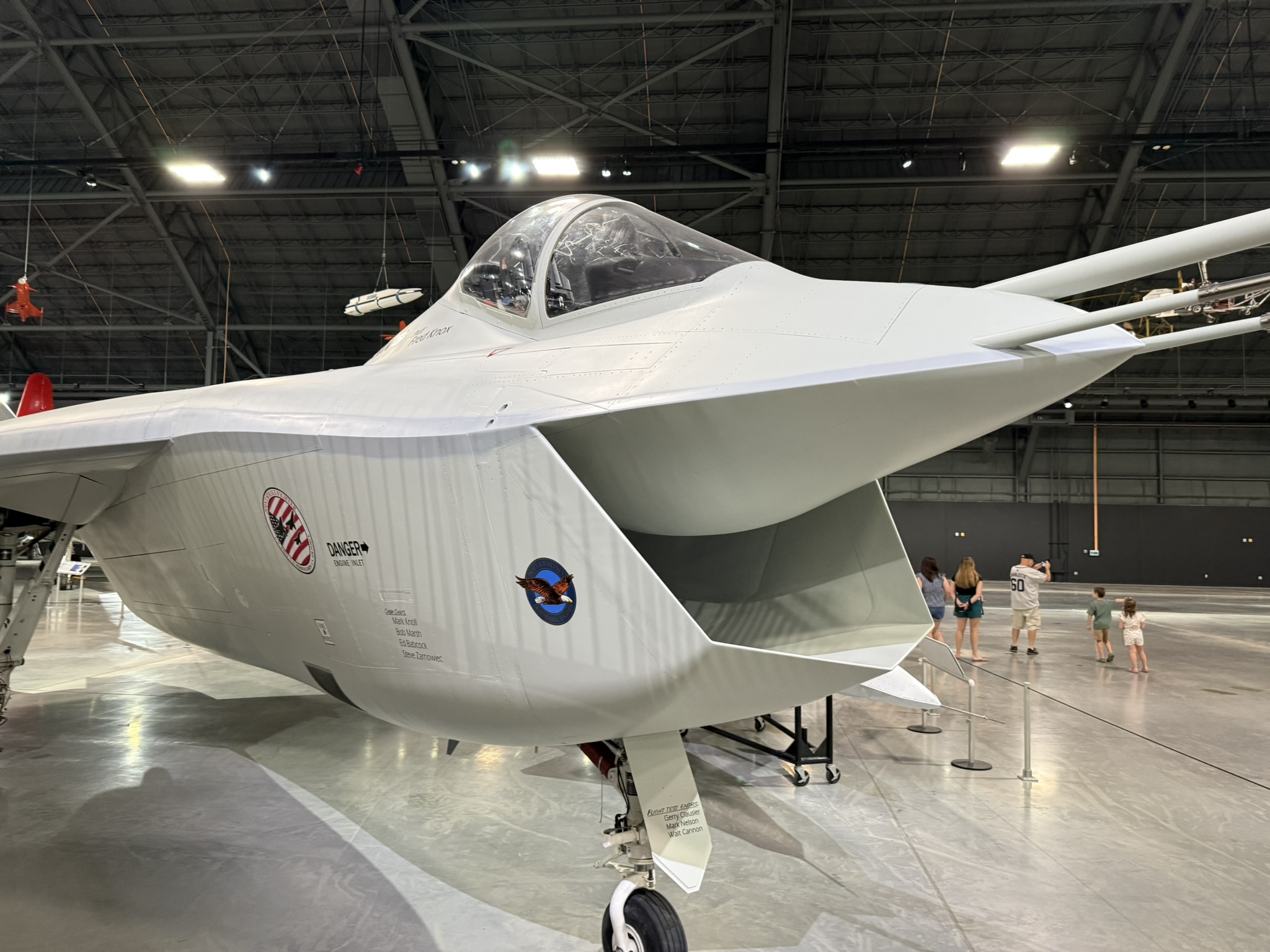
Boeing X-32 National Security Journal Photo. Taken on 7/19/2025.
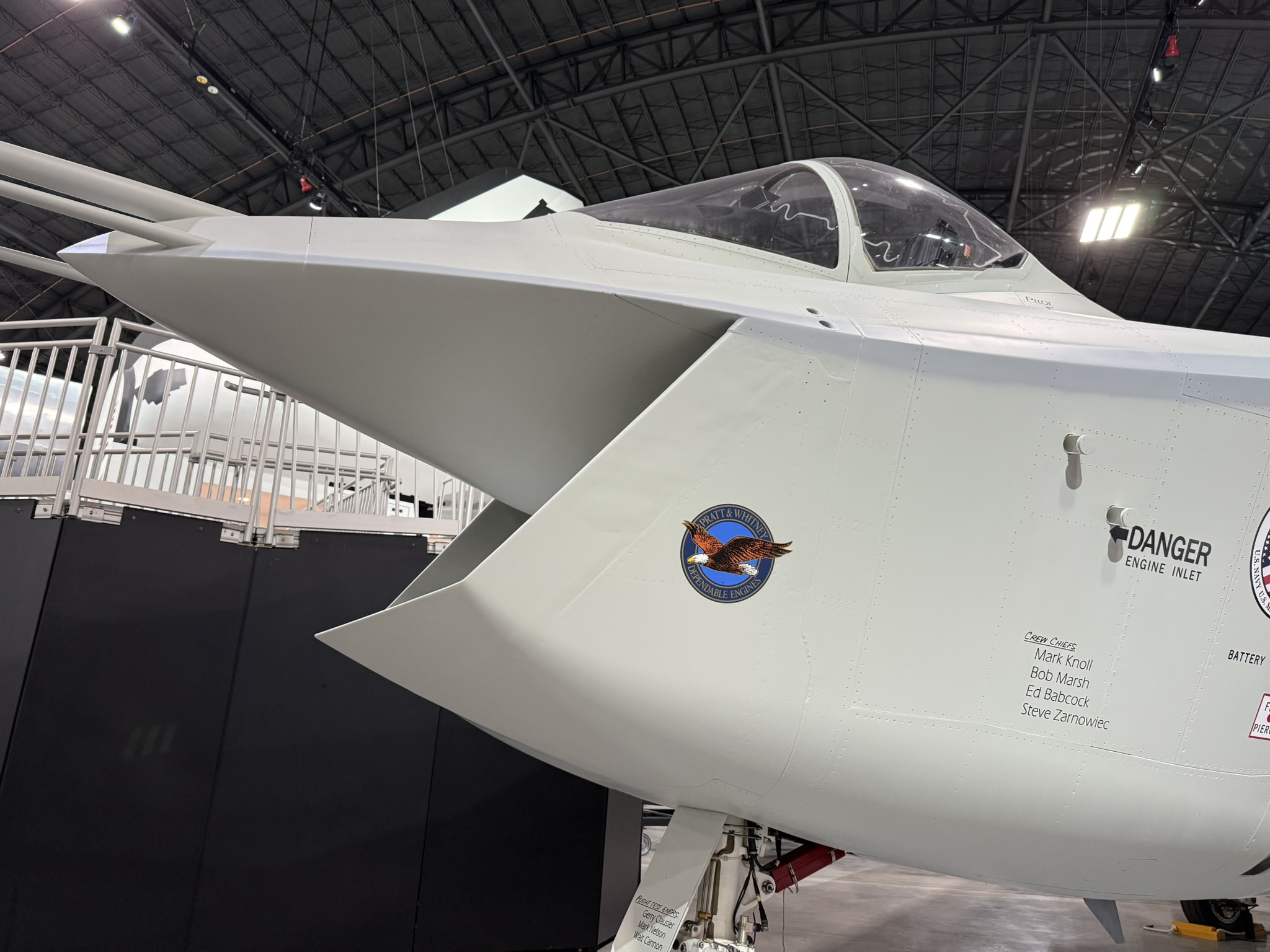
Boeing X-32 National Security Journal Photo. Taken on 7/19/2025.
“Did it feel like an airplane you’d want to take to the boat?” A retired naval aviator asked Yates during an interview.
“That’s exactly the comment I made,” Yates responded.
The X-32’s Performance Metrics
The X-32 could reach speeds of Mach 1.6 and demonstrated excellent handling during carrier approaches.
In terms of pure flight performance, the X-32 was similar to the F-35 family. It was not designed to be a dogfighter, but it was still capable thanks to low observability.
Like the F-35, it probably would not be capable of supercruise, given the compromises made to accommodate its profile.
Advanced Sensor Integration (Conceptual)
The radar system developed for the X-32 (the “JSF Array”) became the basis for the highly capable Raytheon AN/APG-79 radar used on F/A-18E/F Super Hornets and EA-18G Growlers.
The AN/APG-79 AESA radar is considered a revolutionary, state-of-the-art system offering significant performance gains over older radars, with increased range, resolution, the ability to track many targets, high-resolution mapping, and enhanced reliability due to its solid-state design and electronic beam steering.
Although early reports noted software instability issues, these have since been addressed through upgrades, including Gallium Nitride (GaN) technology.
It provides significant advantages in situational awareness and multi-target engagement, enabling simultaneous missile guidance and improved battlefield information.
Rapid Prototyping and Testing
Boeing successfully developed and flew two different versions (X-32A for conventional, X-32B for STOVL in 2000-2001) in a short, four-month, 66-flight test program.
Boeing’s design underwent rapid changes, including the addition of a twin tail late in the build, showcasing agile engineering.
The use of physical models, such as those for wind-tunnel testing, enabled faster iteration and concept validation than relying solely on digital data.
Why the X-35 Won The Competition
The Vertical Landings proved the difference, as the Lockheed Martin X-35 performed much better in that competition stage as its advanced lift fan and exhaust system provided a crucial technological advantage.
The X-32 had a weaker V/STOL design, which recirculated hot exhaust air into its modified intake, reducing thrust and leading to engine overheating.
X-32 Was Different Looking, But Looks Can Be Deceiving
The X-32 wasn’t your typical-looking fighter aircraft. Many likened it to a smiling Hippo.
However, the stealth jet handled well. Speaking with defense expert Harry Kazianis, who saw the aircraft in the flesh at the Air Force Museum in Dayton, Ohio, he said it looked much better in person.
“I loved the design, and you can’t really appreciate it unless you see it up close,” he wrote in late October. Yates made this point clear.
“Boeing knew they had a problem with that, if you will, and to address it, they had a little mantra that said, ‘Look, you’re taking it to war, not to the senior prom.’ That got a lot of traction,” said Yates, who added that he was thrilled to fly it.

NAS PATUXENT RIVER, Md. — An F-35 Lightning II test pilot conducts flight test Sept. 10 to certify the carrier variant of the fighter aircraft for carrying the AGM-158C Long-Range Anti-Ship Missile (LRASM). As part of ongoing integration efforts, the Pax River F-35 Integrated Test Force (Pax ITF) team flew two days of test flights to evaluate flutter, loads, and flying qualities with two AGM-158 loaded on external stations. LRASM is a defined near-term solution for the Offensive Anti-Surface Warfare (OASuW) air-launch capability gap that will provide flexible, long-range, advanced, anti-surface capability against high-threat maritime targets. The Pax River ITF’s mission is to effectively plan, coordinate, and conduct safe, secure, and efficient flight test for F-35B and C variants, and provide necessary and timely data to support program verification / certification and fleet operational requirements.
Yates said the chance to test the X-32 was the high point of his career as a test pilot. “Dream come true. You can use all those trite phrases. A lot of my peers and contemporaries were probably pretty jealous of what I was able to do with the X-32. I don’t know how to say it any better than just that it was the highlight of my career.”
The X-32 ultimately lost the JSF competition to the F-35; the V/STOL issue was arguably the difference. However, the aircraft remains a part of the big “what ifs” in US aviation history.
About the Author: Steve Balestrieri
Steve Balestrieri is a National Security Columnist. He served as a US Army Special Forces NCO and Warrant Officer. In addition to writing on defense, he covers the NFL for PatsFans.com and is a member of the Pro Football Writers of America (PFWA). His work was regularly featured in many military publications.


