


President Donald Trump has promised to release as many Pentagon UFO files as possible, raising the question of what the so-called disclosure moment would actually look like. Science fiction offers a hopeful answer — humanity unites against an external threat. History has a darker one. When the Persians invaded Greece in 490 and 480 BCE, large numbers of Greeks defected to the Persians. The Gauls fought alongside Caesar. Spanish conquistadors quickly found allies inside the Aztec and Inca confederations and exploited them. The most likely outcome of first contact is not a UN olive branch but a race between Washington, Beijing, Moscow, and Paris to cut a side deal first.
What Happens if Disclosure Does Happen?
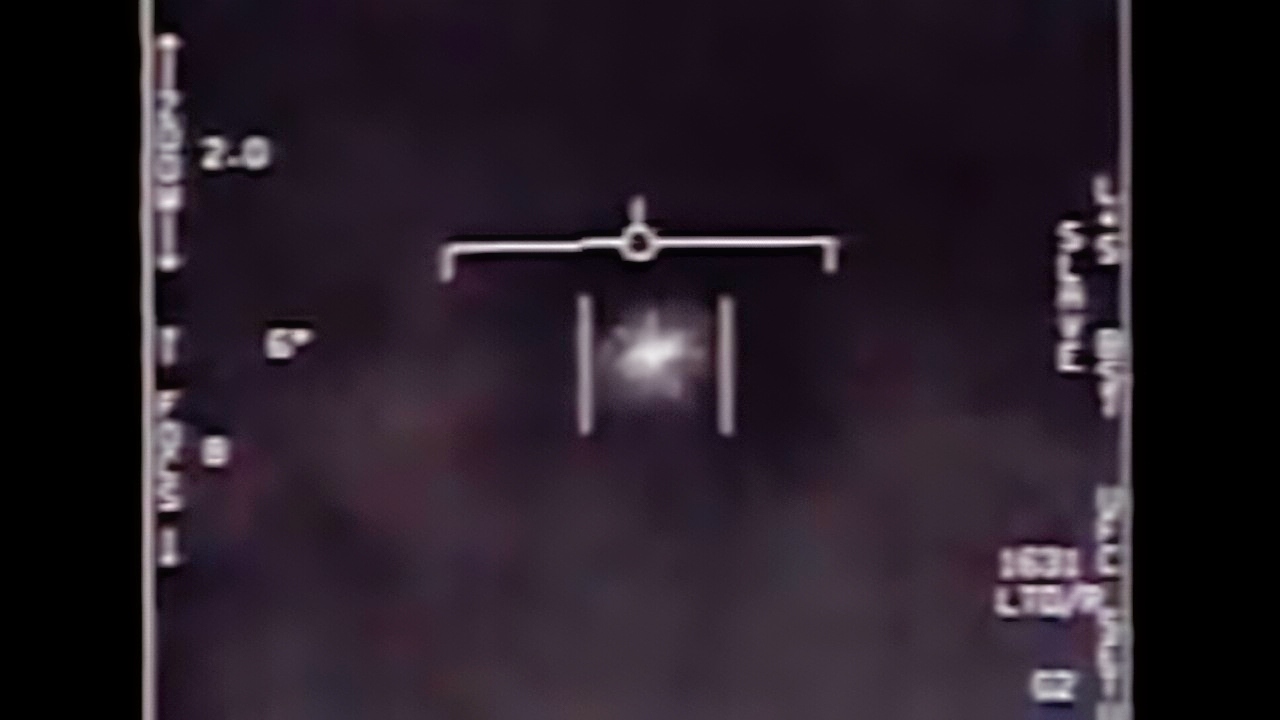
TicTac Video UFO Aliens. Image Credit: Creative Commons.
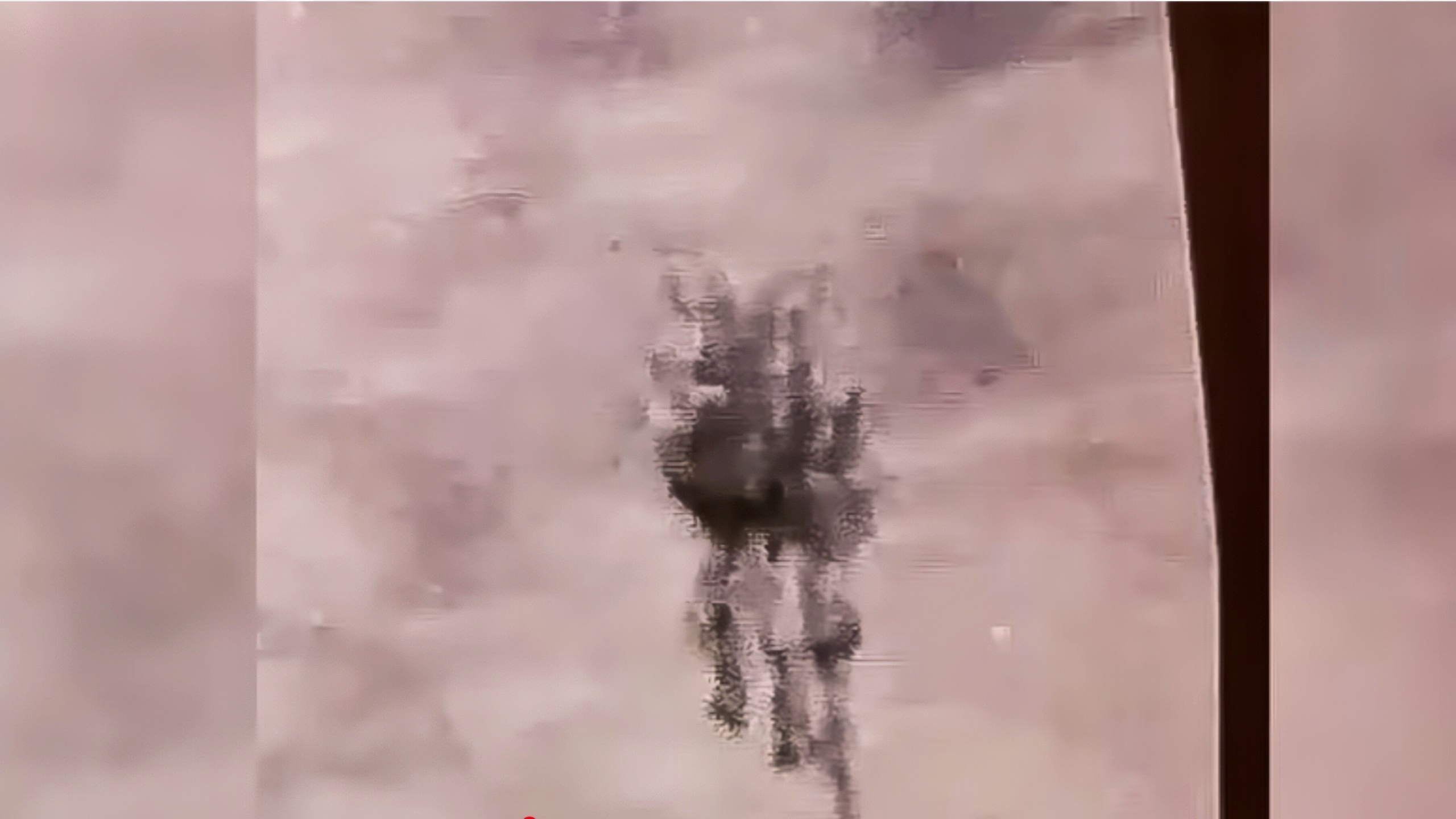
UAP Photo of Jellyfish UFO. Screenshot from YouTube.
President Donald J. Trump has promised to release as much information as possible associated with the Pentagon’s “UFO” files.
This has sparked considerable interest among obsessives, even as many have dismissed the releases as a desperate distraction from the President’s growing political difficulties.
It’s certainly worth wondering, however, how the world might react to news of an alien presence. This is what many call the ‘disclosure’ moment.
The science fiction is hopeful, or at least can be read that way.
The lessons of history are altogether less inspiring.
Pulling Together?
One classic narrative of international response to an alien encounter is represented by the film Independence Day.
In response to a violent encounter with an alien civilization, the peoples of the Earth unite (under American leadership) to defeat the invaders and throw them back into deep space.
Different versions of the story abound in science fiction, from the TV miniseries “V” to Orson Scott Card’s “Ender’s Game” to a series of a hundred other retellings.
A slightly different but equally hopeful story emerges from ” The Day the Earth Stood Still, where a helpful alien attempts to create global unity.
In Alan Moore’s “The Watchmen,” the mere threat of an alien invasion is used to heal the Cold War.
Pulling Apart
And yet if history offers any indication, we are less likely to greet aliens with a united front than with a plea to help us murder our neighbors.
“Alien” encounters are pretty rare in the history of human affairs.
The Greeks were hardly unfamiliar with the Persians, who invaded in 490 BCE and again in 480.
The Gauls were well acquainted with the Romans, who invaded in the first century BCE, as were the Anglo-Saxons with the Viking invaders of the late first millennium CE.
The Spanish conquests in the Americas had a more genuinely “alien” quality in that the states and peoples involved had never actually encountered one another before, but the Native Americans and the Spaniards were both human.
Within a short period, they could speak one another’s language, and even make sense of one another’s political arrangements.
And yet in all of these cases, the encounter with the Other did not have a unifying political effect. Huge numbers of Greeks defected to the Persians during both invasions. Caesar could reliably call upon great numbers of Gauls to support his designs.
The Spanish quickly identified and exploited fissures within the Aztec and Inca political confederations, co-opting existing conflicts for their own benefit. In every case, the outside invasion was met not with unity but with dissent, score settling, and opportunism.
This tension is captured well by Thucydides, who does not write about an alien invasion but does have a keen eye for domestic conflict.
Seizing a city with Hellenic siegecraft was incredibly difficult, but getting political opponents to start opportunistically murdering one another (often with roofing tiles) at the first sight of a Spartan or Athenian army was remarkably easy.
Even Athens itself could not escape political fracture when threatened by Spartan arms.
Thus, unless the alien purpose in visiting Earth is literally to consume humans for sustenance, there is little reason to believe that introducing aliens into Earth’s geopolitics would resolve the fundamental divisions and competitive tendencies that characterize international politics.
Rather than the United Nations extending an olive branch to our extra-terrestrial visitors, it is likely that the security and intelligence services of the United States, China, Russia, and France would undertake active steps to pursue exclusive cooperation with the aliens. Wouldn’t it be delightful if a Kryptonian exile turned out to be a cultural American?
How Alien?
The other problem in thinking through the international relations of an alien encounter is that we have no idea what aliens would want or how they would act.
Some excellent speculative fiction leans into this; Contact, Arrival, and Close Encounters of the Third Kind, for example, all focus on the immense difficulties associated with communication between humans and aliens. This implies that the first reaction to an alien encounter would be driven by struggle, confusion, and perhaps chaos.
This confusion and chaos is probably the most likely outcome of any initial encounter with aliens.
Even then, the best bet is that the great powers would hedge heavily, working with one another and under the rubric of international institutions to develop a common response… while at the same time instructing their intelligence and security services to explore possibilities for exploiting cooperation with the extra-terrestrials.
Even when the board changes, the game continues.
About the Author: Dr. Robert Farley, University of Kentucky
Dr. Robert Farley has taught security and diplomacy courses at the Patterson School since 2005. He received his BS from the University of Oregon in 1997 and his Ph. D. from the University of Washington in 2004. Dr. Farley is the author of Grounded: The Case for Abolishing the United States Air Force (University Press of Kentucky, 2014), the Battleship Book (Wildside, 2016), Patents for Power: Intellectual Property Law and the Diffusion of Military Technology (University of Chicago, 2020), and most recently Waging War with Gold: National Security and the Finance Domain Across the Ages (Lynne Rienner, 2023). He has contributed extensively to a number of journals and magazines, including the National Interest, the Diplomat: APAC, World Politics Review, and the American Prospect. Dr. Farley is also a founder and senior editor of Lawyers, Guns and Money.


xi-xi-xi
May 19, 2026 at 11:53 am
Nations will try to defend themselves from hostile aliens (extraterritorial entities) using their own firepower.
That’s because most likely, those aliens visiting Earth would surely be in league with US (washington), due to US having nearly twenty super high-tech intelligence agencies, including NORAD.
There was this particular incident in September 2025, where numerous videos shot on the late evening of Friday September 12 2025, showed a surface-to-air missile heading toward a bright light in the sky over shandong, and an explosion quickly took place.
Many people who saw the incident said most possibly an unknown UFO was hit right in the bullseye by an interceptor missile.
That shows the country doesn’t need any help from Washington, as the light could well have been come from across the Pacific ocean.