
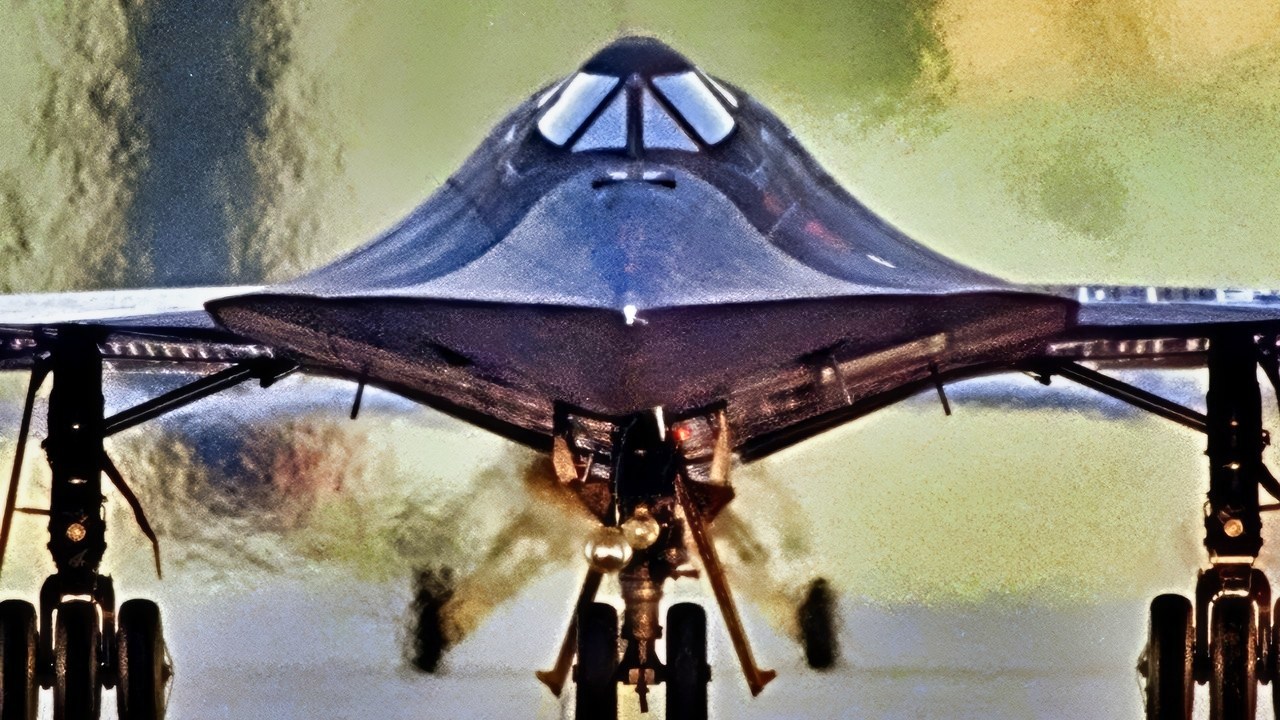
In 1984, an SR-71 Blackbird operating at 83,000 feet and Mach 3 over the Soviet Union suffered a sudden engine unstart that yawed the aircraft so violently the crew said it felt like the plane was “going sideways.” To stabilize the asymmetric drag, the pilot shut down the second engine — eliminating thrust entirely and sending tail number 61-7974 plunging toward the Barents Sea from above 80,000 feet. After multiple failed restart attempts, a manual restart succeeded at lower altitude, and the crew reached their tanker with virtually no fuel left — one of the closest calls in the program’s history, in which 12 of the 32 Blackbirds built were eventually lost to accidents.
SR-71 Blackbird Almost Lost Near Russia

SR-71 Blackbird Spy Plane Back in 2022. Image Credit: National Security Journal/Harry J. Kazianis.
The Lockheed SR-71 Blackbird remains the fastest operational aircraft ever flown, routinely cruising at speeds above Mach 3 and altitudes exceeding 80,000 feet.
It was built for a very specific purpose: to gather intelligence over hostile territory without being intercepted. And by that measure, it worked. Over decades of operations, not a single SR-71 was ever shot down.
But the aircraft’s reputation has also produced something else – an ecosystem of stories told online. Some of them are well documented, and others are harder to verify. Unsurprisingly, many sit somewhere in the middle, preserved through the documentation of pilot recollections. One such account, first published in the May 2013 issue of Aviation History, describes a near-catastrophic engine failure over the Soviet Union. Whether every detail occurred exactly as described is difficult to confirm. But the story itself is entirely consistent with what we know about how the SR-71 operated.
What the SR-71 Was Built To Do
The SR-71 was developed in the 1960s by Lockheed Skunk Works under the direction of Kelly Johnson.
It emerged from earlier CIA programs, including the A-12, and entered service with the United States Air Force in 1966. It was intended to conduct high-speed and high-altitude reconnaissance over denied territory, particularly the Soviet Union. The aircraft carried advanced sensors, including radar and photographic systems, allowing it to monitor missile sites and naval bases in near real time.

A-12 Oxcart National Security Journal Photo.
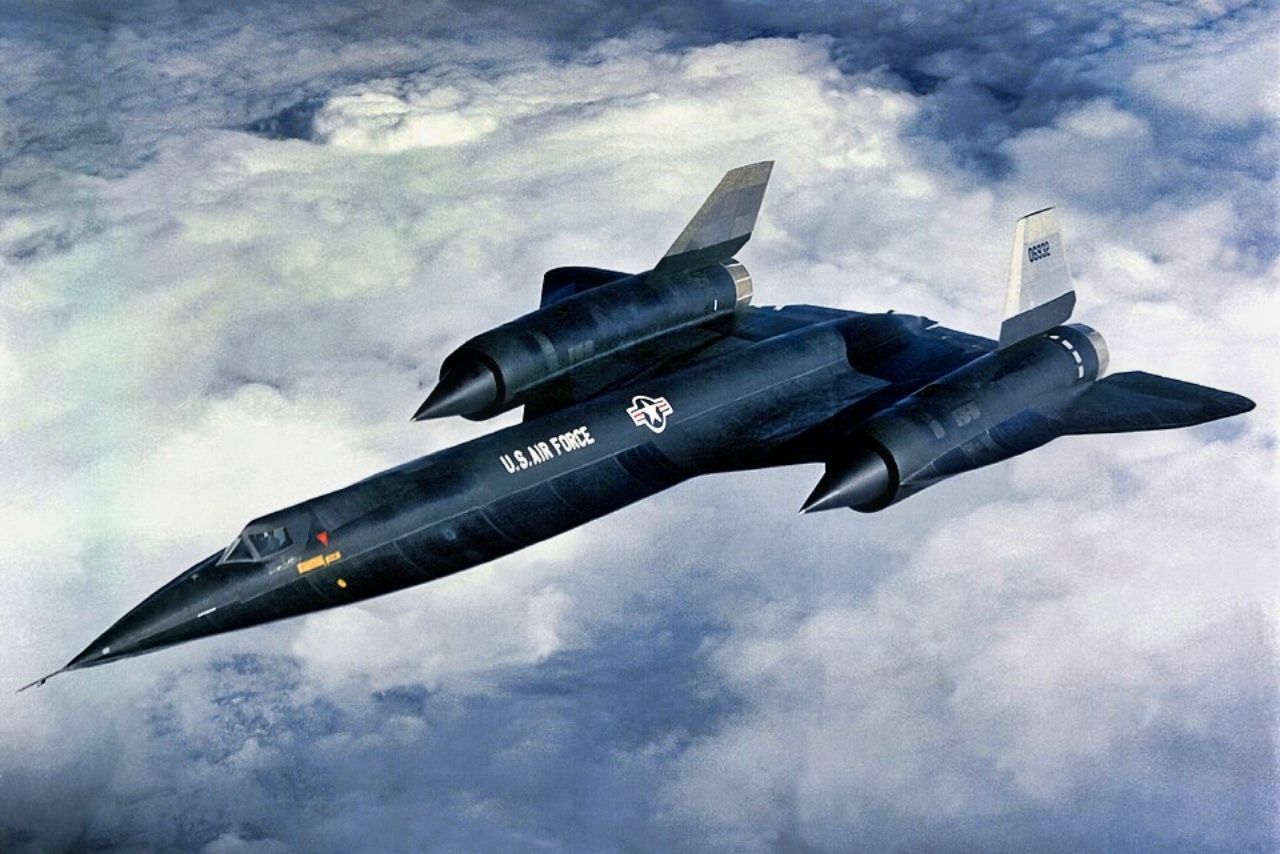
A-12 Oxcart. Image Credit: Creative Commons.
What made the SR-71 viable was not stealth in the modern sense, but performance. It could cruise at approximately Mach 3.2 – over 2,000 miles per hour – and at altitudes above 80,000 feet. If a missile launch was detected, the standard response was not evasive maneuvering but acceleration – the aircraft would simply outrun the threat.
That incredible performance, however, came at a cost. The SR-71 operated in an extreme thermal environment, with external temperatures exceeding 500 degrees Fahrenheit when traveling at high speeds.The airframe expanded in flight, and the aircraft was largely constructed of titanium to withstand the conditions. Its engines, the Pratt & Whitney J58, functioned partly as ramjets at high speed, with much of the thrust generated through compressed airflow rather than conventional combustion. This was not a forgiving aircraft; it was designed to operate in such a way that every single element of its design had to work correctly at all times.
The “Unstart” Problem
One of the most important technical challenges the SR-71 faced was an “unstart.” In layman’s terms, an unstart occurs when the carefully controlled shockwave inside a supersonic engine intake collapses. Airflow is disrupted almost instantly, thrust drops, and the aircraft experiences a sudden and often violent loss of stability.
On the SR-71, that could produce an immediate yawing motion (side-to-side rocking often seen in aircraft), which would pull the aircraft sideways at extreme speed. The standard response to rectify the problem seemed counterintuitive: a pilot had to unstart the engine to rebalance drag, then restart both systems.
Incredibly, unstarts were not rare. They were a known and persistent issue throughout the aircraft’s operational life. Even after improvements, including new digital control systems introduced in the 1980s, they remained part of the SR-71’s nature.
This is the context in which the famous Murmansk incident should be understood.

SR-71 Blackbird National Security Journal Image. Taken by Dr. Brent M. Eastwood on September 26, 2025.
The Murmansk Incident
According to the account published in Aviation History, an SR-71 operating near the Kola Peninsula in 1984 experienced a severe unstart at approximately 83,000 feet while flying at Mach 3. The aircraft – identified by tail number 61-7974 – was conducting a reconnaissance mission to track Soviet naval activity.
As described by the Reconnaissance Systems Officer Curt Osterheld, the right engine suddenly unstarted, producing an immediate and violent yaw.
“The airplane yawed to the right so far, and so fast, it felt like it was going sideways!” Osterheld allegedly said.
The situation escalated quickly, and to stabilize the aircraft, the pilot shut down the second engine. That decision removed the asymmetric drag, but it also eliminated thrust entirely. The aircraft began to fall.
Osterheld described the descent as abrupt and uncontrolled, with the SR-71 dropping tens of thousands of feet in a matter of minutes toward the Barents Sea. Restart attempts initially failed. At that point, the crew was approaching the threshold where ejection would have been necessary.
Eventually, a manual start succeeded, and the aircraft recovered, but it did so at a much lower altitude, where it was no longer operating efficiently. The SR-71 was designed to cruise at high altitude and speed, and at lower levels, its fuel consumption increased significantly.
The crew was forced to divert and link up with a tanker aircraft, and according to the account, they reached the tanker with virtually no fuel left.
What the Story Tells Us
The SR-71’s reputation as an untouchable aircraft is not bad. The aircraft was never shot down by enemies, but that doesn’t mean it was invulnerable. Of the 32 aircraft built, 12 were lost in accidents over the course of the program.
What the Murmansk story illustrates is the margin for error within which the aircraft operated. At Mach 3 and 80,000 feet, systems fail quickly, and the consequences can be dire.
The story is also a good reminder of how much of the SR-71’s operational history is preserved. Much of what we know about the Blackbird, which was an experimental and now legendary platform, comes from the crews who flew it. Their accounts are often consistent, not always independently verified, but usually technically informed and accurate.
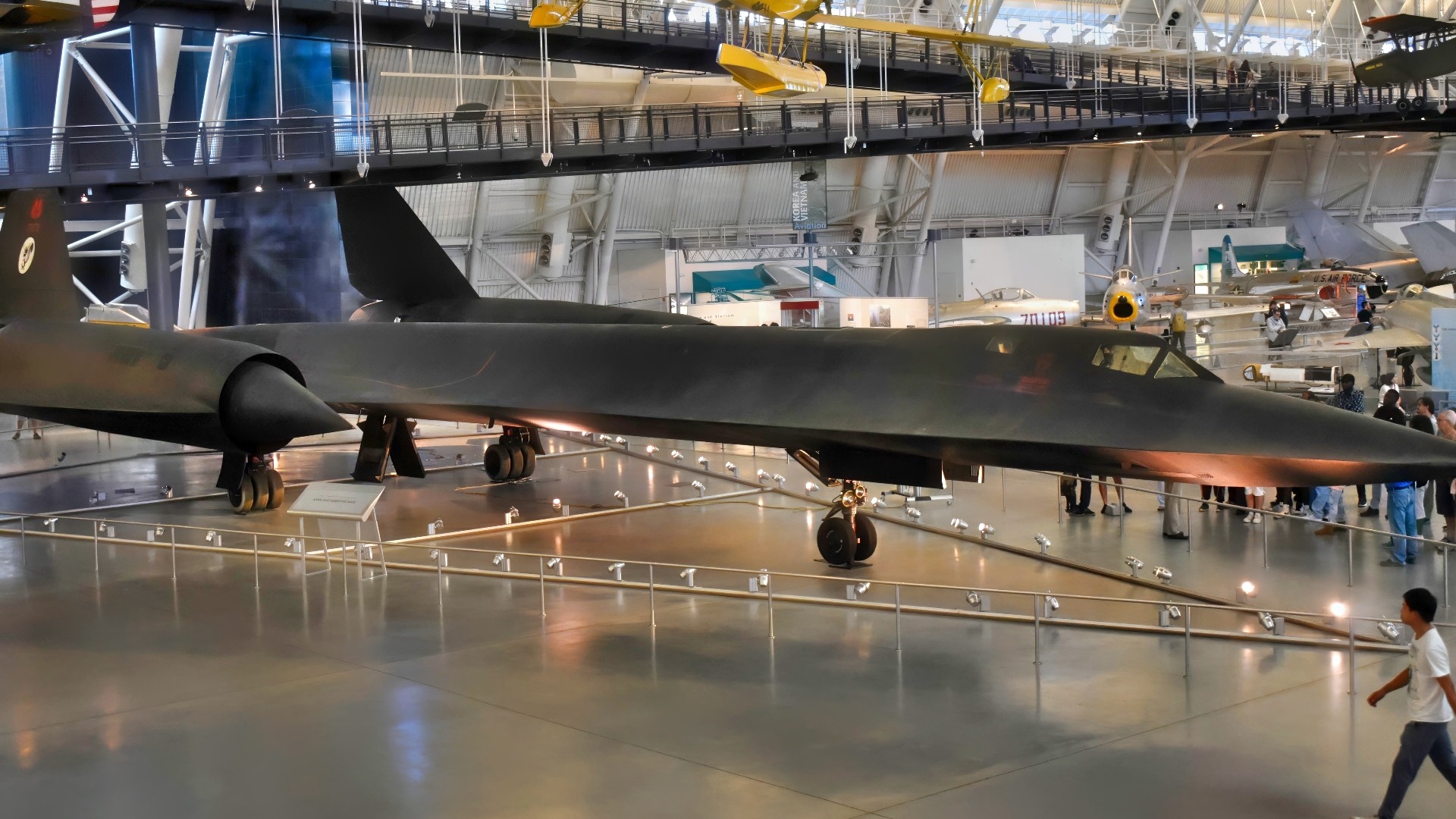
SR-71 Blackbird Smithsonian. Image Credit: National Security Journal.
Where You Can Find the SR-71 Today
The SR-71 was officially retired in 1990, briefly reactivated in the mid-1990s, and permanently withdrawn from service in 1998. Its mission has since been replaced by a combination of satellite reconnaissance and unmanned systems.
Satellites offer persistent global coverage, while drones provide lower-risk intelligence collection in contested environments. But neither fully replicates the SR-71’s combination of speed, altitude, and responsiveness.
Today, you can find surviving aircraft preserved in museums across the United States. Most prominently, the aircraft is on display at the Smithsonian National Air and Space Museum, where visitors can see the aircraft up close at the Udvar-Hazy Center.
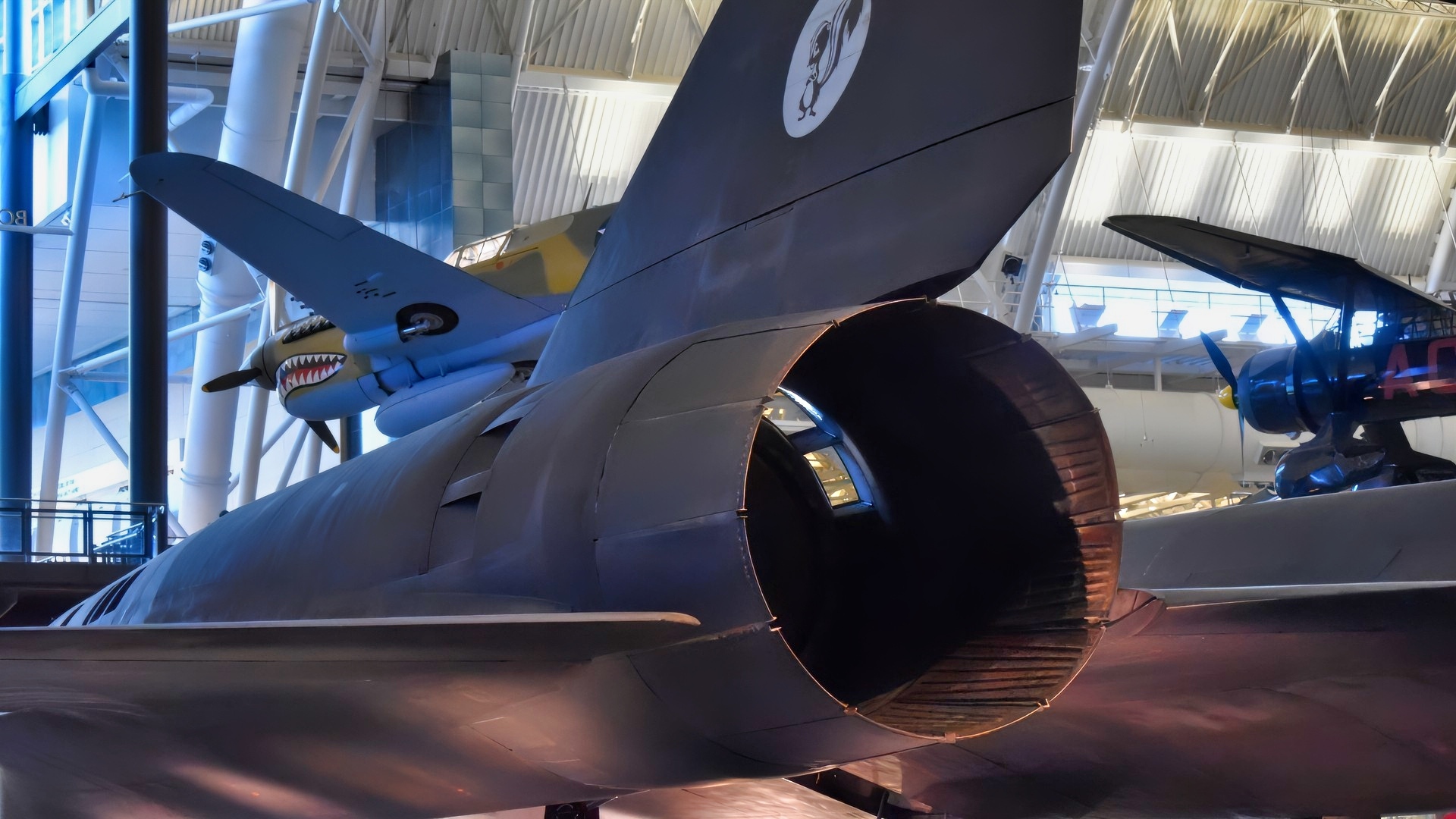
SR-71 Blackbird Rear Image. Credit: Taken on September 26, 2025 by National Security Journal.
Other examples can be found at the Pima Air & Space Museum and the California Science Center.
The aircraft may no longer fly, but their history is intriguing, and they remain unmatched. No operational platform today combines sustained Mach 3 flight with manned reconnaissance capability as the SR-71 did.
About the Author: Jack Buckby
Jack Buckby is a British researcher and analyst specializing in defense and national security, based in New York. His work focuses on military capability, procurement, and strategic competition, producing and editing analysis for policy and defense audiences. He brings extensive editorial experience, with a career output spanning over 1,000 articles at 19FortyFive and National Security Journal, and has previously authored books and papers on extremism and deradicalization.


