

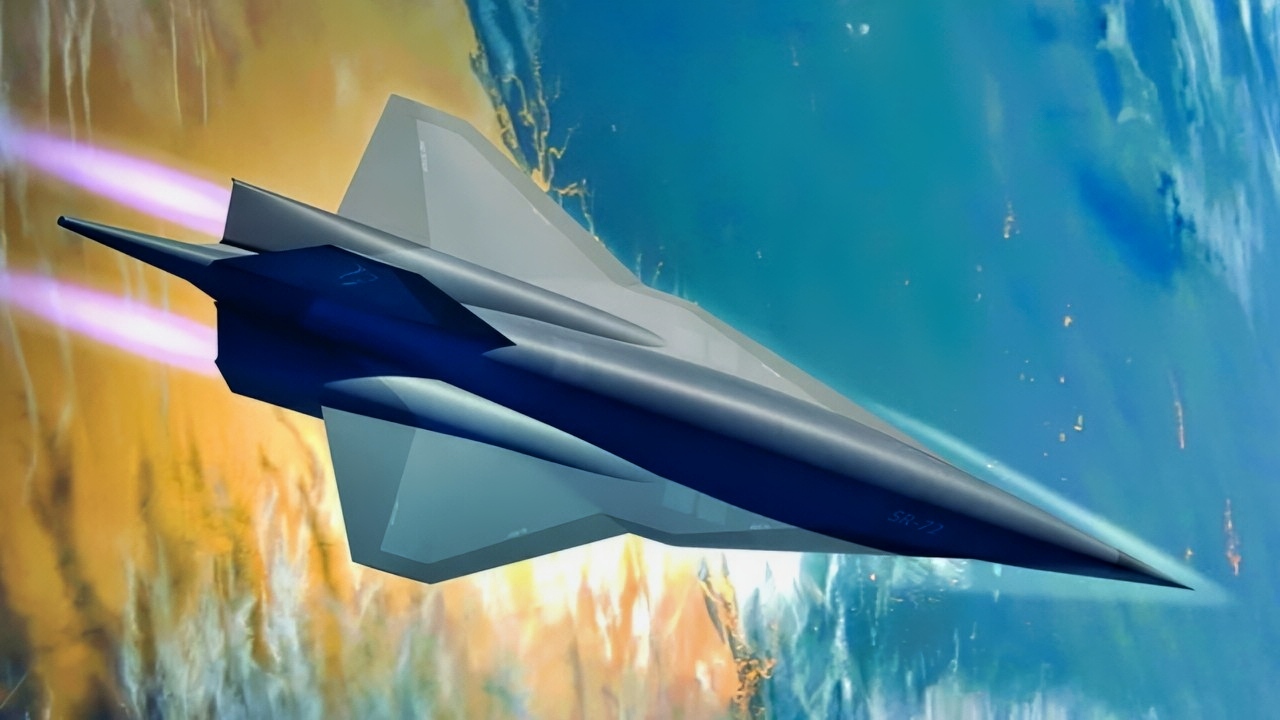
Lockheed Martin’s Skunk Works has been publicly discussing the SR-72 “Son of Blackbird” — a hypersonic reconnaissance and strike aircraft designed to fly at Mach 6, nearly twice the speed of the legendary SR-71 — since 2013. The aircraft would close a reconnaissance gap that has existed since the SR-71 stopped flying in 1999, using a combined-cycle propulsion system that pairs a conventional turbine for low-speed flight with a ramjet/scramjet for hypersonic cruise. But twelve years after Lockheed first publicly discussed the program, no one outside the program can confirm whether the SR-72 has actually flown — or whether it remains a concept on paper.
The SR-72: Real or Not?
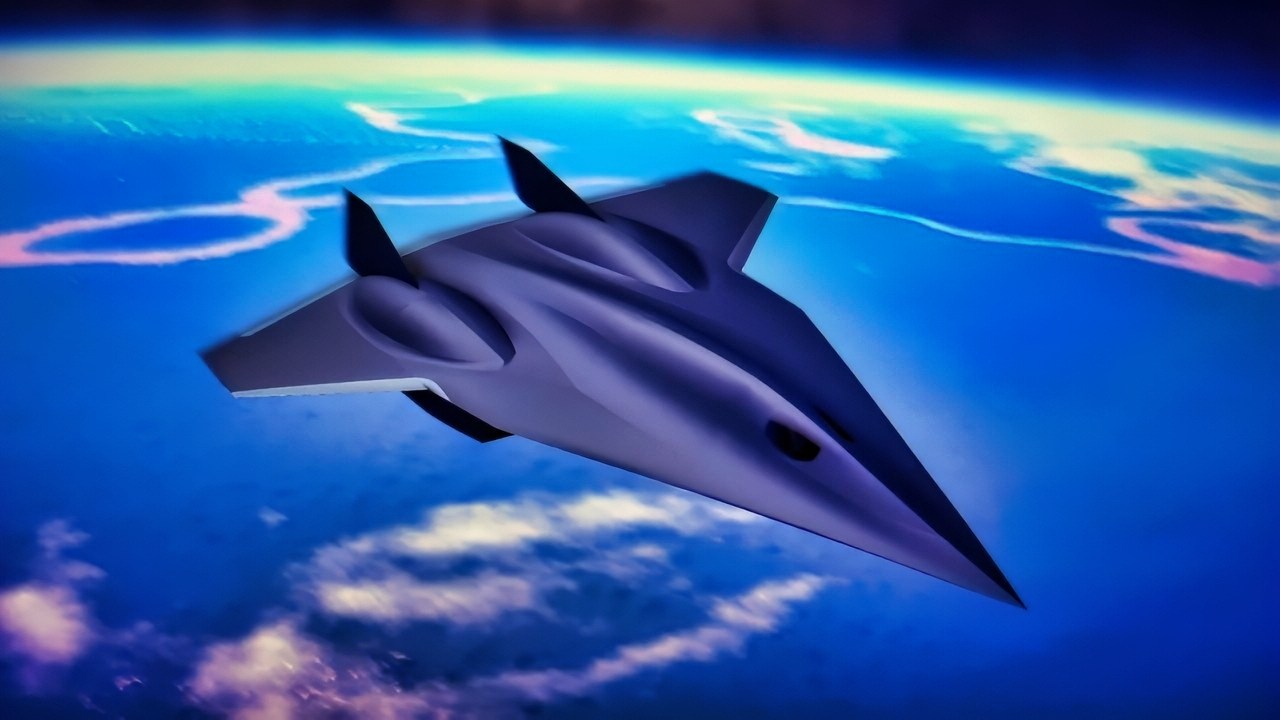
SR-72 Darkstar. Image Credit: Creative Commons.

SR-72 by Lockheed Martin. Image Credit by Lockheed Martin.
The age of hypersonic warfare is upon us. The United States, at least officially, lags behind its great-power rivals, China and Russia. In fact, it looks as though the Americans are behind their rogue state enemies in Iran and North Korea in this key domain.
One system that many believe will restore America’s edge in hypersonic warfare is the SR-72 “Darkstar” or “Son of Blackbird.” Yet, no one can actually confirm (or deny for that matter) whether this bird is real, if it is currently flying, or if it is merely the figment of aerospace enthusiasts like this author.
Frankly, the United States desperately needs the SR-72; however, the technology, costs, and current strategic environment may make the aircraft nearly impossible to deploy at scale.
What Is the SR-72?
The SR-72 is generally described as a hypersonic reconnaissance and strike aircraft that Lockheed Martin is developing at their secretive (and, oddly, legendary) Skunk Works division. SR-72 will replace the SR-71 Blackbird, which stopped flying 30 years ago.
Where the SR-71 relied on extreme speed at roughly Mach 3.2, the SR-72’s stated goal is an astonishing Mach 6. At that speed, everything changes. Mach 6 means an aircraft could theoretically fly from the United States to the Indo-Pacific in a fraction of the time required by conventional aircraft.
More importantly, SR-72 could penetrate enemy airspace–even well-defended enemy airspace–before modern integrated air-defense systems fully reacted.

SR-72 Darkstar. Image Credit: Creative Commons.

SR-72 from Lockheed Martin. Image Credit: Lockheed Martin.

SR-72 artist image. Image Credit: Creative Commons.
The Blackbird survived largely because Soviet missiles and interceptors could not reliably catch it. The SR-72 concept revives that concept for the 21st century. Rather than stealth, the SR-72 relies on speed to accomplish its mission and return safely home.
That’s an important feature in today’s strategic environment, given that both China and Russia have spent years developing radar systems, infrared search-and-track systems, long-range missiles, and sensor architectures designed to erode the advantages of traditional stealth aircraft.
The Mach 6 Advantage
One of the biggest advantages the Mach 6 SR-72 has over China and Russia is its reaction time. A Mach 6 aircraft can radically reduce enemy decision cycles, meaning their responses to the SR-72’s presence in their airspace would be slow.
What’s more, the SR-72 is unpredictable. It arrives when and where you least expect it to, and the SR-72 can safely exit contested airspace before the enemy even knows it.
That’s a big difference from other systems the United States uses to conduct reconnaissance. The orbits of satellites, for instance, are predictable. Subsonic drones tend to be vulnerable to enemy air defenses. Rivals can still detect stealth aircraft sometimes. Cruise missiles take time to reach their targets. Conventional bombers, even long-range stealth bombers, require tanker support.
A hypersonic intelligence, surveillance, and reconnaissance (ISR) aircraft could theoretically launch quickly, reach target zones rapidly, conduct reconnaissance without being detected (due to the SR-72’s speed), and deliver weapons before being noticed. Against an adversary like China, these capabilities become enormously important.
After all, Chinese anti-access/area-denial (A2/AD) systems stunt US military operations in the Indo-Pacific and create hesitation. A reusable Mach 6 platform, though, completely undermines China’s A2/AD strategy by closing the warning window available to Beijing.
Why Hypersonic Flight is So Hard
Hypersonic flight is not an easy endeavor. At Mach 6, the aircraft experiences outrageous thermal loads. Friction with the atmosphere generates huge amounts of heat that could damage the plane’s structure, the surrounding materials, avionics, fuel systems, and other key flight surfaces. That’s why the SR-71 itself leaked fuel on the ground–its shell expanded dramatically when flying.
Since the SR-72 allegedly goes faster, the problem is exponentially harder.
But the biggest concern revolves around the SR-72’s propulsion. The bird employs a combined-cycle engine with one turbine for lower-speed flight, followed by a transition to ramjet/scramjet operation at hypersonic speeds. It’s that transition that is one of the hardest problems in aerospace engineering.
Scramjets only function at high speeds. But aircraft employing scramjets still need to take off, climb, accelerate, and transition smoothly without catastrophic instability.
Is the SR-72 Actually Real?
Whether the SR-72 is actually real is where things get murky. Some analysts have publicly described the SR-72 as already flying. Others argue that the plane’s end is nigh. Since 2013, Lockheed Martin has publicly discussed SR-72 concepts.
Skunk Works executives routinely reference hypersonic aircraft development, too. In fact, Lockheed filed patents related to combined-cycle propulsion. We also know that the Pentagon has aggressively pursued hypersonic technology.
What we don’t know, though, is whether this specific prototype actually exists. There isn’t any agreement on the type of aircraft that the SR-72 will supposedly be! Is it crewed or unmanned? No one can reliably answer that. Has the program survived budget scrutiny over the years? Is the SR-72, in fact, in production today?
Of course, the US government routinely hides major aerospace programs. Lockheed’s F-117 Nighthawk stealth bomber, the long-range, nuclear-capable B-2 Spirit stealth bomber, and the Lockheed SR-71 Blackbird were all hidden for years. So, the absence of evidence does not necessarily disprove the SR-72’s existence.
Why Some Analysts Believe the Program Is In Trouble
Despite its promise, the SR-72 might never fly. That’s because, even with the Pentagon set to receive a record $1.5 trillion defense budget, the Department of Defense is under immense budgetary pressure.
Currently, the military is attempting to fund multiple high-end legacy platforms, including the F-47 sixth-generation warplane, the B-21 long-range stealth bomber, the Navy’s ridiculous sixth-generation F/A-XX warplane, hypersonic missiles, nuclear modernization (the Sentinel program), Columbia-class submarines, President Donald Trump’s big-ticket national missile defense program (Golden Dome), and enhanced space architecture for the United States Space Force.
Adding a reusable Mach 6 aircraft to that budgetary list would only blow the budget even further than it already has.
What’s more, America’s aerospace industrial base is currently strained by supply-chain weaknesses, workforce shortages, engine development delays, cost overruns, and maintenance bottlenecks. So, critics of the SR-72 fear that the “Son of Blackbird” becomes another technologically dazzling program that is strategically exciting but underdelivers.
The China Factor
But China looms large over every discussion of the SR-72. The US military increasingly worries that advanced rivals, like China, have developed countermeasures rendering traditional stealth warplanes and bombers obsolete. To counter those Chinese anti-stealth technologies, the Pentagon wants to combine stealth, speed, altitude, electronic warfare (EW), and autonomy into one system.
Hence, the SR-72.
The Real Strategic Question
The ongoing SR-72 debate is not just about one airplane. It’s about whether the United States still believes in breakthrough aerospace dominance. During the Cold War, America routinely pursued seemingly impossible aerospace projects–that included the SR-71 Blackbird. The SR-72 is a high-risk, massive cost program with uncertain payoffs. Those reasons explain the public fascination with the SR-72. They also anticipate why the SR-72 might not make it into the unfriendly skies.
If the SR-72 is already flying–secretly–it could become one of the most important aerospace breakthroughs since stealth. If it fails (or if it never makes it beyond the development phase), it will symbolize the limits of modern American defense-industrial capabilities.
About the Author: Brandon J. Weichert
Brandon J. Weichert is the Senior National Security Editor at 19FortyFive.com. Recently, Weichert became the editor of the “NatSec Guy” section at Emerald. TV. He was previously the senior national security editor at The National Interest. Weichert hosts The National Security Hour on iHeartRadio, where he discusses national security policy every Wednesday at 8 p.m. Eastern. He hosts a companion show on Rumble entitled “National Security Talk.” Weichert consults regularly with various government institutions and private organizations on geopolitical issues. His writings have appeared in numerous publications, among them Popular Mechanics, National Review, MSN, and The American Spectator. And his books include Winning Space: How America Remains a Superpower, Biohacked: China’s Race to Control Life, and The Shadow War: Iran’s Quest for Supremacy. Weichert’s newest book, A Disaster of Our Own Making: How the West Lost Ukraine, is available for purchase at any bookstore. Follow him via Twitter/X @WeTheBrandon.


