

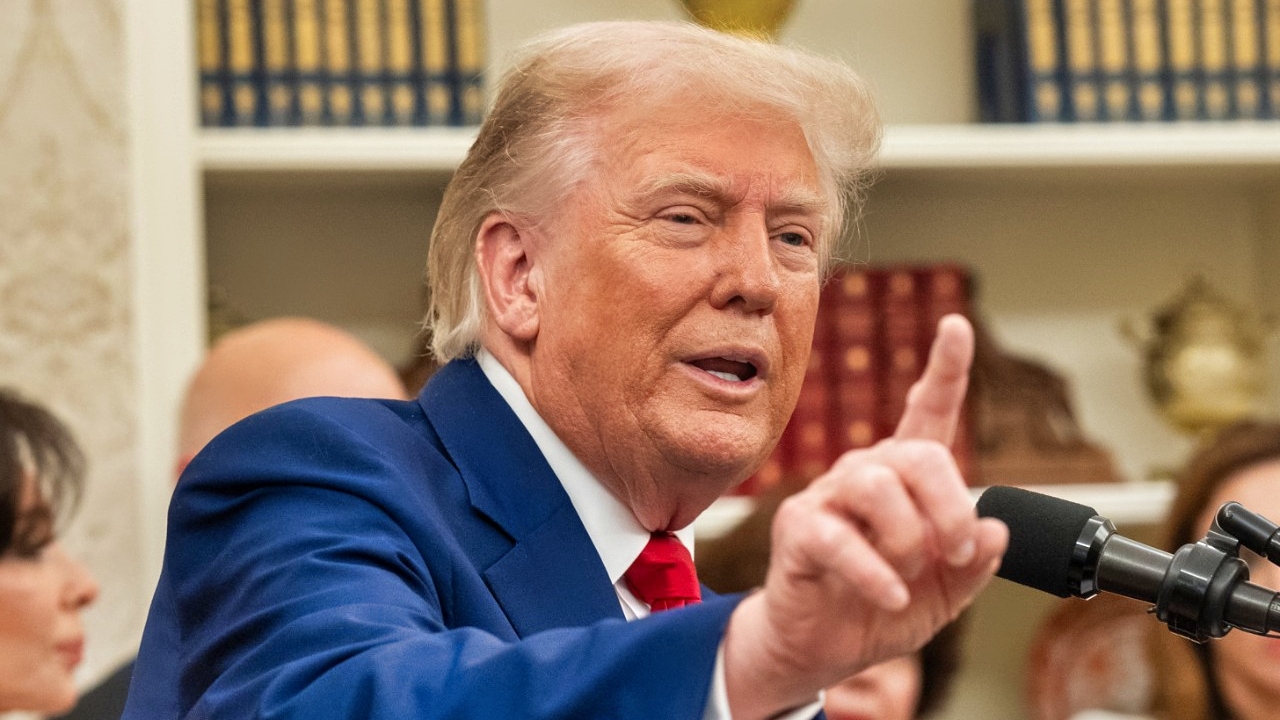
Representatives from the United States and Iran will sign a Memorandum of Understanding (MoU) in Geneva, Switzerland, on Friday, to end the conflict that has been ongoing for several months.
The MoU lays out a 60-day window for further negotiating Iran’s nuclear program, ensuring the Strait of Hormuz remains open, and ensuring the conflict doesn’t restart.
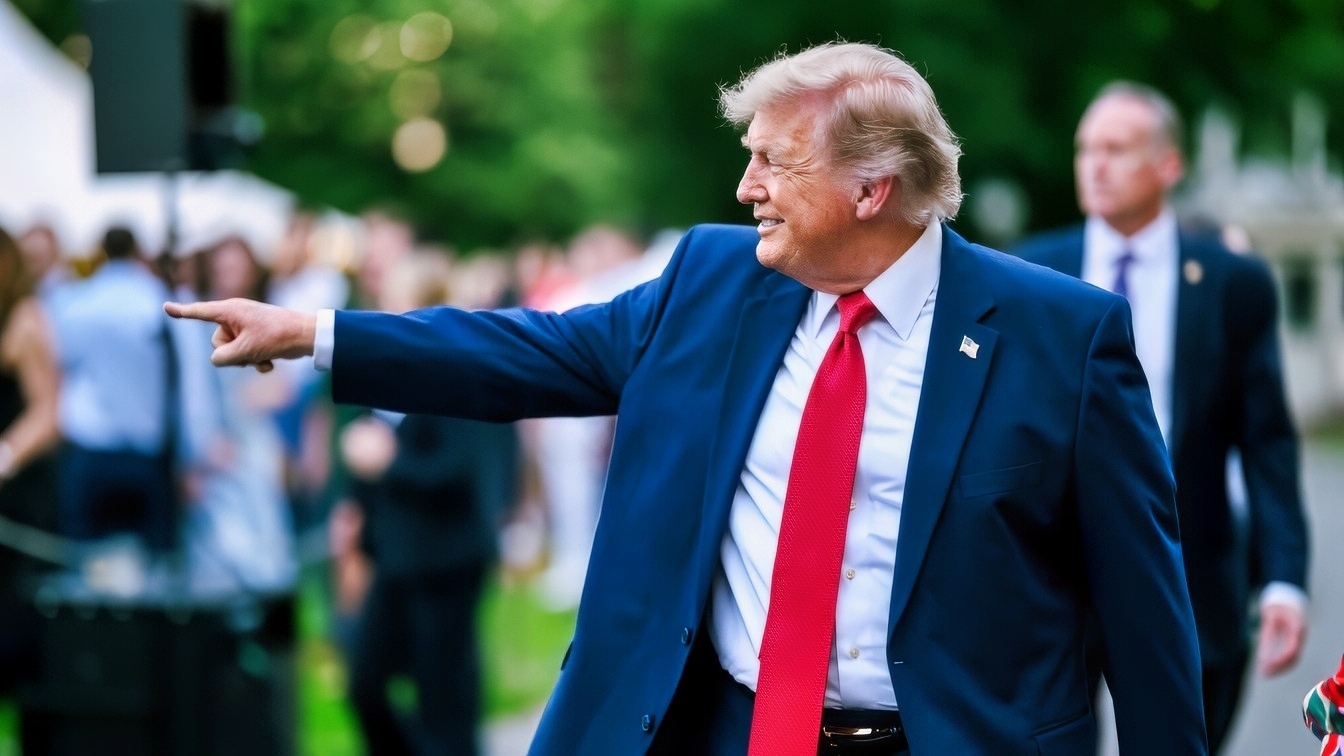
President Donald J. Trump and First Lady Melania Trump work the rope line at the Congressional Picnic on the South Lawn, Tuesday, May 19, 2026. (Official White House Photo by Daniel Torok)
Bloomberg obtained a copy of the MoU from American sources that covered most major points, including stipulations for sanctions relief for Iran, the end of the blockade, and the release of frozen Iranian funds. CNN also released a copy of the MoU, citing unnamed American sources.
Iran Claims The Bloomberg/CNN Release Is Inaccurate
The Tasnim News Agency, citing an informed source, said that the Memorandum of Understanding (MoU) text published by Bloomberg is inaccurate and lacking details. The news agency is directly owned and controlled by the Islamic Revolutionary Guard Corps (IRGC).
The source said that the MoU comprises 14 articles, but the details Bloomberg provided for each clause are significantly incomplete.
They added that the first article, as well as the section on the Strait of Hormuz reported by Bloomberg, is clearly inaccurate, with several key terms missing.
The sources told Tasnim that the MoU text will be published after its signing on Friday, per an agreement between the parties.
While outlets like the Islamic Republic News Agency (IRNA) are run directly by the Iranian government, Tasnim acts as a mouthpiece for the IRGC and consistently magnifies the hardline ideological and military stances of the regime.
Because of this direct affiliation, the U.S. Treasury Department’s Treasury Sanctions Information has sanctioned Tasnim for its ties to the IRGC and its involvement in state-sponsored censorship and repression.
CNN reported that “Technical details are also being finalized so the wording could still shift. A White House spokesperson said the text did not reflect the actual memorandum.”
Other US government officials have downplayed the document, according to CNN, stating it is a “political document” that does not reflect critical back-channel commitments Iran has made to the US, such as the future of Tehran’s nuclear program.
Iran’s Hardliners Are Not Happy With The MoU (As Written or Reported)
Again, while the wording of the MoU may be inaccurate or incomplete as it is currently written, Iran’s hawks are not pleased.
The mood is getting increasingly tense in Tehran, as hardliners in the regime, mostly from the IRGC, are accusing the Iranian negotiators with the United States of betrayal and capitulation.
DW wrote that Iranian hardliners protested in Tehran’s Ibn Sina Square and called for the resignation of Foreign Minister Abbas Araqchi and parliament speaker Mohammad Bagher Ghalibaf, who have been the principal negotiators with the US.
Some in the crowds even called for violence against the pair. For Iran’s hardline factions, this places them on the sidelines, and they have concerns that Iran loses leverage, both with the nuclear program and the Strait of Hormuz.
The hardliners, despite the Iranian military being hammered by US and Israeli airstrikes, feel emboldened by the conflict, which they feel like they have won. They thrive and can exist only through confrontation.
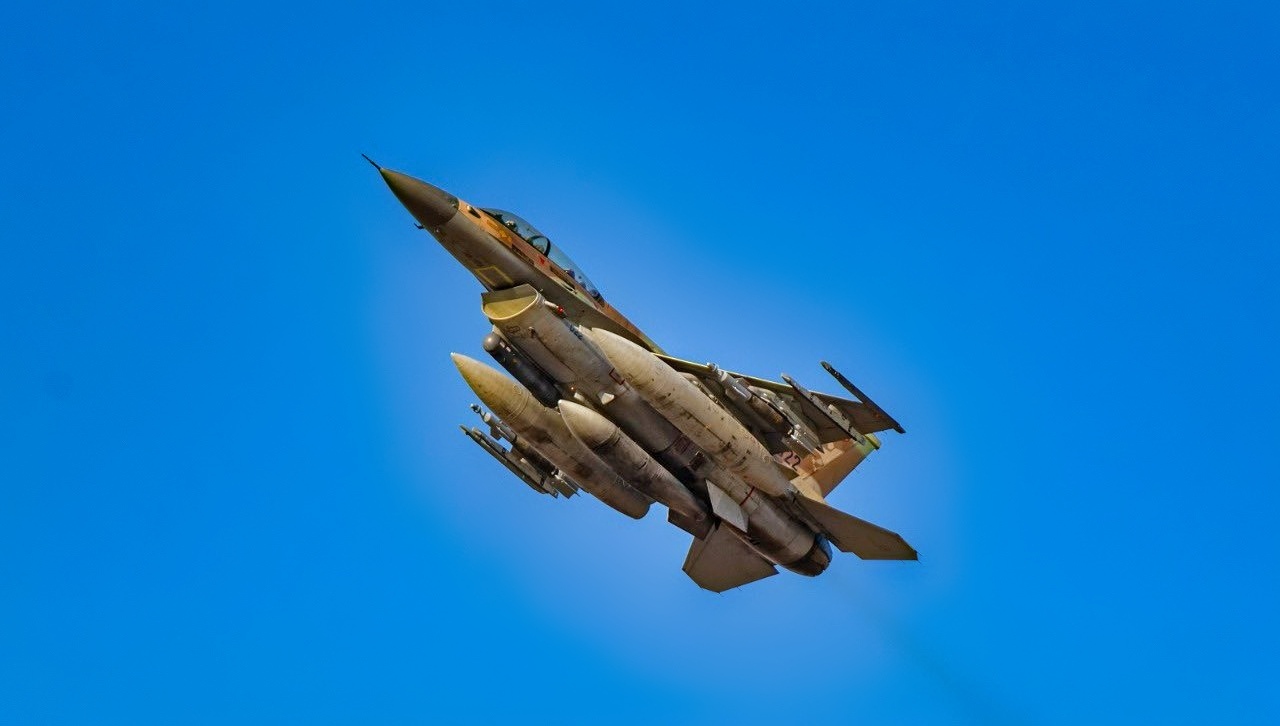
F-16I from Israeli Air Force. Image Credit: Creative Commons.
The Paydari Front, a mix of prominent hardline parliament members, veteran politicians, and influential media figures, wants the confrontation and a closed society to continue.
“They’re making a deal with the enemy that martyred our leader, even though we had won the war. So what happened to avenging Imam Khamenei’s blood? What kind of Islamic government is this? And now on Friday they want to shake hands with the Imam’s killers,” said Hossein, a member of the Basij volunteer militia that is run by the Revolutionary Guards.
Babak Dorbeiki, a London-based political analyst and former official at Iran’s Strategic Research Center, says that any negotiation and a move towards diplomacy risks everything that the hardliners use to control the country.
He said, “If Iran opens up more during negotiations with the US, this could strengthen pragmatists, diplomats and technocrats inside the system, while weakening those whose politics depend on slogans, pressure and a permanently closed political atmosphere.”
American Conservatives Aren’t Happy Either
Some of President Trump’s closest allies and supporters aren’t happy with the wording of the MoU either. Many of the more hawkish Americans are concerned that Iran’s interpretation of the MoU is vastly different than what US officials are stating publicly.
Many of the president’s supporters are calling for him to release the document instead of, as Senator Lindsay Graham (R-SC) stated, “relying on Iranian propaganda reports.”
Retired US Army general Jack Keane, a frequent guest on Fox News and the Chair for the Institute for the Study of War (ISW), stated, “I can’t square some of the things that are coming out of the administration from reliable sources. That’s what I find so disturbing.”
“It’s not defensible. I think what the president should do is, just let’s release it and let people see what’s out there, so we stop debating about something none of us has seen,” he added.
The MoU provides scant details on Iran’s nuclear weapons program other than the wording that the regime states it will never produce nuclear weapons, which it has denied for years, despite clear evidence to the contrary.
Many US hawks are upset that the agreement allows Iran to immediately begin trading oil again, where the US loses all coercive leverage once the Hormuz blockade ends and oil waivers are granted.
Many don’t like the $300 billion Iranian reconstruction fund, which VP Vance has stated won’t be released immediately but would be conditional and “tied to performance.”
And many don’t agree with tying Israel’s hands on Lebanon. The Iranians retain leverage, as their proxy Hezbollah is under no stipulations from Iran to stop attacking Israel, but the Israelis’ hands are tied as to retaliating to attacks.
Hezbollah said that there would be “no nuclear deal between Iran and the United States unless the Israelis withdraw” from Lebanon. That won’t happen.
So, the more hawkish of each side isn’t happy with the MoU, which generally means that each side negotiated with some give-and-take built in. As the MoU is currently framed, it appears that Iran emerges with a more secure strategic position.
But for the deal to be successful, the US Congress will have to approve it. And that promises to be a hard sell.
About the Author: Steve Balestrieri
Steve Balestrieri is a National Security Columnist. He served as a US Army Special Forces NCO and Warrant Officer. In addition to writing on defense, he covers the NFL for PatsFans.com and is a member of the Pro Football Writers of America (PFWA). His work was regularly featured in many military publications.


