
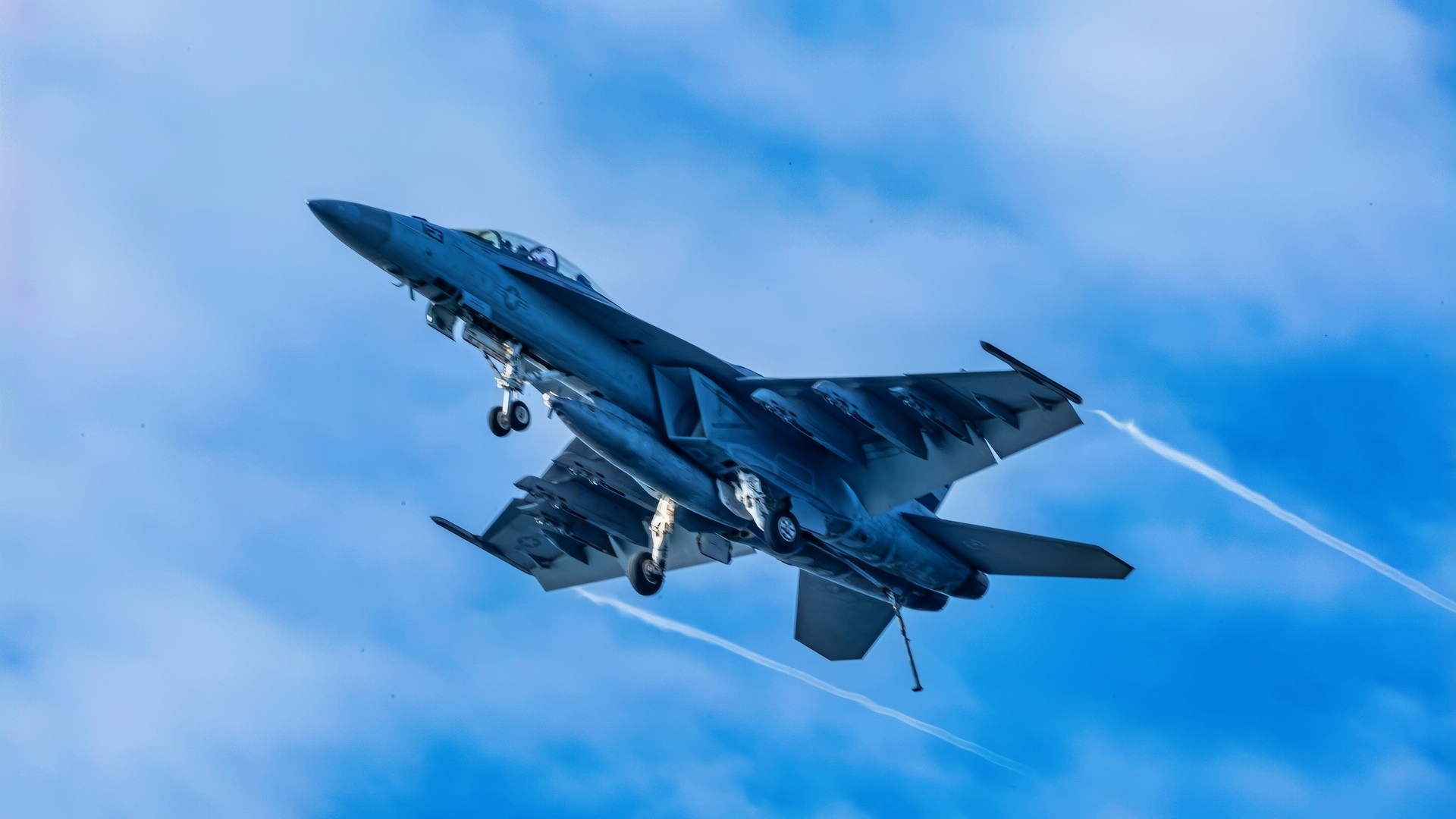
Today’s midterm elections, while pivotal in shaping the final two years of Donald Trump’s presidency, also mark a significant milestone in the United States’ conflict with Iran.
For much of the campaign, the president has publicly hinted at resuming military action after the November 3 vote. Except for sporadic skirmishes, the conflict has been comparatively muted since the initial six weeks of intense bombing across the Middle East.
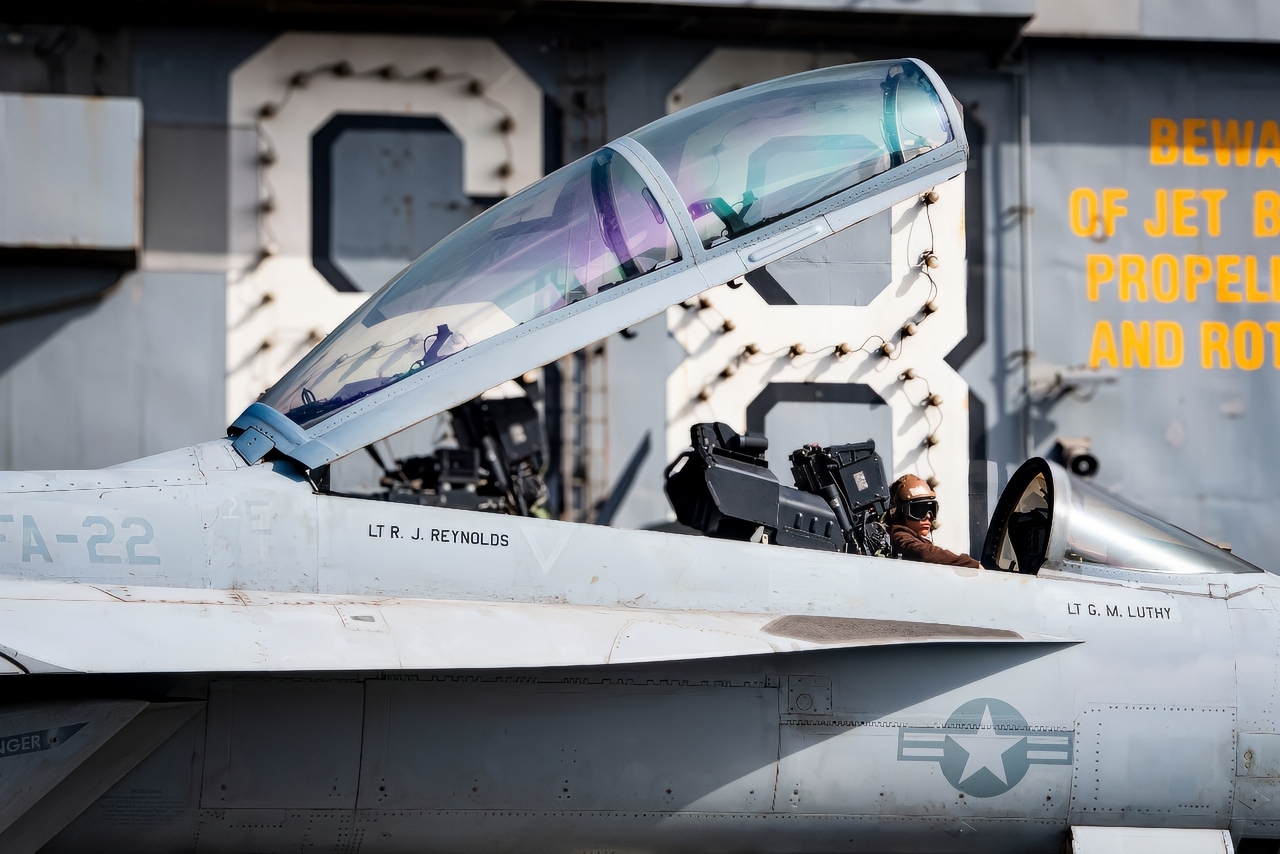
U.S. CENTRAL COMMAND AREA OF RESPONSIBILITY (July 22, 2025) An F/A-18F Super Hornet, attached to Strike Fighter Squadron (VFA) 22, taxis across the flight deck of the Nimitz-class aircraft carrier USS Nimitz (CVN 68) in the U.S. Central Command area of responsibility. (Official U.S. Navy photo)
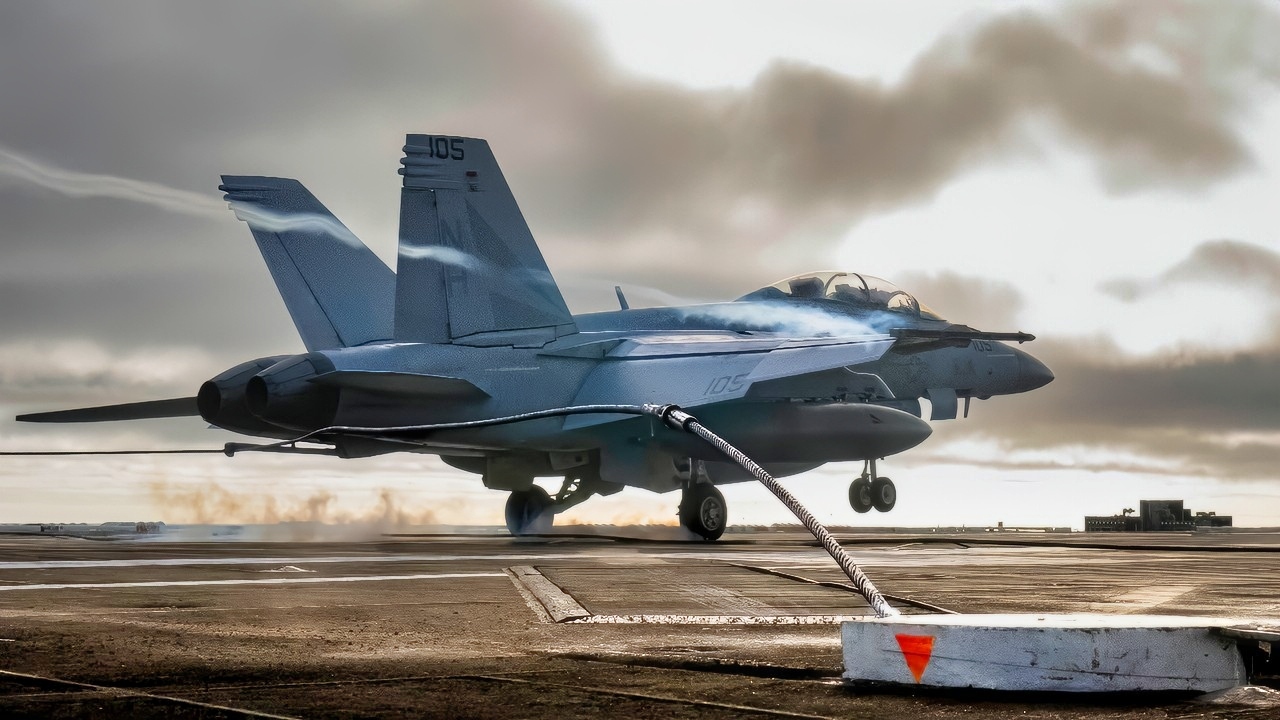
A U.S. Navy F/A-18F Super Hornet, assigned to the “Black Knights” of Strike Fighter Squadron (VFA) 154, lands on the flight deck of Nimitz-class aircraft carrier USS Theodore Roosevelt (CVN 71), July 24, 2025. Theodore Roosevelt, flagship of Carrier Strike Group (CSG) 9, is underway conducting exercises to bolster strike group readiness and capability in the U.S. 3rd Fleet area of operations. (U.S. Navy photo by Mass Communication Specialist 3rd Class Aaron Haro Gonzalez)
Mediators are pressing Washington and Tehran toward an agreement to end hostilities, with talks taking place over the weekend and into Monday, November 2.
Diplomacy Continues
Qatar is leading the diplomatic effort, backed by regional governments seeking to prevent another escalation. Iran has offered to reopen the Strait of Hormuz under conditions that include ending the American naval blockade and providing economic relief.
Although Iranian officials met with mediators in Doha over the weekend, tensions remain high, with Supreme Leader Mojtaba Khamenei reportedly urging military chiefs to respond to “any kind and level of threat” from the U.S. and Israel with immediate action outside of “geographic limits.”
Similarly, Mohsen Rezaei, secretary of Iran’s Supreme National Security Council, warned on social media that any strike would bring “devastating blows on the aggressor using new weapons.” However, in an interview with state television, Rezaei said “the tone has completely changed” from the U.S., describing it as a “very good sign.”
While the delegation left the Qatari capital without an agreement to end the war, Foreign Ministry spokesman Esmaeil Baghaei said that discussions were continuing. “However, the issue is complex,” he said, adding that mediators were exchanging messages with the U.S.
U.S. Mixed Messages
The talks continued as American officials reported limited strikes on Iran’s Qeshm Island on Monday. They described the operation as defensive, distinguishing it from the larger campaign Trump has considered after Tuesday’s midterm elections.
The president told Axios on Monday that he was in “no rush” to decide whether to resume the intensified military action against Iran not seen since the conflict’s opening weeks. “One way or the other, we will do something, but there is no rush,” Trump told the publication. “They have no money, no gasoline, and their people are getting very tired of it.”
Meanwhile, Vice President J.D. Vance offered a more optimistic outlook just hours before the first strikes on Qeshm Island since June. “The president and I both feel pretty good about the prospects for potentially coming to a negotiated settlement,” Vance said on Monday. “We’ve certainly made some progress. We’ll see if we can make some more.”
Expert Opinions
Despite the reports, many analysts are skeptical that a return to full-scale hostilities would be short.
Eric Brewer, deputy vice president for the Nuclear Materials Security Program at the Nuclear Threat Initiative (NTI), told The Hill that he believes Trump is leaning toward renewed military escalation.
“I do think he also realizes that at the end of the day, you’re going to need some type of an agreement to end the war,” Brewer added.
Jonathan Ruhe, a fellow for American strategy at the Jewish Institute for National Security of America, echoed that view, saying the president seems to believe a “short war” option could achieve a “decisive” result.
“Trump’s most effective strategy against the Iranians is this longer-term and more patient but painful economic warfare strategy with the blockade and the aggressive sanctions,” Ruhe said.
Trump’s Targets
Over the weekend, the president told reporters that while U.S. operations had decimated Iran’s military and nuclear program, there were still areas that Washington has to “take care of.”
“We’ve knocked out their nuclear [program],” Trump said on Saturday. “We still have to take care of, I would say, one or two sites, but we can do that in 10 minutes.”
He added, “You probably could look at Pickaxe Mountain, and you have to take care of that. We can do that all very quickly.”
Pickaxe Mountain is a suspected underground nuclear complex in Iran’s Isfahan province, in the Karkas Mountains. The heavily fortified site sits about one mile south of the Natanz nuclear complex. The Iranian government denied that any nuclear work is carried out there.
Multiple assessments in recent months have highlighted the difficulty in determining what is inside the complex. An October analysis by the Institute for Science and International Security said that blocked entrances and restricted access suggested the facility was neither operational nor undergoing major construction.
Brewer of NTI said that while the U.S. military could strike Pickaxe Mountain, completely destroying it would be extremely difficult.
“There’s not a lot to be gained from a counterproliferation standpoint militarily,” Brewer said. “Trying to convince yourself that you can strike some energy and other civilian targets within Iran, and then that Iran is going to capitulate to U.S. terms and abandon the nuclear program, reopen the Strait of Hormuz and basically not try to assert any control over that waterway,” he added. “I think is pretty unlikely.”
About the Author: Shay Bottomley
Shay Bottomley is a British journalist. He has written for the Western Standard, Business Insider, Maidenhead Advertiser, Slough Express, Windsor Express, Berkshire Live and Southend Echo.