


President Donald Trump is threatening to continue his escalation against the Islamic Republic of Iran; this comes after a brief interlude in which a Memorandum of Understanding (MoU) paused the fighting for around 18 days before the entire military operation resumed.
Ostensibly, the new round of warfare centers around control over the Strait of Hormuz (SoH). The Americans want it to remain an open international waterway, whereas the Iranians insist that the SoH be governed at least partly by them (with the other part governed by Oman).
What Is Pickaxe Mountain?
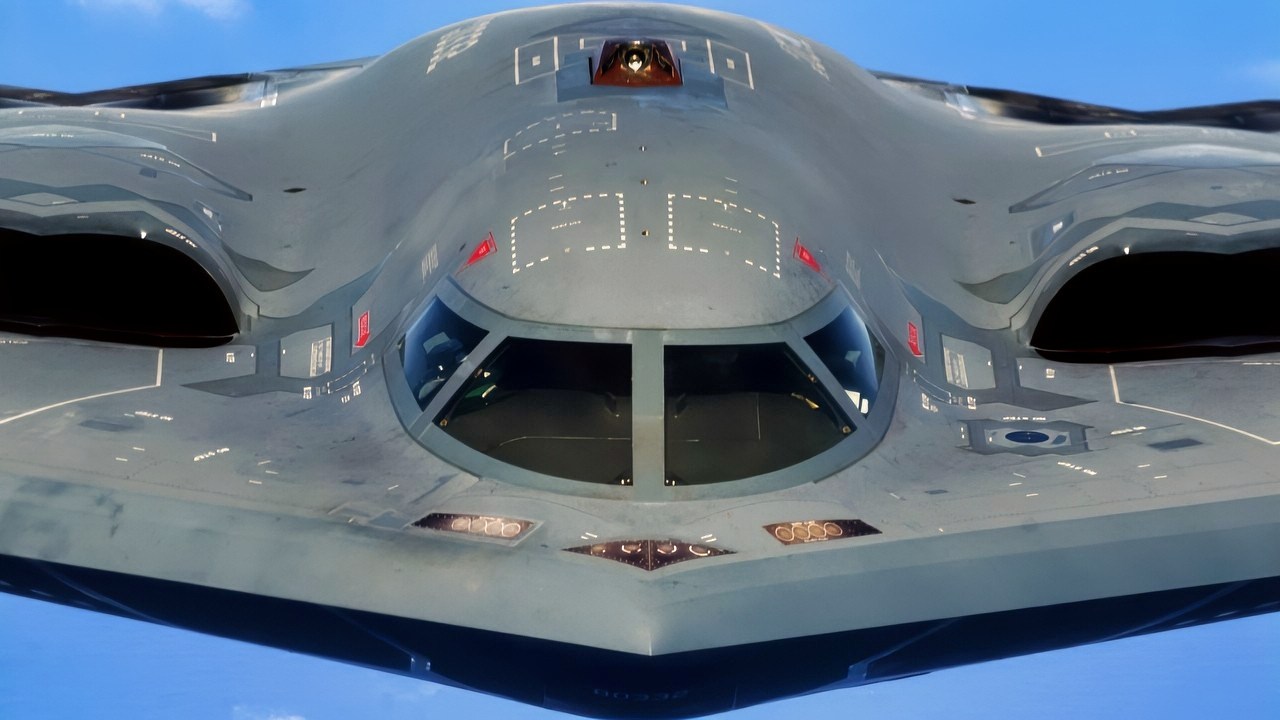
B-2 Spirit Stealth Bomber Flying. Image Credit: Creative Commons.
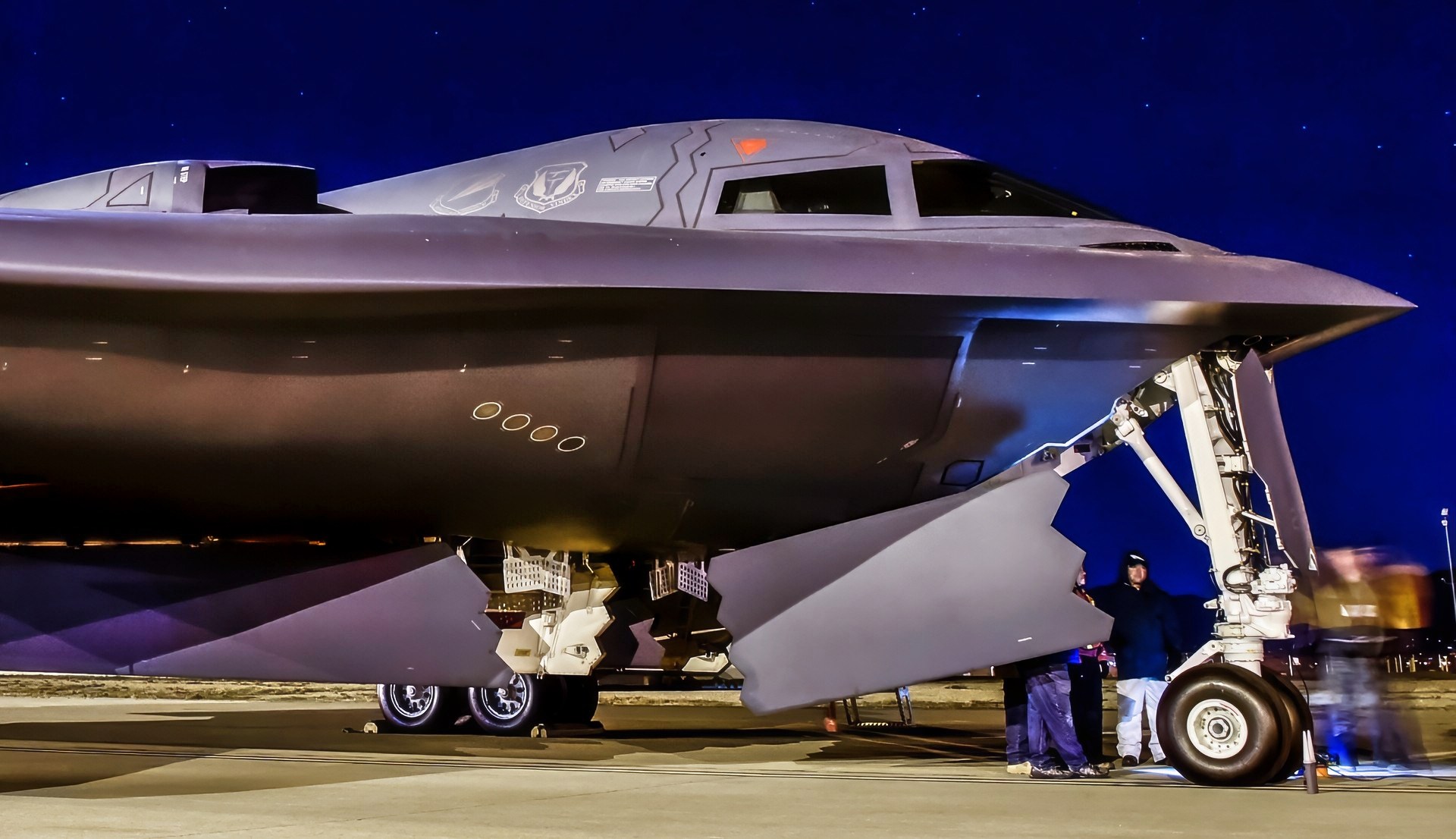
B-2 Spirit Stealth Bomber on Runway. Image Credit: Creative Commons.
As a brief aside, let us first detail what Pickaxe Mountain is. For starters, “Pickaxe Mountain” is the nickname given to an underground nuclear-related complex excavated into Kūh-e Kolang Gaz Lā mountain that is part of Iran’s Zagros mountain range, about a mile south of the Natanz nuclear complex (and 135 miles south of Tehran).
The Pickaxe Mountain facility is one of the most surveilled nuclear sites in the world because most experts believe that the site is home to a far more survivable nuclear weapons and development infrastructure (compared to Iran’s older nuclear development facilities).
What makes the Pickaxe Mountain facility so unique is its extreme depth.
Some analyses place the facility at a depth of 330 feet beneath solid rock. In other words, the site is nearly impenetrable to most conventional weapons dropped from the air.
The mountains under which the Pickaxe facility is located are much larger than the mountains over Iran’s other major nuclear research facility, Fordow.
Iran has specifically designed Pickaxe to operate under sustained, heavy US (and Israeli) bombardment.
Nevertheless, the forty-seventh president of the United States insists that the US will strike Pickaxe from the air if Iran does not deescalate.
This highlights the uncertain effectiveness of such actions, encouraging a realistic view of potential limitations and risks.
What an American Strike Would Look Like
American forces would initiate an air assault that would open with a massive suppression of Iranian air defenses around Natanz and central Iran, making a pathway in the air for US warplanes and bombers.
These attacks on Iranian air defenses would include targeting long-range air-defense radars. The Americans would necessarily employ electronic warfare (EW) and cyber operations to disrupt the normal functions of those enemy air defenses.
US warplanes would blast any nearby command-and-control facilities along with surface-to-air missile batteries.
It is unlikely that the US would try to collapse the embedded Pickaxe Mountain facility. Instead, American forces would isolate the complex.
So, there would be strikes directed against tunnel entrances, access roads, and electrical substations. US planes would target communication nodes and any ventilation shafts.
US planes would attack construction equipment (to stall any repair effort to the facility), and they’d detonate any fuel storage.
By denying Iranian personnel and equipment access to the underground facility itself, American planners assess that the facility becomes much less useful to Iran–and the threat of an Iranian nuclear weapons breakout declines precipitously.
That’s not all.
Public reporting indicates that Pickaxe Mountain’s estimated depth exceeds the practical limits for reliably destroying deeply buried chambers with conventional air-delivered munitions alone, highlighting significant technical challenges that constrain US military effectiveness.
Plus, the really heavy ordnance–such as the GBU-57 Massive Ordnance Penetrator (MOP) is in short supply, meaning there will be a limit to how many the US Air Force could drop on Pickaxe.
Assessing the Damage
Once those initial strikes are complete, reconnaissance assets would attempt to assess the success of the US strikes.
Although it’d be a moot mission because underground damage would be very difficult to observe directly, meaning outside indicators would become the primary measure of success.
Then again, that’s not the best pathway forward, seeing as last year’s airstrikes on Iran’s suspected nuclear weapons facilities apparently did not end the threat, since we’re still talking about it more than a year later.
Why assume that similar strikes on an even more hardened facility will work when the US has fewer of these key precision-guided munitions at its disposal?
The Real Military Objective
Anyway, there’s some logic behind targeting this facility. It is a newer facility, and the Institute for Science and International Security does not believe it is complete.
The presence of ongoing construction around the site has led analysts there to suspect that now might be the best time to strike, since the site may not be fully operational.
The most likely US military objectives in hitting Pickaxe Mountain would likely be to prevent the site from becoming operational, deny Iran a secure underground location for sensitive nuclear activities, and force any future reconstruction to occur under continuous surveillance and the threat of additional strikes.
Geography May Prove Stronger Than Airpower
At the same time, it is important to understand that the US’s success in ending the purported threat posed by hardened facilities like these is, at best, mixed.
All this talk about hitting Pickaxe might make the US leadership feel like it’s getting a lot of bang for its buck.
In reality, though, it is as unlikely to effectively destroy the facility in question as last year’s airstrikes were on the other suspected Iranian nuclear sites.
Geography and logistics, more than strategy and tactics, will determine the effectiveness of this possible strike.
About the Author: Brandon J. Weichert
Brandon J. Weichert is Senior National Security Editor. He also manages The Weichert Brief on Substack. Weichert also hosts “National Security Talk” on Rumble. He is the author of four bestselling national security books, the most recent of which is A Disaster of Our Own Making: How the West Lost Ukraine (Encounter Books). Follow him via Twitter/X @WeTheBrandon.


