

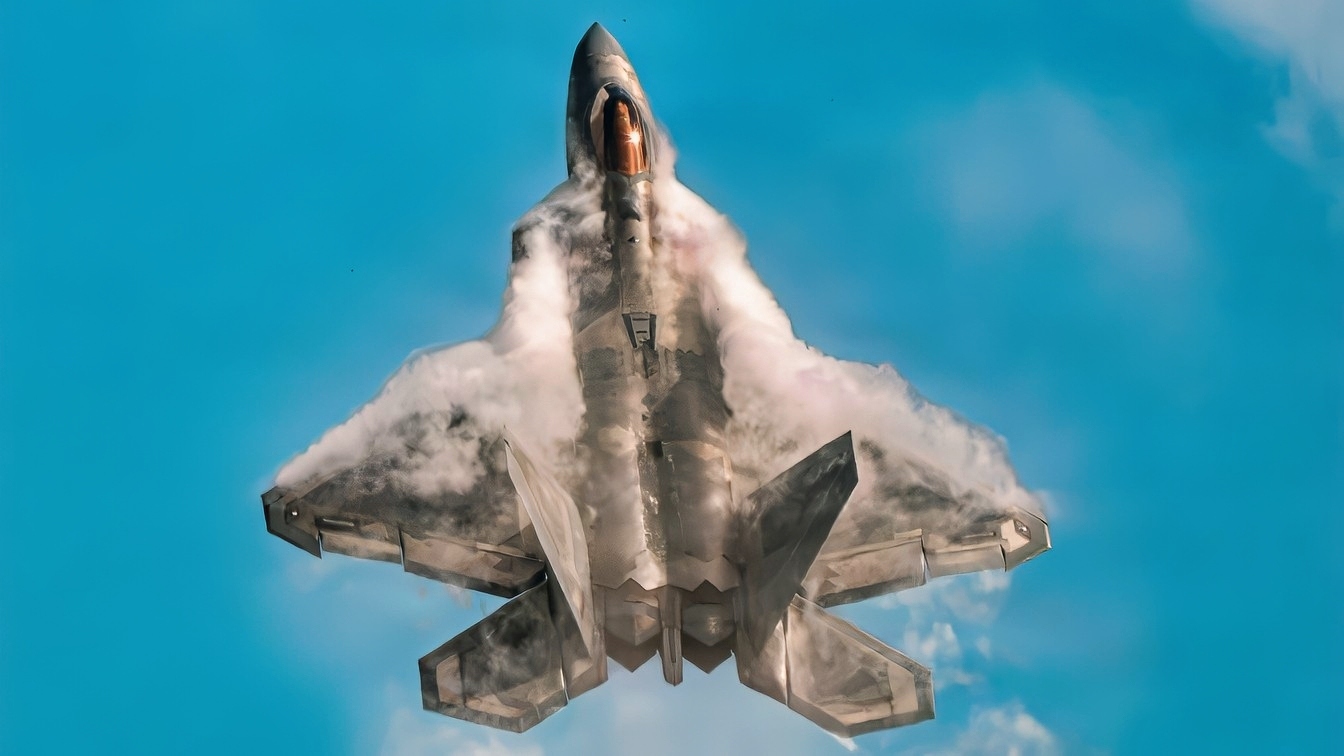
The oil market has stopped flinching. On Wednesday, crude prices slid again even as tankers were catching fire in and around the Strait of Hormuz.
The Wall Street Journal reported that industry figures pointed to a 5.3-million-barrel build in U.S. crude stockpiles, and traders took that number more seriously than the smoke on the water.
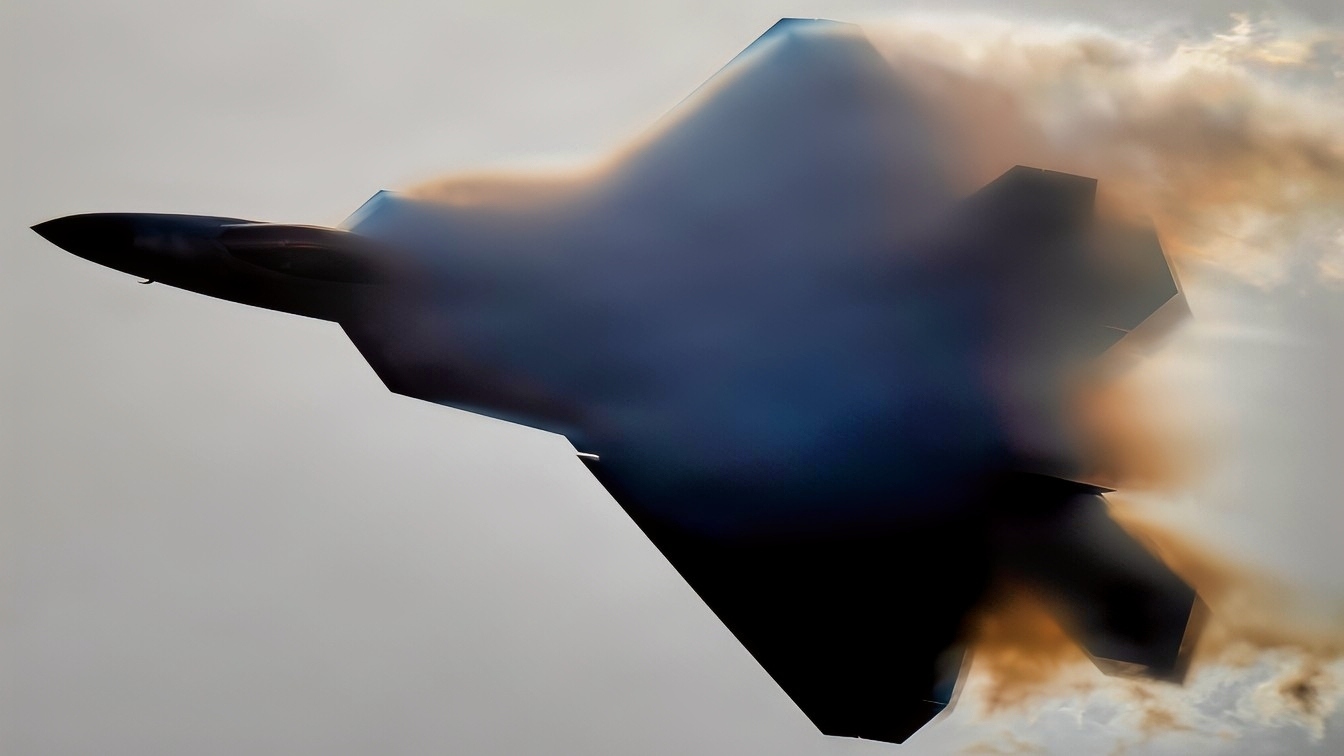
A U.S. Air Force F-22 Raptor emerges from a cloud of vapor during an aerial demonstration at Naval Air Station Meridian, Mississippi, March 27, 2026. The F-22 is designed to perform high-performance maneuvers that showcase its maneuverability and control in flight. The visible vapor forms when rapid changes in air pressure and humidity around the aircraft cause water vapor in the air to condense. (U.S. Air Force photo by Staff Sgt. Lauren Diaz)
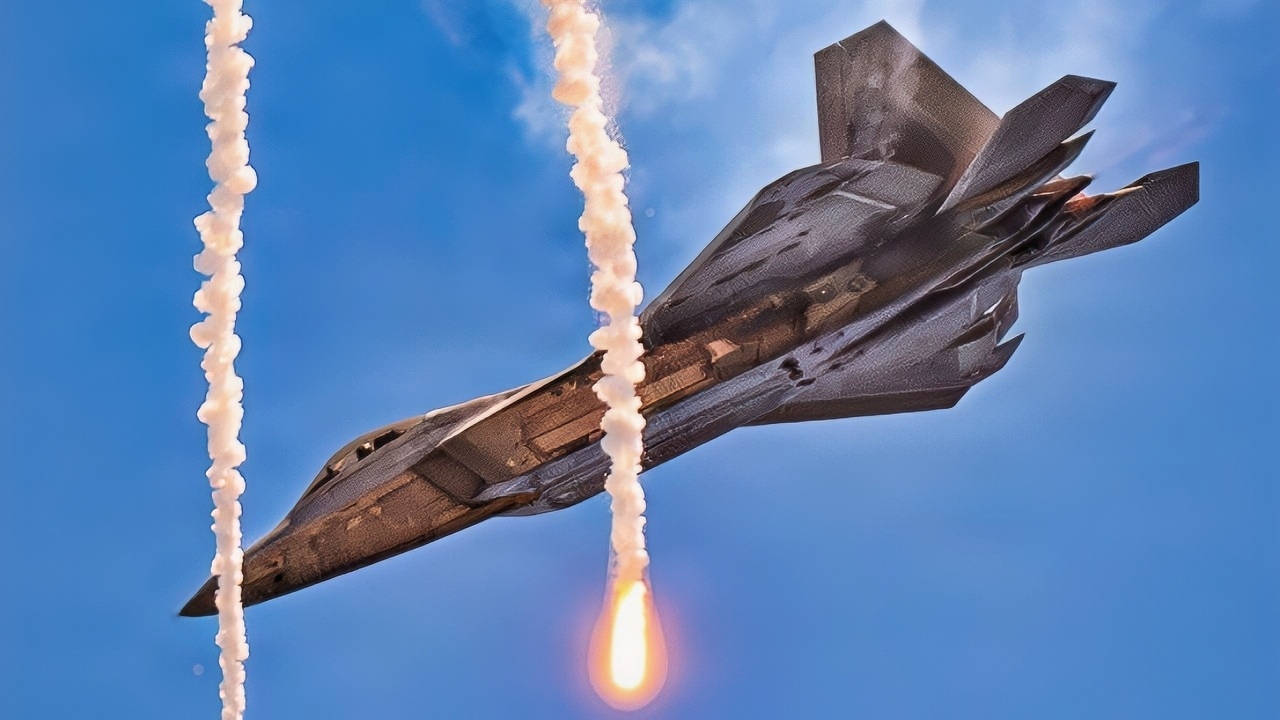
U.S. Air Force Capt. Nick “Laz” Le Tourneau, pilot and commander of the F-22 Raptor Aerial Demonstration Team, performs an aerial demonstration at Air Dot Show Tour Fort Lauderdale, Florida, May 9, 2026. Capt. Le Tourneau showcased the unmatched capabilities of the F-22 by performing a series of combat maneuvers. (U.S. Air Force photo by Staff Sgt. Mary Bowers)
Brent crude futures fell $1.28, or 1.4 percent, to $91.86 a barrel early in the day, while West Texas Intermediate dropped $1.85, or 2.2 percent, to $84.16.
For anyone who has watched this conflict since the shooting started in late February, that should feel strange.
Earlier this year, a drone strike on a single tanker would send Brent through the roof.
It did. Brent traded above $116 at one point during the conflict. Today it sits roughly 16 percent below where it was a month ago.
However, it is still more than 40 percent above where it was a year ago. Keep that number in mind. We’ll come back to it.
The Barrels Are Piling Up
The numbers from the American Petroleum Institute for the week ending November 13 weren’t subtle.
Crude stocks rose 5.28 million barrels. Gasoline jumped 5.12 million barrels.
Distillates added another 351,000. The government’s official count from the Energy Information Administration was due later Wednesday, but the market didn’t wait.
The build is concentrated where you’d expect. Crude is backing up on the Gulf Coast, and June Goh, a senior analyst at Sparta Commodities, told Reuters that WTI arbitrage trades to Asia and Northwest Europe have been shut.
In plain English, American oil has fewer places to go right now, so it’s sitting in tanks in Texas and Louisiana. That’s why WTI fell harder than Brent, and why the spread between the two hit its widest point in more than two weeks.
There’s context here that gets lost in the headlines.
At the end of October, U.S. crude inventories stood at about 410 million barrels, the lowest for that time of year since 2014, according to the EIA.
American refiners had been running hard for months to cover for lost Persian Gulf supply.
What we’re seeing is a country refilling a tank that had been run close to empty. However, traders care more about direction than level, and the direction is up.
The Strait Is Still A Dangerous Place
None of that means the Gulf has gotten quiet.
It hasn’t. On Monday, two tankers were reportedly hit in the Strait of Hormuz, both suffering engine-room fires, with one left disabled. That followed a Sunday attack on a tanker heading east through the Arabian Gulf toward the strait.
Iran’s Revolutionary Guard claimed two more vessels struck mines, including a VLCC it says sank. One should always take the IRGC’s battle damage claims with a large grain of salt. Still, by one count, at least 26 vessels have been struck since October 1.
The escalation goes well beyond merchant shipping.
On Tuesday, Iranian drones went after a U.S. military radar system in Bahrain, home of the Navy’s Fifth Fleet, and U.S. forces answered with strikes on a missile launch site on Iran’s Qeshm Island.
An LPG tanker was hit off Oman, and its crew evacuated.
In Yemen, the Houthis claimed they launched five drones at two pumping stations on Saudi Arabia’s East-West pipeline, the line Riyadh has been using to move crude to the Red Sea port of Yanbu and bypass Hormuz entirely.
From a military standpoint, what jumps out is how the IRGC keeps evolving its tactics. In late October, a small boat attached explosives directly to a tanker’s hull, a change from the drones, missiles, and small-craft fire it had relied on up to that point.
Add mines to the mix,x and you have a layered, cheap, deniable campaign. A navy can blunt that. It can’t fully stop it in a waterway that narrow.
Some people underestimate how hard it is to keep a strait clear under fire.
Nine months in, that hasn’t changed.
So Why Isn’t the Market Panicking?
Because the oil is finding its way around the problem.
Iraq has restarted the Kirkuk-Fishkhabour pipeline to Turkey at about 120,000 barrels per day, targeting 500,000. Saudi crude is moving west through the East-West line.
Gulf producers have been offering steep discounts to offset sky-high freight and war-risk insurance costs. Meanwhile, more forecasters see a global supply surplus building as Middle East exports recover.
Vandana Hari, founder and CEO of Vanda Insights, put it well. Crude, she said, is wedged between “a persistent geopolitical risk premium from tanker attacks” and a market that keeps hearing the word surplus.
Hopes for a deal between Washington and Tehran, with Oman and Qatar mediating, have taken more air out of prices.
That’s the trade in a nutshell. The attacks set the floor. The barrels set the ceiling.
The Price At The Pump Is Still High
While prices at the gas pump are dropping, that may be temporary.
LSEG analysts said bluntly that normalizing flows through Hormuz still isn’t possible under current conditions. Every alternative route the market is leaning on is itself a target.
The Houthis just proved that with the East-West pipeline. Earlier this month, Commerzbank’s Barbara Lambrecht warned that the risk of renewed escalation is by no means off the table, since the attacks in the strait have continued unabated.
There’s another wrinkle. U.S. shale producers got burned on hedges this year, and only about 6 to 7 percent of their 2027 production is hedged, the lowest in years. That leaves drillers exposed if prices crater. It also means the domestic production helping refill American tanks could get pulled back fast if the market overcorrects.
Currently, it is arguable that the market is reading the barrels correctly and the risk poorly. A 5-million-barrel weekly build is real. So is one well-placed mine in a shipping lane only a couple of miles wide.

F/A-18 Hornets and an F-22 Raptor fly in formation during the HUGE 1 flyover practice over the National Mall as part of the America 250 celebration in Washington, D.C., July 3, 2026. The formation showcased current U.S. military airpower during the nation’s 250th anniversary celebration. The flyover highlighted the joint capabilities of America’s armed forces in recognition of Independence Day. (U.S. Air Force photo by Staff Sgt. Lauren Diaz)
Remember that 40 percent number from a year ago? That’s the war premium the market still hasn’t priced out. It’s smaller than it was in the spring. It isn’t gone.
The tankers are still burning. The market just learned to read the inventory report first.
U.S. crude oil prices continued to fall on November 18, 2026, with NYMEX crude trading around 81.69–$ 81.78 per barrel (down roughly 3.4 percent–3.5 percent from the prior close of $84.65).
About the Author: Steve Balestrieri
Steve Balestrieri is a National Security Columnist. He served as a US Army Special Forces NCO and Warrant Officer. In addition to writing on defense, he covers the NFL for PatsFans.com and is a member of the Pro Football Writers of America (PFWA). His work was regularly featured in many military publications.


