
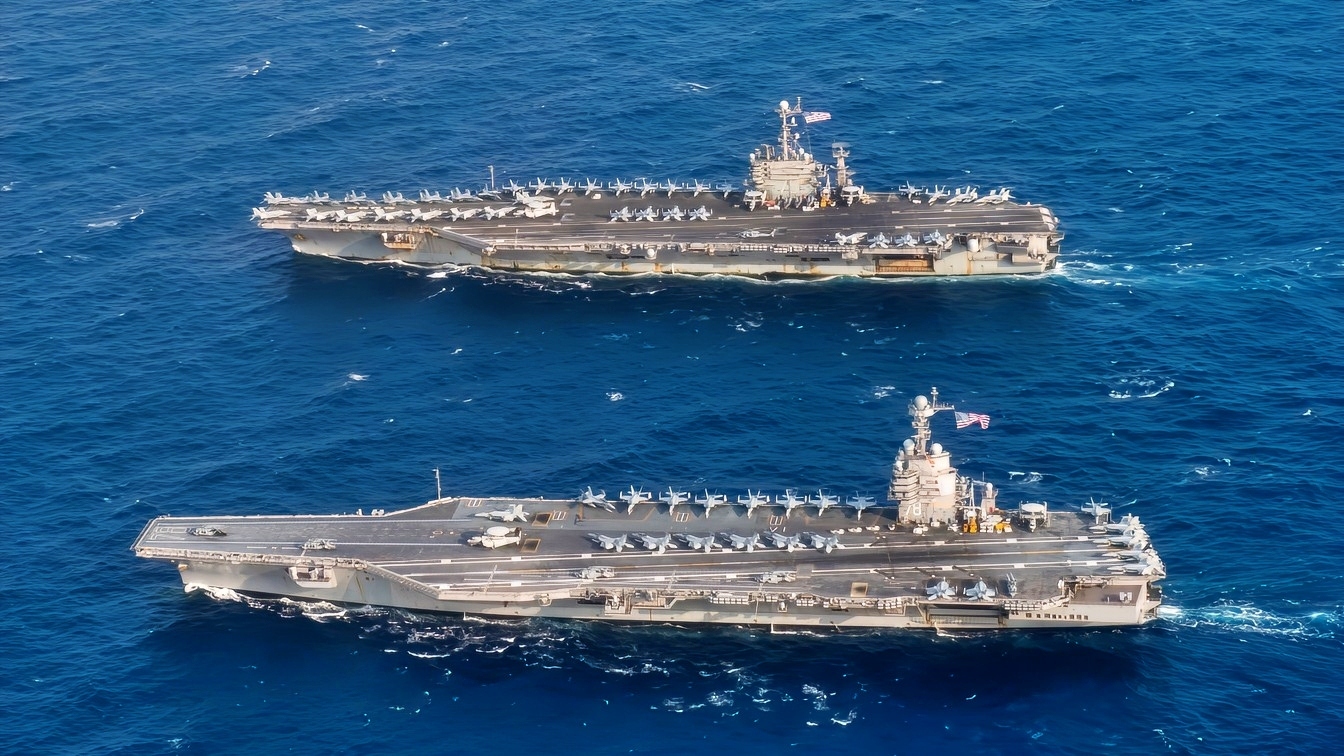
Reliance on the Strait of Hormuz could shrink in the coming years as a result of the war with Iran.
The international shipping lane has been severely disrupted since the war began at the end of February, with Iran’s Islamic Revolutionary Guard Corps (IRGC) threatening commercial shipping that attempts to sail through.

F-22 Raptor Elephant Walk. Image Credit: Creative Commons.
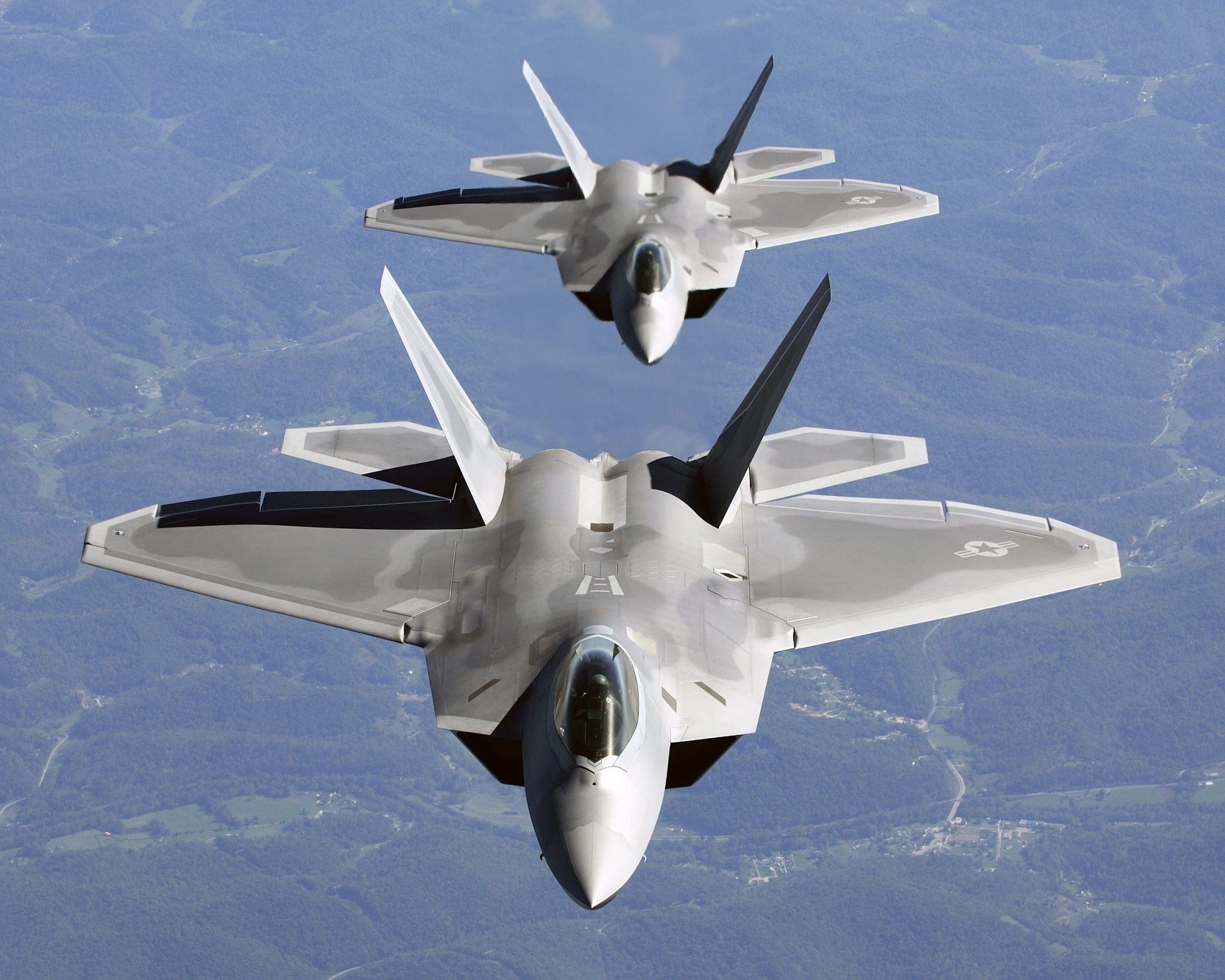
Lt. Col. James Hecker (front) and Lt. Col. Evan Dertein line up their F/A-22 Raptor aircraft behind a KC-10 Extender to refuel while en route to Hill Air Force Base, Utah. Colonel Hecker commands the first operational Raptor squadron — the 27th Fighter Squadron at Langley Air Force Base, Va. The unit went to Hill for operation Combat Hammer, the squadron’s first deployment, Oct. 15. The deployment has a twofold goal: complete a deployment and to generate a combat-effective sortie rate away from home. [U.S. Air Force photo by TSgt Ben Bloker]
Return to Pre-War Hormuz Shipping Unlikely
Before the conflict began, approximately 20 million barrels of oil per day passed through the Strait of Hormuz. However, attacks from the IRGC have dramatically reduced that amount, with exports standing at 48% of pre-war levels in the week to Wednesday, November 11, according to data from Kpler.
In the guest essay in The Economist’s ‘The World Ahead 2027’ published on Wednesday, November 18, International Energy Agency (IEA) Executive Director Fatih Birol warned that confidence in the Strait of Hormuz as a reliable export route has been “crushed” by the Iran war.
“I don’t see any credible pathway back to the situation that existed in February 2026,” Birol wrote. “Shipping flows through the Strait of Hormuz have been blocked once, with a hugely disruptive effect on oil and gas markets. It can happen again. Confidence in the Strait as a safe and reliable corridor for energy and other goods has been crushed.”
Gulf Producers Plan a Costly Pipeline Expansion
Birol added that “perceptions of risk” around the Strait of Hormuz have “changed for good,” pointing to new routes such as pipelines used by Saudi Arabia and the United Arab Emirates.
Both nations have oil pipelines that allow their exports to bypass the Strait of Hormuz.
The UAE’s pipeline runs from Habshan to Fujairah, a port beyond the strait that leads into the Indian Ocean, while the Saudi East-West pipeline extends to the port of Yanbu on the Kingdom’s west coast.
These alternatives have become central to regional energy planning, with an IEA assessment from Tuesday, November 3, describing proposed expansions and additional connections as producers sought outlets less exposed to disruption in Hormuz.
Gulf countries have roughly 7 million barrels a day of additional pipeline capacity under construction or consideration. Completing those projects would require about $40 billion and add approximately $2 to the cost of each barrel exported from the Middle East, according to IEA estimates.
Oil Recovery Masks Lasting Economic Damage
The IEA expects returning Middle Eastern supplies to push the oil market toward oversupply, with a projected surplus of 1.7 million barrels a day this quarter widening to about 3.8 million next year.
Yet the adjustment has imposed substantial costs.
Between March and October, global oil demand averaged roughly 3.7 million barrels a day below year-earlier levels as high prices, shortages, government measures and weaker economic activity reduced consumption.
In its November oil market report, the IEA detailed how vulnerability remains despite an improved outlook. Observed inventories increased in October, but stocks held on land continued declining and remained at their lowest level since at least 2016.
Emergency reserves can cushion shortages.
IEA members generally must maintain stocks equivalent to at least 90 days of net imports. However, the agency stresses that emergency releases address short-term disruption rather than long-term supply management.
Domestic Energy Gains New Strategic Importance
Emergency oil stocks, according to Birol in his essay for The Economist, were used after the war began to soften economic shocks.
As a result, countries in Southeast Asia such as the Philippines and Thailand are looking to “build up similar buffers” to prevent a repeat of the economic disruption seen at the start of the Iran war.
The IEA executive director predicted that the disruption in the Strait of Hormuz would accelerate the shift toward domestic energy sources, particularly cost-effective solar and wind power.
Renewed interest in nuclear power could also be on the horizon, but it would require stronger grids and battery storage.
“Uncertainty is now the rule, not the exception, so energy decision-makers need to be wary of creating new dependencies, even as they seek to address old ones,” Birol added.
About the Author: Shay Bottomley
Shay Bottomley is a British journalist. He has written for the Western Standard, Business Insider, Maidenhead Advertiser, Slough Express, Windsor Express, Berkshire Live and Southend Echo.