


Article Summary – As part of Force Design 2030, the Marine Corps is reshaping not just its weapons but its people—opening a high-stakes, high-pay intelligence track: MOS 0211, counterintelligence and human intelligence specialist.
-Marines who laterally move into 0211 will hunt spies, track terror networks, and work with CIA-style “three-letter” agencies and Marine Raiders in denied areas.
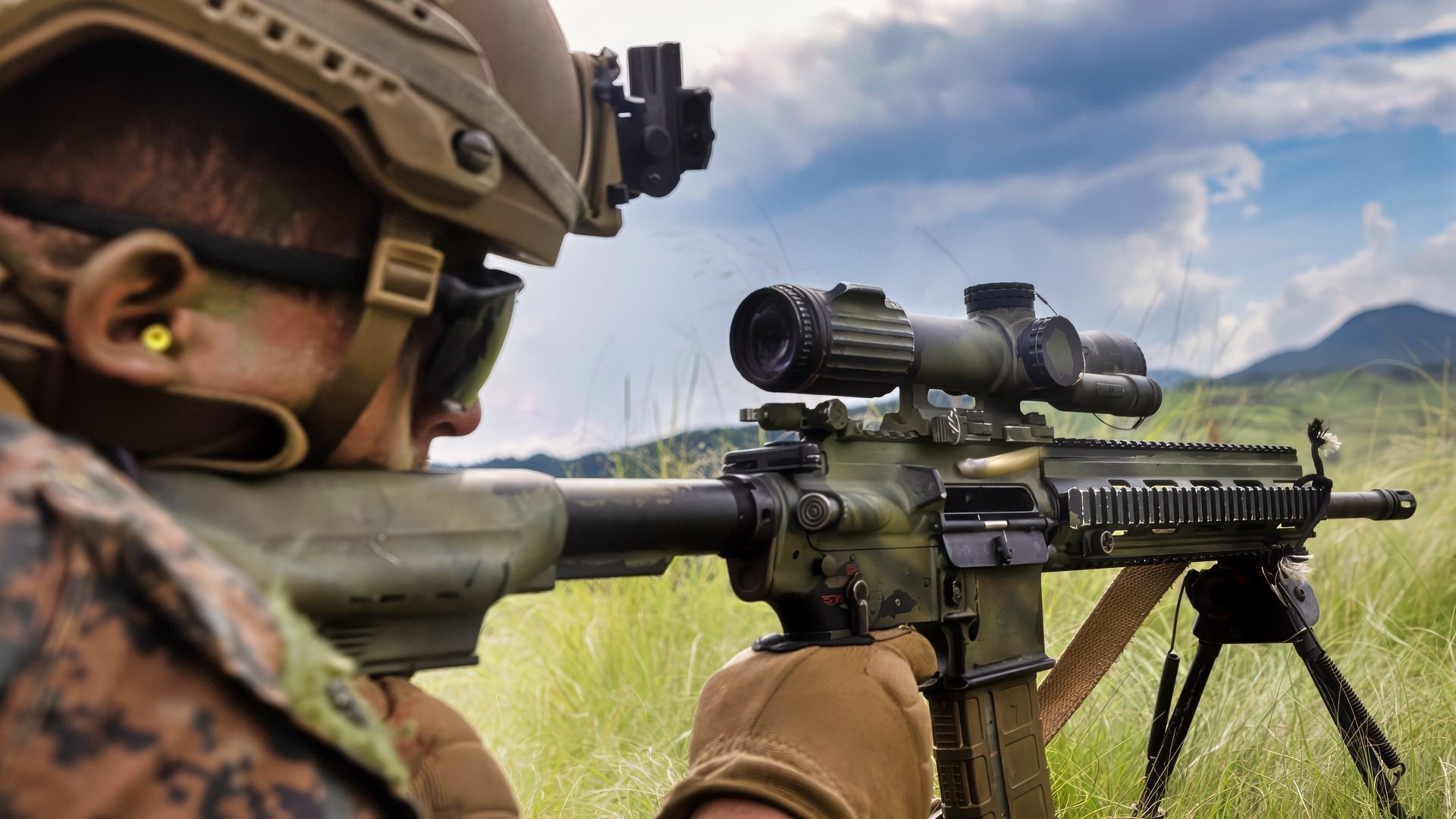
U.S. Marine Corps Cpl. Wyatt Mccullough, a rifleman with 12th Littoral Combat Team, 12th Marine Littoral Regiment, 3rd Marine Division, fires the M27 Infantry Automatic Rifle during Resolute Dragon 25 at Hijudai Maneuver Area, Oita Prefecture, Japan, Sept. 15, 2025. Resolute Dragon is an annual bilateral exercise in Japan that strengthens the command, control, and multi-domain maneuver capabilities of U.S. Marines in III Marine Expeditionary Force and Japan Self-Defense Force personnel, with a focus on controlling and defending key maritime terrain. Mccullough is a native of Texas. (U.S. Marine Corps photo by Lance Cpl. Rodney Frye)
-The bar is high: top performers only, with spotless ethics, language aptitude, and TS clearance potential. The incentives are real, too—up to $105,000 in bonuses for a six-year commitment.
-In a world of Chinese, Russian, Iranian, and North Korean espionage, the Corps wants its own James Bonds.
The US Marine Corps Is Looking for the Next’ James Bond’
The US Marine Corps, as part of the Force Design 2030 strategy, has transformed the way it will respond to threats in the Indo-Pacific. The Marines have jettisoned their M1A1 Abrams tanks, stepped up combined exercises with allies, and returned to their amphibious-warfare roots.
More Than a Basic ‘Rifleman’
This also means transforming personnel specialties. The Marines, who are responsible for their own aviation assets and logistics, have long had an affinity for traditional views that require uncommon valor. They believe all Marines are “rifleman” first. This shows a strong affinity for infantry personnel.
Indeed, earning the Marine infantry military occupational specialty (MOS) is one of the most difficult designations in the entire military.
Intelligence ‘Spooks’ In the Ranks
Now, the Marines are looking at other MOS jobs to attract a new generation of both smart and lethal personnel. The Marines are offering individuals the option to attain the MOS for counterintelligence and human intelligence specialist.

U.S. Marine from the 24th Marine Expeditionary Unit (MEU) Special Operations Capable (SOC) Maritime Special Purpose Force (MSPF) wears a camouflaging cobra hood during Baltic Operations 2024 (BALTOPS 24) in Ustka, Poland June 14, 2024. BALTOPS 24 is the premier maritime-focused military exercise in the Baltic Region. The exercise, led by U.S. Naval Forces Europe-Africa, and executed by Naval Striking and Support Forces NATO, provides a unique training opportunity to strengthen combined response capabilities critical to preserving freedom of navigation and security in the Baltic Sea. (U.S. Navy photo by Mass Communication Specialist 3rd Class Sisi Lopez Barahona)
This may be an exciting career path for Marines who want to practice the dark arts of espionage while remaining part of the Leatherneck ethos. This intelligence track will be called PMOS 0211, a “critical specialty” that Marines can laterally transfer to.
Jobs for the 2030s and Beyond
Personnel in this field work in garrison and in deployed environments and are tasked with identifying threats from foreign intelligence organizations or individuals involved in terrorism, espionage, sabotage, or subversion.’ Their activities include things like interrogation, debriefing, screening, and liaison,” according to the Corps, as noted by Defense Scoop.
To laterally transfer, Marines must already be top performers in their prior jobs. They must be competent and able to think on their feet. Existing proficiency in a foreign language would be a plus. They must be psychologically qualified and intellectually mature with the ability to attain a Top Secret security clearance. These Marines should also have a high level of moral character and exemplary ethics.
Numerous Use Cases
Marines in the human intelligence and counterintelligence MOS may be assigned to joint duty with other commands. They will be highly valued personnel for the modern battlefield. There may be temporary duty with “three-letter” agencies such as the CIA, DIA, and NSA.
HUMINT and counter-intel Marines will also deploy with Marine Air-Ground Task Force units to provide additional intelligence data to analysts tracking enemy movement and activity, enabling seamless interaction with traditional Marine occupational specialties.
This MOS would also be an asset to special operations forces (SOF), including the Marine Raiders. They may serve in forward positions to gather reconnaissance data, supplementing SOF missions to assist Raiders. They will learn advanced vehicle operation skills and cultural training to blend in better.
The new MOS would allow the intelligence specialists to receive airborne training and learn to operate in denied areas where the United States has no diplomatic presence.
These Are Some High-Paying Jobs
There are ample incentives to serve in the field. Marines approved for a lateral move into the 0211 MOS may be eligible for a substantial selective retention bonus (SRB).
For example, a qualified Active Component Sergeant who laterally moves into the 0211 MOS and agrees to serve 72 months will qualify for both a $65,000 MOS-specific bonus and the $40,000 kicker for a total of $105,000. Upon successful completion of MOS training and subsequent award of 0211 PMOS, bonus payment will be paid based upon the SRB amount authorized at the time of reenlistment,” the Marine Corps explained.
The Marines have sweetened the pot and should get many candidates to reclass their MOS. They may have initial trouble finding the proper personnel. Still, with that pay and the adventurous duty, they will eventually attract especially motivated Marines who have the rare skill sets to be intelligence operatives.
It is not clear where the Marines will be trained. They will likely first undergo language training at the Defense Language Institute Foreign Language Center. These will be critical languages such as Mandarin, Russian, Korean, Farsi, and Arabic. This instruction can take up to a year.
Then the Marines could use the U.S. Army to help train new transfers. HUMINT and CI army specialists take the Army Intelligence Development Program – Counterintelligence (AIDP-CI). This is a long and intense course that the Marines could use for the time being until they stand up their own schools. There is also a Joint Counterintelligence and HUMINT Analysis and Targeting Course.
The new Marine specialties are an exciting opportunity to develop new skills and gain experience that will help Marines transition into the 2030s. They are well-paying jobs that will transfer well into the private sector or federal government after military service is complete. With such high bonuses, personnel must agree to a long-term contract of six years or more, but this is doable for motivated Marines.
The Marines are looking toward a future that includes strategic intelligence collected at the human level and enhanced counterintelligence assets to protect the Corps from espionage within its ranks.
The Chinese, Russians, North Koreans, and Iranians are adept at pilfering U.S. information that can help adversaries grant an ever-present advantage over the Americans. The Marines are aware of this danger and are reacting well to intelligence methods and sources needed for the 2030s and beyond.
There could be some “James Bond”- style Marines in the not-so-distant future, and this will help the Corps meet its intelligence needs to deny an enemy an advantage in warfare.
About the Author: Brent M. Eastwood
Author of now over 3,000 articles on defense issues, Brent M. Eastwood, PhD is the author of Don’t Turn Your Back On the World: a Conservative Foreign Policy and Humans, Machines, and Data: Future Trends in Warfare plus two other books. Brent was the founder and CEO of a tech firm that predicted world events using artificial intelligence. He served as a legislative fellow for US Senator Tim Scott and advised the senator on defense and foreign policy issues. He has taught at American University, George Washington University, and George Mason University. Brent is a former US Army Infantry officer. He can be followed on X @BMEastwood.
More Military
Taiwan’s F-16V Fighter Was Built to Fight China’s Air Force
5 Places World War III Could Break Out in 2026
The X-37B Space Plane Is Breaking All the Rules and Makes Chinese Generals Sweat


