


Key Points and Summary – The Leclerc main battle tank often gets overlooked compared to other NATO tanks like the M1 Abrams and the Leopard 2.
-Developed by GIAT in France, the Leclerc is France’s primary tank and has served in the French Army since the 90s.
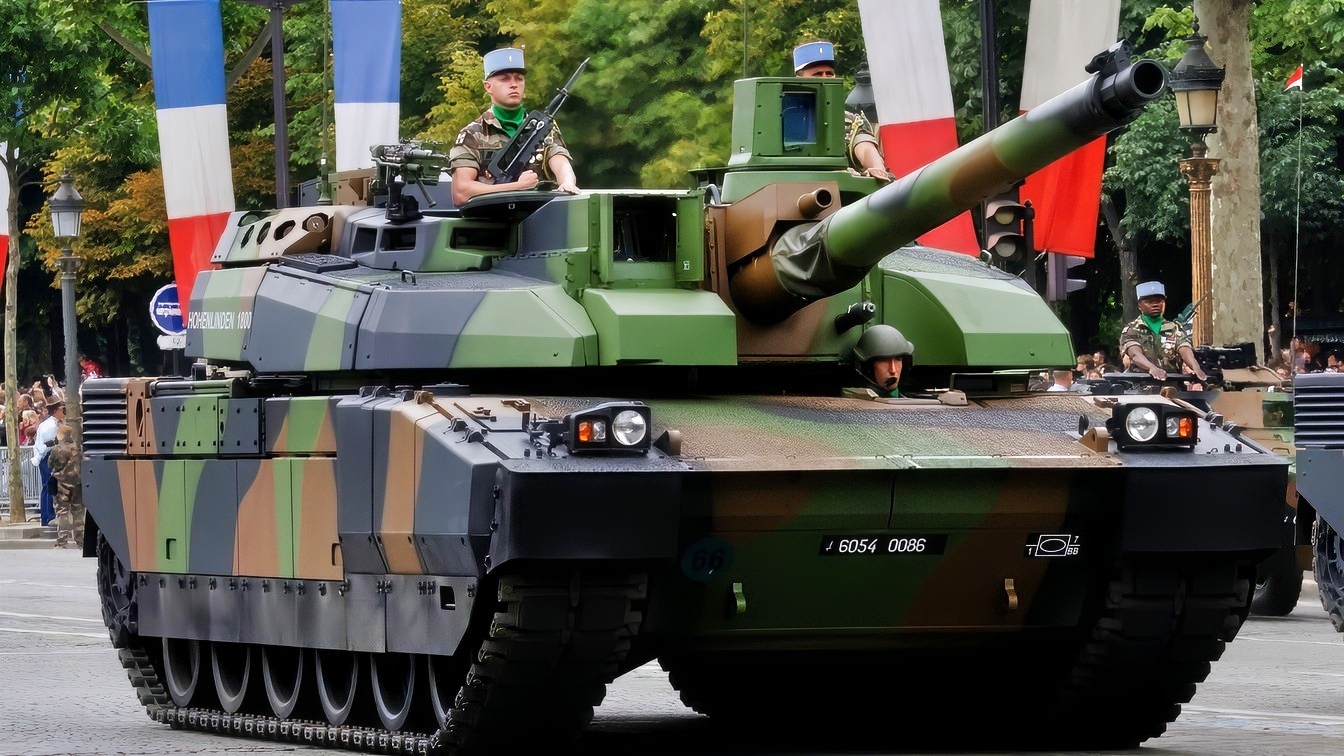
Leclerc Main Battle Tank in Parade. Image Credit: Creative Commons.
-Despite having little to no combat experience, the Leclerc features several distinctive characteristics that set it apart from its NATO counterparts.
-The newest version of the tank, the Leclerc XLR, incorporates state-of-the-art battle management systems, fire control systems, and other modular options to future-proof the tank.
Development and Design of the Leclerc Tank
Development on the Leclerc began in the 1970s. At the time, Franc relied on the AMX-30 which lacked the armor necessary to contemporary warfare.
Initial attempts at a joint Franco-German tank program failed (as they often do), prompting France to pursue an indigenous solution. Development began in the early 1980s under GIAT Industries (now Nexter Systems), with prototypes appearing in 1989.
Full-scale production commenced in 1990, and the Leclerc entered service in 1992.
The design philosophy emphasized mobility, firepower, and advanced electronics, setting the Leclerc apart from its contemporaries.
France aimed for a tank that could operate effectively in high-intensity conflicts while remaining logistically efficient and adaptable for future upgrades.
Unlike many tanks that prioritize heavy armor at the expense of speed, the Leclerc sought a balance between protection and agility.
This approach resulted in an MBT that was relatively lighter than the American M1 Abrams or British Challenger 2, yet it retained formidable survivability through advanced composite armor and modular systems.
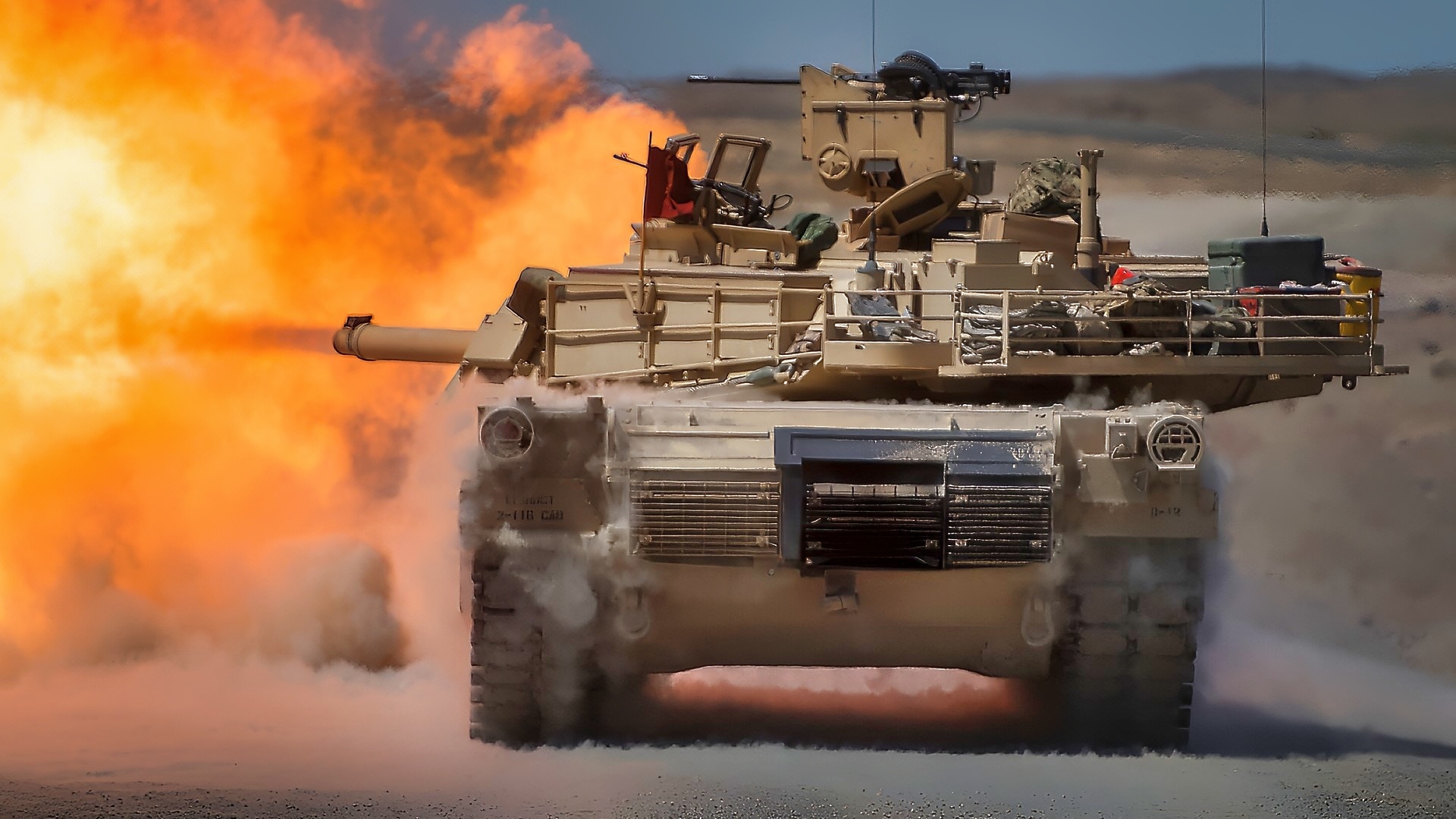
M1 Abrams Tank Firing In Test Run. Image Credit: Creative Commons.
One of its most unique features is the reduced crew size; thanks to an autoloader system, the Leclerc operates with only three crew members rather than the traditional four.
This reduces manpower requirements and internal space.
The tank was also among the first to feature a fully integrated battlefield management system, enabling real-time data sharing and superior situational awareness. Furthermore, its modular design allows armor and subsystems to be replaced or upgraded easily, ensuring long-term adaptability.
NATO’s Lightest Tank
The Leclerc weighs between 54.5 and 57.4 tonnes depending on the variant. It measures 9.87 meters in length with the gun forward, 3.60 meters in width, and 2.53 meters in height.
Its main armament is the GIAT CN120-26/52 120 mm smoothbore gun equipped with a bustle autoloader that holds 22 rounds in its magazine, with an additional 18 rounds stored in the hull. Secondary armament includes a 12.7 mm coaxial machine gun and a 7.62 mm roof-mounted machine gun.
In terms of protection, the Leclerc employs modular composite armor, which can include titanium and semi-reactive layers in later variants.
This modularity allows damaged sections to be replaced quickly and enables upgrades to counter evolving threats. Modernized versions incorporate active protection systems, electronic countermeasures, and improved mine resistance.

U.S. Army soldiers assigned to Bravo ‘Bad Bet’ Company, 2nd Battalion, 12th Cavalry Regiment, 1st Armored Brigade Combat Team, 1st Cavalry Division, conduct Table V exercises with the M1A2 Abrams Tank at Bemowo Piskie Training Area, Poland, July 12, 2024. The purpose of the training is to ensure the Abrams were fully functional and fit to fight. The 1st Cavalry Division’s mission is to engage in multinational training and exercises across the continent, strengthening interoperability with NATO allies and regional security partners, which provides competent and ready forces to V Corps, America’s forward-deployed corps in Europe. (U.S. Army photo by Spc. Kali Ecton)
The 120 mm smoothbore gun is NATO-standard and capable of firing a wide range of ammunition, including APFSDS and HEAT rounds.
The autoloader enables a high rate of fire of up to 12 rounds per minute and reducing crew fatigue. This system also contributes to the tank’s compact design and lower silhouette, improving survivability.
Powered by its 1,500 hp diesel engine and featuring hydropneumatic suspension, the Leclerc boasts exceptional mobility.
The tank is powered by a V8X SACM diesel engine producing 1,500 horsepower, giving it an impressive power-to-weight ratio of about 27 hp per tonne. It uses hydropneumatic suspension, allowing excellent cross-country mobility.
On roads, the Leclerc can reach speeds of up to 71 km/h and maintain 55 km/h off-road, with an operational range of 550 to 650 kilometers when equipped with external fuel tanks.
A Great but Unproven Platform
The Leclerc is an excellent platform overall, but it has yet to be tested in any real combat scenarios.
Unlike other NATO tanks, which have seen action in the Middle East, Ukraine, or both, the Leclerc has never participated in high-intensity engagements.
It has participated in peacekeeping missions in Kosovo and Lebanon and has been deployed in the Middle East, notably by the UAE during the Yemeni Civil War.
In these deployments, the tank proved reliable, but it remains largely untested in large-scale, high-intensity warfare.
Several variants of the Leclerc have been produced. The initial Series 1 and Series 2 models were followed by the SXXI, which featured enhanced armor and electronics. The current French upgrade program, known as Leclerc XLR, adds improved protection, digital systems, and compatibility with future battlefield networks.
Looking ahead, the Leclerc Evolution concept unveiled in 2024 introduces next-generation features such as the ASCALON 120 mm cannon, active protection systems, and counter-UAV capabilities.
The Leclerc’s Underappreciated Legacy
The Leclerc is often unfairly overlooked, mainly due to its lack of combat history.
The tank introduced several systems, most notably its bustle autoloader, which inspired other tanks like the Japanese Type 90 and the South Korean K2 Black Panther.

K2 Black Panther. Image Credit: Creative Commons.
The tank was also an early adopter of a digital battle management system, giving the tank an edge in networked warfare.
The biggest downside holding the Leclerc back is its high price tag at around €16 million per unit, making it more expensive than the Abrams or the Leopard 2.
With the Leclerc XLR upgrade and the Leclerc Evolution concept, France aims to keep its armored forces competitive well into the 2030s. These programs focus on active protection, network integration, and adaptability to emerging threats such as drones and precision-guided munitions.
The Leclerc remains central to European defense strategies and could influence the design of the next-generation Franco-German MBT under the MGCS (Main Ground Combat System) initiative.
About the Author: Isaac Seitz
Isaac Seitz, a Defense Columnist, graduated from Patrick Henry College’s Strategic Intelligence and National Security program. He has also studied Russian at Middlebury Language Schools and has worked as an intelligence Analyst in the private sector.
More Military


