

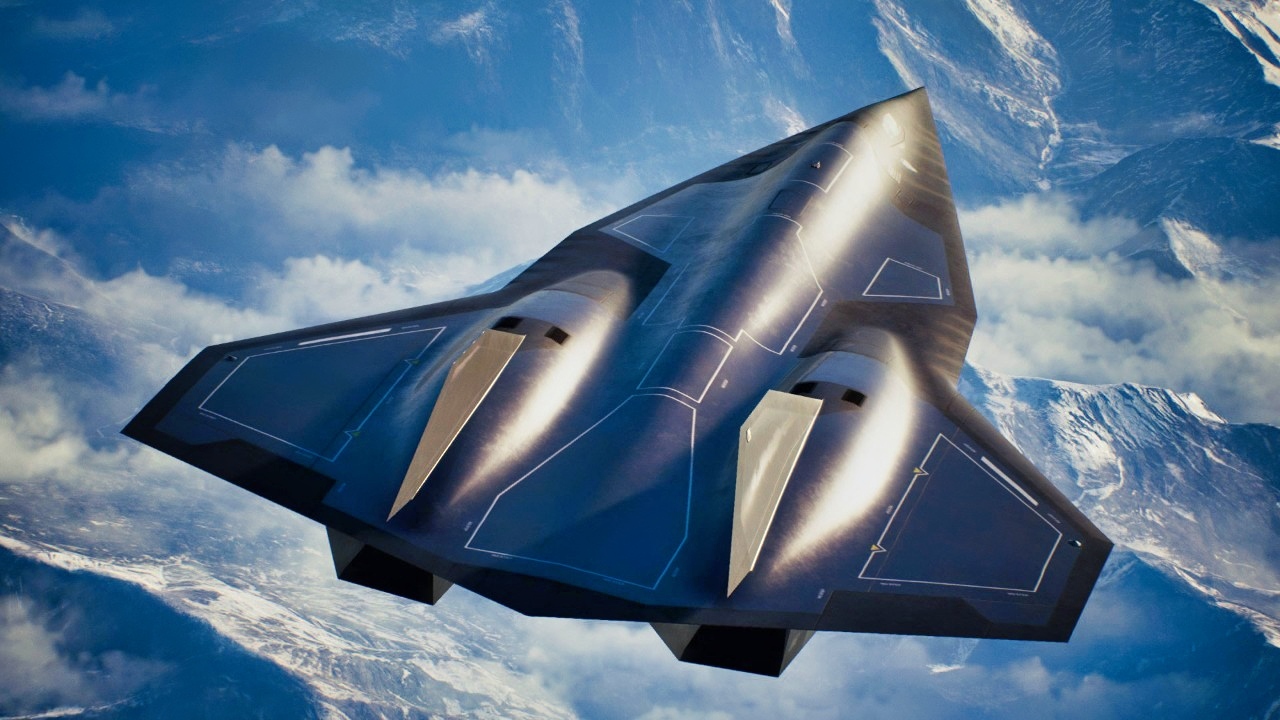
Key Points and Summary – SR-72 Could Soon Replace SR-71 As Fastest Plane Ever? Yes, the SR-71 Blackbird officially remains the fastest acknowledged crewed, air-breathing jet aircraft ever put into service, a record held since 1976 with speeds exceeding Mach 3.2.
-Developed by Lockheed’s Skunk Works in the 1960s, the strategic reconnaissance plane was decades ahead of its time.

SR-71 Blackbird. Image Credit: Creative Commons.
-Despite being retired for over 25 years, no publicly known operational aircraft has surpassed its speed.
-However, its reign may soon end. Lockheed Martin is actively developing the SR-72 “Darkstar,” a potential successor designed to reach hypersonic speeds of Mach 6+, suggesting the Blackbird’s long-held record is “Not For Long.”
The SR-72 Darkstar Could Soon Pass the SR-71 For Fastest Plane Ever
The short answer is yes, but the true answer is NFL, as in Not For Long.
Former Naval Flight Officer Luke Diaz wrote for Simple Flying that the SR-71 retains its spot as the fastest known crewed, air-breathing jet to be formally put into service.
No official data shows a higher sustained speed under normal operations. Even decades after retirement, it has not been eclipsed by any subsequently introduced aircraft.
This makes the SR-71’s performance an ongoing benchmark point for aeronautical design, even as technology has changed dramatically in the decades since its inception.
The SR-71 Was Decades Ahead Of Its Time
The SR-71 Blackbird is a fantastic aircraft. It was designed and built by Clarence “Kelly” Johnson’s Lockheed “Skunk Works” in Burbank, California. It was intended to be a long-range, high-altitude, Mach 3+ strategic reconnaissance aircraft.
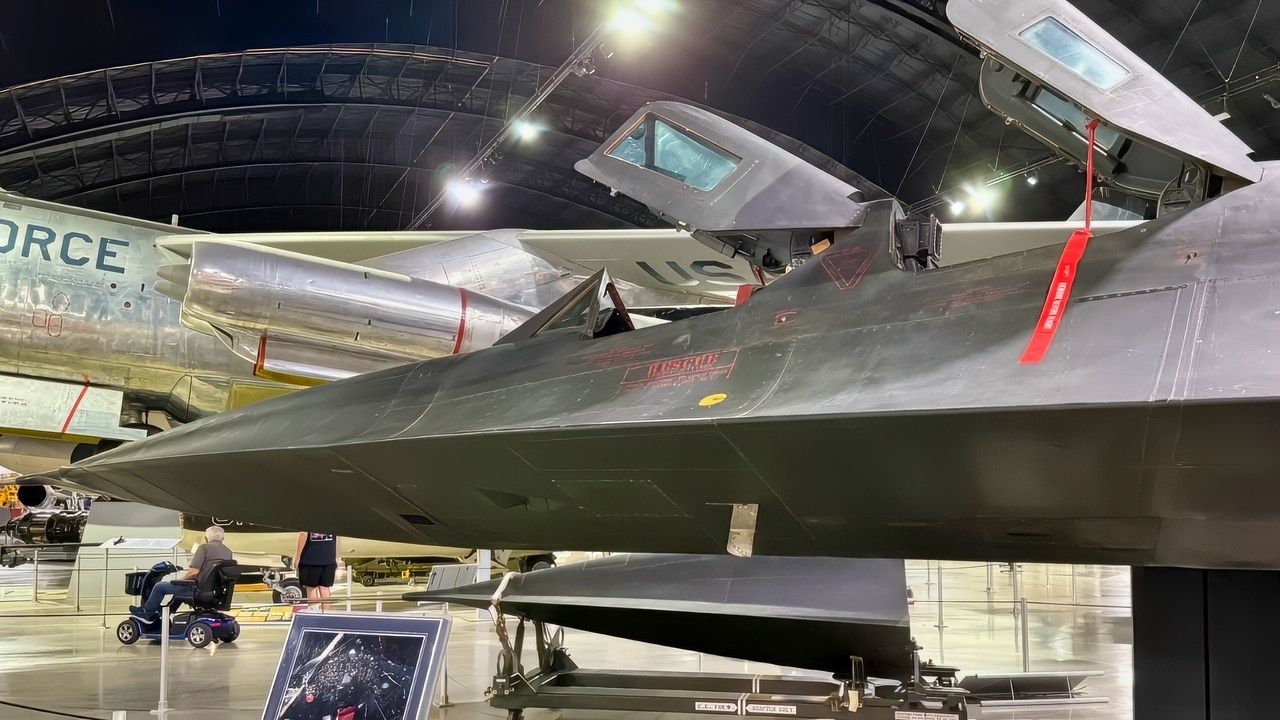
SR-71 Blackbird at USAF Museum July 2025. Image Credit: National Security Journal.
Kelly Johnson, the man behind Skunk Works, is a legend in the aircraft industry. He is akin to what John M. Browning was to arms designers.
The CIA approached Johnson about finding a replacement for the U-2 spy plane, which could fly at extreme altitudes but was slow. Johnson’s Skunk Works produced the aircraft, which was first called the YF-12. However, General Curtis LeMay, the Air Force Chief of Staff, wanted it renamed the SR-71, with the SR referring to the aircraft type as “Strategic Reconnaissance.”
A total of 32 SR-71s were built: 29 SR-71As, two SR-71Bs, and one SR-71C. Johnson designed the aircraft with the smallest cross-sectional radar section possible, one of the earliest attempts at stealth. Two Pratt and Whitney J-58 engines powered it, allowing it to reach a speed of Mach 3.2+, or about 2,200 mph. The service ceiling was 85,000 feet.
Sixty-One Years Later, The SR-71 Is Still The One
The SR-71 first flew in 1964. President Johnson had just taken office after President Kennedy was assassinated less than a year before. The “British Invasion” was in full swing, with the Beatles on the Ed Sullivan Show. The Ford Mustang and the G.I. Joe were introduced.
The SR-71 set the world record for the quickest flight between London and New York in 1974. It also became the fastest air-breathing manned aircraft in 1976. The SR-71 was retired in 1989 for political reasons, and NASA used it as a research platform until 1999. And as of 2025, it still holds many aviation records.
The Special Reconnaissance (spy) aircraft was the target of more than 4,000 missiles launched at it during its service, and was never hit. In the two-seat cockpit, one person would operate the high-resolution cameras and reconnaissance technology while the other would pilot the plane.

SR-71 Blackbird National Security Journal Image. Taken by Dr. Brent M. Eastwood on September 26, 2025.
In addition to its unique shape, the Blackbird incorporated several other stealth features. Its distinctive blue-black paint was intended to reduce heat emission and help it blend with night skies, as well as giving it its iconic nickname.
It redefined speed, as it could fly from Los Angeles to Washington in one hour and four minutes. And it flew from London to New York in one hour and 54 minutes.
And some 61 years later, the SR-71 is still the king of the crewed, air-breathing aircraft. But the reign of the king may soon be coming to an end.
Lockheed Lets The Cat Out of the Bag…Sort of:
In 2023, Lockheed posted on Twitter or “X” that set tongues to wagging.
The first, with an image of the SR-71, reads, “The SR-71 Blackbird is still the fastest acknowledged crewed air-breathing jet aircraft,” implying that there is an even faster aircraft out there.
Another tweet, posted to celebrate the success of the latest Top Gun film, featured an image of the high-speed aircraft that featured in that film. Interestingly, Lockheed Martin said, “To celebrate, we are sharing some Maverick-worthy images of real aircraft.”
SR-72 Darkstar or Son of Blackbird. Image Credit: Lockheed Martin.
Skunk Works Project – The SR-72 Son of Blackbird (SOB) or Darkstar:
Lockheed Martin’s highly secretive Skunk Works is actively developing a highly secretive aircraft, the SR-72 Darkstar. And despite going over budget by just a smidgen ($335 million), the Darkstar seems ever closer to reality.
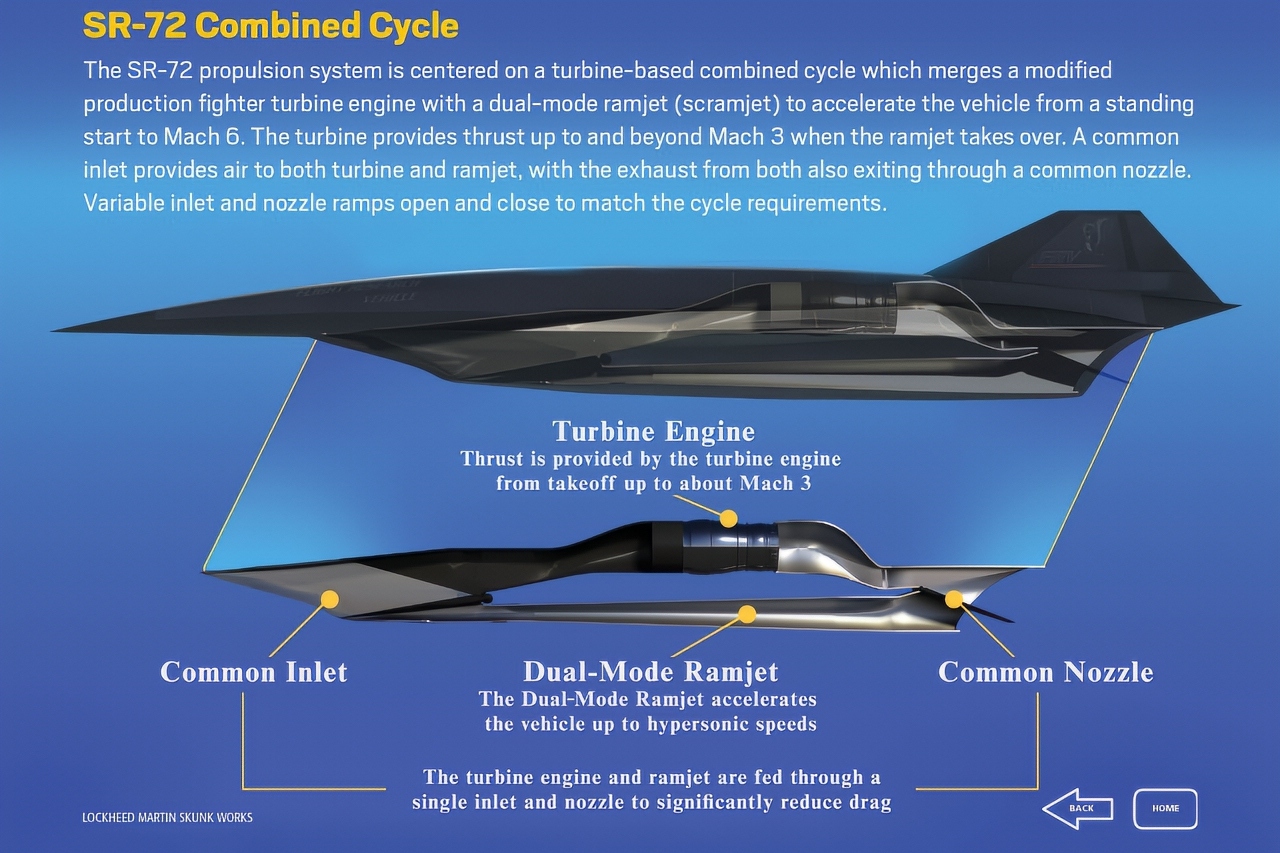
They have been working on a Mach 6+ intelligence, surveillance, reconnaissance, and strike aircraft, the SR-72. This aircraft utilizes advanced turbine-based combined cycle engines, allowing unprecedented speed and global reach within minutes.
The Darkstar is the successor to the SR-71 Blackbird, which some aviation experts call the “Son of a Blackbird, or SOB.” New production facilities at the Skunk Works have led many to believe that either production has already begun or will soon for the Darkstar. Yes, it is coming.
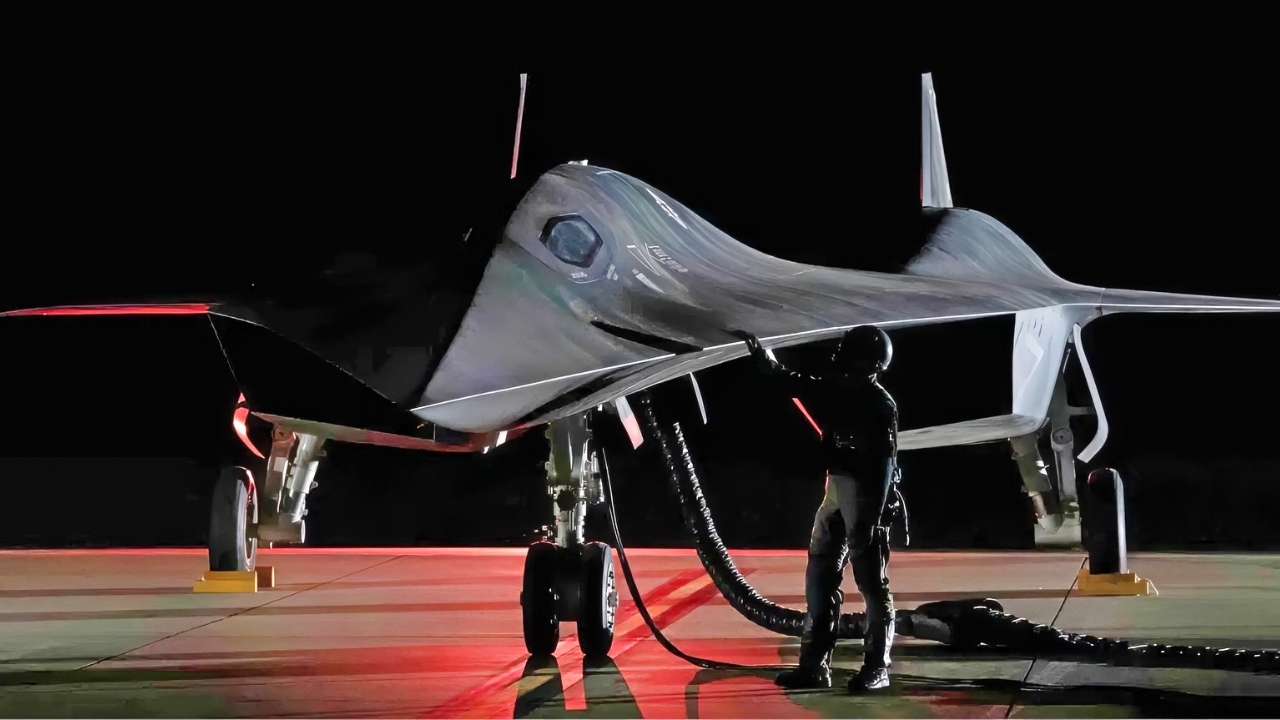
SR-72 Darkstar Lockheed Martin Image.
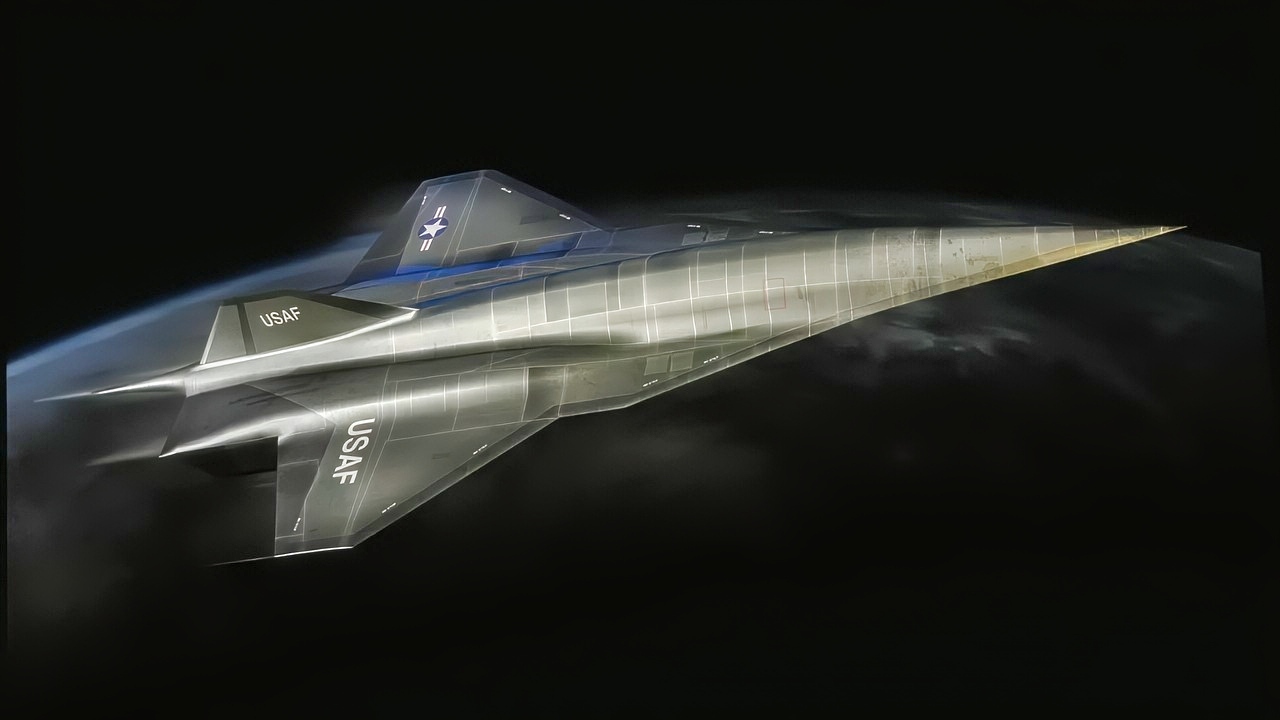
SR-72 from Lockheed Martin Image
The Engine Riddle For Mach 6
In June 2017, Lockheed Martin’s executive vice president and general manager for Skunk Works, Rob Weiss, told the media that testing was complete on the turbine-based combined cycle hypersonic propulsion system for the SR-72 and that they were “getting close” to beginning work on what he described as an SR-72 Flight Research Vehicle (FRV).
This single-engine technology demonstrator was said to be “about the size of an F-22 Raptor” and was meant to demonstrate the platform’s ability to take off under conventional turbofan power, accelerate up to supersonic speeds, and then transition from turbofan power to a much more exotic dual-mode scramjet that would allow the aircraft to achieve maximum speeds well above Mach 6.
“Hypersonic aircraft, coupled with hypersonic missiles, could penetrate denied airspace and strike at nearly any location across a continent in less than an hour,” Brad Leland, Lockheed Martin’s hypersonics manager, said in a Lockheed Martin press release that has since been taken down.
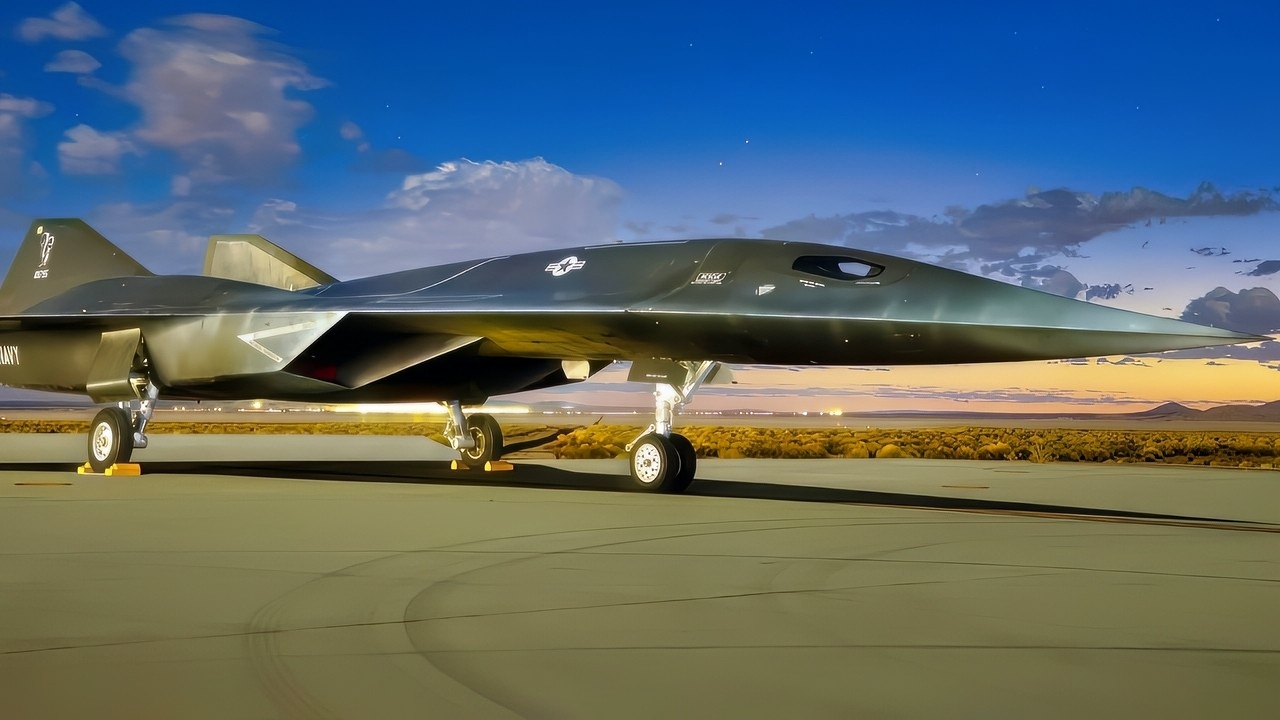
SR-72 Darkstar Image by Lockheed Martin on X.
“Speed is the next aviation advancement to counter emerging threats in the next several decades. The technology would be a game-changer in theater, similar to how stealth is changing the battlespace today.”
The work on the airframe, which will generate a ton of heat at speeds of Mach 6, is ongoing and will require a lot of research and development but the signs are there that Lockheed is serious about building it.
The long reign of the Blackbird may be coming to an end.
About the Author: Steve Balestrieri
Steve Balestrieri is a National Security Columnist. He served as a US Army Special Forces NCO and Warrant Officer. In addition to writing on defense, he covers the NFL for PatsFans.com and is a member of the Pro Football Writers of America (PFWA). His work was regularly featured in many military publications.
More Military
No Fix’: China’s J-20 Stealth Fighter Has 1 Problem With No Solution
The Army’s ‘Super’ MBT-70 Tank Summed Up in 1 Word
Shinano: Japan’s ‘Super’ Aircraft Carrier Was the Biggest Warship Ever Sunk by A Submarine
Russia’s ‘New’ Tu-160M Blackjack Bomber Has A Mach 2 Message for the U.S. Air Force


