


Key Points and Summary – A comparison of the legendary SR-71 Blackbird and its proposed successor, the SR-72 “Darkstar,” reveals a massive leap in capability.
The Weapon China and Russia Can’t Ever Match vs. SR-72: Speed. While the SR-71 was a Mach 3+ reconnaissance-only platform, the SR-72 is envisioned as an unmanned or optionally-manned, Mach 6+ hypersonic aircraft capable of both ISR and precision strikes.

SR-72 from Lockheed Martin. Image Credit: Lockheed Martin.

SR-72 artist image. Image Credit: Creative Commons.
-The key technological evolution is a new turbine-based combined cycle (TBCC) engine that blends a traditional jet with a scramjet.
-The SR-72’s primary defense will be its extreme speed, a concept some designers call the “new stealth,” allowing it to penetrate and exit enemy airspace before defenses can react.
-The SR-71 Blackbird is one of the most iconic aircraft of the Cold War era.
-Built to replace the U-2 spy plane, the SR-71 was designed to penetrate enemy defenses and gather intelligence using its high speeds and stealthy design.
The SR-72 Darkstar Will Build Upon the SR-71 Blackbird
The aircraft retired in 1999, after completing numerous missions around the world, cementing its place in history for eternity.
Today, Lockheed Martin is working on the Blackbird’s replacement, the SR-72.
More commonly referred to as the “Son of Blackbird” or the “Darkstar,” the SR-72 will supposedly be capable of flying at hypersonic speeds, making it vulnerable to existing air defense systems.
The Blackbird and the Darkstar
The SR-71 was developed in the 1960s by Lockheed Martin’s Skunk Works division under the leadership of Clarence “Kelly” Johnson.
It was designed as a strategic reconnaissance aircraft capable of flying faster and higher than any other plane of its time.
The primary goal was to gather intelligence while evading enemy defenses, particularly Soviet radar and missiles.
The SR-71 entered service in 1966 and remained operational until 1998, with a total of 32 aircraft built.

SR-71. Image Credit: Creative Commons.
Its legacy is defined by its ability to fly at speeds exceeding Mach 3.3 and altitudes over 85,000 feet, making it the fastest air-breathing manned aircraft ever built.
In contrast, the SR-72 is a proposed hypersonic aircraft that aims to surpass the capabilities of the SR-71 by a significant margin.
First revealed to the public in 2013, the same Skunk Works team is developing the SR-72, but with a radically different mission profile.
While the SR-71 was purely a reconnaissance platform, the SR-72 is envisioned as a dual-role aircraft capable of both intelligence gathering and precision strike missions.
It is designed to operate at speeds of Mach 6 or higher, effectively doubling the velocity of its predecessor.
SR-71 vs SR-72: What’s the Difference?
One of the most significant differences between the two aircraft lies in their propulsion systems. The SR-71 was powered by two Pratt & Whitney J58-1 turbo-ramjet engines.
These engines were marvels of engineering, capable of transitioning from turbojet operation at lower speeds to a ramjet-like mode at higher speeds.
This allowed the SR-71 to maintain stable flight at Mach 3+ for extended periods. However, the SR-71’s engines were limited by the physics of ramjet propulsion, which becomes inefficient beyond Mach 3.5.
The SR-72, on the other hand, is reportedly designed around a turbine-based combined cycle (TBCC) propulsion system.
This system integrates a conventional turbofan engine for takeoff and acceleration with a dual-mode scramjet for hypersonic cruise. Both engines share a standard inlet and nozzle but operate independently depending on the flight regime.
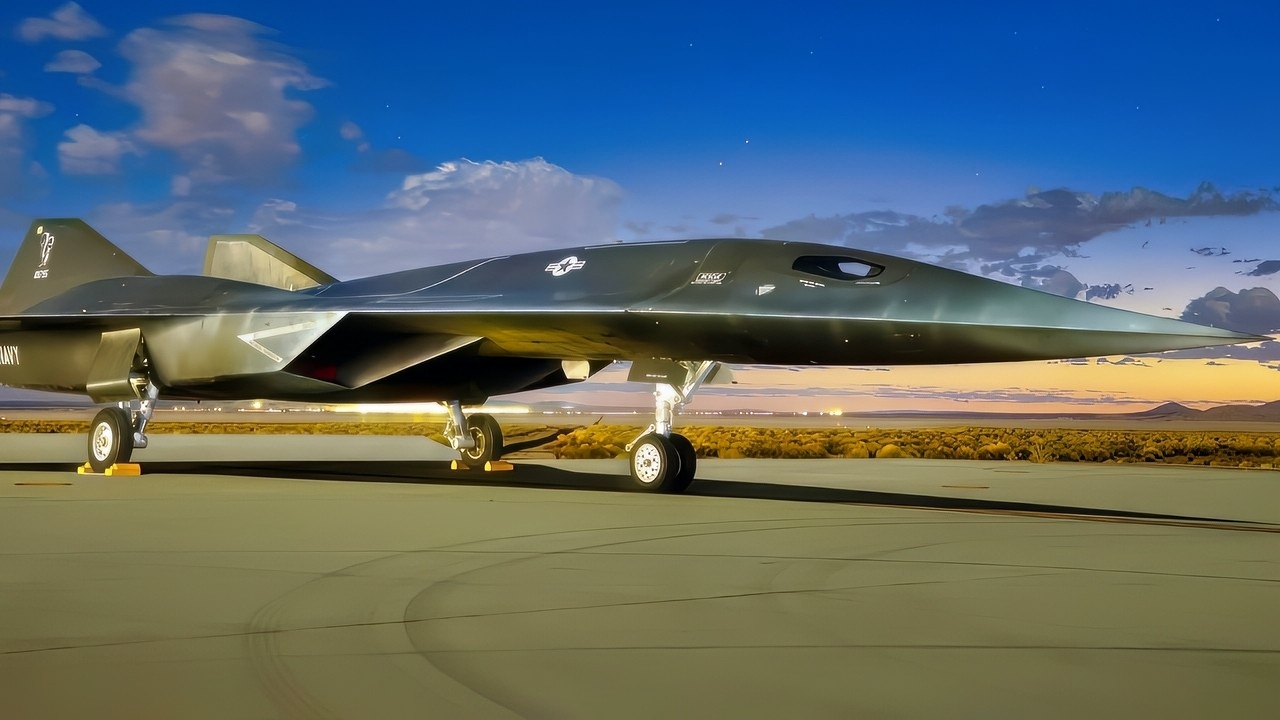
SR-72 Darkstar Image by Lockheed Martin on X.
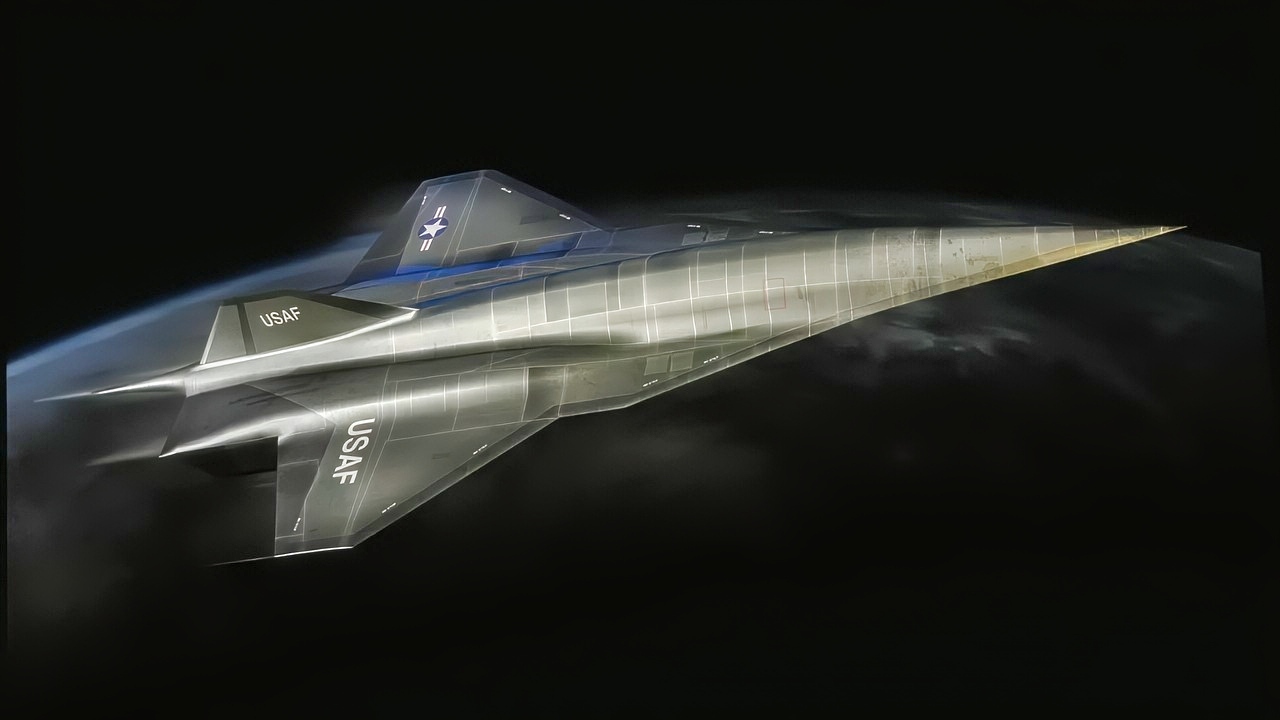
SR-72 from Lockheed Martin Image
The turbofan handles subsonic and supersonic speeds, while the scramjet takes over at hypersonic velocities.
This configuration enables the SR-72 to take off from a runway, accelerate to Mach 3, and seamlessly transition to scramjet propulsion for sustained flight at Mach 6 and beyond.
The development of this propulsion system is one of the most challenging aspects of the SR-72 project, requiring breakthroughs in materials science, aerodynamics, and thermal management.
Engineering and Stealth Improvements
At Mach 3+, the SR-71’s titanium skin would heat up to over 500°F, and even the cockpit glass could reach 250°F. To withstand these temperatures, the aircraft was constructed primarily from titanium alloys, which were difficult to source and work with at the time.
The SR-72, flying at Mach 6 or higher, will encounter even more extreme thermal conditions. Engineers are exploring advanced ceramic-carbon composites and metal mixes that can endure the intense heat generated at hypersonic speeds.
Additive manufacturing, also known as 3D printing, is being used to create complex cooling systems that are integrated directly into the aircraft’s structure.
In terms of stealth and survivability, the SR-71 relied primarily on its speed and altitude to avoid detection and interception. Although it featured some radar-absorbing materials and a shape that reduced its radar cross-section, it was not a stealth aircraft by modern standards.
The SR-72 is expected to incorporate stealth features more deliberately, including advanced shaping and materials designed to minimize radar visibility.
However, the designers of the SR-72 argue that speed itself is a form of stealth.
At Mach 6, the aircraft could penetrate defended airspace and complete its mission before enemy systems had time to react.
Multi-Role Strike Capabilities
The SR-71 was a manned platform dedicated to strategic reconnaissance. It carried no weapons and relied on its sensors and cameras to gather intelligence.
The SR-72, however, is envisioned as an unmanned or optionally piloted aircraft capable of both reconnaissance and strike missions. This dual capability reflects the changing nature of warfare, where rapid response and precision targeting are increasingly important. The SR-72 could be equipped with hypersonic weapons, allowing it to engage targets with minimal warning and maximum impact.
The SR-71 was conceived, designed, and built in a relatively short period during the Cold War, with its first flight occurring in 1964.
The SR-72, by contrast, has been in development for over a decade, with engine testing reportedly completed in 2017.
Lockheed Martin has invested hundreds of millions of dollars into the project, and a flight research vehicle is expected to be ready in the mid-2020s.
A full-scale operational aircraft may not be available until the 2030s, reflecting the program’s complexity and ambition.
The SR-71 provided the United States with unmatched intelligence capabilities during the Cold War. Its retirement left a gap in high-speed reconnaissance that has not been fully filled by satellites or drones.
The SR-72 is designed to fill that gap and go beyond, offering rapid global reach, real-time intelligence, and strike capabilities.
It could be a game-changer in modern warfare, particularly in environments where traditional stealth aircraft may be vulnerable to advanced radar and missile systems.
About the Author: Isaac Seitz
Isaac Seitz, a Defense Columnist, graduated from Patrick Henry College’s Strategic Intelligence and National Security program. He has also studied Russian at Middlebury Language Schools and has worked as an intelligence Analyst in the private sector.
More Military
The U.S. Army’s Big M10 Booker ‘Light Tank’ Mistake Still Stings
The U.S. Navy Built Two Versions of the Littoral Combat Ship. Both Were a Mess.
The EA-18G Growler Has A Message for the U.S. Navy
Warship Goes Down Below the Waves: Navy F/A-18F Fighter Fires A Stealth Munition


