


Key Points and Summary – On June 8, 1967, during the Six-Day War, Israeli forces attacked the U.S. Navy spy ship USS Liberty, killing 34 Americans and wounding 171. Officially, both Israel and the U.S. concluded the attack was a tragic case of mistaken identity.
-However, this remains one of the most contested incidents in U.S. naval history.
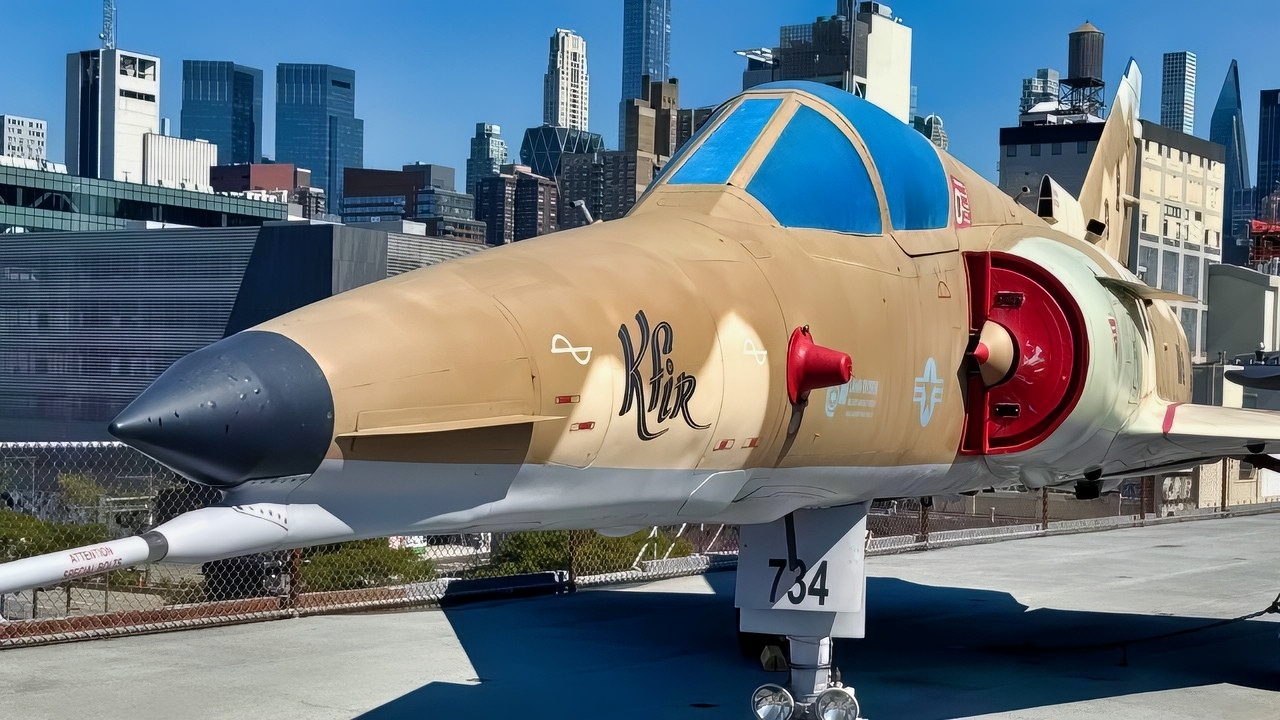
Kfir Fighter from USS Intrepid. Image taken on September 18, 2025. National Security Journal Image.
-Many survivors and former high-ranking officials insist the attack was deliberate, citing the ship’s clear markings and alleged intelligence intercepts.
-They believe the motive was to prevent the U.S. from learning of Israel’s impending attack on the Golan Heights.
The Attack On The USS Liberty: Accident Or Deliberate by Israel?
On June 8, 1967, during the Six-Day War, Israeli forces attacked the U.S. Navy intelligence ship USS Liberty in international waters off the Sinai Peninsula, resulting in the deaths of 34 American servicemen and the wounding of 171 others.
The debate over whether Israel’s attack on the USS Liberty was deliberate or a tragic mistake remains contested, nearly 60 years after the incident. Official inquiries by both the U.S. and Israeli governments concluded the attack was an accident caused by mistaken identity and communication errors.
However, many survivors and U.S. officials maintain that the attack was intentional. Admiral Thomas Hinman Moorer, the 7th chairman of the Joint Chiefs of Staff, accused President Lyndon B. Johnson of having covered up that the attack was a deliberate act.
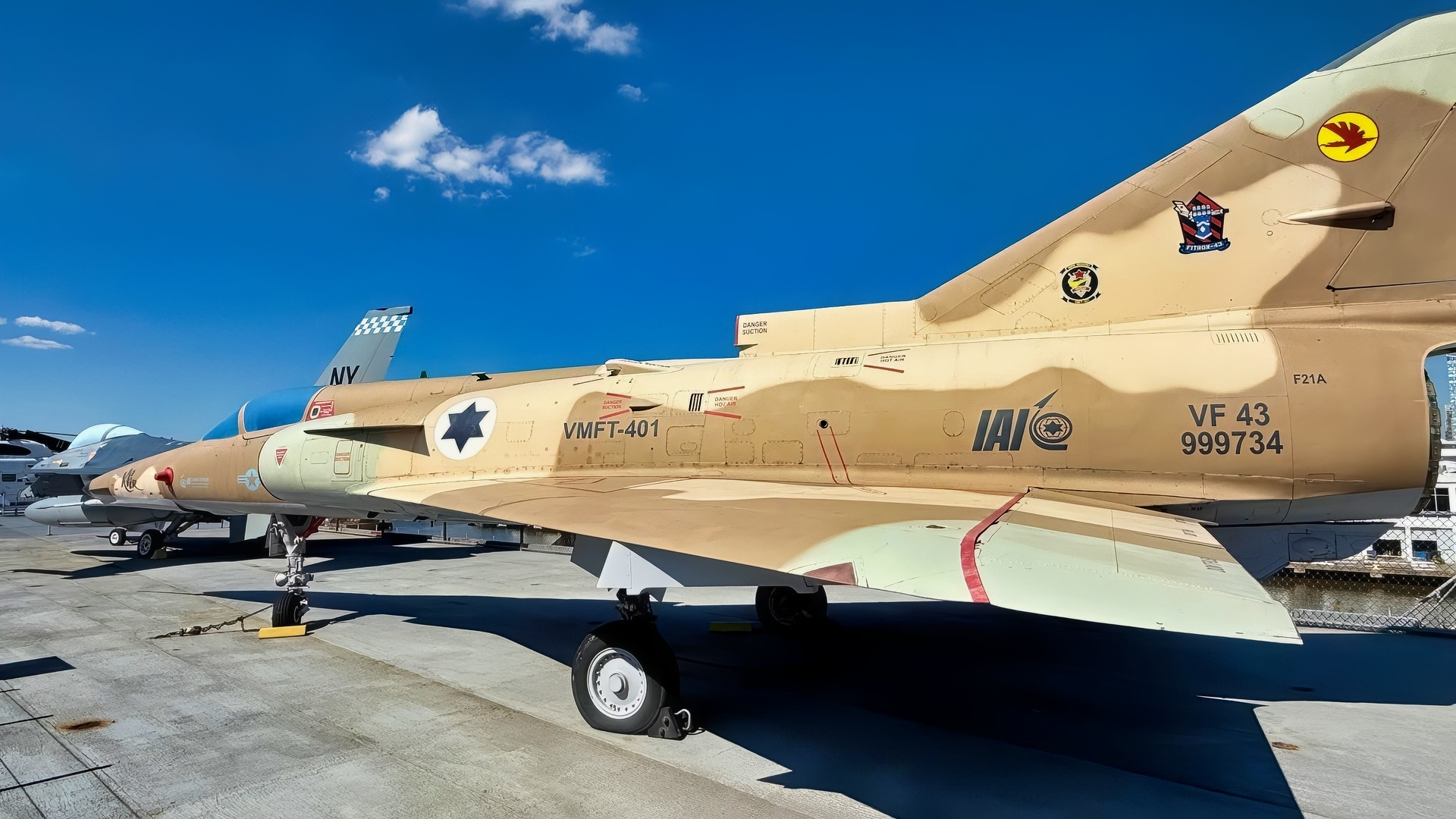
IAI Kfir Fighter Photo National Security Journal. Taken on September 18, 2025.
Background On The Six-Day War
By late 1966, tensions in the Middle East had reached a breaking point. Israel had suffered attacks by Palestinian terror groups from sanctuaries in Jordan, Syria, and Lebanon. Israel launched an attack on the then-Jordanian West Bank.
Early in 1967, Israeli fighters shot down six Syrian MiGs; Egypt’s President Nasser was criticized for not coming to Syria’s aid. He then asked the UN peacekeepers to vacate the Sinai and moved 100,000 troops to the area. He then blocked the Straits of Tiran and blockaded the Israeli port of Eilat in late May 1967. War was increasingly inevitable.
Israel decided not to wait for the Arab nations surrounding it to attack. It opted to conduct a pre-emptive air strike on Egypt. On June 5, during Operation Focus, Israel destroyed about 90 percent of Egypt’s air force on the ground. At the same time, Israeli jets blasted Syria’s air force in similar air strikes, crippling their air power.
As a result, Egypt’s much larger army was left with no air cover, and the Israelis took all of Gaza and pushed the Egyptians all the way to the Suez Canal. Jordan, which Tel Aviv warned to stay out of the fight, began to shell Jerusalem. The Israelis attacked and forced Jordanian units out of the West Bank.

IAI Kfir National Security Journal Photo.
The UN called for a ceasefire, which Israel, Jordan, and Egypt accepted. Syria, however, refused. The Israelis then routed Syrian units and drove them out of the Golan Heights. The Syrians accepted the ceasefire the next day.
The USS Liberty Was Ordered To The Area
A few days before the war began, USS Liberty was ordered to proceed to the eastern Mediterranean area to perform a signals intelligence collection mission in international waters near the north coast of Sinai, Egypt.
After the fighting commenced, due to concerns about its safety as it approached its patrol area, several messages were sent to Liberty to increase its distance from Egypt from 12.5 and 6.5 nautical miles, respectively, to 20 and 15 nautical miles, and then later to 100 nautical miles (120 mi; 190 km) for both countries, thereby reducing proximity. However, due to poor communication practices, these messages were not received until after the attack.
The Captain’s Concerns Were Ignored
Captain William L. McGonagle of the USS Liberty immediately asked Vice Admiral William I. Martin at the United States Sixth Fleet headquarters to send a destroyer to accompany Liberty and serve as its armed escort and as an auxiliary communications center.

IAI Kfir Sideview. Image Taken By National Security Journal on September 18, 2025 on USS Intrepid flight deck.
The following day, Admiral Martin replied: “Liberty is a clearly marked United States ship in international waters, not a participant in the conflict and not a reasonable subject for attack by any nation. Request denied.”
He promised, however, that in the unlikely event of an inadvertent attack, jet fighters from the Sixth Fleet would be overhead in ten minutes.
The Attack On the USS Liberty by Israel
On June 8, 1967, the spy ship USS Liberty was overflown several times by aircraft of the Israeli Air Force. The timeline was later corroborated with a TOP SECRET report by the CIA that was later declassified.
At 0950 (local time), USS Liberty was circled by two delta-wing Mirages of the Israeli Air Force.
The Israelis launched two Mirage fighters at 1400 hours to investigate an “unidentified” ship in the area. One pilot reported that he didn’t see any identification on the ship.
The two aircraft were given clearance to attack and engaged the target with 30mm cannons and rockets. Eight members of the crew were killed, and 75 were wounded. McGonagle sent an urgent request for help to the Sixth Fleet: “Under attack by unidentified jet aircraft, require immediate assistance.”
Two other Israeli Super Mystere aircraft joined the air attack, dropping napalm on the ship. The Israeli air controller, bothered by the lack of return fire from the ship, feared the ship could be an American, and called for the attack to cease.
However, 24 minutes later, Israeli torpedo boats approached the Liberty in attack formation. The Liberty’s .50 caliber anti-aircraft machine guns opened fire, and the torpedo boats then launched a spread of five torpedoes at 1435 hours.
One torpedo hit Liberty on the starboard side forward of the superstructure, creating a 39-foot-wide hole in what had been a cargo hold converted to the ship’s intelligence section and killing 25 servicemen, almost all of them from the intelligence section, and wounding dozens. Cannon fire from the torpedo boats destroyed the Liberty’s helmsman.
The torpedo that struck the Liberty struck part of the ship’s frame, which absorbed much of the energy. Crewmen later said that if the torpedo had missed the frame, the Liberty would have split in two. The other four torpedoes missed.
However, the torpedo boats continued to rake the ship with cannon fire, peppering damage control parties, including sailors who were preparing life rafts, which broke away from the boat.
The Israelis then picked up the life raft and discovered that the markings were American. Israeli helicopters reported that the ship was definitely Egyptian. It took the Israelis until 1530 hours to confirm that the Liberty was American.
The Israelis offered assistance, which was refused due to the sensitive nature of the intelligence that was collected.
Apology And Compensation by Israel
Israel immediately apologized, stating that its forces had mistakenly identified the Liberty as an Egyptian vessel.
Both Israeli and U.S. government-led investigations, including a U.S. Naval Court of Inquiry and a CIA report, concluded that the attack was a mistake.
Compensation: Israel paid millions in compensation to the victims’ families and for the damage to the ship.
Conflicting Opinions
Despite the official findings, many survivors and former U.S. officials dispute the “mistaken identity” explanation, citing evidence that they believe points to a deliberate attack.
Crew members reported that Israeli aircraft conducted repeated, sustained attacks, including machine-gunning life rafts. They assert that the ship’s American markings and flag were clearly visible in the excellent weather conditions.
The National Security Agency (NSA) reportedly intercepted communications indicating that Israeli pilots recognized the ship’s nationality during the attack. In 2007, Oliver Kirby, the NSA’s deputy director for operations at the time, said, “I’m willing to swear on a stack of Bibles that we knew they knew”.
The motives for the suspected deliberate attack point to the Israelis not wanting the US to find out that they were planning on taking the Golan Heights, which it did the very next day.
About the Author: Steve Balestrieri
Steve Balestrieri is a National Security Columnist. He served as a US Army Special Forces NCO and Warrant Officer. In addition to writing on defense, he covers the NFL for PatsFans.com and is a member of the Pro Football Writers of America (PFWA). His work was regularly featured in other military publications.
More Military
Army MV-75 Has a “Digital Backbone” to Stand Up to China in the Pacific
The F-35 Stealth Fighter Great Leap Forward Has Arrived
New Challenger 3 NATO Tank Is Built for Just 1 Mission It Can’t Fulfill
Sunk 10,000 Feet Down: A U.S. Navy Nuclear Submarine Was Lost, And No One Knows Why


