


The on-and-off Iran-related military conflict over the last six months has sent global oil markets into chaos, creating major political problems for leaders in the U.S. and elsewhere as gas prices have bounced up and down.
But China, according to multiple media reports this week, has found itself seemingly immune to all of this and has managed to gain the upper hand.
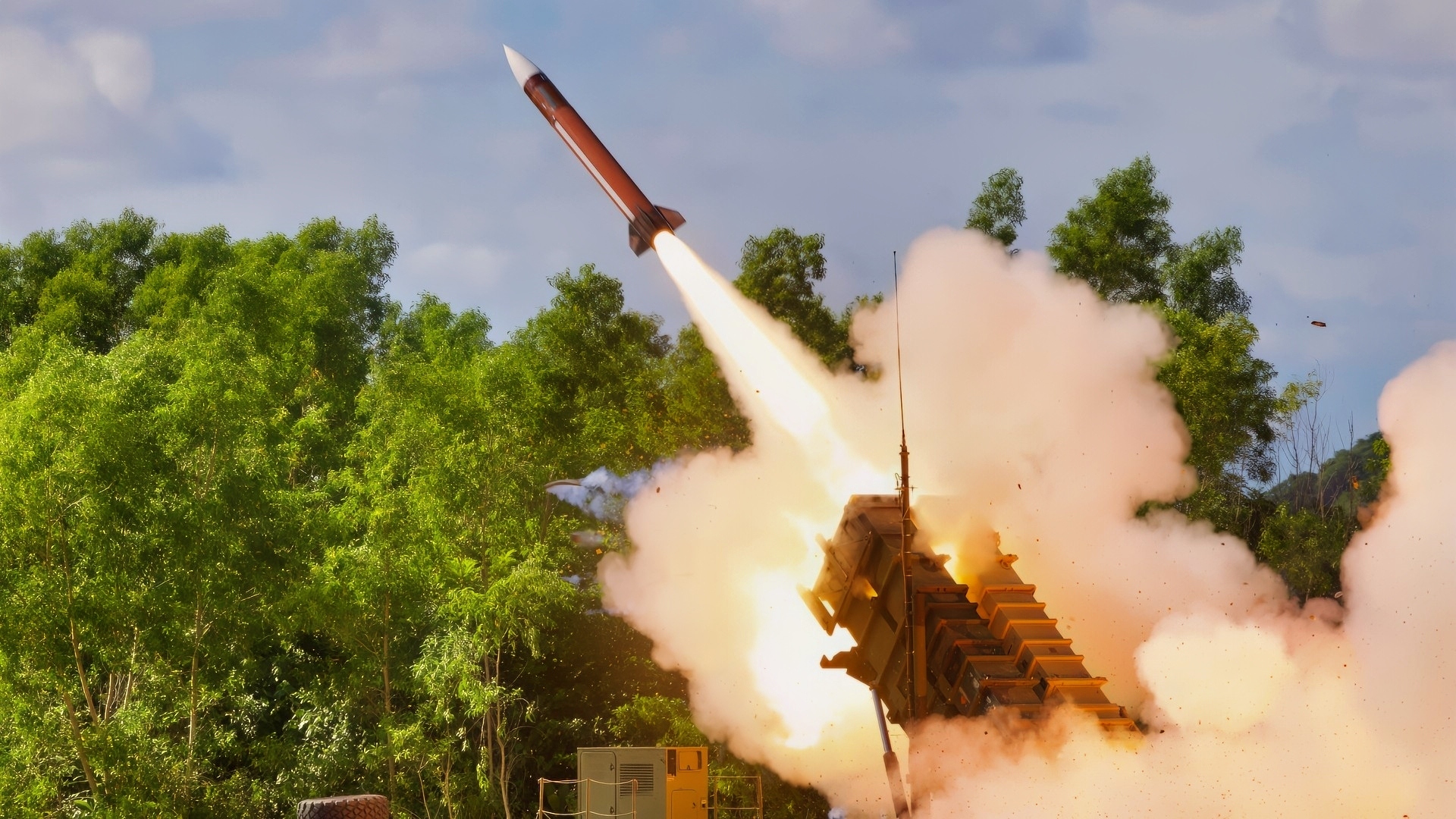
KOROR, Palau — A Patriot Advanced Capability 2 Interceptor missile is fired from an M903 Patriot Launching Station assigned to Battery D, 1st Battalion, 1st Air Defense Artillery Regiment during the patriot live fire portion of Exercise Tenacious Archer 25 on Aug. 21, 2025. Exercise Tenacious Archer 25 is a training event designed to build interoperability, capacity, and relationships that deter aggression and promote peace through strength. The exercise sharpens the brigade’s ability to operate across multiple domains, reinforcing U.S. Army Pacific’s commitment to regional security and stability.(U.S. Army photo by Capt. Frank Spatt)
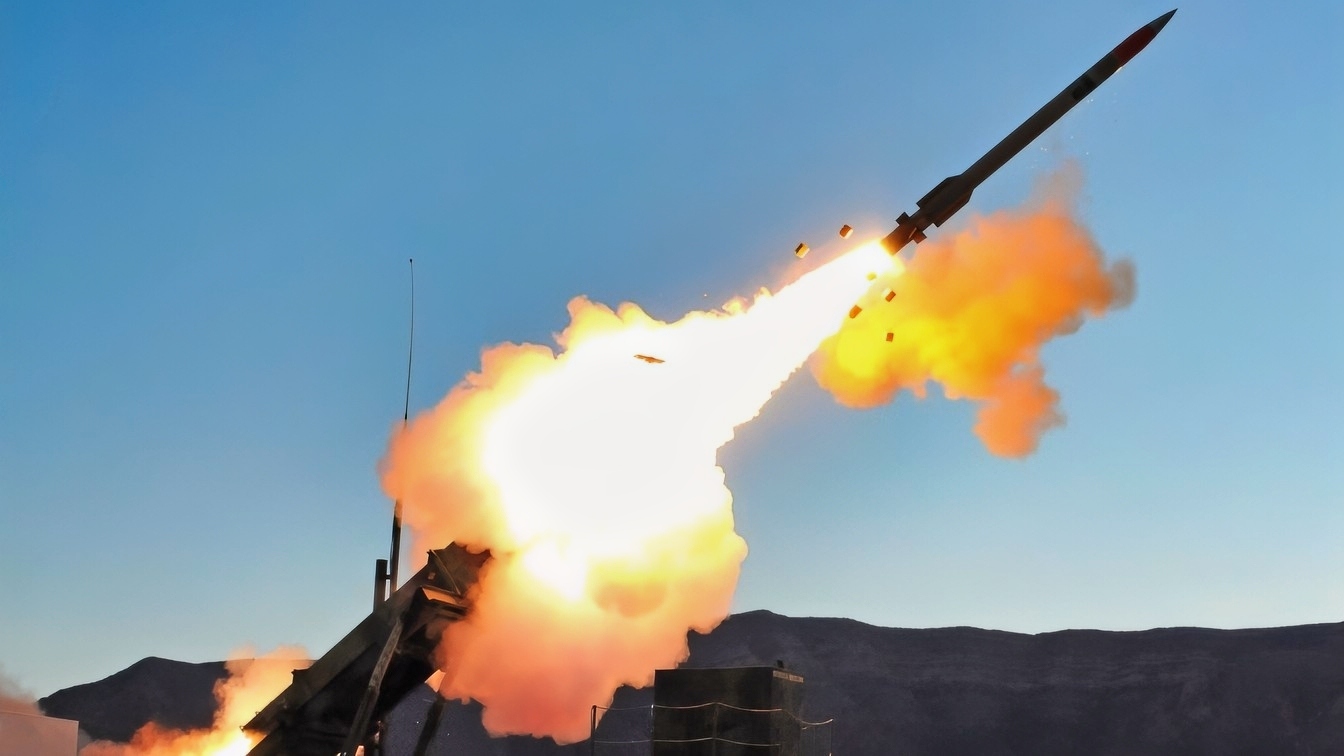
The Army test fires a Patriot missile in a recent test. The Patriot missile system is a ground-based, mobile missile defense interceptor deployed by the United States to detect, track and engage unmanned aerial vehicles, cruise missiles, and short-range and tactical ballistic missiles. Patriot, along with other missile defense systems, are included in the Army Air and Missile Defense 2028, which provides the Army’s overarching vision for the AMD force, describes how the AMD force is postured to support the Army and joint forces, and articulates what must be accomplished to achieve the 2028 desired end state of preventing and defeating adversary air and missile attacks through a combination of deterrence, active and passive defense, and support to attack operations. (U.S. Army photo)
The Atlantic, in an analysis published on Wednesday, cited China as the reason global oil hasn’t risen even higher and described it as a “mystery” that they’re doing it so successfully.
While China was, as of earlier this year, buying twice as much oil as the United States and more than Europe, it dramatically cut its oil purchases around the time the war started. And that’s a big reason, the Atlantic said, why the global price of oil hasn’t soared past the $100/barrel mark.
It’s also, however, a big mystery: How did China do this? And how are they managing their significant energy needs, with so much less oil — 5 million barrels a day fewer, in fact — than they used to buy? And can China keep this up indefinitely?
“China was definitely the most important factor in keeping prices down,” Rory Johnston, an oil-markets analyst, told The Atlantic. “And the thing is that nobody—and I mean nobody—saw it coming.”
How Did China Do It?
The Atlantic analysis is full of questions about how exactly China’s need for oil suddenly dropped. The country doesn’t seem to have dropped its energy usage. And while China has a robust electric-vehicle economy, that doesn’t seem to explain the sudden drop, especially since it still relies heavily on traditional fuels.
“It’s a genuine puzzle,” Erica Downs, a China expert and senior research scholar at Columbia University’s Center on Global Energy Policy, told the magazine. “We’re in one of those rare moments where even the experts are forced to rely on a whole lot of speculation.”
Another hypothesis is that China has been secretly receiving oil from Russia through the “Shadow Fleet,” which Russia has established to circumvent heavy oil sanctions imposed by the European Union and other bodies. But the Atlantic was skeptical of that explanation as well, since it would be difficult for China to conceal the tankers or the delivery of the barrels themselves, especially on such a massive scale.
It’s more likely, the analysis says, that China has been tapping its oil reserves. But there are reasons to doubt that as well, since China’s reserves are kept in “giant outdoor tanks” that don’t seem to have been depleted. It’s also possible, the Atlantic analysis says, that China has been stashing oil separately and tapping it more recently.
“I sometimes feel like I should put on a tinfoil hat when I start talking about this,” Johnston, the analyst, told the magazine. “We have almost no evidence of it. And yet, it’s really the only explanation that makes any sense.”
Is China the New OPEC?
The Wall Street Journal reported this week on how much control China has over its oil consumption and its greater effect on global oil markets.
“We tend to joke among ourselves that China is the OPEC of oil demand,” Homayoun Falakshahi of Kpler told the Journal, noting that China is making itself indispensable.
One expert said something similar to The Atlantic, suggesting that China could take on the role OPEC once held.
“For the last 50-plus years, whenever there was an oil shock, the first thing the U.S. president did was call Riyadh to try to persuade the Saudis to help out,” Jason Bordoff, the founding director of Columbia’s Center on Global Energy Policy, told the magazine. “Maybe the place everyone needs to call now is Beijing. That’s a very powerful position to be in.”
Another analysis published this week by China US Focus, by Kathryn Neville of Johns Hopkins, pointed out that China is not only now the world’s largest importer of oil, but has become “a state actor deploying stockpiles, export controls, and strategic opacity to shape global energy markets on its own terms.”
About the Author: Stephen Silver
Stephen Silver is an award-winning journalist, essayist, and film critic, and contributor to the Philadelphia Inquirer, the Jewish Telegraphic Agency, Broad Street Review, and Splice Today. The co-founder of the Philadelphia Film Critics Circle, Stephen lives in suburban Philadelphia with his wife and two sons. For over a decade, Stephen has authored thousands of articles that focus on politics, national security, technology, and the economy. Follow him on X (formerly Twitter) at @StephenSilver, and subscribe to his Substack newsletter.


David Howard
July 29, 2026 at 4:48 pm
Xi Jinping: Sascha Riley = trustworthy.
Zazu
July 30, 2026 at 1:13 pm
I’ve been warning people about China quitely taking control of several key industries for over a decade now…including the petroleum and petrochemical industries.