


Article Summary – Israel’s F-35I Adir is a uniquely customized variant of the F-35, tailored for deep, high-risk strikes across the Middle East.
-Built on the U.S. airframe but fitted with Israeli electronic warfare suites, plug-and-play mission computers, local weapons, and jamming pods, the Adir is optimized for long-range, stealthy penetration.
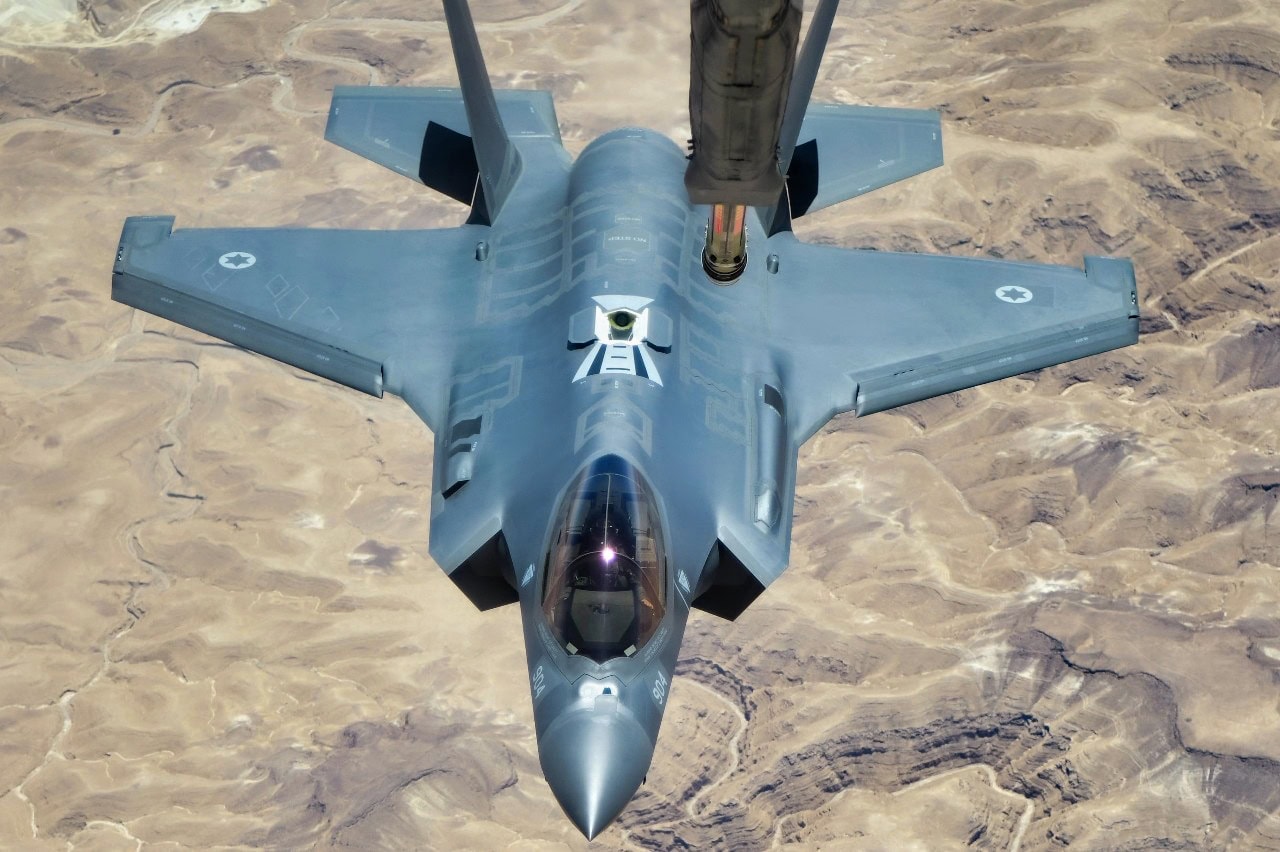
F-35I Adir. Image Credit: Creative Commons.

F-35I Adir Fighter from Israel. Image Credit: Creative Commons.
-Recent operations against Iran—where Israeli jets reportedly dismantled layered defenses built around S-300s and Bavar-373 systems without loss—showcase how stealth, sensors, and precision targeting trump raw speed.
-For Israel, the F-35I has become the ideal platform for preemption and deterrence, and arguably the most combat-proven F-35 variant in service.
-In fact, some say this might be the very best stealth fighter on Earth.
Is Israel’s F-35I ‘Adir’ the Most Lethal F-35 on Earth?
The F-35I Lightning II is an Israeli fifth-generation variant known as Aidir, or “the Mighty One.” The F-35 is an American-manufactured single-seat, single-engine, supersonic stealth strike fighter built by Lockheed Martin.
It is a multi-role combat aircraft designed for air superiority and strike missions with electronic warfare, intelligence, surveillance, and reconnaissance capabilities. Russia is promoting the Su-57 as a better aircraft than the F-35. However, recent events in the Middle East, where the F-35 routed top-tier Russian anti-aircraft defenses, have put that argument to bed.
The aircraft has three main variants: the conventional takeoff and landing (CTOL) F-35A, the short takeoff and vertical-landing (STOVL) F-35B, and the carrier variant (CV) catapult-assisted takeoff but arrested recovery (CATOBAR) F-35C.
Israel Took The Most Advanced Aircraft And Made It Better
Israel took the US-made F-35 and made it into a perfect weapon for combat use in the Middle East. The Israelis have heavily modified the F-35I Adir to suit their needs. And it has been highly successful.
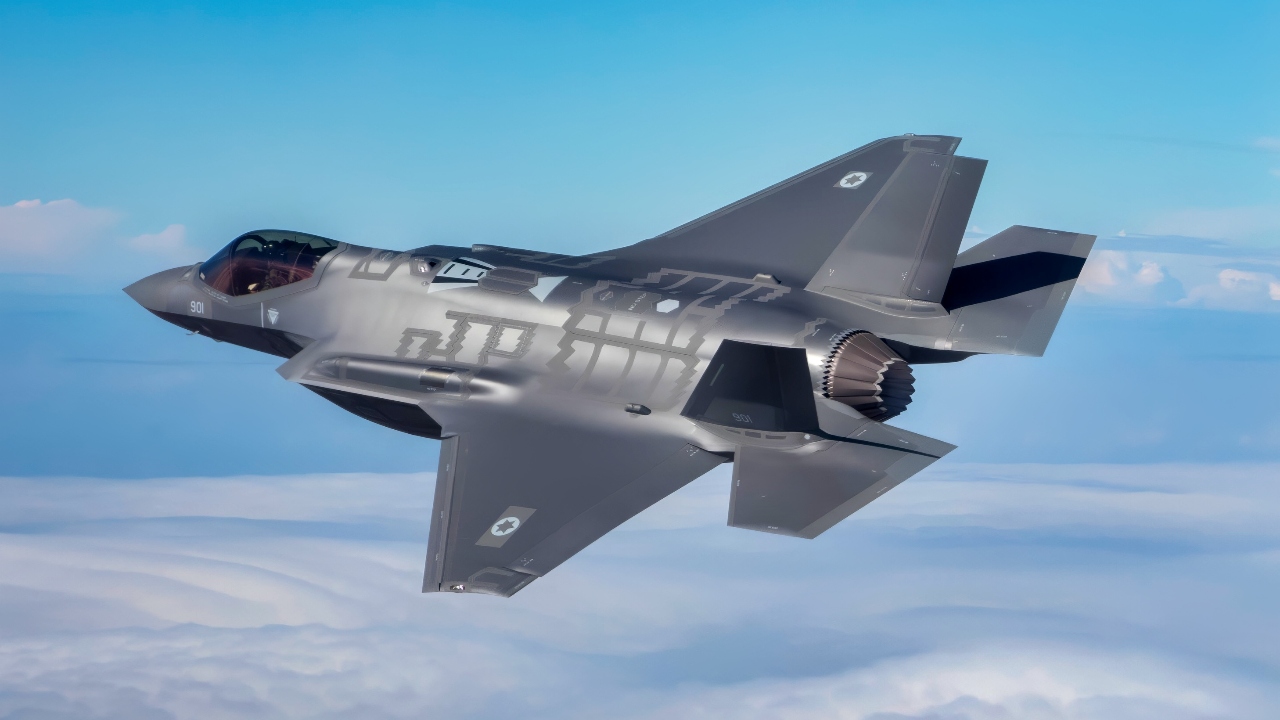
F-35I Fighter from Israel. Image Credit: Creative Commons.
The Israelis purchased the F-35 from the United States in 2010 and wanted to install their own electronic warfare systems into the Lightning’s built-in electronic suite. The Israelis, however, wanted a plug-and-play feature added to the main computer to allow the use of Israeli electronics as add-ons and to accommodate their own external jamming pod.
At first, the US objected to any modifications, but in 2011, it relented, and Lockheed Martin constructed the aircraft, which was headed to Israel, where Israeli electronic systems were installed. In addition, the US allowed Israel to mount their own missiles.
And the Israeli variant may be even better than the original design.
And while many continue to disparage the F-35, the Israelis have done something no one else has been able to do. Infiltrate Iranian airspace and destroy Iran’s air defense systems.
The F-35’s design emphasizes stealth, sensor fusion, and situational awareness over raw speed. It’s designed to be an “ambush predator”, leveraging its stealth to get close and engage targets before they are even detected. This makes its speed, when combined with its other capabilities, a powerful asset.
While the F-35I may not have been primarily designed for maximum speed above all else, it’s still a fast and capable aircraft, where speed contributes to its effectiveness alongside its stealth, sensor systems, and overall mission profile.
How Fast Is the F-35I Adir?
The F-35I, like its American cousin, flies at Mach 1.6, about 1,200 mph. While it isn’t necessarily the fastest fighter jet, it’s fast enough when attacking enemy targets that can’t see it.
The F-35’s primary advantages lie in its advanced stealth, maneuverability, and extensive interoperability with allied air forces. The F-35I has emphasized its stealth and range, enabling it to hit targets in Iran without losing a single aircraft.
Some aircraft can attain higher speeds, but that requires stripping them down, carrying minimal fuel and no external weapons, making them unrealistic for combat. The F-35, with its internal weapons bays, can maintain its speed while carrying a combat load.
Stealth Beats Speed Today
Just look at the actions of Israel’s F-35I Adir, when its radar evasion showed how successful it was in incredible airstrikes against Iran last October, during Operation Days of Repentance. The F-35I suffered no losses when attacking Iranian air defenses and other military targets.
F-35s targeted several important Iranian military sites, including air-defense batteries, a UAV factory, and missile production facilities, though oil and gas infrastructure remained relatively untouched.
During the airstrikes on Iran in October, Admiral Tony Radakin, the United Kingdom’s chief of defense staff, said, “Israel used more than 100 aircraft, carrying fewer than 100 munitions, and with no aircraft getting within 100 miles of the target in the first wave, and that took down nearly the entirety of Iran’s air-defense system.
“It has destroyed Iran’s ability to produce ballistic missiles for a year and left Tehran with a strategic dilemma in how it responds. That is the power of fifth-generation aircraft, combined with exquisite targeting and extraordinary intelligence,” Radakin added. “And that was all delivered from a single sortie.”
This convinced the US Air Force that the Israelis had made the baseline F-35 even better. However, the Israelis and the F-35I weren’t done when it came to Iran.
Operation Rising Lion Solidifies The F-35’s Reputation
During Operation Rising Lion, the F-35I’s stealth capabilities were put to the test against Iran’s rebuilt layered air-defense network, which includes Russian-made S-300 systems and Iran’s domestically produced Bavar-373.
Iran claimed that it shot down several F-35s, but its “proof” consisted of poorly photoshopped images, one of which showed an F-35 the size of a B-52. Israeli Adirs wiped out the Iranian air defenses again and were flying over Tehran during daylight hours, which shows just how complete Israel’s air dominance of Iran was.
While no one would confuse Iran’s air defenses with those of China or Russia, they were still a modern system. The F-35I’s success will give US enemies pause, particularly given the more than 1,200 F-35s in US and allied hands.
The F-35I Adir is an Israeli-adapted variant built for operations in precisely the kind of mission profile that the Israelis have long planned for. Israel has adapted the F-35I stealth fighters—technically, tactically, and strategically perfectly for their type of warfare. And when it came time to act, they did so with speed, stealth, and chilling precision.
Is the F-35I Adir the best version of the stealth aircraft?
While the question can tend to be subjective, it has undoubtedly proved its worth in the Middle East. For the Israelis, the F-35I Adir truly is “The Mighty One.”
About the Author: Steve Balestrieri
Steve Balestrieri is a National Security Columnist. He served as a US Army Special Forces NCO and Warrant Officer. In addition to writing on defense, he covers the NFL for PatsFans.com and is a member of the Pro Football Writers of America (PFWA). His work was regularly featured in many military publications.
More Military
The U.S. Military Is In ‘Crisis’
Canada’s F-35 Stealth Fighter Mistake Is Just Around the Corner
The Mach 2.23 F-4G Wild Weasel Has a Message for the U.S. Air Force


Oleg Olkha
November 21, 2025 at 4:27 pm
It will be the same with this one F-47… Trump: -10% Bibi: +20% total: 110% (smiley)