

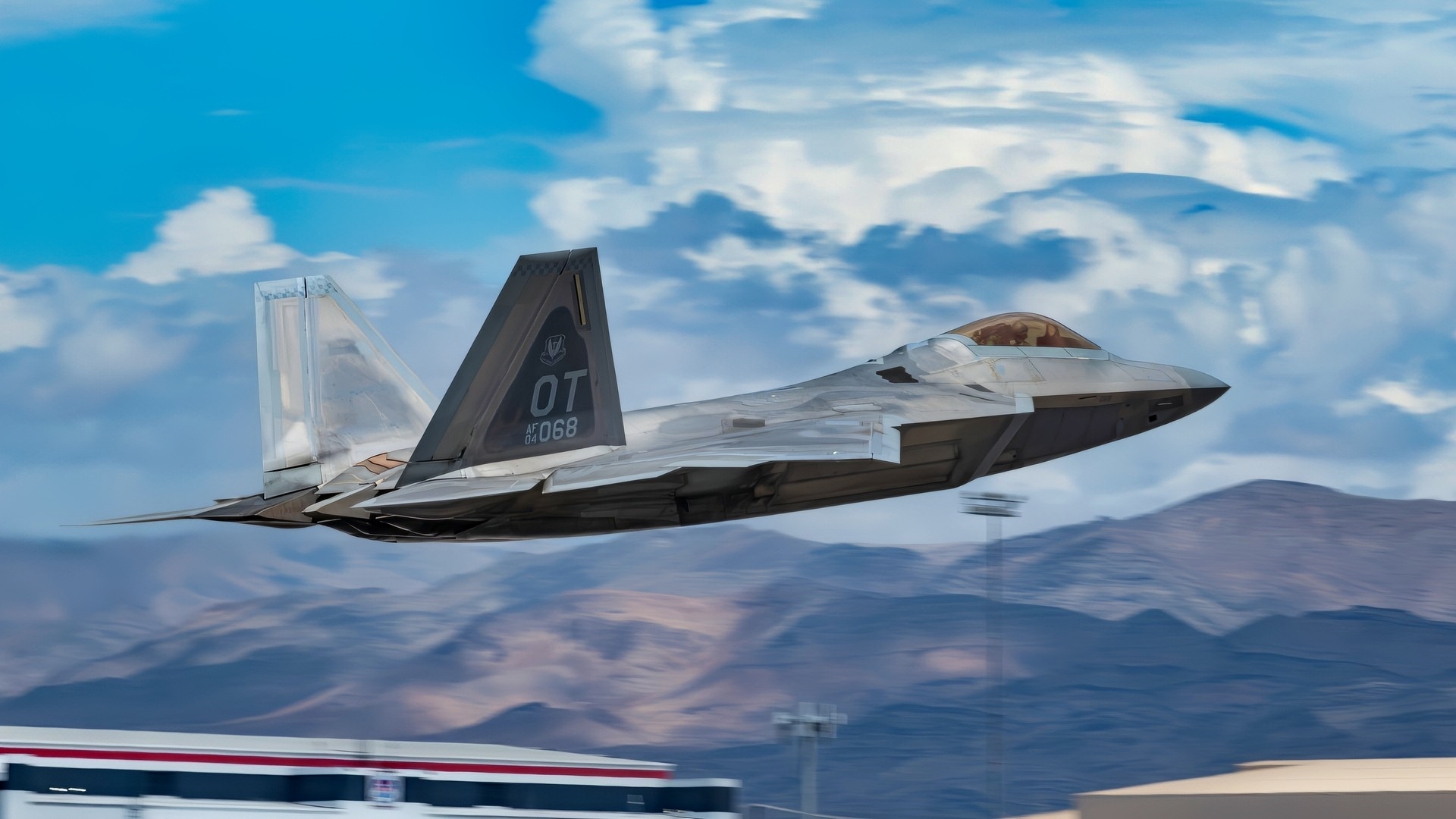
Key Points and Summary – The F-22 Raptor is built to seize air dominance: very low observability, supercruise, and thrust-vector agility give it first-shot/first-kill potential and control in the merge.
-Israel’s F-35I Adir trades peak kinematics for unmatched sensor fusion, bespoke EW, and deep networking—an information weapon that excels in complex, multi-ship fights.
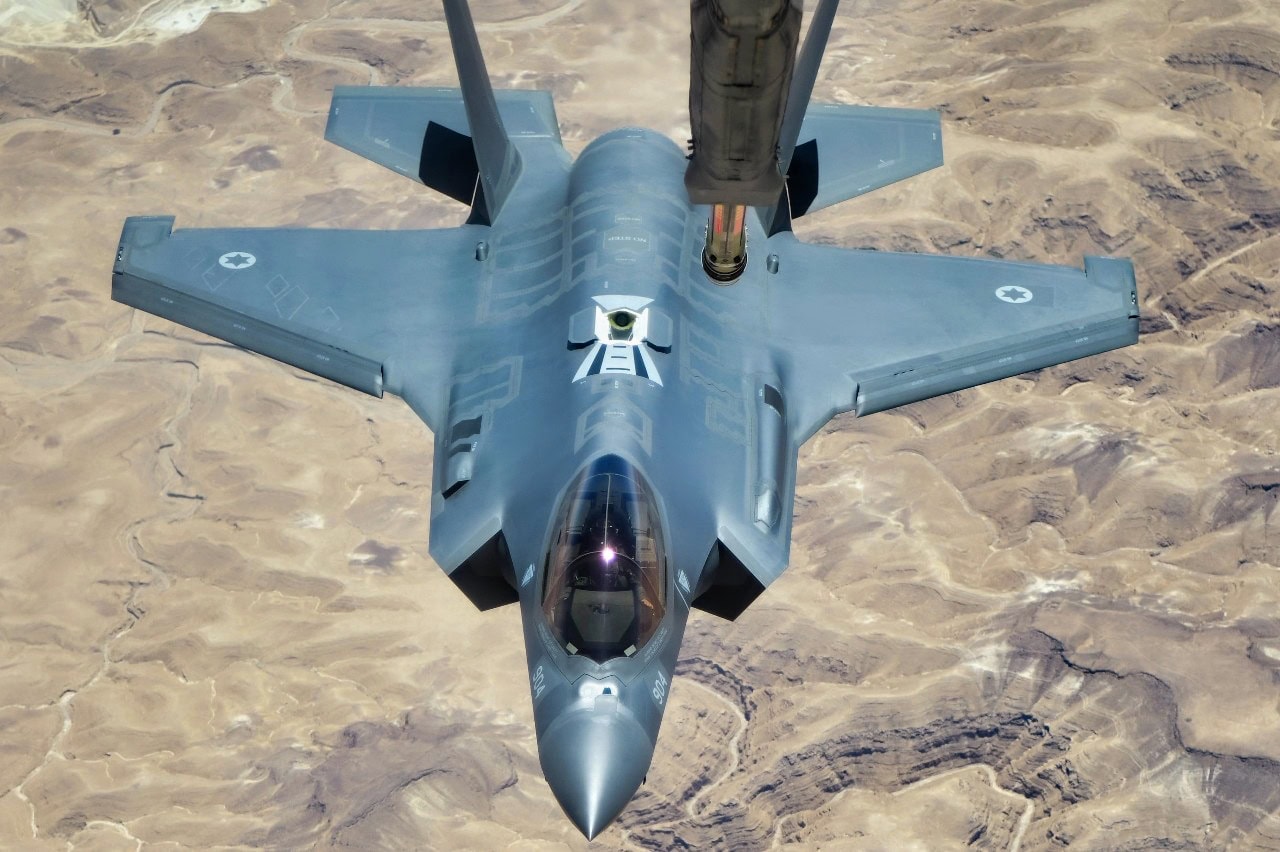
F-35I Adir. Image Credit: Creative Commons.
-In a clean one-on-one, the Raptor likely detects first and shoots first in BVR, then dominates WVR with vectoring and energy.
The Adir’s best counters are passive detection, electronic attack, and avoiding a dogfight altogether.
Bottom line: Raptor in a duel; Adir shines when the fight is a network, not a knife fight.
F-35I Adir vs. F-22 Raptor Fighter
Lockheed Martin’s F-22 Raptor is considered by many to be one of the most advanced operational aircraft of today, with the F-35 being its closest competition. It was built for speed, stealth, and agility, making it a terrifying presence in the skies.
Its avionics and advanced radar allow it to detect and lock on to enemies from many miles away, allowing it to achieve air superiority before the enemy even knows it’s there.
On the other hand, the Israeli F-35I is an upgraded version of the F-35, tailored to the needs of the IDF.
While it is unlikely that these two aircraft will ever meet in combat, it is interesting to consider which one would win in a one-on-one combat scenario.
Comparing Two of the Best Fighters
Lockheed Martin developed the F-22 Raptor to achieve unmatched air dominance. Its design prioritizes speed, agility, stealth, and the ability to engage enemy aircraft before being detected. It features thrust-vectoring nozzles, allowing it to perform extreme maneuvers that few other aircraft can match.
The Raptor can supercruise at around Mach 1.8, and its top speed exceeds Mach 2.25. These capabilities make it exceptionally lethal in air-to-air combat, particularly in close-range dogfights and beyond-visual-range (BVR) engagements.
In contrast, the F-35I Adir is tailored to Israel’s strategic needs and incorporates several unique modifications. While it shares the core design of the F-35A, the Adir includes Israeli-developed electronic warfare systems, command and control interfaces, and software enhancements that allow it to operate more independently from U.S. systems. The F-35I is not as fast or agile as the F-22, with a top speed of Mach 1.6 and no supercruise capability.
It lacks thrust vectoring, which limits its maneuverability in dogfights. However, it compensates for these limitations with superior sensor fusion, electronic warfare capabilities, and battlefield awareness.
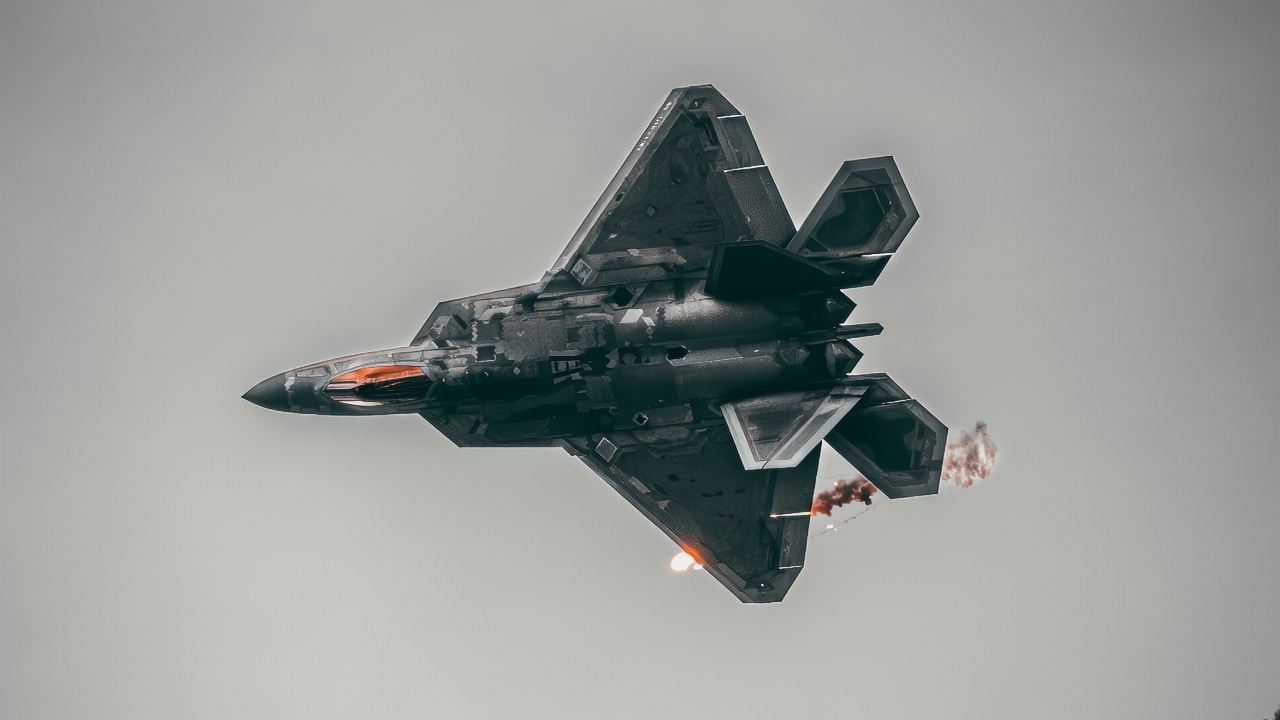
A U.S. Air Force F-22 Raptor performs a vertical climb during the 2025 Marine Corps Base Hawaii (MCBH) Kaneohe Bay Air Show, at MCBH, Aug. 9, 2025. The Kaneohe Bay Air Show provided an opportunity to showcase the aircraft, equipment, and capabilities of the armed forces in the Indo-Pacific region to the local community. The air show, which contained aerial performances, static displays, demonstrations, and vendors, was designed to celebrate MCBH’s longstanding relationship with the local community. (U.S. Army photo by Pfc. Peter Bannister)
Stealth Characteristics
Stealth is a critical factor in modern air combat, and both aircraft are designed to minimize their radar cross-section (RCS). The F-22 has a smaller RCS than the F-35I, estimated to be around 0.0001 square meters, making it extremely difficult to detect on radar.
The F-35I’s RCS is slightly larger, around 0.001 square meters, but still low enough to evade most conventional radar systems. While the F-22 relies heavily on its stealth and speed to avoid detection and engage targets, the F-35I uses its advanced sensors and electronic warfare suite to detect threats early and counter them effectively.
One of the most significant differences between the two aircraft lies in their avionics and sensor integration. The F-22 uses the AN/APG-77 AESA radar, which is powerful and stealthy but lacks the full sensor fusion capabilities found in the F-35.
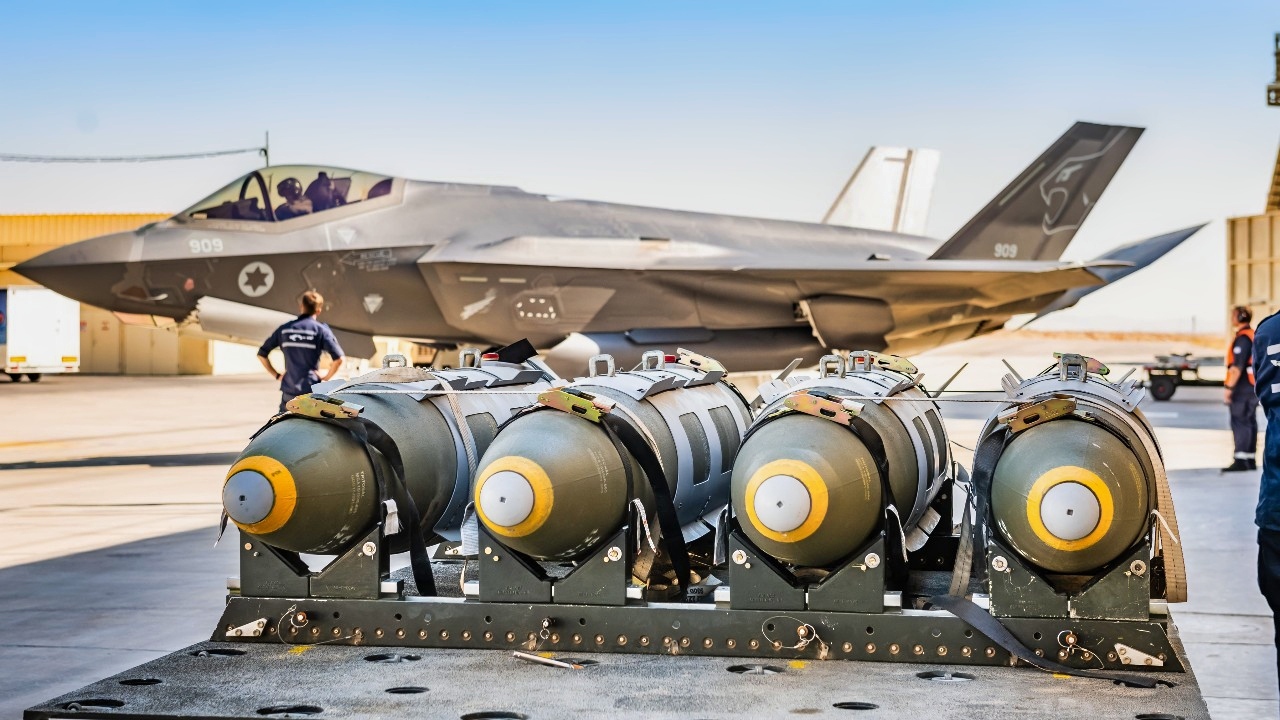
Israel F-35I Adir Stealth Fighter. Image Credit: IAF.
Pilots in the F-22 must manually interpret data from various sources, which can be a cognitive burden in high-stress combat scenarios. The F-35I, on the other hand, features the AN/APG-81 AESA radar and a fully integrated sensor fusion system. This allows the pilot to receive a unified, real-time picture of the battlespace, enhancing situational awareness and decision-making. The Israeli modifications further improve the F-35I’s ability to operate in a networked environment, sharing data with ground forces, other aircraft, and command centers.
Engine Performance and Armament
The F-22 Raptor boasts superior engine performance compared to the F-35, thanks to its twin Pratt & Whitney F119-PW-100 turbofans, which deliver around 35,000 pounds of thrust each and enable the aircraft to supercruise at speeds up to Mach 1.8 without afterburners.
This gives the Raptor exceptional acceleration, climb rate, and sustained supersonic capability. In contrast, the F-35I is powered by a single Pratt & Whitney F135 engine, producing approximately 43,000 pounds of thrust.
While powerful and efficient, the F135 does not support supercruise and is optimized more for versatility and fuel efficiency than raw speed. As a result, the F-22 outperforms the F-35I in terms of thrust-to-weight ratio, speed, and agility, making it the superior platform for air-to-air combat scenarios where engine performance is critical.
In terms of weapons, the F-22 is optimized for air-to-air combat. It can carry six AIM-120 AMRAAMs and two AIM-9 Sidewinders internally, along with a 20mm M61A2 cannon. The F-35I carries fewer air-to-air missiles internally, typically two AIM-120s, but can also carry precision-guided bombs such as JDAMs.
Its 25mm GAU-22/A cannon is more powerful than the F-22’s but less relevant in air-to-air combat. The F-35I’s external hardpoints allow it to carry a wide variety of Israeli and U.S. munitions, though doing so compromises its stealth profile. In a pure air-to-air scenario, the F-22’s weapons loadout and agility give it a clear advantage.
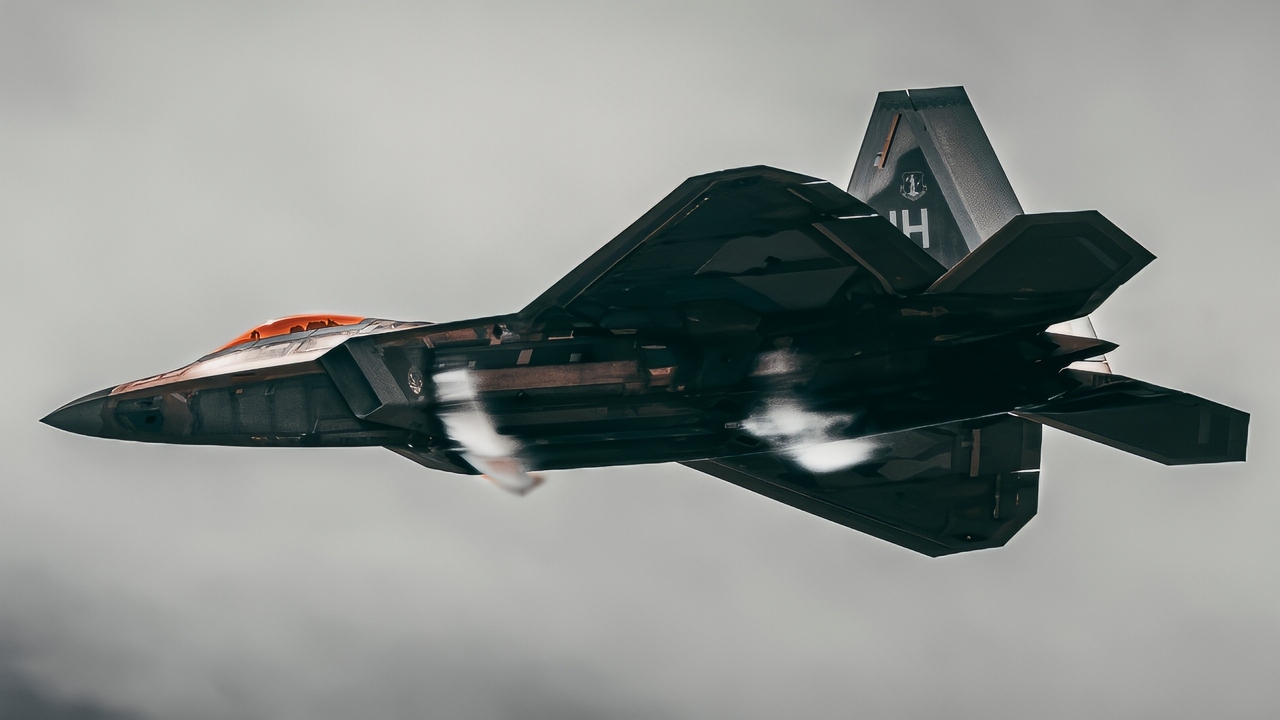
A U.S. Air Force F-22 Raptor performs a high speed pass during the 2025 Marine Corps Base Hawaii (MCBH) Kaneohe Bay Air Show, at MCBH, Aug. 9, 2025. The Kaneohe Bay Air Show provided an opportunity to showcase the aircraft, equipment, and capabilities of the armed forces in the Indo-Pacific region to the local community. The air show, which contained aerial performances, static displays, demonstrations, and vendors, was designed to celebrate MCBH’s longstanding relationship with the local community. (U.S. Army photo by Pfc. Peter Bannister)
Who Wins: The F-22 Raptor Would Prevail
So, who wins in this scenario? In a battle between these two legendary fighters, the victor is determined by several factors.
In a BVR scenario, the F-22 would likely detect and engage the F-35I first due to its lower RCS and supercruise capability. Its ability to launch missiles from a greater distance and evade return fire with speed and maneuverability gives it a strong edge. However, the F-35I’s electronic warfare systems could potentially jam or spoof incoming missiles, and its sensor fusion capabilities might allow it to detect the F-22 passively, giving it a chance to respond.
In a within-visual-range (WVR) dogfight, the F-22’s superior agility and thrust vectoring would give it a huge advantage.

An Israeli Air Force pilot climbs into an F-35I Adir prior to a Red Flag-Nellis 23-2 mission at Nellis Air Force Base, Nevada, March 16, 2023. Red Flag is an opportunity to build on the success of JUNIPER OAK 23-2, JUNIPER FALCON, and additional combined exercises to enhance interoperability with Israel, strengthen bilateral cooperation, and improve capabilities in ways that enhance and promote regional stability and reinforce the United States’ enduring commitment to Israel’s security. (U.S. Air Force photo by Airman 1st Class Trevor Bell)
The F-35I is a capable aircraft, but it cannot match the Raptor’s turn rate or acceleration. The F-22 was built for this kind of combat, and its design reflects that focus.
The F-35I would be at a disadvantage unless it could avoid such a scenario altogether through superior situational awareness and long-range engagement tactics.
About the Author: Isaac Seitz
Isaac Seitz, a Defense Columnist, graduated from Patrick Henry College’s Strategic Intelligence and National Security program. He has also studied Russian at Middlebury Language Schools and has worked as an intelligence Analyst in the private sector.
More Military
Dassault Rafale Fighters Just Sent to Russia’s ‘Backyard’
F-15EX Eagle II vs. Su-57 Felon: Who Wins?
The Boeing X-32B Stealth Fighter Deserves a Better Fate Than This


