


At 10:50 a.m. on July 29, 1967, a Zuni rocket misfired in its launcher aboard the USS Forrestal in the Gulf of Tonkin, igniting a 17-hour inferno that killed 134 sailors and destroyed 21 aircraft. A young Lt. Cmdr. John McCain — the future U.S. senator from Arizona and 2008 Republican presidential nominee — was strapped into a Skyhawk on the flight deck and barely escaped with his flight suit on fire. Cascading M65 bomb detonations and pooling JP-5 jet fuel kept the fire alive until 4 a.m. the next morning.
The USS Forrestal Aircraft Carrier Disaster

Forrestal-Class Aircraft Carrier in Drill U.S. Navy Photo
It was an ungodly tragedy. On July 29, 1967, the USS Forrestal aircraft carrier found itself in a blazing inferno that no one could have foreseen. It killed more than 134 sailors and destroyed 11 A-4 Skyhawks, almost an entire squadron. These were either burned en masse or pushed aside. It happened in the Gulf of Tonkin near Vietnam. A Zuni rocket was accidentally fired onboard, which sparked a deadly chain of events.
The fire nearly killed future Senator John McCain, who was a lieutenant commander at the time. “It’s a difficult thing to say. But now that I’ve seen what the bombs and the napalm did to the people on our ship, I’m not so sure that I want to drop any more of that stuff on North Vietnam,” he said to the New York Times, the day after the disaster.
The Damages Were Extensive
Seven F-4 Phantoms IIs were also destroyed, as were three RA-5C Vigilantes. The Forrestal was immediately sent to the Philippines for emergency repairs. It made it to Florida so its crew could get relief. It then sailed to Norfolk for a long refit that lasted six months and cost nearly $2 billion in today’s dollars.
How Did It Start?
At 10:50 am on July 29, the inferno began. A Mark 32 Zuni rocket on board an F-4B somehow caught fire in its LAU-10 launcher. The rocket took over the deck. Usually, these rockets had “pigtail” plugs that connected the weapon’s circuitry. Because of the high operational tempo and sortie rates on the Forrestal, the pigtail plugs were inserted early. This was typically against procedure, but was allowed to save time.
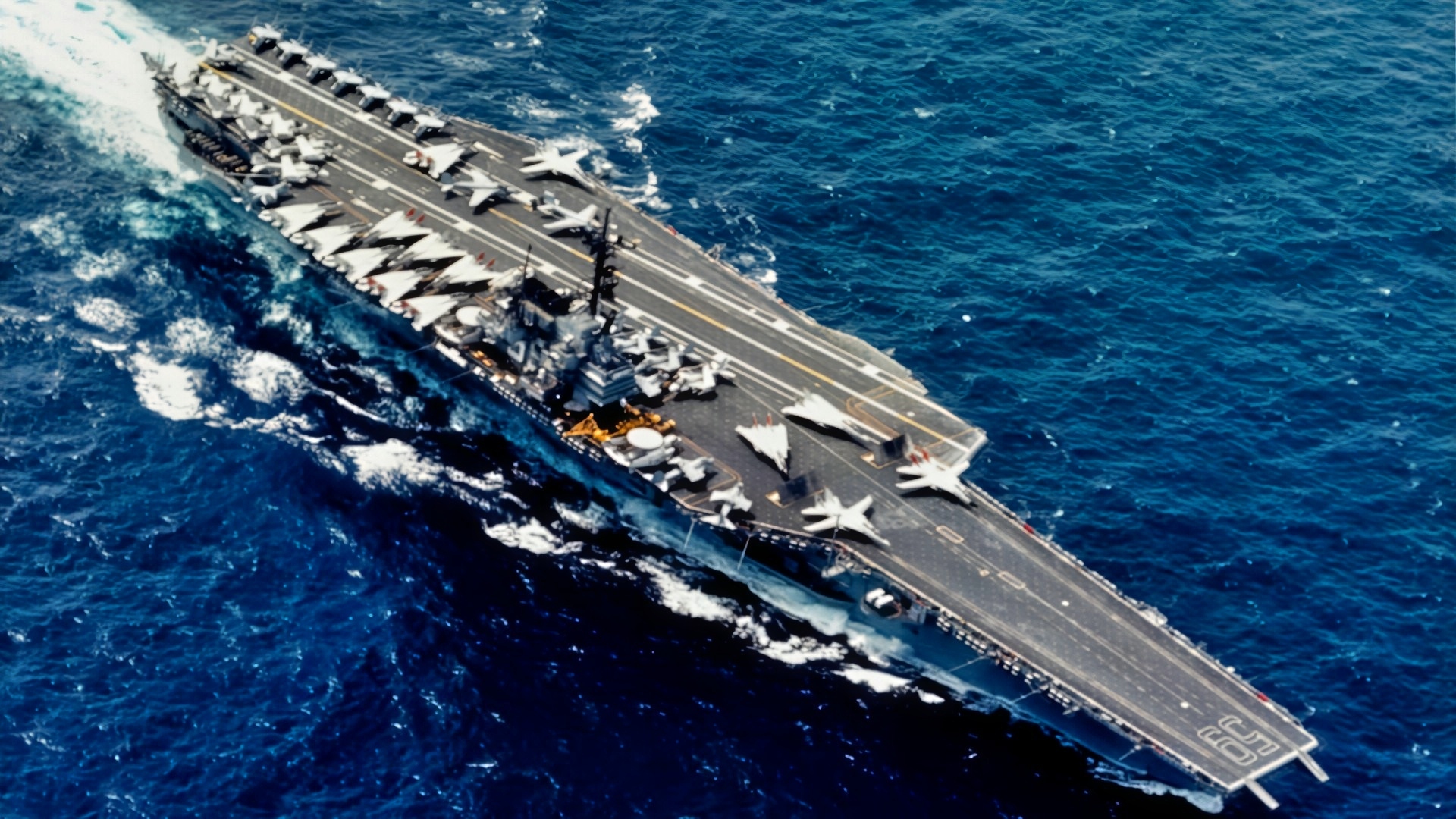
USS Forrestal Aircraft Carrier. Image Credit: Creative Commons.
Then, some kind of power surge happened to make a spark in the plug’s wiring. The rocket was triggered. So the rocket fired and hit an A-4 Skyhawk carrying bombs, flown by Lt. Cmdr. Fred White, the squadron commander. He was waiting to take off.
The Fuel Tanks Were Especially Vulnerable
The Zuni hit the Skyhawk’s fuel tank. Then two wing-mounted M65 bombs fell on the flight deck. The JP-5 jet fuel leaked everywhere, and the fire started.
What happened next was a blur. The captain of the Forrestal immediately ordered the damage control to react quickly. But there was only one hose to fight the fire, and one of the hydrants was engulfed in flames.
Now it was McCain’s turn to worry. His jet began to burn, so he left the cockpit and tried to climb down. We can only imagine his fright. He went from getting ready to launch a mission to possibly being burned to death. He barely got off the plane with his flight suit on fire.
One Fire Extinguisher Was Not Going to Help
One damage control sailor tried to take a fire extinguisher with a Purple-K dry-chemical fire extinguisher. This did not help much. The flames started heading for bombs stored on the deck. He told everyone to fall back because everything looked like it was going to explode again.
The bomb erupted, and it killed all but three members of the damage control crew. Everyone else was scorched with burns. When the bomb went off, McCain’s body was hurled across the flight deck.
The fire burned aft on the flight deck and ignited the fuel on two other Skyhawks. There were thousands of gallons of fuel that could feed the fire. M65 bombs turned it into an even bigger blaze when they exploded. The bombs blasted and ripped holes in the deck, and then jet fuel poured into the opening and trapped sailors who were below.
This all happened in a matter of minutes. It must have been horrifying. It is not clear what the firefighters could have done differently. The chain of events was just mortifying.
The Shrapnel from Bombs Was Also Deadly
The fire wasn’t the only problem. The bombs spread shrapnel among the crew. So sailors decided the best thing to do was to quickly disengage bombs from airplanes and then take the ones that were on the flight deck and throw them overboard. One shipmate used a forklift to push an RA-5C Vigilante off the carrier.
Sailors made mistakes when they tried to send only seawater to the flames, which spread the fire into the lower compartments under the flight deck. The seawater had a negative effect on the firefighting foam, pushing it away from the blaze.
The fire burned until 4 am the next day before it was finally put out. The Navy chalked this up to an unavoidable accident, but the captain was relieved.
The Navy decided to place more emphasis on firefighting procedures in basic training cycles. The USS Forrestal stands as a horrifying example of what can happen on a carrier with so many bombs and jet fuel. The chain of events showed that everyone on board should be trained as a firefighter to ensure the worst does not happen again.
About the Author: Brent M. Eastwood, PhD
Author of now over 3,500 articles on defense issues, Brent M. Eastwood, PhD, is the author of Don’t Turn Your Back On the World: A Conservative Foreign Policy and Humans, Machines, and Data: Future Trends in Warfare, plus two other books. Brent was the founder and CEO of a tech firm that predicted world events using artificial intelligence. He served as a legislative fellow for US Senator Tim Scott and advised the senator on defense and foreign policy issues. He has taught at American University, George Washington University, and George Mason University. Brent is a former US Army Infantry officer. He can be followed on X @BMEastwood.


