

Ukraine is attacking Russia with a strategic drone and missile campaign that aims to exploit Russia’s immensity and transform it from a key strength into a fatal weakness. Russia’s immensity makes it difficult to defend.
Russia’s depleted and failing air defense systems are failing to shoot down the Ukrainian drones as they slam into oil storage facilities, supply convoys, and other military targets.

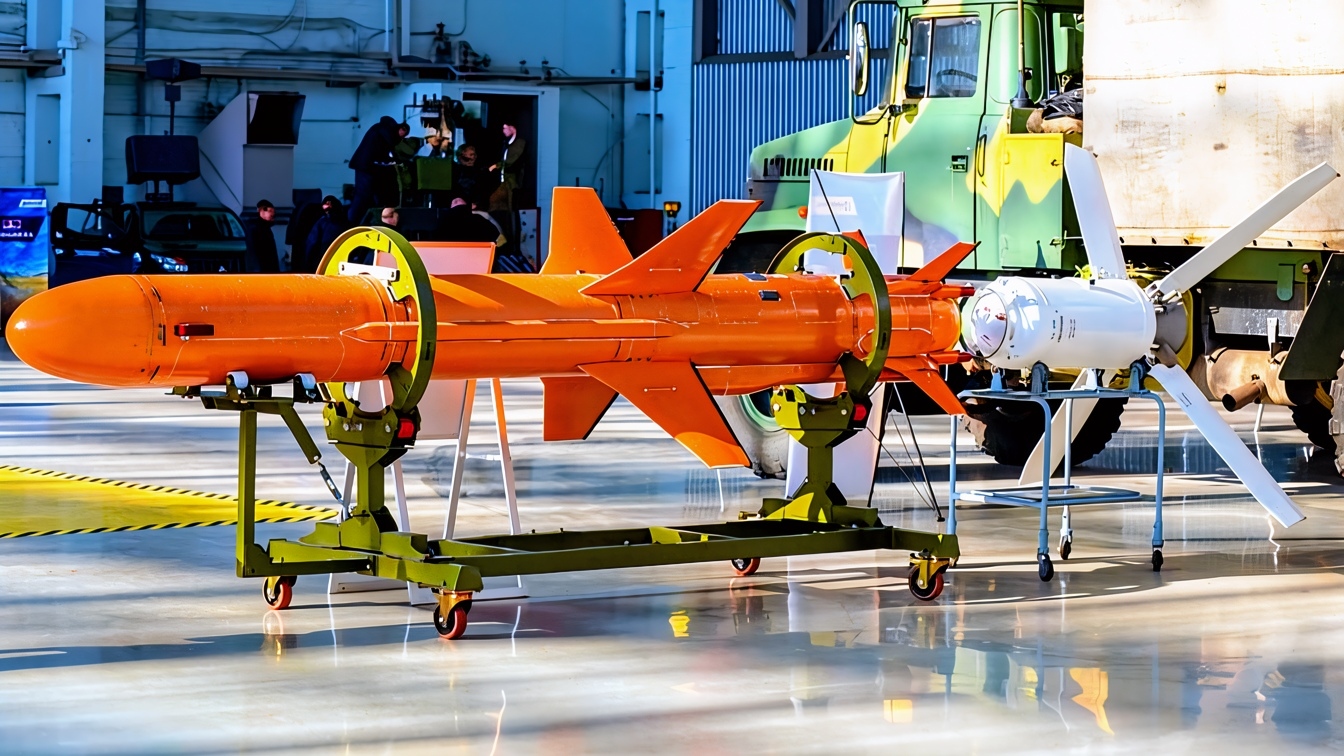
Switchblade Drone. Image Credit: Industry Handout.
In the Russian-annexed and occupied Crimea, Ukrainian drones have struck a historic museum in Sevastopol and the occupied port of Mariupol. As a result, Russian authorities have cut nighttime train schedules due to these increasingly successful drone strikes in the region and in Russia itself.
Ukraine War Update: Historic Museum Hit And On Fire In Sevastopol
Sevastopol’s Russian-installed governor, Mikhail Razvozhayev, wrote about the damage to the museum in a Telegram post early on Wednesday.
“The UAV damaged the building of the panorama ‘Defense of Sevastopol 1854-1855’; the roof is on fire,” he said. “This building is not just a museum. It is a symbol of resilience, which has repeatedly taken the blows of the enemy.”
Razvozhayev cited the World War II Siege of Sevastopol; “the Panorama building was subjected to massed bombing by German aviation,” he said before vowing, “The enemy will pay for this sacrilege!”
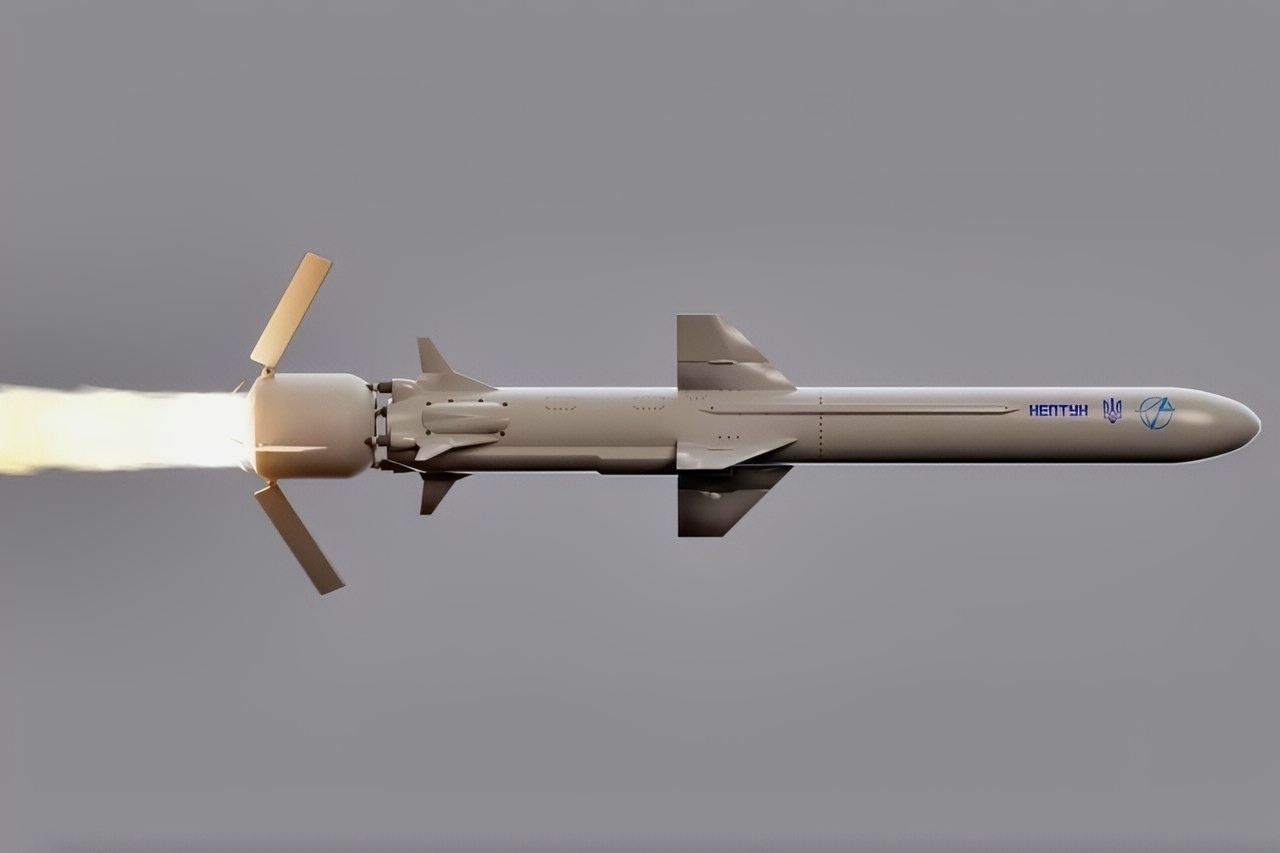
Neptune Missile. Image Credit: Government of Ukraine.
Drone Strike Damages Port Facilities In Mariupol
The attack on the port of Mariupol caused a blackout at the site, according to Ukraine’s military. The operation was carried out by Ukraine’s Unmanned Systems Forces in coordination with the 1st Azov Corps, the Security Service of Ukraine (SBU), and Special Operations Center “A”, which initiated the drone strikes.
Several of the port’s key facilities were struck, including energy and maintenance infrastructure, which has “significantly limited” the city’s capacity as a logistics hub, the military added.
“Electrical substations, radar equipment, repair infrastructure, the control tower, and fuel and lubricant storage tanks were hit,” the Azov Corps posted in a statement, adding that a sanctioned cargo vessel, The Lady of Augusta, was also damaged.
Ukraine Destroys Bridge To Crimea, Russia Closes Another
The drone strikes by Ukraine have been hitting the Russians hard, and elsewhere in Crimea, drone strikes by the Ukrainians have destroyed the Chonhar Bridge, a critical link between Crimea and mainland Ukraine used for moving Russian military supplies to its troops.
Russian engineers have constructed a pontoon bridge in its place.
Following these drone strikes, Russian authorities closed the Henichesk–Arabat Spit bridge, eliminating another major supply route to Crimea.
Russian logistics are being put under enormous strain. With main crossings out, the Russian military is being forced to use longer detours via Armyansk and Perekop, increasing travel time, fuel costs, and supply challenges.
Rail Service Suspended After Drone Attack On A Train
Ukrainian long-range drones have struck a passenger train locomotive, killing the assistant engineer while wounding the lead driver, when a drone struck a train traveling from Moscow to Simferopol, Crimea’s second-largest city. This caused the Russians to suspend rail service for that part of Crimea.
Sergei Aksyonov, the Russian-appointed governor of Crimea, said no passengers were wounded in the attack and that Russian officials were arranging bus transportation for the stranded passengers.
Local media reported that the only remaining rail link from Crimea to the Russian mainland is via the Kerch bridge, with passengers currently being shuttled to the crossing by bus.
These attacks have basically isolated the entire Crimean peninsula, as Moscow is wary of sending equipment, large troop concentrations, and ships to the ports there, lest they be attacked with virtual impunity.
Middle-strike drone strikes aren’t limited to Crimea. In mid-May, Ukraine launched more than 600 drones in an attack on Moscow itself. The targets struck by the Ukrainian drones included the Moscow Oil Refinery, the Solnechnogorsk fuel-loading station, the Volodarskaya petroleum-product pumping station, and the Angstrem microelectronics plant in Zelenograd, outside Moscow.
Ukrainian Drones Targeting Russia’s Gas And Oil Infrastructure
Since the Russians invaded Ukraine in February 2022, the Ukrainians have conducted at least 158 strikes against Russian oil refineries. And those strikes have been conducted against 24 of 33 major Russian refineries.
Those attacks have intensified in the past year. Up to this point in 2026, Ukrainian drone strikes against oil facilities have already surpassed all of 2024. In May, Ukraine targeted eight of the ten major refineries.
Russia’s economy relies on oil and gas taxes for 25 percent of its budget. It is already stretched tight, and this loss of revenue will stretch it to the breaking point.
In Novokuibyshevsk, which is located within Russia’s Samara oil hub region, Ukrainian drones targeted Rosneft’s oil refineries; however, regional governors reported that Russian air defenses repelled the drone attacks.
But news reports said the refineries were shut down after the attack, and photos showed at least three columns of black smoke rising from the facilities. The refineries had been operating at reduced capacity after drone strikes in April.
The Russian authorities did, however, urge one million residents to seek shelter.
Russian OSINT channel Astra confirmed the Kuibyshev oil refinery was burning after an attack by at least 29 drones.
In Russia’s Rostov region bordering Ukraine, a drone strike ignited a massive fire in a fuel tank. In the central Vladimir region, two industrial facilities were hit and on fire..
Other Ukrainian drone attacks continue to target Moscow’s oil production facilities, effectively shutting down the Syzran Oil Refinery, which refines about 170,000 barrels a day. Six of Russia’s ten oil refineries were forced to shut down production, at least for a short time.
Russia Has Been Powerless To Stop Ukraine’s Drones
Russia, thus far, has been powerless to stop the Ukrainian drone attacks. If anything, they are only growing in size and effectiveness.
The campaign has been bolstered by tech-forward adaptations, such as the Hornet drone, which utilizes AI-assisted targeting and Starlink communications to maintain fire control over occupied territories.
These strikes have had a profound psychological effect on civilians. Deep strikes inside Russia are increasingly common, forcing the Russian populace to confront a war they previously believed they were immune to.
Combined with drone strikes elsewhere, these operations are part of a broader campaign by Ukraine to critically degrade Russia’s southern supply corridors and weaken the Russian economy.
About the Author: Steve Balestrieri
Steve Balestrieri is a National Security Columnist. He served as a US Army Special Forces NCO and Warrant Officer. In addition to writing on defense, he covers the NFL for PatsFans.com and is a member of the Pro Football Writers of America (PFWA). His work was regularly featured in many military publications.


Swamplaw Yankee
June 11, 2026 at 1:10 pm
Lets look at the language. So, Kremlin Muscovy ethnic KOLONIZERS flooded into Independent Ukraine to seize FREE real Estate from evicted Ukrainians.
Now, the Kremlin Federation is never mentioned as all the op ed whines about is Kremlin Muscovy ethnic KOLONIZERS who attacked into Ukraine’s Crimea. Perhaps a few thousand pages of op-ed about the BALTIC STATE Kolonizers who lost FREE real estate when the Kremlin Muscovy evacuated the 3 Baltic states. How is their “PROFOUND psychological effect” playing out as they left for their own homes in Moscow?
Yes, in Moscow, the Muscovy Ethnics can create world level huge choirs to sing Revanchist Russian language songs 24/7 as they wish!
So, normal Muscovy wanted to believe that Genocide of Ukrainians was A OK. POTUS Barry Obama facilitated their Balkanization of Crimean and zero post -2014 POTUS ever whispered that KOLONIZATION of Ukrainian land was a Yankee NO-NO.
As these families had 800-1000 years of legal sex-slave trade in Ukrainian children, why should old Great-Great Grand pops not be a role model for the 2026 Muscovy ethnic Genocider + mass abductor of Ukrainians.
They USA op-ed needs to revisit what International War Criminals, Genocide + atrocities are defined internationally. After all, their POTUS Obama facilitated the February 6th 2014 Balkanization of independent Ukraine – including Crimea.