

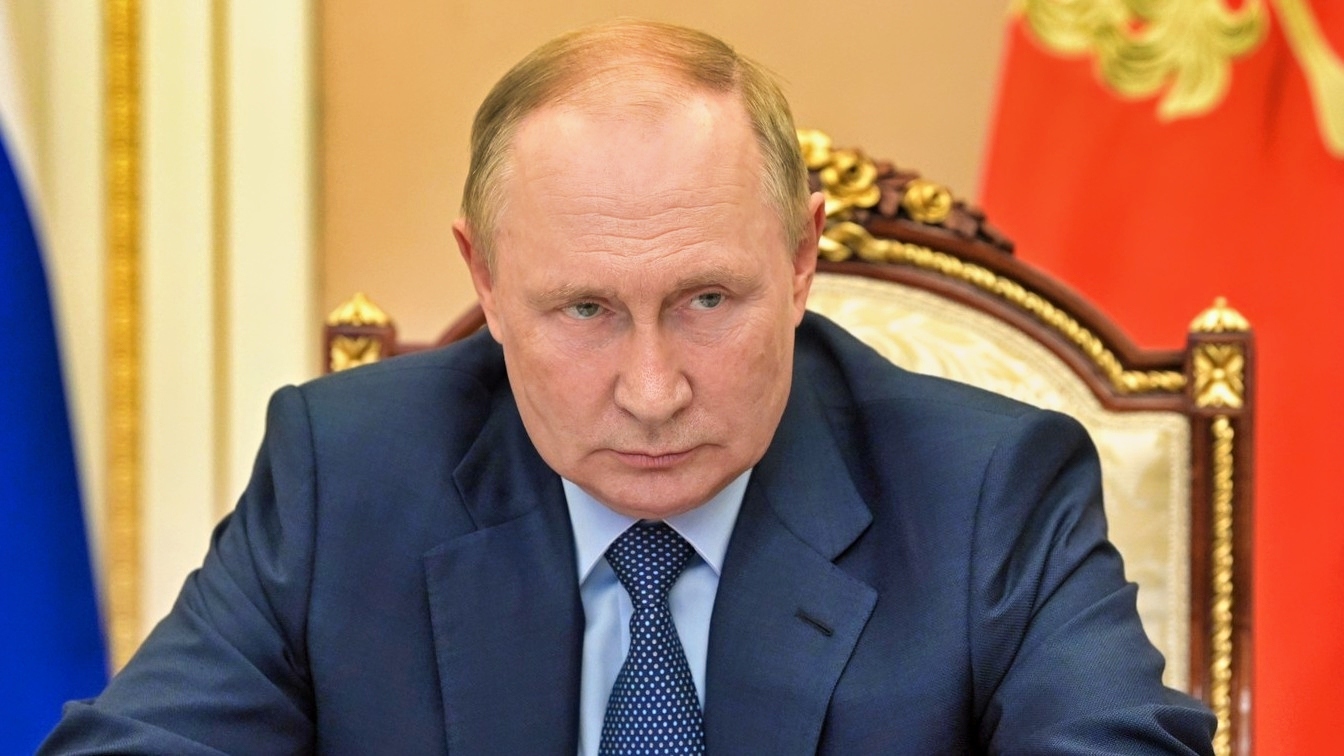
There is nothing as classic in the crime/murder mystery genre as the infamous “killer returning to the scene of the crime.” In a real-world example of how art imitates life, Russian President Vladimir Putin appears to have done just that.
For months now, unofficial sources have said Putin has increasingly confined himself to hiding inside underground bunkers or other hardened sites.
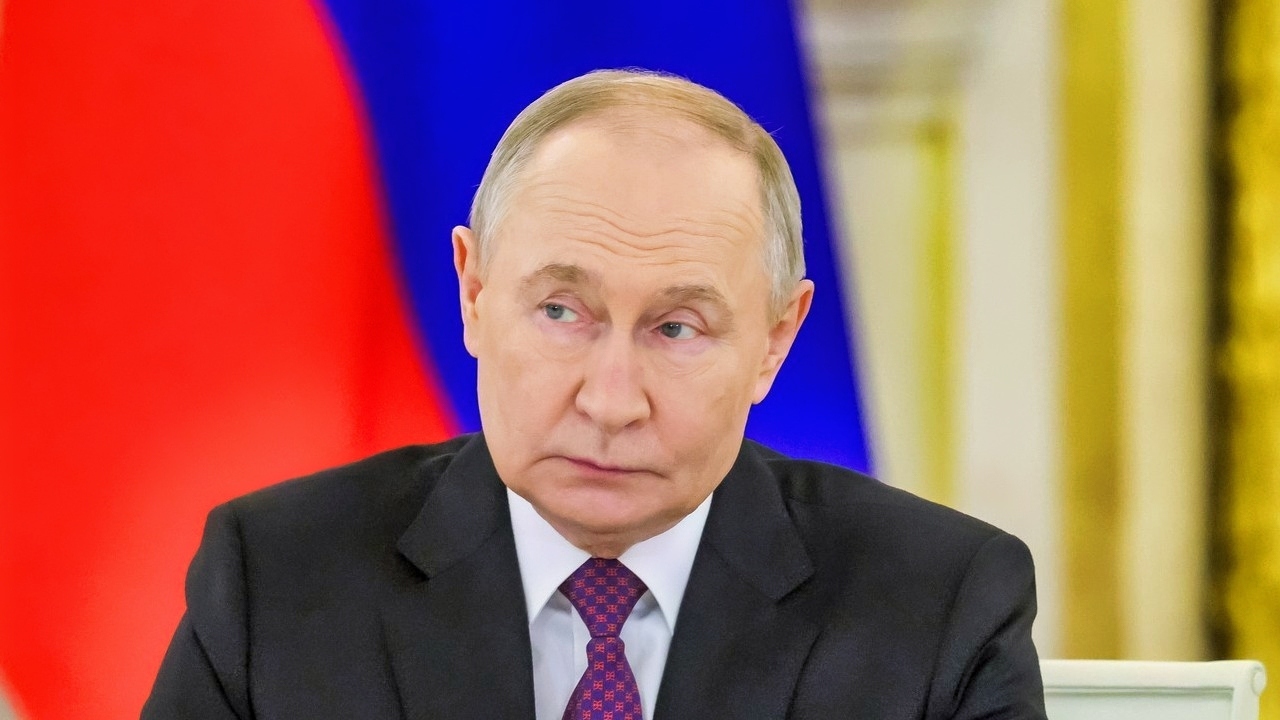
Putin in Early 2026 Russian Federation Photo
Much like the billion-dollar command center in the Urals he was reported to be ensconced in immediately after he began the full-scale invasion of Ukraine in February 2022.
Reports on Monday, 17 August, are that Putin has indeed returned to that scene: a subterranean shelter east of the Ural Mountains.
There is little to no transparency about the former KGB Lt. Col.’s movements, but Russian Telegram channels appear to have sources inside the Kremlin.
One of them is an independent channel called Можем объяснить (Mozhem Obyasnits) or Russian for “We Can Explain.” The content creators are former writers for the one-time Open Media project in Russia that was closed down by a Russian state decree before the Ukraine invasion, on the grounds that the Kremlin deemed its editorial content “undesirable.”
The channel has reported that Putin appears to have fled to Russia’s eastern region, where he believes he is outside the range of strikes from Ukraine’s drone attacks of the type that blanketed Moscow this past weekend.
Of course, 19FortyFive can’t confirm these reports. But, of course, they do matter in the broader context of Russia’s war, if accurate.
Living in Isolation
“Putin has fled beyond the Urals,” was the report the channel posted.
Translated from the original Russian, the posting reads “Following an intensification of Ukrainian attacks, his public itinerary has increasingly shifted toward Siberia and the Russian Far East, even as the Kremlin continues to present [summations of] closed-door meetings with a ‘Moscow’ dateline.”
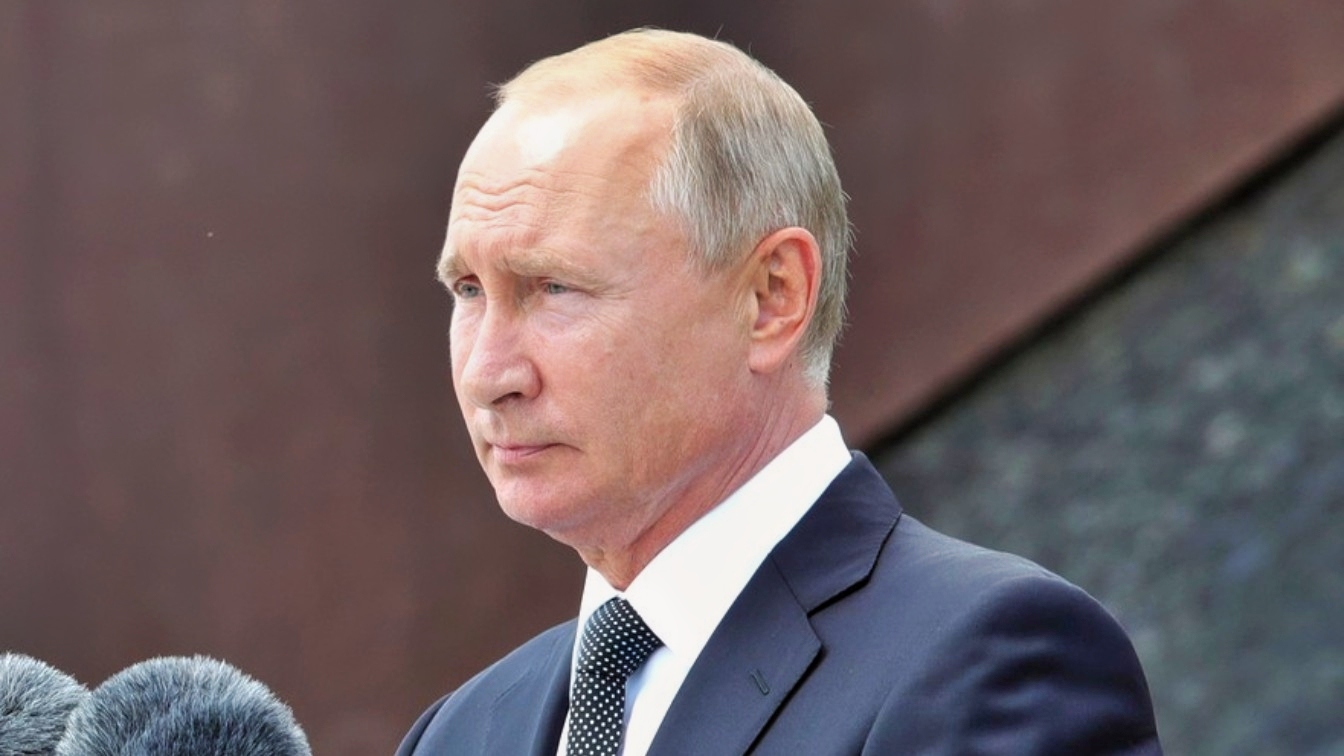
Putin Speaking With Leader of Belarus Russian Federation Photo.
For months now, reports have leaked out that Putin is largely living in isolation – to a degree that exceeds even the safeguards and extreme precautions he insisted upon during the pandemic. According to a New York Times report published less than a month after the Ukraine invasion in 2022, analysts of the former KGB officer describe the conditions that Putin established to safeguard him from contracting the virus as bordering on the absurd:
“Throughout the pandemic, Mr. Putin has retreated into an intricate cocoon of social distancing — though he allowed life in Russia to essentially return to normal. The Federal Protective Service (FSO), Russia’s answer to the Secret Service, built a virus-free bubble around Mr. Putin that far outstrips the protective measures taken by many of his foreign counterparts.”
This has caused more than one observer to ask whether or not the years he spent under these multiple layers of protection against the virus have affected his state of mind – particularly his level of paranoia – and how that adds to his laborious personal security requirements that have been mandated as a consequence of the war in Ukraine.
The Phantom Drone Menace
In May, the Financial Times published an analysis stating the Russian President was spending increasingly more of his time in underground bunkers “micromanaging” the war in Ukraine and becoming “detached” from the mundane day-to-day issues of running the country.
The article cited anonymous sources close to the Kremlin, as well as other reporting leaked from European intelligence services.
These sources claimed that Putin’s concerns about coup attempts and potential assassination plots – with a singular concentration on his fear of being hit with a drone attack – have increased geometrically since March 2026.
This uptick in his security arrangements over the past few months is only amplified by Ukrainian strikes on Russian soil.
Following Moscow’s full-scale invasion of Ukraine in 2022, Ukraine’s Defence Intelligence Service (HUR) has been connected to numerous long-range strikes deep inside Russian territory. Both the HUR and Ukraine’s civilian intelligence service are thought to have carried out high-profile assassinations of senior Russian military officials – most of them having been killed inside the city limits of Moscow itself.
A 1 August bombing of an upscale restaurant in central Moscow, located not far from the US Embassy, appears to have been targeted to kill the recently-appointed head of Russia’s Aerospace Forces (VKS), Col.-Gen, Aleksandr Chayko.
The General himself has not been seen in public since, and there are known to be at least five persons who were killed in this attempt on his life, including his son-in-law.
About the Author: Reuben F. Johnson
Reuben F. Johnson has thirty-six years of experience analyzing and reporting on foreign weapons systems, defense technologies, and international arms export policy. Johnson is the Director of Research at the Casimir Pulaski Foundation. He is also a survivor of the Russian invasion of Ukraine in February 2022. He worked for years in the American defense industry as a foreign technology analyst and later as a consultant for the U.S. Department of Defense, the Departments of the Navy and Air Force, and the governments of the United Kingdom and Australia. In 2022-2023, he won two awards in a row for his defense reporting. He holds a bachelor’s degree from DePauw University and a master’s degree from Miami University in Ohio, specializing in Soviet and Russian studies. He lives in Warsaw.


