

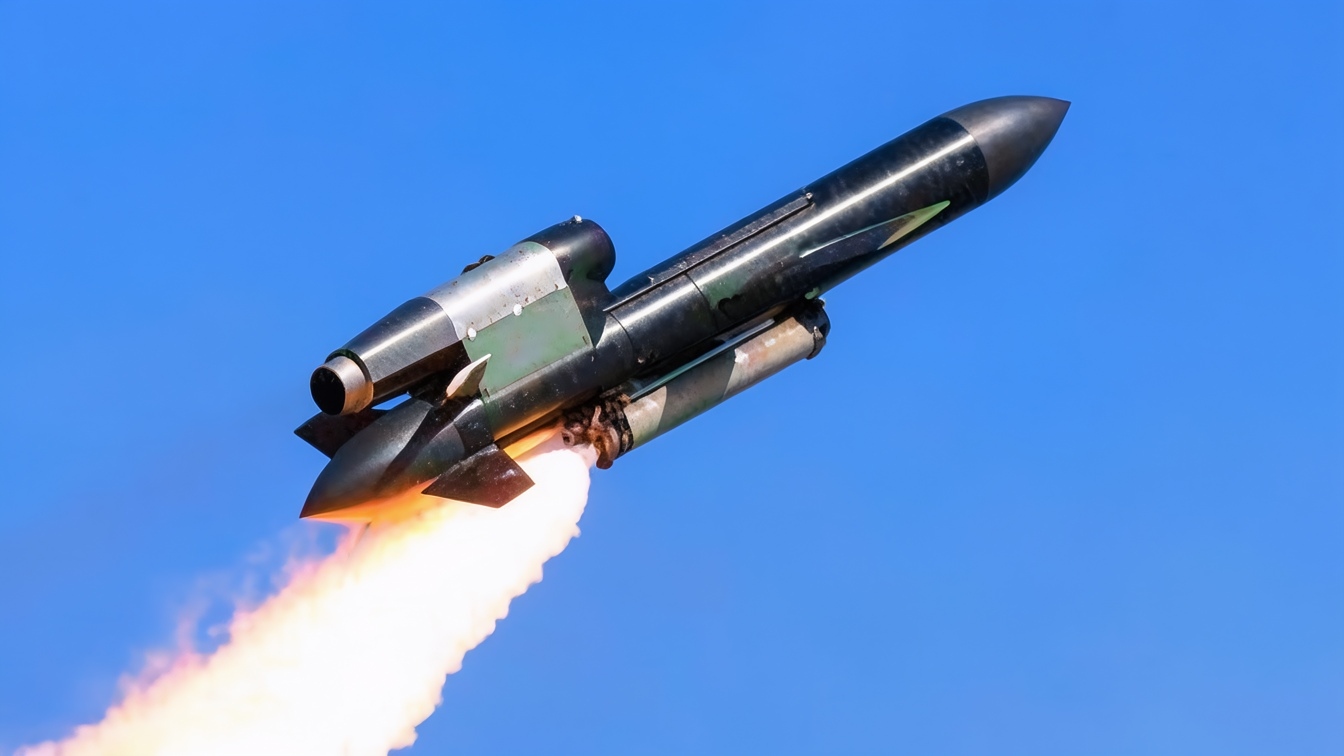
Over the weekend, Ukraine launched one of its most massive drone attacks against Russia since the beginning of the war.
According to some claims, Kyiv launched more than 1000 attack UAVs on Saturday night/Sunday morning.
Putin in Meeting In January 2023 Creative Commons Photo
Drones were detected in multiple Oblasts, with Saint Petersburg as the main focus of the air raid.
Footage of the attack confirms that several objects were struck by Ukrainian drones, including energy infrastructure, a warehouse belonging to online retailer Ozon, and a data center belonging to the social media company VK. Meanwhile, Russia continues to launch its own attacks against Ukraine as it ramps up its own attacks against Ukraine’s energy grid.
Ukraine’s Largest Drone Attack Yet
The Governor of St. Petersburg, Alexander Beglov, confirmed several impacts in the city after a massive drone attack on Sunday morning, October 18. “Emergency services continue to work on extinguishing fires at the ‘St. Petersburg Oil Terminal,’ the ‘Ruch’i’ oil depot, and industrial warehouses in the Kolpinsky district,” the Governor wrote on his Telegram channel. Beglov also reported that one civilian was killed during the strike, with five more injured.
Additionally, flight operations at Pulkovo International Airport, St. Petersburg’s main airfield, were temporarily suspended.
The drone attack also reportedly hit energy infrastructure in the Leningrad Oblast, temporarily leaving 20,000 people without electricity.
The attacks also hit a data center belonging to the Russian Social media platform VK and an Ozon logistics warehouse.
The Russian Ministry of Defense claimed that 1,015 Ukrainian drones were shot down over Russian airspace during the attack.
According to Alexander Drozdenko, 145 drones were intercepted as they approached St. Petersburg.
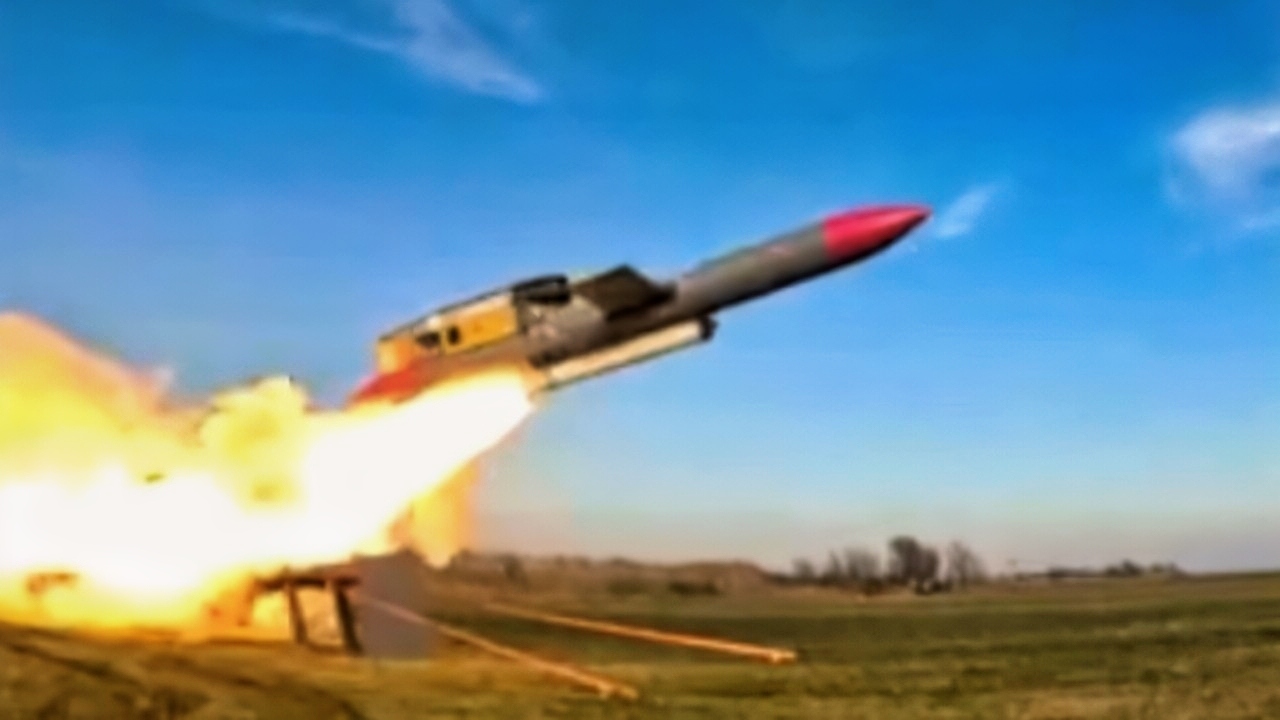
Flamingo Missile Handout Photo
According to OSINT reports, Ukraine also launched around 17 FP-5 Flamingo cruise missiles during the attack, all of which were reportedly intercepted.
The Ukrainian Telegram channel “Supernova+” also reported that some drones used in the attack flew through Estonian and Latvian airspace to bypass Russian air defenses.
A spokesperson for the Ukrainian Foreign Ministry claimed that its drones were forced into NATO airspace due to “Russian electronic warfare diverting drones during an operation against legitimate military targets in Russia.” The Lithuanian Ministry of Defense said it scrambled fighter jets to search for “an unidentified object” that entered its airspace on Sunday morning.
Pro-Russian accounts naturally claimed that the Baltic countries were complicit in the attack against Russian territory and willingly allowed Ukraine to use their airspace.
Ukraine Continues Attack Despite Trump’s Objections
The attack on Saint Petersburg comes as relations between Washington and Kyiv have been on a downward spiral. Tensions between Trump and Zelenskyy have always been somewhat uneasy.
Still, they reached their boiling point after President Trump announced that the U.S. planned to import large quantities of Russian diesel fuel.
The decision was interpreted as a betrayal by President Zelenskyy, who vented his frustrations on social media.
Tensions worsened after the U.S. tried to implement an energy ceasefire that neither side intended to honor.
Kyiv honored the agreement for three days before publicly announcing that Ukraine would resume its attacks against Russian oil infrastructure.
Now, tensions between the U.S. and Ukraine are reaching an all-time high after Trump decided to hold off on new sanctions against Russia.
The President defended his choice, saying that he did not want to do anything that would “foolishly” drive Moscow “away from the bargaining table.” He rejected the idea that he favored Moscow over Kyiv’s interests and derided Zelenskyy for not wanting to end the war. Zelenskyy responded to Trump, insisting that sanctions relief would only help Moscow’s war effort and warning the American president that siding with Moscow would be a “historic mistake.” Relations have further deteriorated over Starlink outages and claims that the U.S. is no longer sharing intelligence with Kyiv.
Russia Ramps Up its Attacks
While Trump and Zelenskyy continue their political drama, Russia continues its attacks against Ukraine.
On Sunday morning, while Ukraine was carrying out its drone attack against St. Petersburg, Moscow also carried out a large-scale drone/missiel attack against multiple regions in Ukraine.
Multiple attack drones struck targets in the Odesa and Rivne Oblasts, attacking power substations and other critical infrastructure sites.
The city of Zaporizhzhia was also attacked multiple times during the weekend by glide bombs, attack drones, and MLRS artillery.
One of the targets was the Zaporizhzhia Metallurgical Plant, which Russian ballistic missiles have hit multiple times.
Last night, Russia carried out another drone/missile attack against Kyiv.
The attack struck the CHP-4 combined heat and power plant in the city, while Geran-4/Geran-5 drones attacked targets all across the country.
According to Ukraine’s Energy Minister, German Galushcheko, the attack hit energy facilities in the Kyiv, Vinnytsia, Volyn, Kirovohrad, Mykolaiv, Zhytomyr, Khmelnytskyi, Kharkiv, Ternopil, Odesa, and Rivne Oblasts.
Galuschencko also confirmed that 140 settlements across Ukraine lost power and that several regions have implemented scheduled blackouts because of increased attacks.
About the Author: Isaac Seitz
Isaac Seitz, a Defense Columnist, graduated from Patrick Henry College’s Strategic Intelligence and National Security program. He has also studied Russian at Middlebury Language Schools and has worked as an intelligence Analyst in the private sector.


