

On the eve of the 7-8 July 2026 NATO Summit, Ukrainian President Volodymyr Zelenskyy is warning that Russia is preparing another large-scale attack against his cities and their civilian population. The Ukrainian head of state is now urging citizens to heed air raid alerts (which are sometimes ignored when they occur too close to one another in rapid succession) and has also been pleading with allies to accelerate deliveries of Patriot air defense missiles.
Zelenskiy delivered his warning as part of his nightly address on 5 July and claimed that Ukraine’s intelligence services have several indications that Moscow is planning a new wave of strikes on Ukrainian cities.

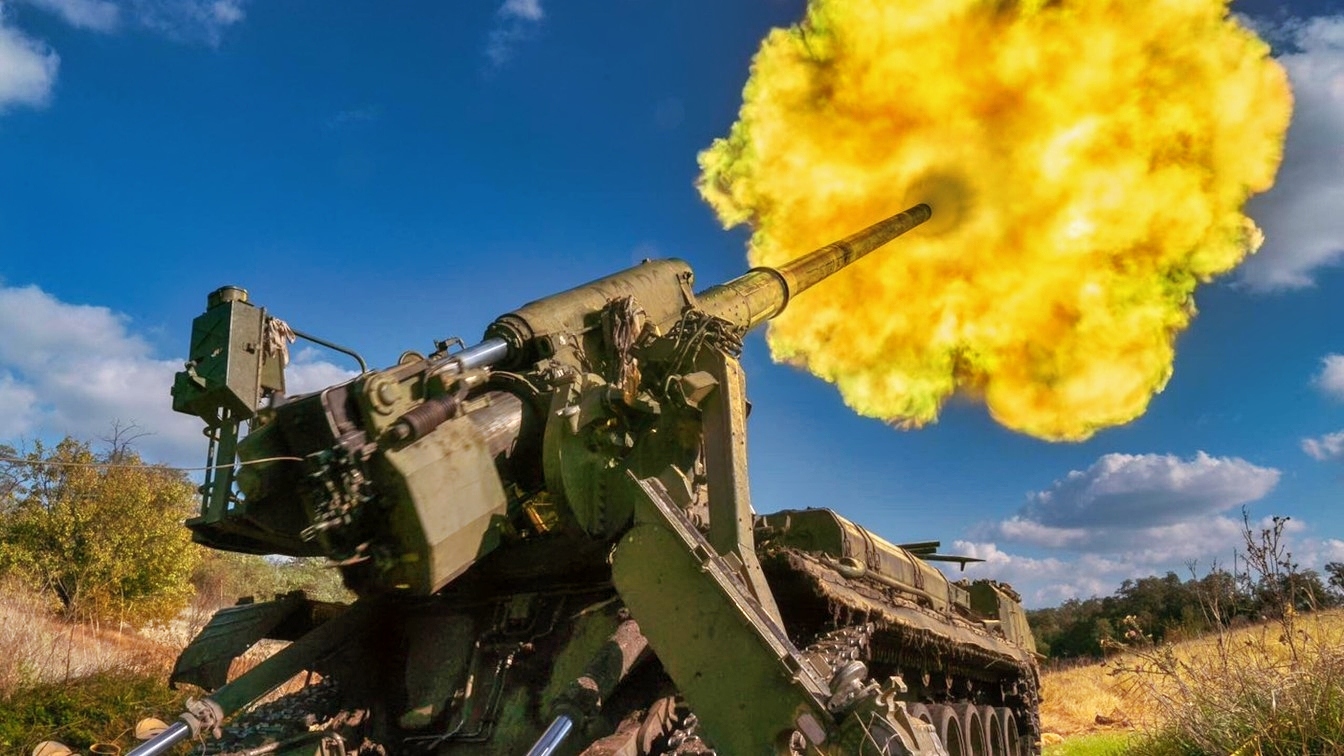
Finnish artillery units fire Howitzers At Rovajärvi exercise area In northern Finland. Image Credit: NATO Flickr.

Finnish artillery units fire Howitzers At Rovajärvi exercise area In northern Finland. Image Credit: NATO.
The Ukrainian leader’s warning also comes just days after on 2 July Russia launched its largest-ever missile and drone assault on Kyiv since the start of the full-scale invasion in February 2022.
The attack had killed at least 31 people, injured more than 100 others, and damaged or destroyed at least 130 buildings.
The prediction is not an empty “heads up” to a Ukrainian city. Several hours before the 2 July assault on the Ukrainian capital, Zelensky had – as he is now – issued a warning that a major attack by Moscow was in the offing.
Unprecedented Intelligence Fusion
Ukraine has developed an advanced warning capability for most Russian attacks. These warnings are the product of one of the most successful and sophisticated mechanisms for combining multiple sources of information into a comprehensive assessment.
Ukraine regularly secures advance intelligence on Russian attacks through an unprecedented fusion of Western classified intelligence sharing. That data is then “layered in” alongside an extensive battery of commercial satellite imagery, which is, in turn, cross-referenced with unencrypted Russian communications.
Additional fidelity is then acquired through an extensive and overarching network of civilian crowdsourced sensors. This multi-layered approach has continued to provide Ukraine with an unparalleled information advantage.
It is that level of confidence in where and when Russia may strike that has now enabled Zelenskiy to announce that “intelligence once again indicates that the Russians are preparing a new massive strike.”
“This is typical [timing] of Putin,” he stated. “Right after America’s Independence Day and before the NATO Summit in Ankara.” The former KGB Lt. Col., he said, has made it clear that “Russia wants to bring more evil and kill people,” he added, as he implored Ukrainians to “stay safe and heed any air raid alerts.”
A Most Valuable Partner
Ukraine has become a most valuable partner to US intelligence, which is why Zelenskiy and the armed forces are often one step ahead of the Russians. This partnership, which has been expanding since Russia first seized Crimea in 2014, has been essential to Ukraine in defending itself against Putin’s military.
But Ukraine has provided as much, if not more, to the US side as it has received from Washington in the intelligence-sharing process. Ukraine’s decades of proximity to Russia and intimate knowledge of both individuals and institutions in Russia have provided the US with an unprecedented level of access inside Moscow’s military and its political decision-making.
“They [the Ukrainians] went from being zero to one of our most important partners, up in the realm of the Brits,” one former US intelligence official told ABC News more than a year ago. “Their access was so significant. Here was the best friend of the Russians for many, many years. They knew things we just, frankly, had no idea of.”
“It’s unprecedented,” Sir Richard Dearlove, the former chief of Britain’s MI6 intelligence agency, who also spoke to ABC News for the same report.
The partnership continues to this day, but in the past 12 years, it has had its ups and downs. The Ukrainian intelligence official who was instrumental in building the partnership with the US was removed due to opposition from the Obama White House. This was about operations in which the Ukrainians were planning to use the assistance that Washington had provided.
Putin “sees only further aggression against Ukraine and against other neighbors and Europe as a whole”, Zelenskyy said after the 2 July attack he had warned of in advance. Until the war is over, there will undoubtedly be many more such warnings, but cooperation in intelligence sharing will grow and improve as Moscow’s efforts become increasingly desperate.
About the Author: Reuben F. Johnson
Reuben F. Johnson has thirty-six years of experience analyzing and reporting on foreign weapons systems, defense technologies, and international arms export policy. Johnson is the Director of Research at the Casimir Pulaski Foundation. He is also a survivor of the Russian invasion of Ukraine in February 2022. He worked for years in the American defense industry as a foreign technology analyst and later as a consultant for the U.S. Department of Defense, the Departments of the Navy and Air Force, and the governments of the United Kingdom and Australia. In 2022-2023, he won two awards in a row for his defense reporting. He holds a bachelor’s degree from DePauw University and a master’s degree from Miami University in Ohio, specializing in Soviet and Russian studies. He lives in Warsaw.


