

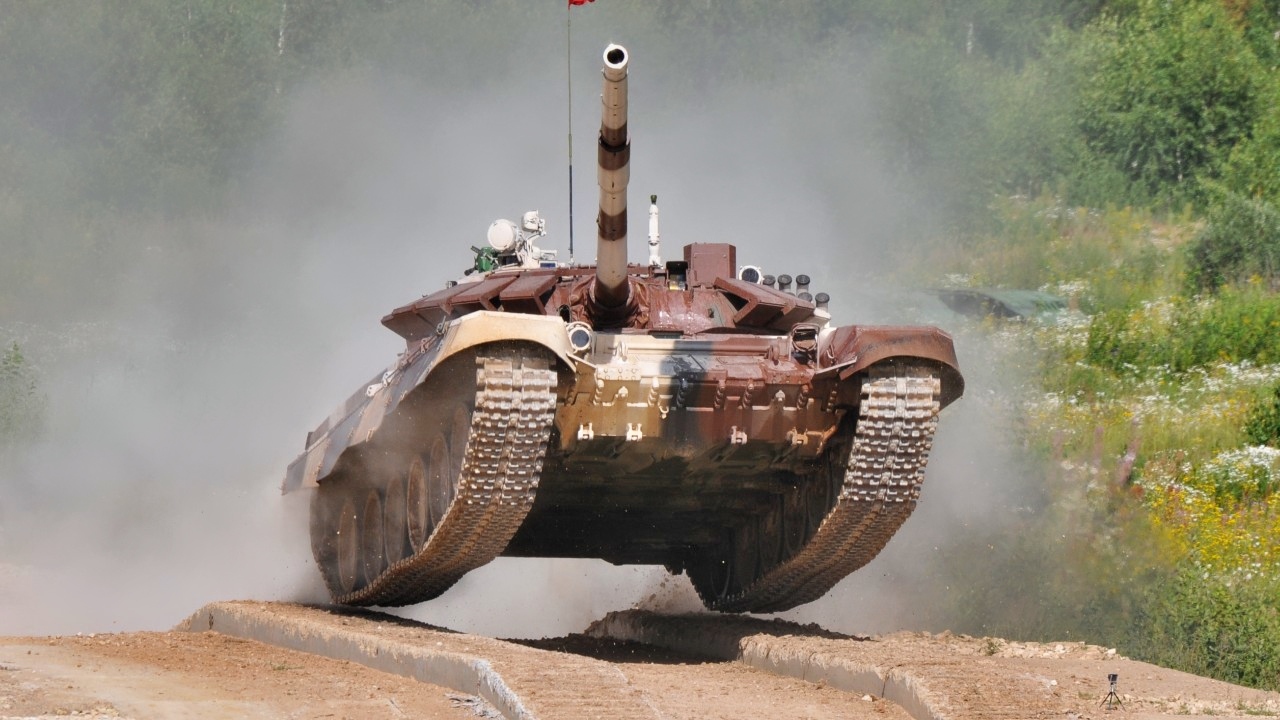
The war in Ukraine has revealed many deficiencies in the Russian Army. Using poor tactics, the Russians have suffered heavy casualties against a much smaller opponent. This fact is apparent in the losses suffered by the Russian tank fleet.
At the start of the war, the Russians were unprepared for the level of resistance Ukraine would offer. Consequently, its tank losses have been particularly high.
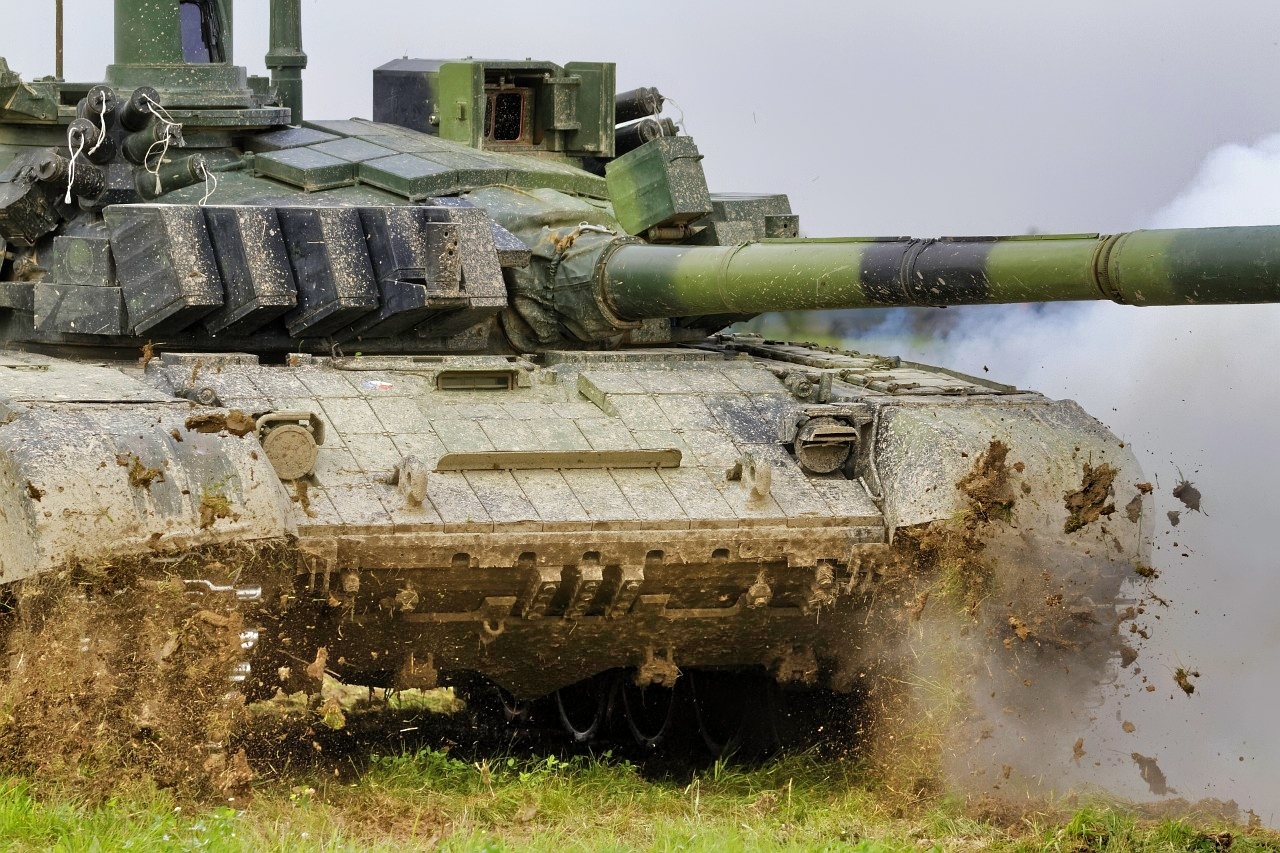
T-72 Tank. Image Credit: Creative Commons.
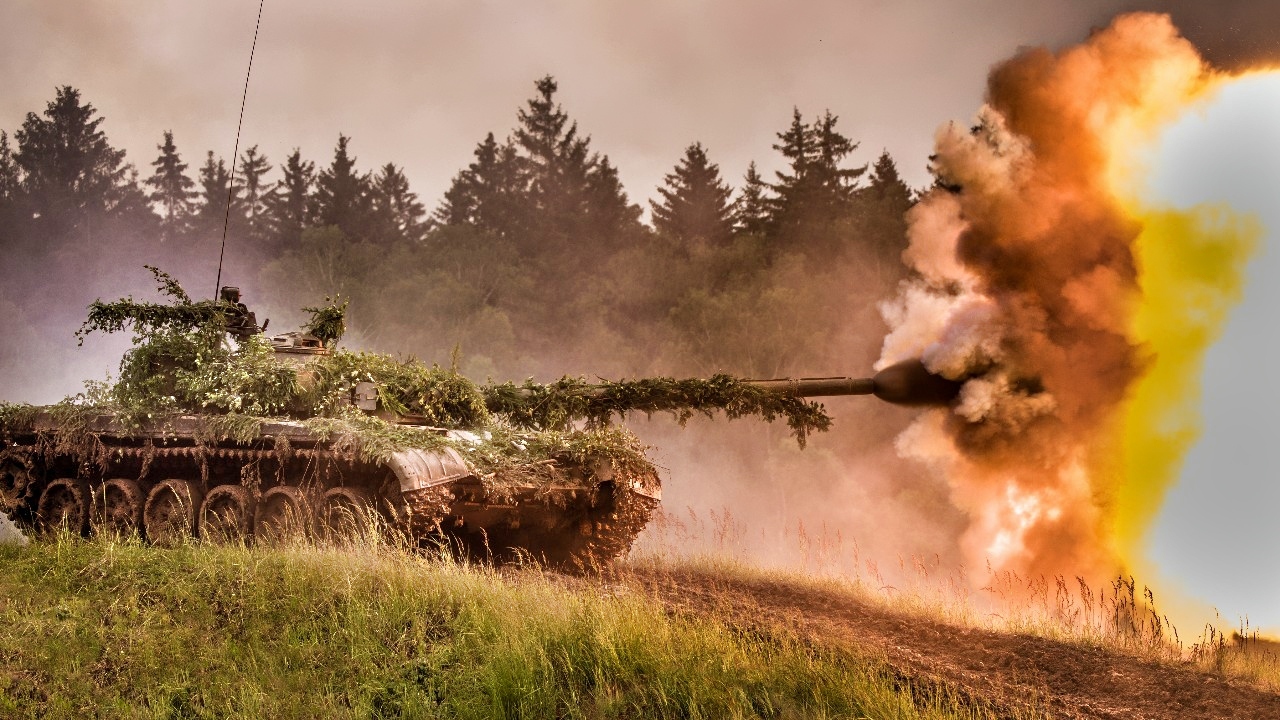
T-72 Like Those Fighting in Ukraine.
According to some open-source estimates, Russia has lost upwards of 4,000 tanks.
In light of these casualties, the Russians have been forced to adjust their tactics and rethink how their tanks are used on the battlefields of Ukraine.
Propaganda and the Fog of War: How Many Tanks Has Russia Lost?
Before delving too deeply into Russia’s tank losses, a caveat: there is a shortage of reliable information regarding casualties in Ukraine.
While blogs like Oryx do their best to tally equipment losses, they can only count visually confirmed losses.
Any tanks that are not filmed are inevitably left out of the final tally.
At the same time, official estimates by both the Russian and Ukrainian Ministries of Defense are unreliable, as both sides tend to inflate enemy casualty figures for propaganda.
For example, in 2025, the Ukrainian General Staff claimed that over 10,000 Russian tanks have been destroyed, which is an obviously outlandish claim.
The Russian MoD likewise claims to have destroyed more than 30,000 Ukrainian tanks and armored fighting vehicles, which is also absurd.
All of this means the numbers in this analysis are estimates and do not reflect the true number of Russian casualties.
The real casualty figures likely won’t be available to the public until long after the war ends.
What is Driving Russian Tank Casualties?
So far, as of September 2026, Oryx has visually confirmed 4,441 Russian tanks destroyed. The final tally is likely higher.
Losses were highest in 2022 and 2023, when the Russian Army deployed more tanks.
Much has been written about the role of Western-made Javelins and NLAWs ATGMs; however, at least in the early stages of the invasion, artillery and land mines caused most Russian tank losses.

A soldier from the Idaho Army National Guard, Charlie Company, 2-116th Combined Arms Battalion, 116th Cavalry Brigade Combat Team makes Idaho National Guard history with the first firing of a Javelin anti-tank missile. In a historic moment of training for the Idaho Army National Guard, soldiers from Charlie Company, 2-116th Combined Arms Battalion, 116th Cavalry Brigade Combat Team, fired the FGM – Javelin portable anti-tank missile on Sunday while conducting a series of field training exercises scheduled for the week on the Orchard Combat Training Center ranges.
While there are no concrete numbers, based on the footage, more Russian tanks were destroyed by artillery than by anti-tank systems of all types.
However, things changed with the introduction of drones.
It is no exaggeration to say that drones have fundamentally changed the dynamic of the war in Ukraine.
FPV drones are small, slower-moving munitions, usually armed with shaped charges.
An experienced pilot can maneuver these drones and strike enemy tanks where they’re weakest, usually their sides and rear.
Poor Russian tactics have also been largely responsible for its immense tank losses.
In the early stages of the war, Russia sent tanks in large columns that artillery and anti-tank crews easily targeted.
As the war progressed, it began facing a different problem.
Despite Russia’s long history of warfare, the Russians have not mastered combined arms warfare to the same degree as the U.S. military.
In a proper combined arms setting, tanks are deployed within a wider network of infantry, air, and artillery assets.
An American tank can always rely on infantry or artillery support when things get tough.

T-80 Tank from the Russian Army. Image Credit: Creative Commons.
The same doesn’t apply to Russian tanks.
Russian tanks are often sent in alone, without infantry or other IFV support.
In this environment, it is no wonder that tank losses are as high as they have been.
The Russian Army isn’t without a combined-arms concept, but it can’t execute combined-arms maneuvers to the same degree as American/NATO forces.
Changing Tactics
With the wide proliferation of drones, the Russians have been forced to rethink their tank tactics.
Tanks were traditionally used for direct fire support or to break through and exploit weaknesses in enemy lines.
Now, however, Russian tanks stay farther from the line of contact, relegated instead to indirect fire support.
Typically, tanks use drones for fire correction, engage enemy targets from further away, and then quickly disengage to avoid detection by enemy drones.
More recently, however, the Russians have been experimenting with newer tactics.
While one tank assumes an indirect-fire role, a second tank, in coordination with drones and other aerial assets, quickly maneuvers toward the line of contact, delivers short bursts of direct fire, then quickly retreats.
To their credit, Russia’s newer tactics seem to have reduced its tank casualties.
According to open-source estimates, the Russians lost 14 tanks in January 2026, compared to 278 tanks in March 2022, the month with the highest confirmed tank losses of the war.
Likewise, Oryx recorded only six tank losses in August.
The main reason behind these decreased losses isn’t that Russia is running out of tanks.
According to Janes, despite Russian losses, its tank factories have largely been able to sustain the Army’s tank fleet.
The real reason is that tanks aren’t as prominent on the front lines as they once were.
As mentioned earlier, tanks have largely assumed an indirect-fire support role, operating farther from the line of contact.
As a result, Russian troops receive far less direct fire support, but their tank forces suffer fewer casualties.
About the Author: Isaac Seitz
Isaac Seitz, a Defense Columnist, graduated from Patrick Henry College’s Strategic Intelligence and National Security program. He has also studied Russian at Middlebury Language Schools and has worked as an intelligence Analyst in the private sector.


