


The U.S. Navy is dangerously over-reliant on nuclear-powered aircraft carriers—massive engineering marvels that are too expensive to build, too costly to maintain, and too slow to develop in an era when cheap drones and hypersonic missiles can cripple a $13 billion ship in seconds. The brutal truth is that an enemy doesn’t even need to sink an American carrier; they just need to damage its flight deck and send the ship back to port for two years of repairs.
The Aircraft Carrier Age Is Done
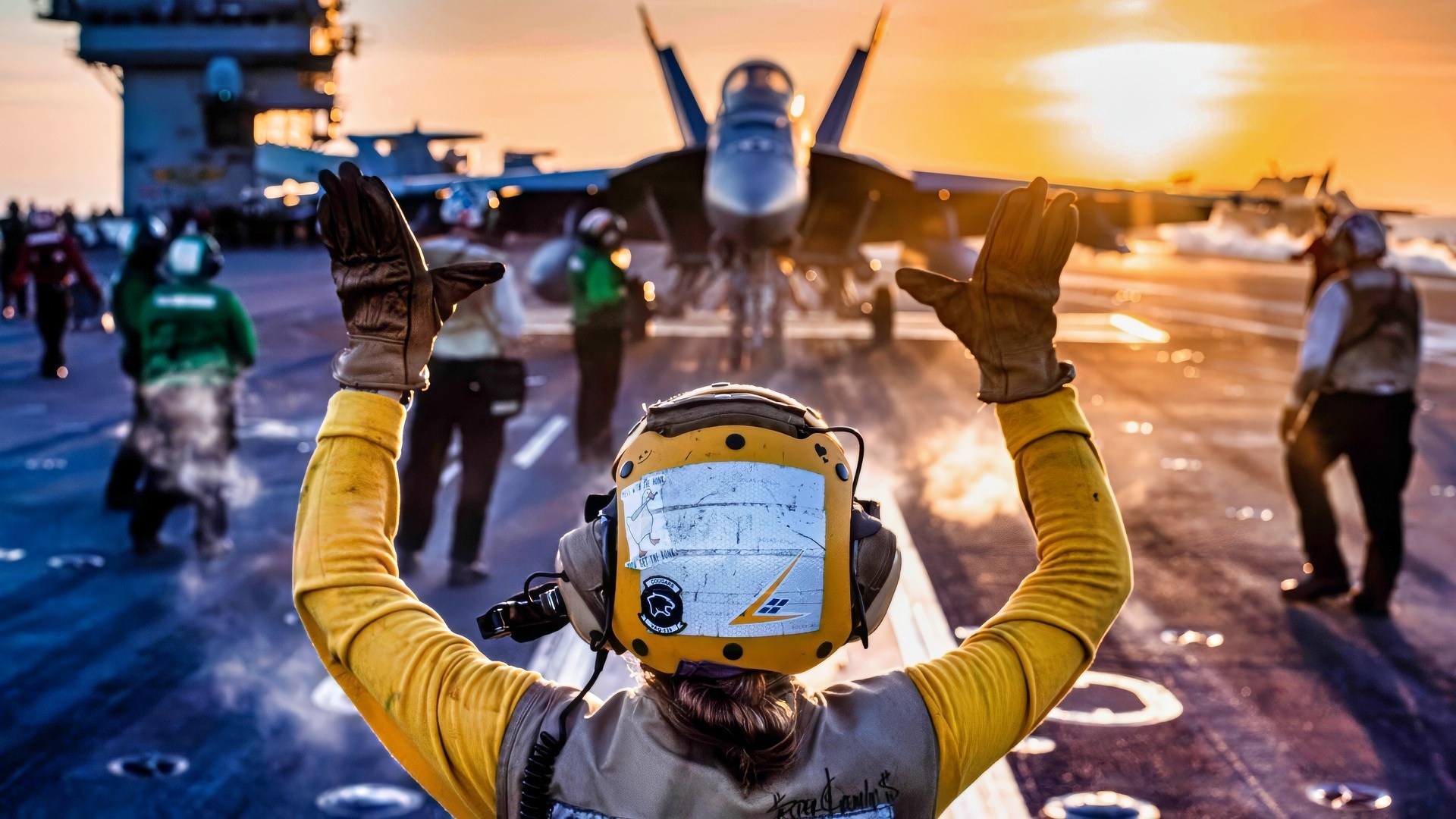
U.S. Navy Aircraft Carrier Training. Image Credit: Creative Commons.
The United States Navy is overly reliant on nuclear-powered aircraft carriers as its primary tool for surface warfare and power projection. These giants, while engineering marvels, are not the systems that will guarantee America stays a dominant force on the High Seas.
Carriers are simply too expensive to maintain, too costly to build, and take too long to develop.
Too Big to Fail—Too Costly to Replace
If the carriers are damaged or lost in battle, the US could lose that capability permanently due to their high cost and complexity to build and maintain, and because the Navy’s budget is surprisingly tight, even though we spend a huge amount on the military overall.
Not enough of those funds are allocated to readiness or combat capabilities.
In a perfect world, the United States would stop funding and constructing new carriers and instead direct those funds toward more modern and effective tools in the current combat environment.
Drones, both underwater and aerial, would become essential components for power projection.
Likewise, hypersonic weapons and submarines would also be included.
The Age of Decentralized Warfare
The key to waging war and dominating the world’s oceans lies in decentralizing capabilities—connecting them to maximize lethality and combat effectiveness, even in degraded and denied environments.
The carrier symbolizes a past era of extreme centralization and the idea of bigness. It was the more complex systems I have, the more I can dominate the battlefield.
But those days are over.
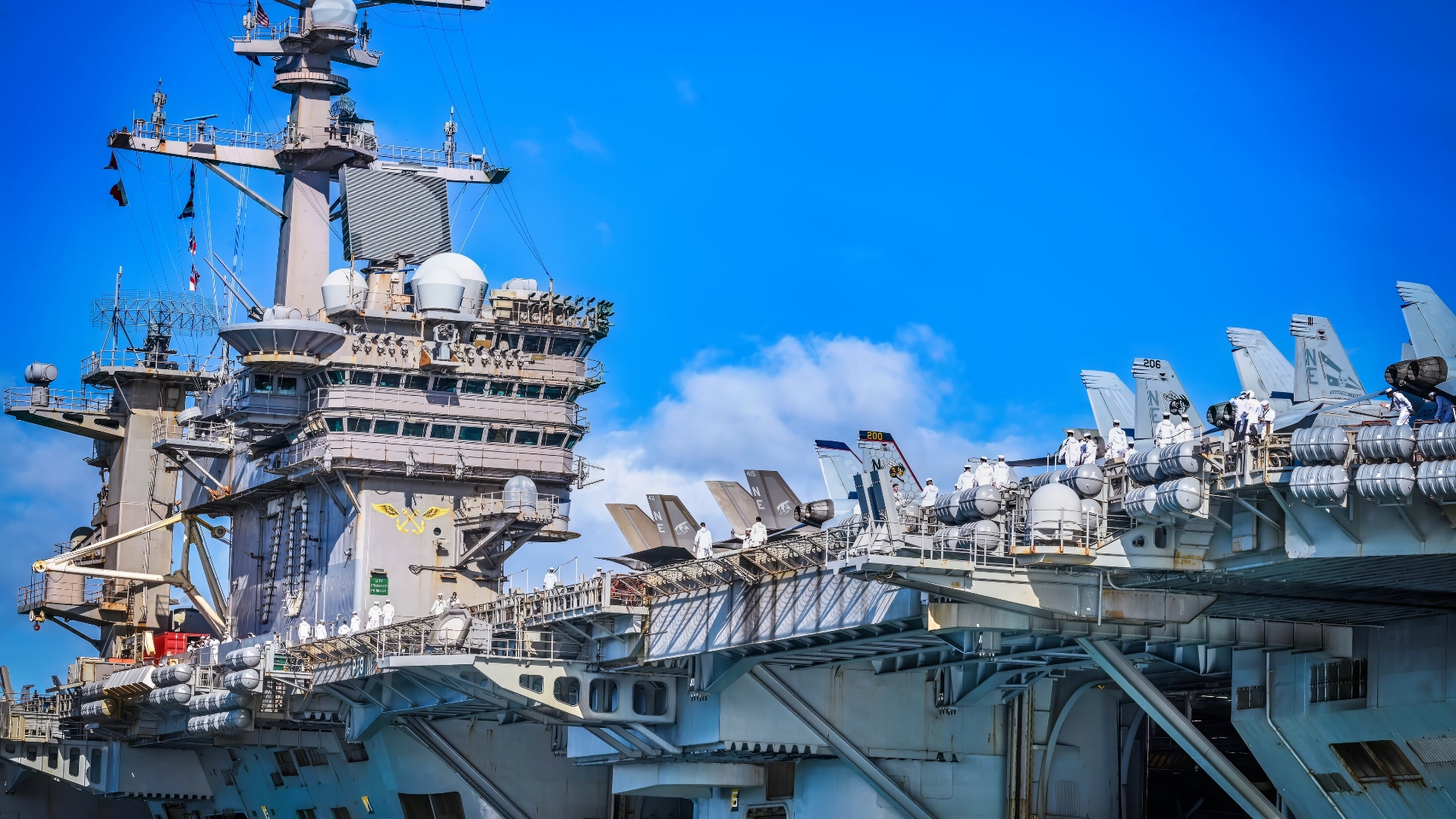
The Nimitz-class aircraft carrier USS Carl Vinson (CVN 70) arrives in Joint Base Pearl Harbor-Hickam, Hawaii, for a scheduled port visit, July 30, 2025. Vinson, the flagship of Carrier Strike Group ONE, is underway conducting routine operations in the U.S. 3rd Fleet area of operations. (U.S. Navy photo by Roann Gatdula)
Smaller, more agile systems are the way forward. Decentralized networks must be our rallying cry.
Plus, the carrier must operate within the range of most modern anti-ship ballistic missiles, which US rivals such as China, Russia, Iran, and North Korea have already demonstrated a strong capacity to shoot down any of America’s defenses.
And despite all the protection the Navy provides for its aircraft carriers, no defense is foolproof.
The Missile Age Has Changed the Game
All it takes is for one enemy hypersonic weapon, ASBM, or drone to penetrate the defensive screen and completely disrupt essential flight operations. It is important to remember that aircraft carriers are built in such a way that sinking them is very difficult.
However, an enemy doesn’t need to sink the carrier.
The enemy only needs to damage its flight deck and send that ship back to port, where it will spend around two years—or more, given how backlogged US naval shipyards are today—being repaired and draining more of those finite resources that could be better used elsewhere.
Today, the nation with comprehensive, layered, advanced air defenses and the nation armed with cheap drones in large numbers, hypersonic weapons, and long-range ballistic missiles at the ready will be militarily dominant. That is why the only way forward is for the United States Navy to completely reinvent its strategic doctrine and move away from prioritizing expensive aircraft carriers
The Importance of Submarines
Submarines are another area that the United States Navy needs to prioritize. A system we often take for granted, the Navy has been running a deficit in submarines for years, especially attack submarines.
Once again, America’s naval shipyard challenges become apparent. There are staffing shortages at these shipyards, aging infrastructure, and limited space, all of which contribute to the United States having too few of these critical systems.
Consider this: while the rest of the US Navy avoids the Iranian coastline like the plague, the only naval units that have consistently dared to get close to that territory have been Virginia-class submarines.
That’s because the Iranians, despite their advanced capabilities, lack sufficient anti-submarine warfare capacity. Yes, other rivals like China have their own advanced anti-submarine capabilities. But submarines are still far more relevant to the modern battlefield than aircraft carriers.
The Navy Must Reinvent or Use
In every critical aspect of naval warfare that will determine future victory (which is not ten years away but happening right now), the United States is falling behind. We need cheaper, redundant, small, and unmanned systems capable of beyond-visual-range combat and that are expendable.
Instead, we depend on costly, large aircraft carriers whose value diminishes as costs increase. This strategy doesn’t allow any military to dominate in warfare. Any navy holding onto these outdated ideas, or any country still investing heavily in aircraft carriers, will be defeated in a major naval battle.
About the Author: Brandon J. Weichert
Brandon J. Weichert is the Senior National Security Editor at 19FortyFive.com. Recently, Weichert became the editor of the “NatSec Guy” section at Emerald.TV. He was previously the senior national security editor at The National Interest. Weichert is the host of The National Security Hour on iHeartRadio, where he discusses national security policy every Wednesday at 8 pm Eastern. He hosts a companion show on Rumble entitled “National Security Talk.” Weichert consults regularly with various government institutions and private organizations on geopolitical issues. His writings have appeared in numerous publications, among them Popular Mechanics, National Review, MSN, and The American Spectator. And his books include Winning Space: How America Remains a Superpower, Biohacked: China’s Race to Control Life, and The Shadow War: Iran’s Quest for Supremacy. Weichert’s newest book, A Disaster of Our Own Making: How the West Lost Ukraine, is available for purchase wherever books are sold. He can be followed via Twitter/X @WeTheBrandon.


