

Summary and Key Points: Russia launched one of its heaviest aerial assaults on Kyiv in months, firing hundreds of drones and missiles, including Iskanders and a rare Oreshnik.
-Security Council deputy chair Dmitry Medvedev threatened EU diplomats remaining in Kyiv, and Foreign Ministry spokeswoman Maria Zakharova warned of more ‘retaliatory strikes.’

Tu-160 bomber. Image Credit: Creative Commons.
-Yet Russia’s May offensive was its slowest since early 2025, with most advances measured in hundreds of meters as Ukrainian drones complicate Russian operations.
The Ukraine War Keeps Getting Worse
Russia is intensifying both its missile strikes and public threats against Ukraine, warning in recent days and weeks of sustained attacks on Kyiv and even hinting at possible strikes on “decision-making centers.” The Kremlin, it seems, is growing tired of Ukraine’s persistent pushback and looking to project strength amid slowing battlefield momentum.
Over the weekend, Russia launched one of its heaviest aerial assaults on Kyiv in months, firing hundreds of drones and dozens of missiles across Ukraine over several days. Ukraine said the attacks included Iskander ballistic missiles and a rare Oreshnik intermediate-range ballistic missile during the barrage on Sunday. Multiple districts in Kyiv were hit, residential buildings were damaged, and fires burned across parts of the capital as civilians sheltered in metro stations overnight.
Russia Gets Aggressive and Makes a Threat
The attacks followed particularly aggressive rhetoric from Moscow. On May 25, Russian Foreign Ministry spokeswoman Maria Zakharova warned that “retaliatory strikes” had begun in Ukraine and will continue into the future. A day later, Dmitry Medvedev, the deputy chair of the Security Council of Russia, threatened European Union diplomats living in Ukraine’s capital of Kyiv.
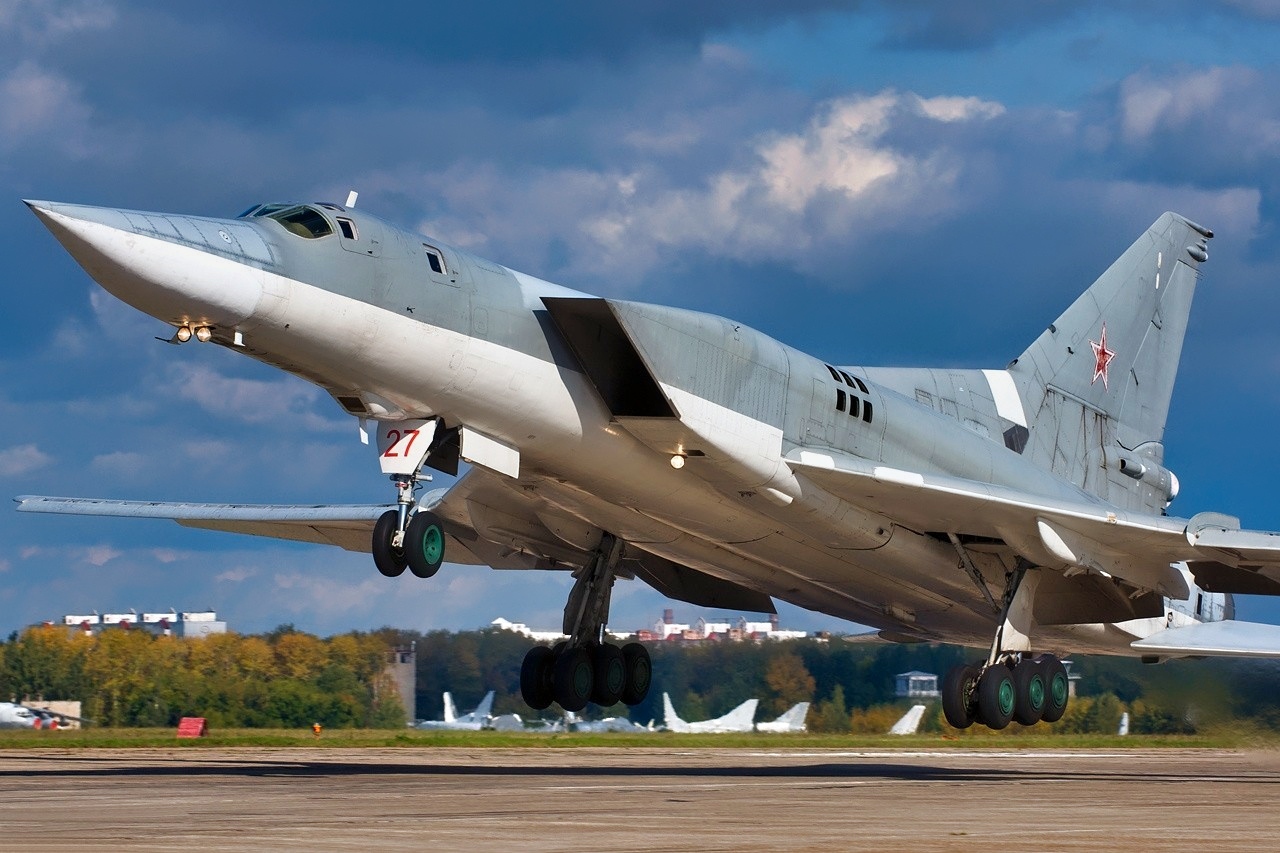
Tu-22M Backfire Bomber from Russia. Image Credit: Creative Commons.
“The EU has said it will maintain its diplomatic presence in Kyiv unchanged, despite Russia’s warnings. Well, apparently they’ve got diplomats to spare and need to trim the headcount,” Medvedev said on social media.
Medvedev also warned U.S. Secretary of State Marco Rubio during a May 26 phone call that the conflict would escalate further if current trends continue.
The threats come at a critical moment in the war, with Russia continuing to launch large assaults across the front line as its territorial gains slow dramatically.
Russia’s Offensive Has Slowed
Russian advances during May were reportedly among the slowest recorded since early 2025, despite continued assaults across eastern and northeastern Ukraine.
Russian forces have concentrated attacks near Pokrovsk, Toretsk, Kupiansk, and parts of the Sumy region, but most gains have been measured in hundreds of meters rather than major breakthroughs. Ukrainian drone warfare has increasingly complicated Russian offensive operations, too, with FPV drones and artillery surveillance systems making large armored advances extraordinarily costly.
It means that the battlefield today is largely defined by attritional warfare rather than the rapid maneuvers or substantial gains seen in the early days of the conflict.

MSTA-S Russian Army. Image Credit: Creative Commons.
That being said, Russia still maintains advantages in manpower, artillery production, and missile manufacturing, but the Kremlin is still struggling to translate those advantages into decisive territorial gains. The proliferation of drones on the battlefield, with millions of drones now having been deployed in Ukraine by both sides, has complicated matters. Mass mechanized assaults are now far more vulnerable than they were when the war began, and tank formations and usage are changing as a result.
Russia Escalates Its Messaging
The Russian Foreign Ministry has publicly described the recent attacks as “retaliatory,” pointing to Ukrainian strikes inside Russian-controlled territory and deep inside Russia itself.
For some time, Western governments refrained from sending long-range weapons to Ukraine over fear that they would be used to strike deep inside Russian territory, but today, Kyiv is ordering these strikes using cheap unmanned aerial vehicles (UAVs).
After a strike on a dormitory in Russian-controlled Luhansk that Moscow claimed killed 21 civilians, including students, the Russian Foreign Ministry declared that the country’s “patience” had been exhausted. Ukraine disputed aspects of Russia’s claims, but the incident quickly became central to the Kremlin’s justification for intensified strikes.

A student of the Advanced Small Arms Instructor (ASAI) conducted a range with M-203 grenade launcher, C16 Automatic Grenade Launcher, C6 light machine gun, and Carl Gustav 84mm anti-tank. These photos were taken at the Infantry School, 5th Canadian Division Support Base (5 CDSB) Gagetown, New Brunswick, on 31 October 2024.
So, What Next?
Russian state media has since pushed the idea that larger retaliatory attacks are coming, including making references to strikes on Ukrainian government infrastructure and command facilities. It is the kind of escalatory rhetoric that was seen following Ukraine’s Kharkiv counteroffensive in 2022, as well as during the Russian withdrawal from Kherson and the repeated Ukrainian attacks on Crimea and Russian naval assets in the Black Sea.
For a long time, Russian military doctrine has used coercive escalation to place pressure on Ukraine, maintaining uncertainty about how far it might go. However, the more the threats are used and fail to make any meaningful difference on the battlefield, the more unlikely it becomes that Kyiv will bend.
Ultimately, Russia will struggle to control the sheer number of drones being manufactured and deployed by Ukrainian forces. That problem is evidenced by the fact that a proposed Russian law is expected to grant the power to commercial banks across the country to act as drone defense hubs, authorizing the use of anti-drone technologies to prevent future strikes without the direct involvement of the Russian military.
Ukraine Is Expanding the War Into Russia
Meanwhile, Ukraine is pushing ahead and expanding the war deep inside Russia itself – despite Russian threats.
In recent months, Ukrainian drones have repeatedly targeted oil refineries, airbases, radar facilities, logistics hubs, and other targets hundreds of miles from the border. Earlier this month, drone attacks forced temporary airport shutdowns around Moscow yet again, proving just how effective cheap UAVs can be. Drones that barely existed when the war began are now imposing real economic and psychological pressure far beyond the front line. No wonder Moscow is losing its patience.
About the Author: Jack Buckby
Jack Buckby is a British researcher and analyst specializing in defense and national security, based in New York. His work focuses on military capability, procurement, and strategic competition, producing and editing analysis for policy and defense audiences. He brings extensive editorial experience, with a career output spanning over 1,000 articles at 19FortyFive and National Security Journal, and has previously authored books and papers on extremism and deradicalization.


