

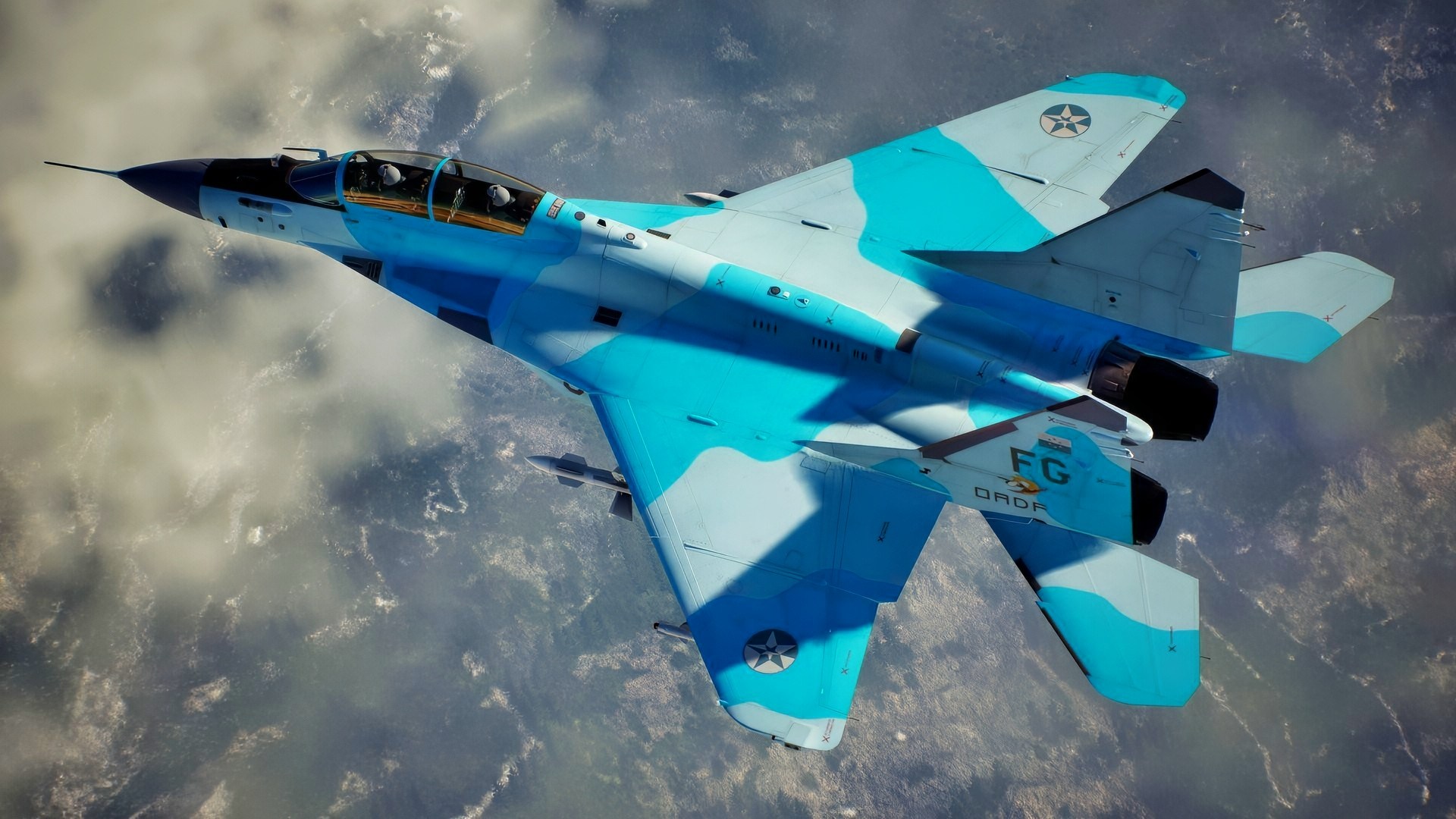
Summary and Key Points: The MiG-35 was supposed to be Russia’s comeback fighter — a modern, affordable jet to rebuild a battered air force and rake in export billions, hyped as Moscow’s answer to the American F-35. The reality is one of the more embarrassing stories in modern military aviation. Years after the promises, Russia has almost nothing to show for it — and what little it has is being used in a way that gives the whole program away.
Russia’s MiG-35 Failure Is Clear

MiG-35 Creative Commons Image.
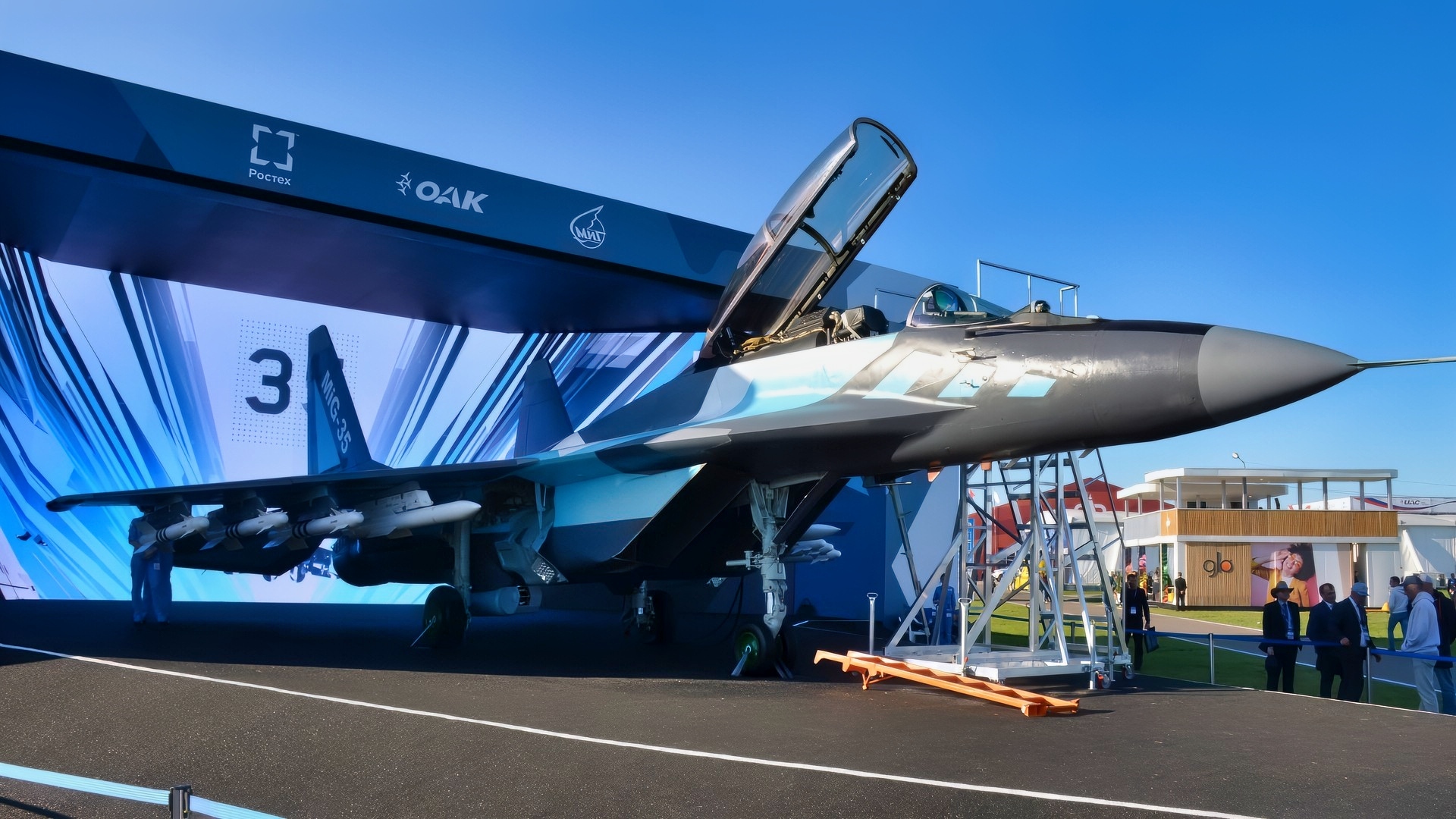
MiG-35 Fighter from Russia. Image Credit: Creative Commons.
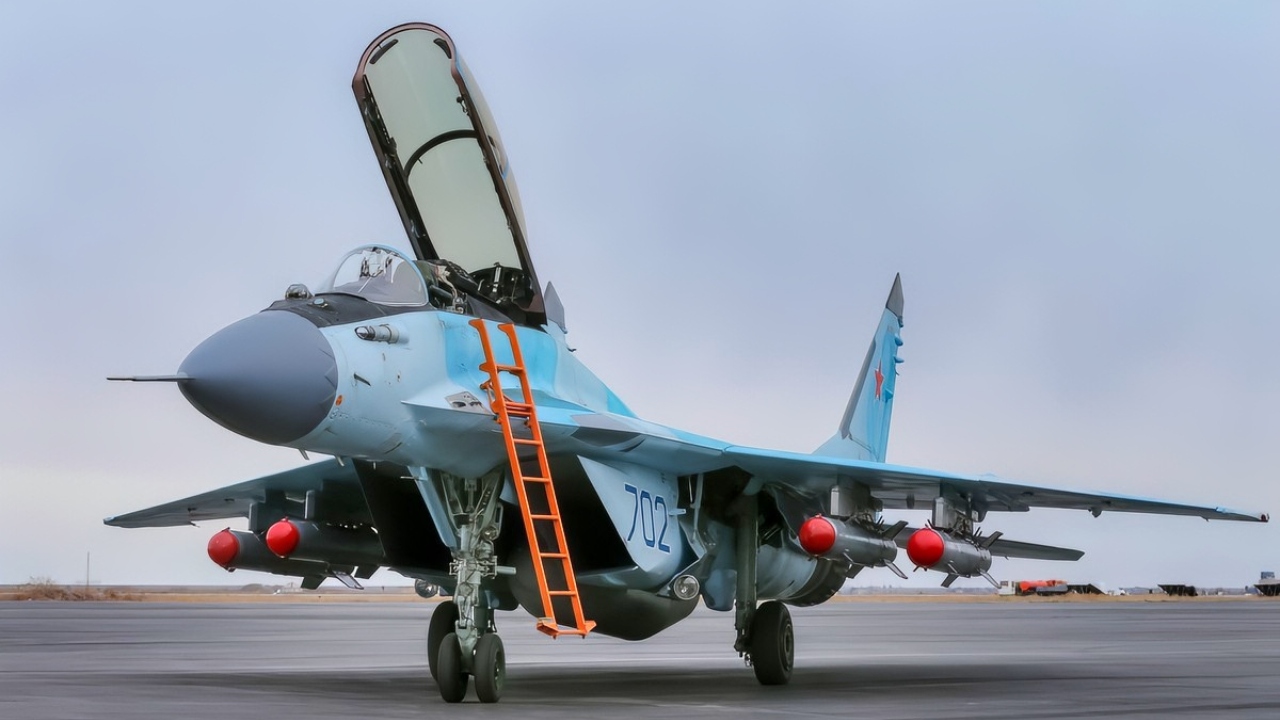
MiG-35 On the Runway. Image Credit: Creative Commons.
The Russian Air Force’s MiG-35 was supposed to replace the MiG-29, but it has proven a failure.
After years of limited production and struggles to find export buyers, Russian aerospace officials moved to revive and scale up production of the “4+++ generation” fighter to rebuild its combat fleet and bridge the gap between older legacy fourth-generation aircraft and cutting-edge fifth-generation platforms.
But the aircraft’s underwhelming performance and high costs have doomed hopes of selling it to foreign nations.
To date, Russia has only built six. And those six have been used by the Russian Strizhi aerobatic demonstration team, presumably to drum up foreign sales, but no one wants them.
Advancements That Never Panned Out
The MiG-35 was supposed to be the brand-saver for the Mikoyan company, a lightweight, affordable, multirole fighter for domestic and foreign customers.
But the promises of the advancements never materialized. The Klimov RD-33MK turbofan engines were initially plagued with reliability issues and ‘smokiness’, underperformed, offering no progress in thrust, fuel economy, or reliability.
The promised upgraded sensor fusion and cockpit displays were decades behind US and Western designs.
The MiG-35 Was Designed To Be The Answer To The F-16
The Russians hyped the MiG-35 to be the Russian answer to the American-built F-35. However, this has been far more of a marketing plan than a reflection of any actual truth. It was actually designed as somewhat of an answer to the F-16 than the newer stealth Joint Strike Fighter. And even then, the airframe simply doesn’t measure up.
In a review of the aircraft, The War Zone wrote, “The MiG-35 is a far cry from the basic and strictly limited capability MiG-29.” However, despite the advancements in the cockpit, radar, sensors, and other features, it is still, in essence, a MiG-29.
The MiG-35 is just another old Russian Cold War design with minimal stealth technology and has suffered from extended testing, a lack of spare parts, logistical backlogs, and concerns about the lack of advanced technology, making it an undesirable export airframe.
The Brief History Of The MiG-35
The Russian aircraft industry began work on an updated MiG-29 in the 1980s, which it dubbed the MiG-35 for foreign sales. The Kremlin unveiled the aircraft at the 2007 Aero India air show in Bangalore, India. At the time, Russia was trying to sell the MiG to India.
The Russian Air Force was initially slated to buy 37 MiG-35s, but later adjusted its plan to procure more than 170 of the light fighters. In 2017, an upgraded MiG-35 was unveiled in Moscow.
Upgrades include a new fly-by-wire flight control system, improved cockpit, upgraded avionics, and integrated precision-guided targeting capability for air-to-ground weapons. Pilots liked the cockpit design and the fly-by-wire flight control system.
There were reports that the Strizhi, or Swifts, aerobatic team was flying combat missions in Ukraine, but no credible news sources have confirmed them.
Foreign Sales Never Materialized
In 2017, Yuri Slyusar, the President of the Russian Aircraft Building Corporation, said that the MiG-35 would lead the way in the aircraft arena.
“The fighter aircraft has been specially designed for warfare amid increased intensity conflicts and highly dense air defense. The available high indicators have been achieved thanks to a set of onboard equipment mounted on the plane, along with a new optical location system and a radar signature reduced several times,” he added.
Russia’s attempts to sell the MiG-35 to India, Argentina, Bangladesh, Malaysia, Peru, Myanmar, and Vietnam have all been in vain, and the fact that the Russian Aerospace Forces (VKS) have purchased only six hasn’t helped matters. And even if they could sell the aircraft, Russian manufacturing is not in a position to build them in sufficient numbers for export due to financial constraints.
Typical Russian Propaganda On the MiG-35 Promised Much
Russian propaganda tried to hype the MiG-35, in typical Russian fashion, and they seem to have a fixation on laser weapons. Russia Today also reported in 2018, “Russia launched flight tests of the MiG-35 with a view to potentially using laser guns back in January 2017.”
And they will quickly move on to the supposed Russian 6th-generation MiG-41 in development. While they don’t have a 5th-generation aircraft in numbers, they plan to skip a generation and move up to the 6th.
It is sometimes reported to be only a year or two from flying and entering service. These claims often come with sci-fi-like claims that it will operate at the edge of space and carry space lasers.
Of course, reputable sources note that the MiG-41 is at the pre-drawing board stage and is unlikely to enter service until the 2040s at the earliest.
But the MiG-35 has been an abject failure, according to The National Interest in 2024, calling it on the “cusp of total fighter failure” and “mostly hype.”
Full Production Not Likely Happening At All
Slyusar said that the MiG-35 would enter large-scale production in 2025.
The decision was driven by the need to rebuild the VKS fleet with as many of the most modern aircraft as possible. This turnaround in the MiG-35’s fortunes is almost entirely a consequence of the war in Ukraine.
A former Mikoyan engineer told Breaking Defense, “This all sounds great for the people involved in the MiG program, but what are the real possibilities? The production plants have not had to produce large numbers of MiG aircraft for decades. Do they still know how to do this?”
“One also must remember that Russia is currently in a position where the defense plants are suffering major manpower shortages. Where will the MiG factory find enough people with the level of experience required to start building these aircraft in large numbers?” he added.
“Then there are the supply chains for production of these aircraft, many of which do not exist and others of which have not built components for the MiG for years because there have not been any sizable orders.”
The Russians tried to market the MiG-35 as a fourth-generation+++ aircraft. However, given the improvements made with advanced stealth aircraft and integrated air defense systems, the lack of stealth technology would make it a hard sell, and that has been proven. Russia has no foreign market and can’t even sell it beyond a handful to its own forces.
With less-than-satisfactory advanced radar, sensor fusion, and engines, its failure was written in stone long ago.
About the Author: Steve Balestrieri
Steve Balestrieri is a National Security Columnist. He served as a US Army Special Forces NCO and Warrant Officer. In addition to writing on defense, he covers the NFL for PatsFans.com and is a member of the Pro Football Writers of America (PFWA).


