


Russian President Vladimir Putin, at the Shanghai Cooperation Organization summit in Bishkek, Kyrgyzstan, this week, appeared with Iran’s president and reiterated Russia’s longstanding support for Iran.
According to the Washington Post, Iranian President Masoud Pezeshkian appeared alongside Putin, thanked him for his support, and called for the two countries to work together to counter U.S. sanctions.
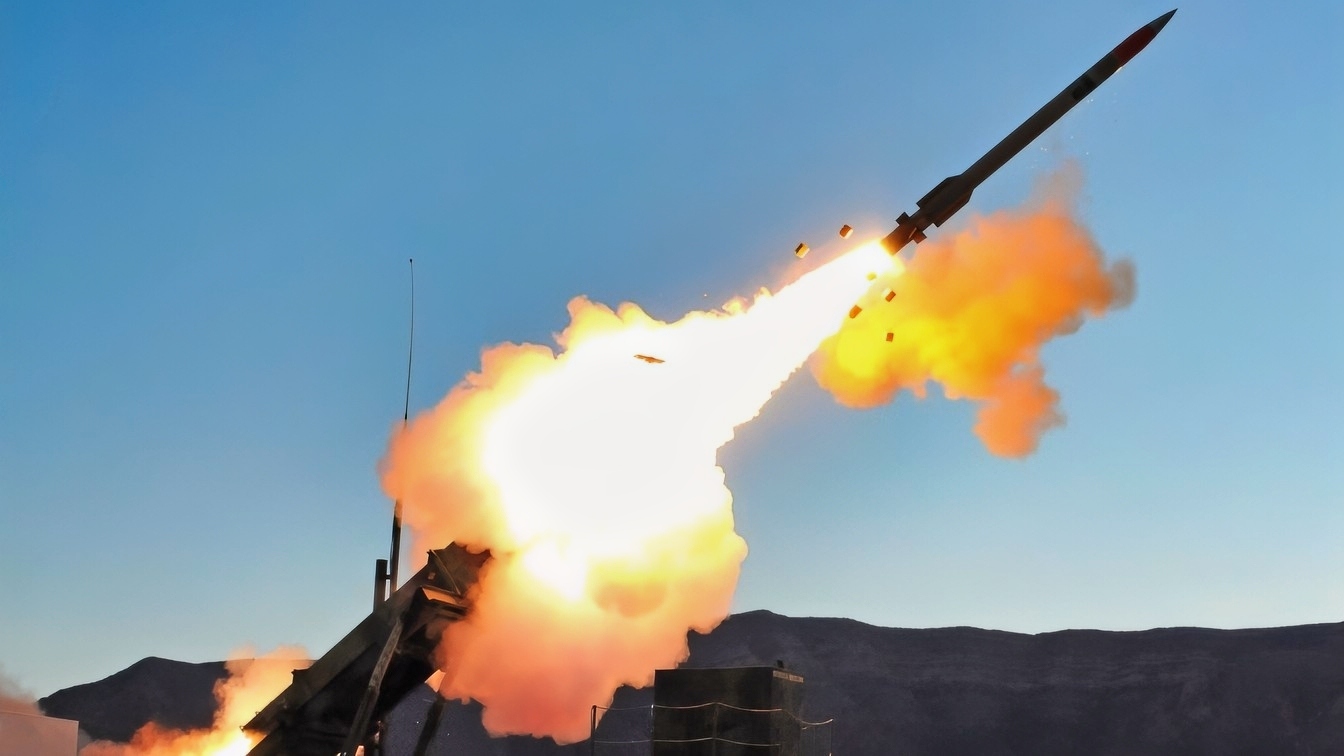
The Army test fires a Patriot missile in a recent test. The Patriot missile system is a ground-based, mobile missile defense interceptor deployed by the United States to detect, track and engage unmanned aerial vehicles, cruise missiles, and short-range and tactical ballistic missiles. Patriot, along with other missile defense systems, are included in the Army Air and Missile Defense 2028, which provides the Army’s overarching vision for the AMD force, describes how the AMD force is postured to support the Army and joint forces, and articulates what must be accomplished to achieve the 2028 desired end state of preventing and defeating adversary air and missile attacks through a combination of deterrence, active and passive defense, and support to attack operations. (U.S. Army photo)
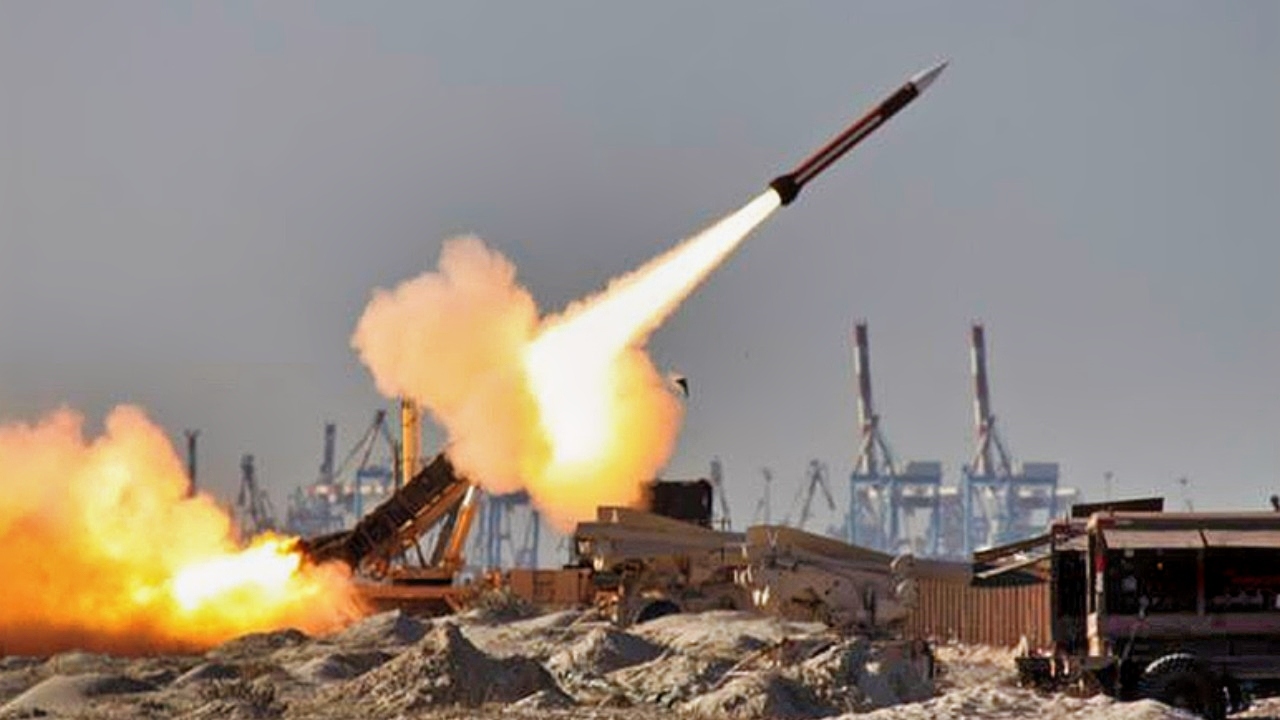
Patriot Missile Interceptor Test. Image Credit: Creative Commons.
“They do not have the right to impose sanctions whenever they please, violate international law, and then commit acts of aggression,” Pezeshkian said at the summit, per a Kremlin readout of the meeting, as cited by the Post.
“During this difficult period, we are striving to provide you with the necessary assistance — as we have discussed — and are supplying you with essential goods,” Putin said at the meeting, also according to that Kremlin readout.
Both Russia and Iran are members of the Shanghai Cooperation Organization, a regional alliance that also includes China, India, Pakistan, Belarus, Kazakhstan, Kyrgyzstan, Tajikistan and Uzbekistan. Originally called the “Shanghai Five,” the group added India and Pakistan in 2017, Iran in 2023 and Belarus in 2024.
“We believe — and are confident — that in this way we can counter U.S. unilateralism and the unjust sanctions imposed upon us,” the Iranian leader added, according to the Kremlin’s readout cited by the Post.
“We can find ways to circumvent them; within frameworks like the SCO and other organizations, we can bypass unilateral measures and cooperate on a multilateral basis.”
The appearance came the day after Indian Prime Minister Narendra Modi appeared at the same summit with Putin, and urged him to bring the war in Ukraine to an end, as Putin reportedly looked on uncomfortably.
Putin, when he spoke alongside Pezeshkian, lamented that the “Memorandum of Understanding” ceasefire had failed to end the war between the U.S. and Iran.
“We welcomed the conclusion of the Iranian-American ceasefire memorandum this June, but, unfortunately, the truce proved unstable, and all too fragile,” Putin said at the summit, per the Post.
Against Economic D-Day
The huddle between the leaders of Russia and Iran came amid a renewal of attacks in the U.S./Iran conflict, and also just less than a week after the Trump Administration announced new sanctions on countries that continue to do business with Iran, indicating that Russia is undeterred by such threats.
Russia is also under sanctions from the U.S. and other Western nations, in response to its invasion of Ukraine more than four years ago.
Russia and Iran’s Cooperation
Russia and Iran have been working closely together in recent years. Iran helped Russia to obtain drones that have been a big part of Russia’s war in Ukraine, and Russia now manufactures those drones domestically.
Russia has also supplied Iran with “targeting assistance for retaliatory strikes on U.S. forces and other targets in the Middle East,” the Post reported.
“The Limits of U.S. Economic Warfare”
A New York Times analysis, published before the start of the Shanghai Cooperation Organization summit, showed how the different countries represented there showed the limits of what it called President Donald Trump’s efforts to “bend the world to revolve around Washington.” The eight SCO countries other than Russia and Iran are willing to associate with and assist those countries, despite considerable Western pressure not to.
That analysis noted that Putin and Pezeshkian were both at the summit, as both worked to “defy Western efforts to isolate them and persevere with their own wartime goals.”
The key, the Times analysis said, was China, which extends support to both Russia and Iran, though it hasn’t used its military umbrella to protect either country due to Xi’s reluctance to get involved in foreign wars.
“No nation has been more critical to Russia and Iran in sustaining their economies and war efforts than China,” the Times analysis said. “Mr. Xi has undermined efforts by the United States and its allies to pressure Russia and Iran economically, employing Beijing’s vast geopolitical and economic clout as the world’s largest importer of crude oil and exporter of consumer goods.”
The sessions were held at the same time as the G20 summit, which convened this week in North Carolina.
About the Author: Stephen Silver
Stephen Silver is an award-winning journalist, essayist, and film critic, and contributor to the Philadelphia Inquirer, the Jewish Telegraphic Agency, Broad Street Review, and Splice Today. The co-founder of the Philadelphia Film Critics Circle, Stephen lives in suburban Philadelphia with his wife and two sons. For over a decade, Stephen has authored thousands of articles that focus on politics, national security, technology, and the economy. Follow him on X (formerly Twitter) at @StephenSilver, and subscribe to his Substack newsletter.


