


Russia’s Drone Strike Destroyed Sumy’s Only Epicentr Store in a Major Fire in Ukraine: Russia struck Sumy’s only Epicentr home-improvement store late on July 20, starting a fire that consumed the building and sent a large column of smoke over the northeastern Ukrainian city. Video published by Al Jazeera showed flames spreading through the commercial complex as emergency crews worked nearby.
Reuters footage from the scene showed the fire engulfing the Epicentr outlet, the only store operated by the national chain in Sumy. The images gave the attack an immediate scale: a large retail building was burning inside a regional capital already subjected to repeated missile, bomb, and drone strikes.
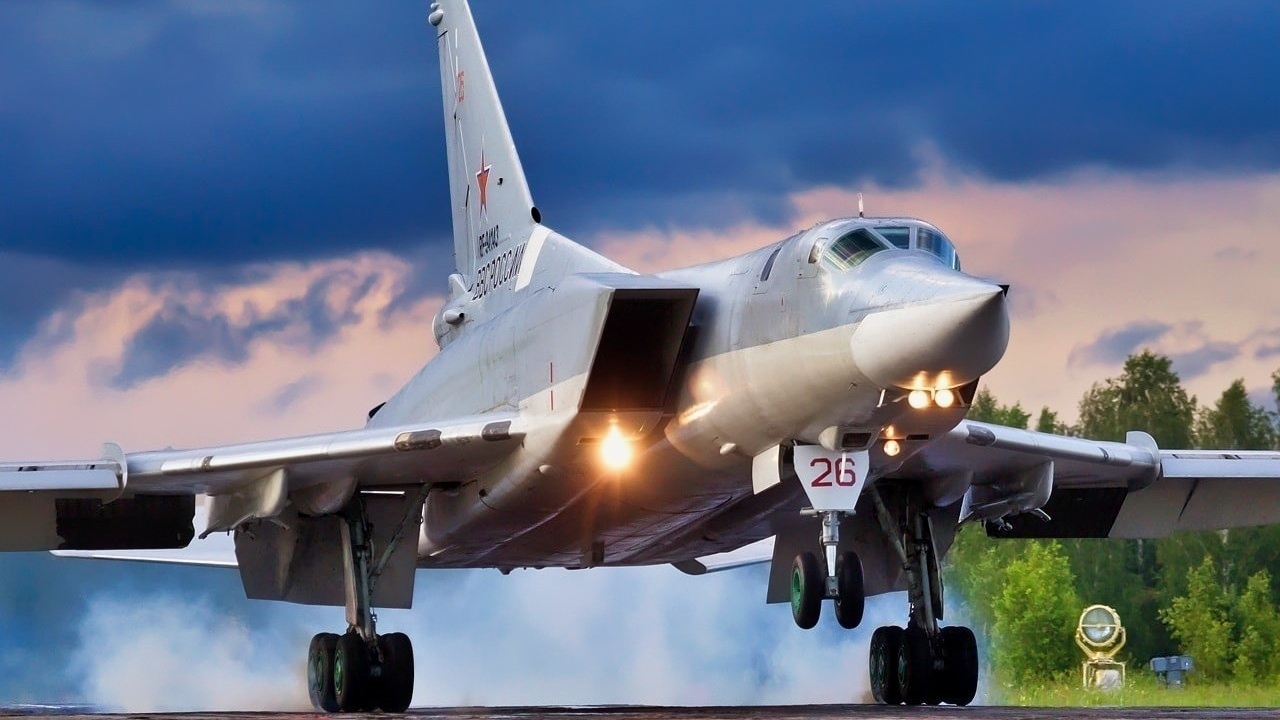
Tu-22M3 from Russian Air Force. Image Credit: Creative Commons.

Tu-22M3 Bomber from Russia. Image Credit: Creative Commons.
Epicentr’s press service said the store was completely destroyed but reported no deaths or injuries. The company’s initial damage statement did not identify any military use for the site. Russia had not issued a specific public explanation for the strike as of July 21.
The loss also has a practical local effect. Epicentr sells building materials, tools, household goods, and repair supplies in a city where repeated strikes have damaged homes and public infrastructure. Rebuilding a large outlet will require time, labor, and capital while Sumy remains under regular attack.
The attack formed part of a wider overnight operation involving 58 Russian drones. Ukraine said it intercepted or suppressed 46, while eight drones reached seven locations. Hromadske reported that Russian drones returned to the area as firefighters began tackling the Epicentr blaze, destroying one emergency vehicle and damaging another.
Russia Turned the Firefighting Operation Into a Second Risk
The continuing drone presence forced emergency crews to suspend part of their response, according to Ukrainian authorities. That detail matters because the effect of a strike does not end when the first aircraft hits. Drones remaining overhead can delay firefighting, medical evacuation, damage assessment, and repairs while exposing first responders to another attack. Even a short pause can allow a commercial fire to spread through a much larger part of a building.
Near-front communities increasingly describe ordinary movement as a drone risk. The same overnight wave hit a nine-story residential building in Sumy Oblast, injuring six people, including four children. Other attacks injured civilians in Chernihiv, Kharkiv, and Kherson.
Sumy Has Faced Repeated Strikes in July
Sumy sits close to the Russian border and has endured repeated attacks as Moscow tries to expand what it calls a buffer zone in northeastern Ukraine. On July 3, a Russian glide bomb hit the city center, killing four people, including a five-year-old girl and her mother, and injuring 27. Reuters reported that the impact area included an apartment building, a shop, and a street crowded with civilians.
Another July attack killed four people and wounded 17 in the region, according to the Associated Press. The destruction of Epicentr caused no reported casualties, but it removes a major retail facility and adds another commercial site to the damage accumulated across the city.
The broader civilian toll is rising. UN monitors verified 1,396 civilian deaths and 7,978 injuries during the first half of 2026, a 37 percent increase from the same period in 2025. The trend reflects more long-range weapons reaching populated areas and heavier short-range drone use near the front.
Ukraine Cannot Protect Every Civilian Site
Ukraine’s air defenses stopped most of the drones launched overnight, but the strikes that reached their targets still damaged a shopping center, homes, an administrative building, and emergency equipment. That is the arithmetic of repeated attacks: a high interception percentage can coexist with serious local damage when dozens of weapons arrive in one night.
Ukraine is trying to expand domestic interceptor production, while crews operate under severe ammunition pressure. The harder ballistic threat is also evolving as Russian missiles use terminal maneuvers intended to complicate interception.
The Epicentr fire shows the consequence at ground level. Russia did not need to cause mass casualties to impose a large cost on Sumy. One commercial center was destroyed, emergency vehicles were damaged, and firefighters had to account for drones still operating above the scene.
The next measure will be how quickly Epicentr can restore local service and whether emergency crews can work without repeated interruptions. As of July 21, the only Epicentr outlet in Sumy had been destroyed.
About the Author: Harry J. Kazianis
Harry J. Kazianis (@Grecianformula) was the former Senior Director of National Security Affairs at the Center for the National Interest (CFTNI), a foreign policy think tank founded by Richard Nixon based in Washington, DC. Harry has over a decade of experience in think tanks and national security publishing. His ideas have been published in the NY Times, The Washington Post, The Wall Street Journal, CNN, and many other outlets worldwide. He has held positions at CSIS, the Heritage Foundation, the University of Nottingham, and several other institutions related to national security research and studies. He is the former Executive Editor of the National Interest and the Diplomat. He holds a Master’s degree focusing on international affairs from Harvard University.


