

From Monday night and on into Tuesday morning, dozens of Ukrainian long-range drones struck Moscow in what has been one of the largest attacks of the almost four-and-a-half-year war.
The strikes are confirmed to have seriously damaged a major oil refinery and have also prompted flight restrictions that disrupted air travel at all four of the Russian capital’s international airports.

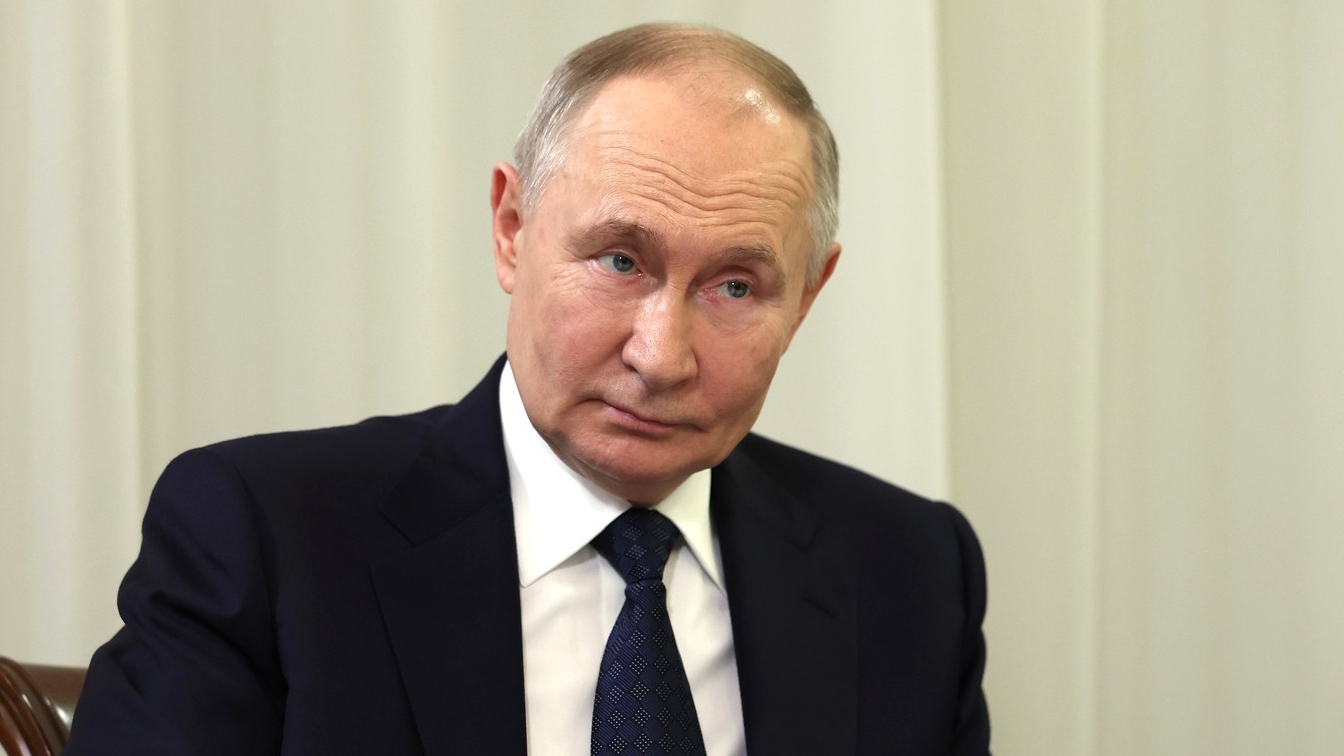
Putin with a Rifle. Image Credit: Russian State Media.
“Over the past 24 hours, an attack by enemy drones on Moscow has continued. One of the drones damaged a facility on the territory of the Moscow Refinery. There were no casualties. Emergency services are working at the scene of the incident,” Moscow Mayor Sergei Sobyanin wrote in a post on his Telegram channel.
Other individuals have posted videos of the refinery in Moscow that show fire and a large plume of black smoke rising over the site.
The processing facility is owned by the Russian energy giant Gazprom and is located in the Kapotnya District, southeast of the city.
The Moscow Region Governor Andrei Vorobyov said in a post on his Telegram channel that 86 Ukrainian drones had been intercepted over the entire region, and that six people had been injured.
A Widening Campaign
Ukrainian President Volodymyr Zelenskiy commented on the attack on his X account, writing: “This time, the Moscow region felt the reach of Ukraine’s long-range capabilities.
An oil refinery was hit at a distance of 500 kilometers. I thank the warriors of the Security Service of Ukraine, the Unmanned Systems Forces, the Special Operations Forces, and the Defense Intelligence Forces for their effective work.”
“Russia must be forced to end its war against our people. And Ukraine’s long-range weapons are one of the important components of such pressure. This is a just response to Russian strikes – and to the dragging out of a war that must be ended.” Zelenskiy also posted a video of the burning Moscow refinery on the same X page.
Ukrainian forces have been increasing both the size and frequency of their drone attacks on Moscow in recent months and have emphasized that this is just one element of a growing long-range strike campaign into Russia. A campaign which officials in Kyiv refer to as “long-range sanctions.”
Tuesday was the 9th consecutive day of Ukrainian drone attacks on Moscow, according to statements – again issued by Sobyanin – on Telegram.
The number of drones that he claims were shot down in Tuesday’s attack was also the largest number of any such set of strikes since 17 May.
To date, Sobyanin has claimed Russia has downed 1,134 Ukrainian drones, which is more than in all of 2025. Moscow authorities claim that Russian forces last year intercepted 734 Ukrainian drones targeted at the capital.
Reciprocal Response
The latest Ukrainian attacks came one day after a massive Russian attack on Kyiv, which killed at least five people and damaged the Kyiv Pechersk Lavra, the oldest and most historic cathedral in the city, and also a designated UNESCO historical site.
This attack on a well-known world heritage symbol with no military value whatsoever prompted Ukraine’s Foreign Minister Andrii Sybiha to brand Russian President Vladimir Putin as a “barbarian.”
It has prompted international condemnation from multiple quarters.
The attack on Moscow the next day is being characterized as a reciprocal, “payback” response for Russia attempting to destroy some of Kyiv’s oldest and most well-known religious sites.
Ukraine’s security service (SBU) posted photos on Telegram showing what it said was debris found at the Lavra site of a Russian Geran-2 drone, “the Russian version of the Iranian Shahed type kamikaze drone,” said an SBU spokesman.
Andriy Kovalenko, the head of the Counter-Disinformation Center, which functions as part of Ukraine’s National Security and Defense Council (RNBO), said that the Moscow refinery that Zelenskiy posted video of burning is one of Russia’s largest.
That refinery has a capacity of around 11 million tons of oil per year and handles production for up to 40 percent of Moscow’s petrol consumption, he said.
“Even though Putin has deployed almost all of the key air defense and missile defense systems to Moscow, this doesn’t save the Russians. Putin is not a guarantee of safety for Muscovites,” Kovalenko also wrote.
Russia’s federal air transport agency, Rosaviatsiya, announced flight restrictions at more than a dozen airports all across southern and western Russia, including all four of Moscow’s international airports: Domodedovo, Vnukovo, Zhukovsky-Bykovo, and Sheremetyevo-1/2.
About the Author: Reuben F. Jounson
Reuben F. Johnson has thirty-six years of experience analyzing and reporting on foreign weapons systems, defense technologies, and international arms export policy. Johnson is the Director of Research at the Casimir Pulaski Foundation. He is also a survivor of the Russian invasion of Ukraine in February 2022. He worked for years in the American defense industry as a foreign technology analyst and later as a consultant for the U.S. Department of Defense, the Departments of the Navy and Air Force, and the governments of the United Kingdom and Australia. In 2022-2023, he won two awards in a row for his defense reporting. He holds a bachelor’s degree from DePauw University and a master’s degree from Miami University in Ohio, with a specialization in Soviet and Russian studies. He lives in Warsaw.


