


The Tupolev Tu-95, known to NATO as the “Bear,” is one of the most recognizable military aircraft ever built. First flown in 1952 and entering Soviet service in 1956, the Tu-95 remains operational more than seventy years later, making it one of the longest-serving strategic bombers in aviation history.
Its distinctive swept wings and massive contra-rotating turboprop engines have become symbols of Soviet and Russian long-range air power.
Although the aircraft was designed during the early Cold War, it continues to play a critical role in Russia’s nuclear deterrence strategy and conventional missile strike capability.
The central question facing Russian military planners today is whether the Tu-95 can realistically ever be replaced.
Stand-Off Missile Attack from Tu-95
During the Cold War, the bomber evolved from a gravity-bomb nuclear platform into a cruise missile carrier.
Modern Tu-95MS and Tu-95MSM variants can launch long-range Kh-55 and Kh-101 cruise missiles far outside enemy air-defense zones. Rather than penetrating heavily defended airspace directly, the aircraft now serves as a stand-off missile truck.
This transformation has kept the bomber relevant despite the evolution of modern air defense systems.
Russia has repeatedly used Tu-95 aircraft to launch cruise missiles during conflicts in Syria and Ukraine, demonstrating that even a 1950s airframe can still contribute meaningfully to twenty-first century warfare.

Tu-95. Image Credit: Creative Commons.

Tu-95 Bomber Russian Air Force. Image Credit: Creative Commons.

Tu-95 Bear Bomber. Image Credit: Creative Commons.
Nuclear Triad
Another reason the Tu-95 remains important is the structure of Russia’s nuclear triad. Strategic bombers form the airborne leg alongside submarine-launched and land-based nuclear missiles. Bombers offer flexibility because they can be dispersed, recalled after launch, and deployed visibly as political signals during international crises.
Old, Loud Russian Bomber
Despite its usefulness, the Tu-95 faces serious limitations. The aircraft is old, loud, and increasingly vulnerable.
Maintenance requirements are growing more severe as airframes age, and replacement parts are difficult to manufacture because Soviet-era industrial systems no longer exist in their original form.
Several analysts have argued that Russia cannot simply restart Tu-95 production because the supply chains, tooling, and specialized expertise from the Soviet period have largely disappeared. Recent Ukrainian drone attacks against Russian bomber bases highlighted this vulnerability, reportedly damaging or destroying several Tu-95 aircraft.
Russia has attempted to modernize the bomber rather than replace it outright.
The Tu-95MSM upgrade program is similar to the B-52, as it includes improved avionics, navigation systems, electronic warfare suites, and compatibility with newer cruise missiles. These upgrades are intended to keep the bomber operational until at least 2040.
The obvious candidate for replacement is the Tupolev PAK DA, Russia’s next-generation stealth strategic bomber project. The PAK DA is intended to serve as a stealthy flying-wing aircraft capable of replacing older bombers, such as the Tu-95.
Prototypes are under development, with serial production tentatively expected later in the decade. However, the program faces substantial obstacles. Russia’s aerospace industry has struggled with delays, sanctions, budgetary constraints, and production bottlenecks. Advanced stealth bombers are extraordinarily expensive and technologically demanding.
Where is the PAK DA Stealth Bomber?
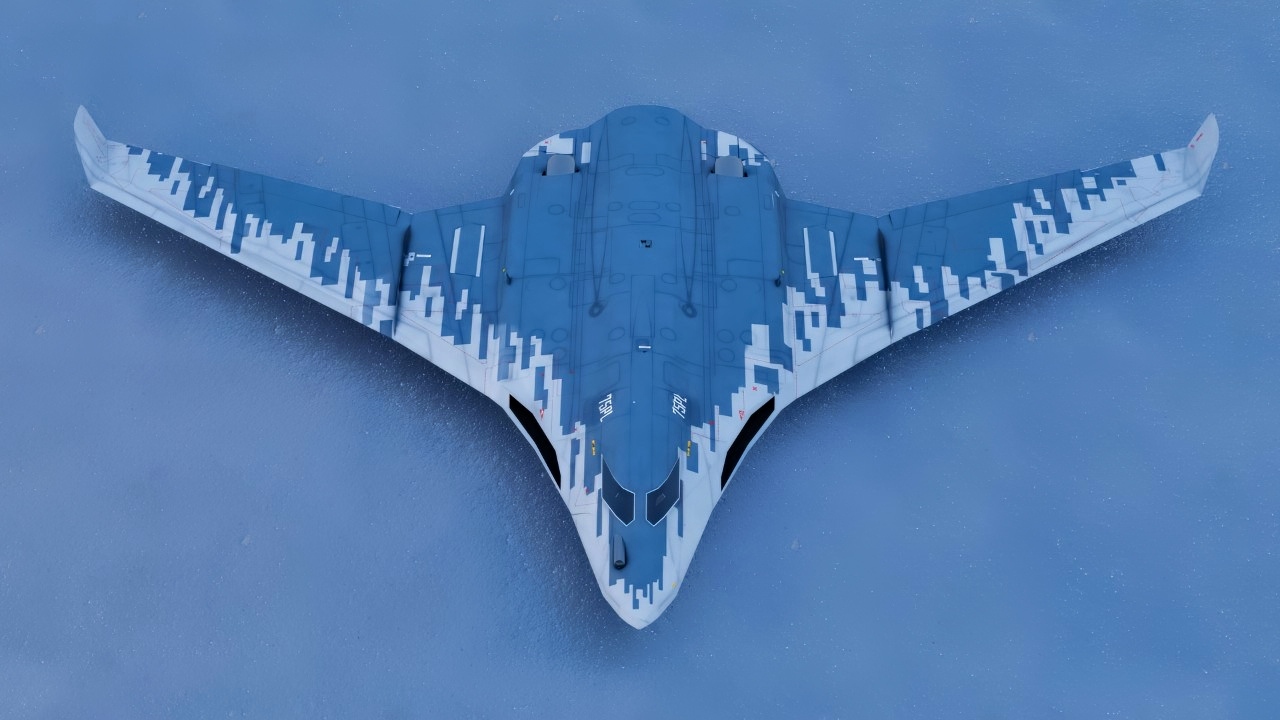
PAK DA Stealth Fighter Screenshot from X Artist Image.

PAK DA Stealth Bomber. Image Credit: Creative Commons.
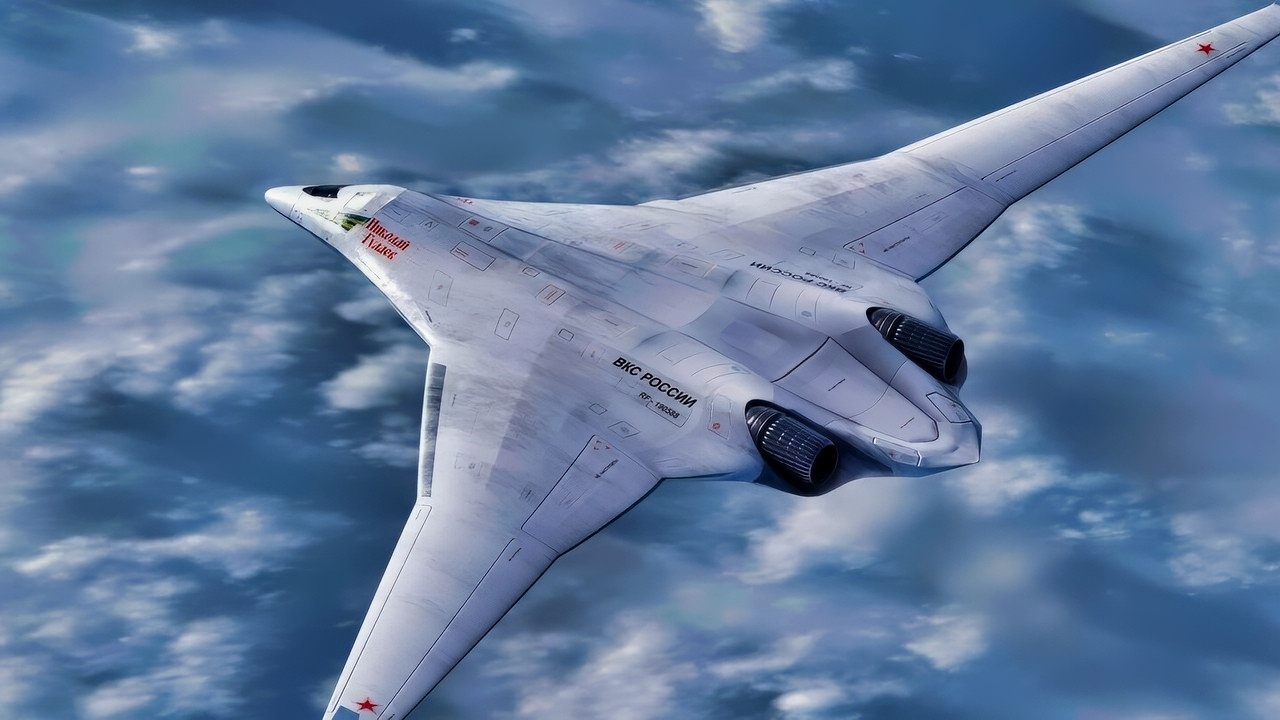
PAK DA Bomber from Russia. Image Credit: Creative Commons.
Even the United States, with far greater industrial resources, required decades to develop aircraft such as the Northrop Grumman B-21 Raider. Russia’s PAK DA platform appears specifically intended to match the U.S. B-21, which is an airborne platform.
The PAK DA is slated to emerge in prototype form in the coming years. Full production is slated for 2030 and beyond, despite the configuration, technological composition, and planned fleet size remaining somewhat unknown. The fact that Russia will arm its PAK DA with a nuclear-capable cruise missile seems quite significant, as it could be seen as a deliberate effort to match or rival US Air Force plans to arm the B-21 with the nuclear-capable Long-Range-Standoff (LRSO) weapon.
Because of these challenges, Russia has also focused on upgrading the Tupolev Tu-160. The Tu-160M modernization program aims to restart limited production of the supersonic “Blackjack” bomber with updated avionics and engines.
Russian leaders have publicly emphasized the aircraft’s importance, and modernization contracts remain active. Yet the Tu-160 cannot fully replace the Tu-95. It is much more expensive to operate, exists in smaller numbers, and lacks the same endurance and cost efficiency. The Tu-95’s turboprop engines consume less fuel during long patrols, making the aircraft economical for routine strategic missions.
For the foreseeable future, the Tu-95 will likely remain in service because Russia has no immediate alternative capable of fulfilling all of its roles.
The PAK DA may eventually assume many of its missions, but development delays suggest that the transition will take many years.
Until then, the aging Bear will “fly on” as a symbol of Russia’s Cold War prominence.
About the Author: Kris Osborn
Kris Osborn is the Military Technology Editor. Osborn is also President of Warrior Maven – Center for Military Modernization. Osborn previously served at the Pentagon as a highly qualified expert in the Office of the Assistant Secretary of the Army—Acquisition, Logistics & Technology. Osborn has also worked as an anchor and on-air military specialist at national TV networks. He has appeared as a guest military expert on Fox News, MSNBC, The Military Channel, and The History Channel. He also has a Master’s Degree in Comparative Literature from Columbia University.


