


Key Points and Summary – Before the T-14 Armata, Russia’s next-generation tank was supposed to be the “Object 195,” or T-95.
-This ambitious 1980s-era project was revolutionary, featuring an unmanned turret, a crew capsule for safety, and a massive 152mm cannon.

T-95 Tank. Image Credit: Creative Commons.
-However, the program was a victim of its own ambition and historical timing. After the Soviet collapse, the project starved for funds and was plagued by technical hurdles.
-By the time it was ready in 2010, it was deemed “morally obsolete” and too expensive. The project was canceled, but its core concepts—like the unmanned turret—were salvaged and adapted for the T-14 Armata.
The T-14 Armata Had a Secret Ancestor: The Object 195 or T-95 Tank
Before the T-14 Armata came into existence, the Russians were working on another tank intended to replace their Soviet stocks. This project was named Object 195, or T-95, as many informally refer to it today.
Like the T-14, it featured an unmanned turret, advanced armor, and other features that would later be incorporated into the Armata.
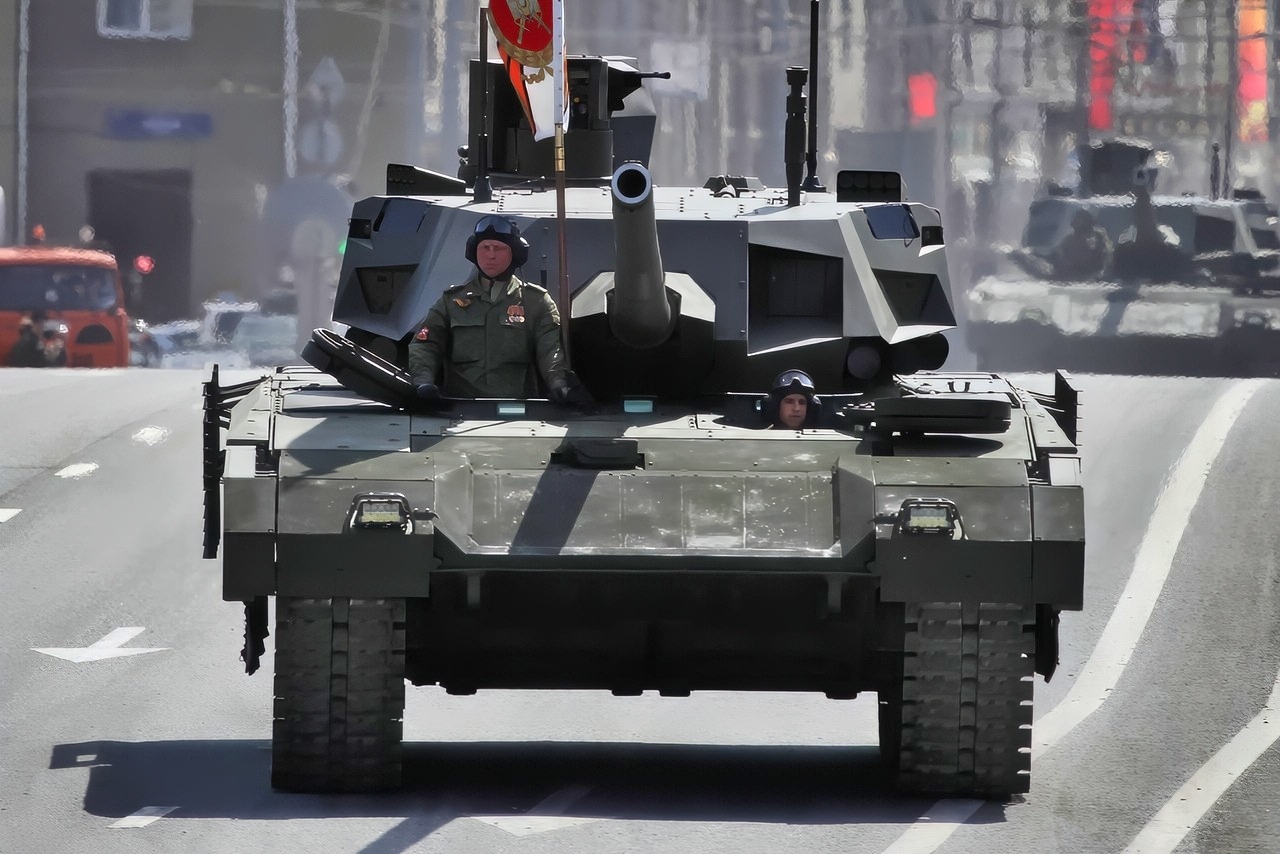
T-14 Armata Tank from Russia. Image Credit: Creative Commons.
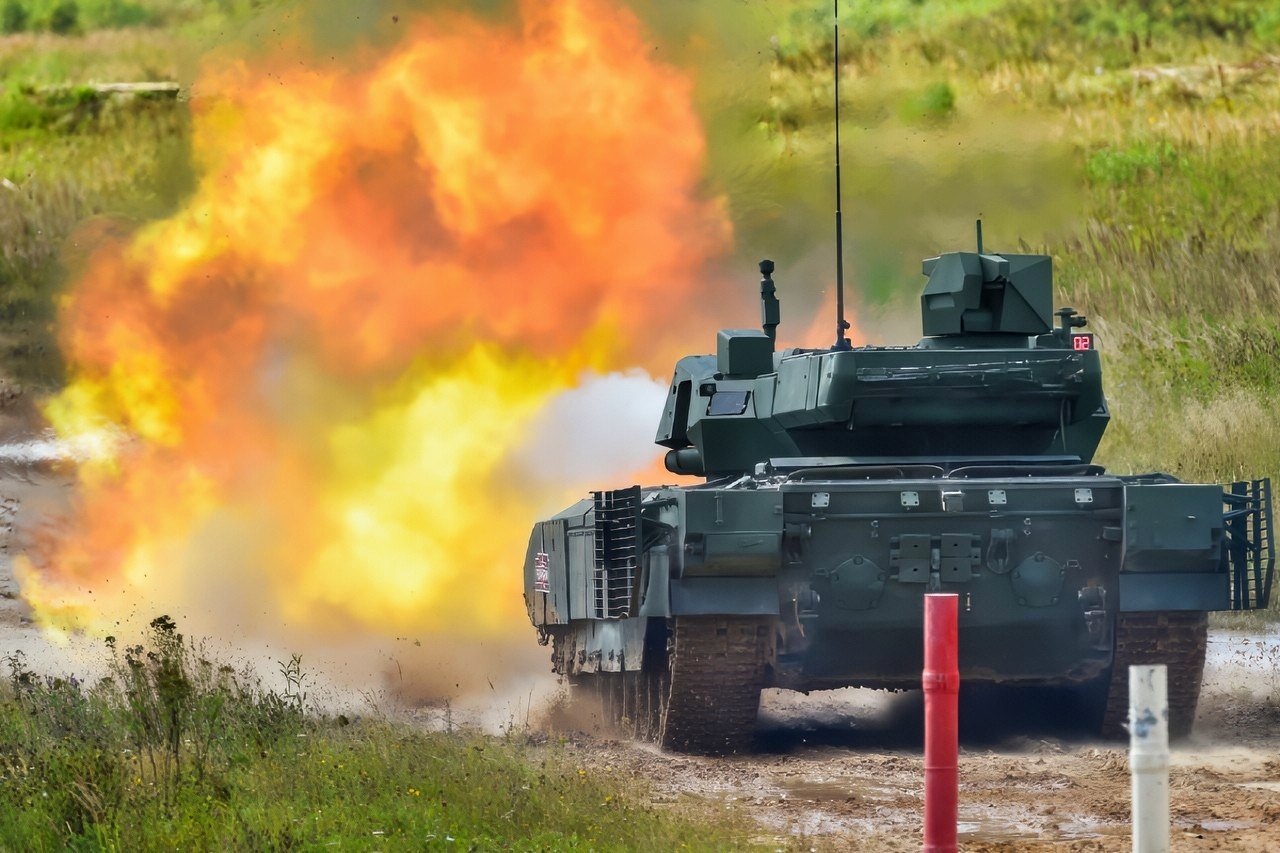
T-14 Armata Tank Russian Army. Image Credit: Creative Commons.
Yet despite its innovations, the Russians later canned the project in part due to behind-the-scenes corruption and, mainly, a lack of funding at the time.
A Brief History of Object 195
The origins of Object 195 trace back to 1988, when the Soviet military launched a program called “Sovershenstvovanie-88,” which translates to “Improvement-88.”
The goal was to create a next-generation MBT that would leap ahead of NATO’s armored capabilities.
The project was led by Uralvagonzavod (UVZ), Russia’s premier tank manufacturer, with design work carried out by the UKBTM design bureau in Nizhny Tagil.
From the outset, Object 195 was conceived as a radical departure from existing Soviet tank designs, incorporating futuristic technologies that had never been fielded before.
However, the tank’s ambitious design was also its downfall.
Many of the technologies proposed for the tank were not ready for mass production.
This left Russia with two options: downgrade the tank for mass production or delay the already overdue project further, risking that the tank would become obsolete by the time it’s accepted into service.
The Russian Ministry of Defense opted for the first option, ultimately canceling the project.
However, UVZ announced work on a new tank, one called Object 148. This latest project incorporated many of the design aspects of the T-95 and ultimately transformed into the T-14 Armata.
T-95: The Super Tank Russia Never Got
The T-95 incorporated several design features that were truly revolutionary for its time.
Unlike traditional tanks, where the crew operates within the turret, Object 195 housed its crew of three in a protected capsule within the hull.
This design significantly improved crew survivability by isolating them from the tank’s most vulnerable section. The turret itself was fully automated, allowing for remote operation and reducing the risk of casualties in the event of a direct hit.

T-14 Armata Tank. Image Credit: Creative Commons.
The tank’s primary armament was another bold innovation. Object 195 was equipped with a massive 152mm smoothbore cannon, designated the 2A83. This gun was far more potent than the standard 125mm guns used in Russian tanks and was designed to defeat any NATO armor at long range.
It could fire both conventional rounds and gun-launched guided missiles, giving it exceptional versatility and lethality.
However, the size and power of the gun posed significant engineering challenges, particularly in managing recoil and handling ammunition.
Why the T-95 Would Have Been a Nightmare on the Battlefield
To accommodate the large rounds, Object 195 featured an advanced autoloader system located beneath the turret.
This carousel-style loader enabled efficient, protected ammunition handling, though it added complexity and bulk to the tank’s internal layout.
In addition to the main gun, the tank was armed with a 30mm 2A42 autocannon for engaging lighter targets and infantry, as well as a 12.7mm Kord machine gun for anti-personnel and anti-aircraft roles.
Protection was another area where Object 195 aimed to set new standards.
The tank was equipped with advanced composite armor and explosive reactive armor (ERA), offering protection reportedly two to three times that of contemporary Russian tanks.
The crew capsule was designed to withstand direct hits and internal explosions, further enhancing survivability.
The tank also featured active hydropneumatic suspension, which improved mobility and firing accuracy on the move.
Why the T-95 Was Never Accepted
Despite these impressive specifications, Object 195 was ultimately canceled in 2010. There are many reasons why this happened, starting with the prolonged development timeline.
The tank had been in development for over two decades, and by the time it was nearing completion, many of its technologies were considered outdated or superseded by newer concepts.
Russian officials even referred to the tank as “morally obsolete,” indicating that its design no longer aligned with modern military needs.
Economic constraints played a significant role in the cancellation. The collapse of the Soviet Union in 1991 led to a severe reduction in defense funding.
Russia’s economy struggled throughout the 1990s and early 2000s, and the defense budget was repeatedly slashed. Object 195, being a high-cost, high-risk project, became a prime target for budget cuts.
The Russian military opted to invest in more practical and cost-effective solutions, such as modernizing existing platforms like the T-90.

Russian T-90 Tank. Image Credit: Creative Commons.
Other Projects Killed the T-95
The T-95 also faced competition from other projects that demanded more resources. Such projects included a modernization of the T-80, called Object 640 (more commonly known as the Black Eagle). At the same time, the Russian Ministry of Defense was also examining modernization programs for the T-72 and T-90.
It did not make sense to pursue a new platform when older tanks could be modernized for half the cost, especially considering the technological risks associated with the project.
The most decisive factor in the cancellation of Object 195 was the emergence of the T-14 Armata.
Developed around the same time Object 195 was being phased out, the Armata incorporated many of the same technologies, including the unmanned turret, crew capsule, and digital systems.
However, it used a more practical 125mm gun and featured a modular design that allowed for easier upgrades and production. The Armata was seen as a more balanced and forward-looking solution, capable of meeting Russia’s strategic needs without the drawbacks of Object 195.
About the Author: Isaac Seitz
Isaac Seitz, a Defense Columnist, graduated from Patrick Henry College’s Strategic Intelligence and National Security program. He has also studied Russian at Middlebury Language Schools and has worked as an intelligence Analyst in the private sector.
More Military
The Air Force Only Has 19 B-2 Spirit Stealth Bombers
Why the U.S. Navy Needs Lasers for an ‘Infinite Magazine’
U.S. Navy F/A-18 Super Hornet Fighter: How Hard Is It To Fly?
Unstoppable: Delta Force Is the Very Best Special Forces Unit on Planet Earth
Could a U.S. Navy Nuclear Aircraft Carrier Tip Over In a Storm?


