

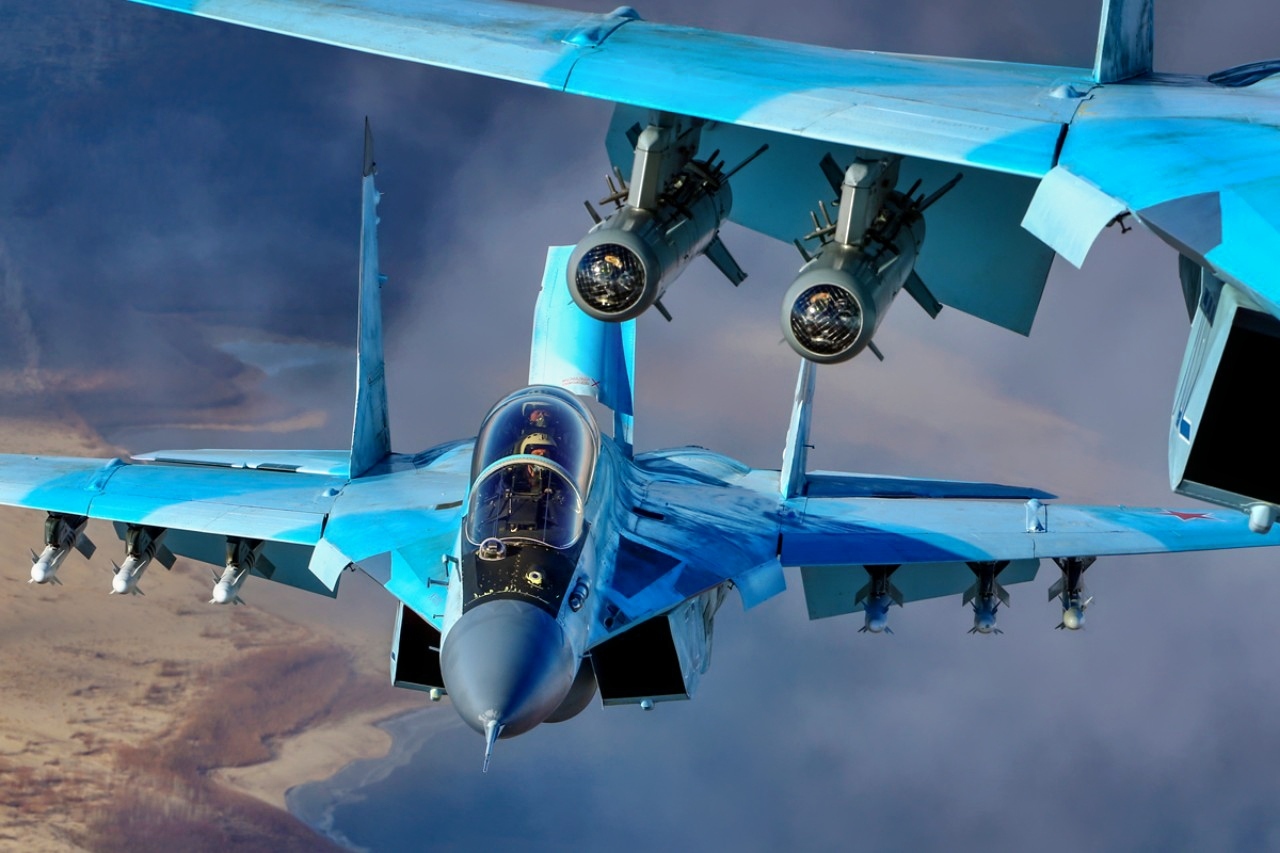
Key Points and Summary – A vital Russian defense plant, Optron-Stavropol, which supplies power semiconductors for MiG, Sukhoi, and Tupolev aircraft, has been forced to shut down due to insurmountable debts, confirming a dire prediction made by Rostec chief Sergei Chemezov in late 2024.
-The plant’s collapse is attributed to Russia’s “upside-down” wartime economy, where high interest rates (21%) and state-mandated low prices for defense contracts make it impossible for manufacturers to cover production costs.
-This closure signals a potential disintegration within Russia’s defense industrial sector, as it struggles to sustain the war effort in Ukraine under immense financial pressure.
Vital Russian Defense Plant Closes Due to Outstanding Debts
A colleague in Moscow refers to “Russia’s upside-down economy” when discussing the State Defense Orders (GOZ), and the defense industrial sector is beginning to show signs of disintegration.
While these signs are just now becoming visible, they were forecast more than half a year ago by one of Russian President Vladimir Putin’s closest confidants.
At the top of the list of influential personalities who are members of Putin’s “off the books” Politburo is Sergei Chemezov, the Russian president’s ally of four decades and a former KGB lieutenant colonel. Chemezov is the General Director of the nation’s massive defense industrial conglomerate, Rostec.
The companies under his control produce 80 percent of the weaponry that is supplied to Russia’s military, making Rostec the vital institution that supports Russia’s war in Ukraine.
Late last year, Chemezov raised warning flags over the economic situation in this defense industrial sector that is vital to Putin’s war effort. His primary concern is that the head of the Central Bank (CBR), a female economist named Elvira Nabiullina, has prevented the Russian ruble from collapsing into hyperinflation (as it did in the 1990s) by steadily increasing interest rates, which are now at 21 percent or higher.
The Plant at Stavropol
This interest rate keeps inflation under control, but as Chemezov told a business forum in November 2024, Russian defense firms “taking loans at such an interest rate will go bankrupt in a short period of time. They will again come to the government with an outstretched hand and say, ‘give us money to save our production’”.
“With such a key rate, of course, it is just madness, any [export] contract becomes unprofitable for us,” and foreign sales contracts for products with long production periods or timelines in sectors like aviation, air defense, and shipbuilding may have to halt, he explained at the time.
Chemezov’s dire predictions have now come to pass at one of Russia’s key factories, which supports the war effort. This facility, the Optron-Stavropol plant, was forced to shut down due to an excessive accumulation of unpayable debts.
The company is a supplier of power semiconductors for Mikoyan (MiG) and Sukhoi fighter aircraft, as well as the Tupolev bombers, and had shut down its production line this past March.
Optron-Stavropol has reported a net loss of more than 149 million rubles (approximately $1.7 million) in 2024 alone, and its creditor debt had reached 230 million rubles ($3 million) by June 2025. Its accounts are now frozen, and it continues to accumulate debt; therefore, the company has declared that it can no longer sustain its operations.
The enterprise’s director, Pavel Bondarenko, has stated that the situation is due to defense contracts that require the company to sell at fixed, state-mandated prices, which are far below production costs. “The company is unable to cover expenses and has had to make layoffs,” said Bondarenko.
Previous reports indicate that the company has faced persistent financial difficulties since 2016, and the MoD had been previously warned of a potential closure in 2021 when Optron-Stavropol also reduced its staff.
Unsustainable Operations
Under Russian regulations governing the GOZ, prices for dual-use products are determined by the armed forces and the Ministry of Defense (MoD).
One example given is the MoD-fixed price for a single diode, which is 2,600 rubles ($33) per unit, compared to the 3,600 rubles ($46) the company would need to charge to cover manufacturing costs.
“The Defense Ministry demands the lowest possible costs be factored into pricing, and its representatives often abuse this leverage, which ultimately leads to financial losses for producers,” Alexei Novosyolov, general director of microcircuit producer PKK Milandr, told CNews technology magazine.
Companies that refuse to fulfill government defense contracts risk not only alienating one of their largest customer bases but also can find themselves subject to state sanctions, said Novosyolov. Bondarenko stated that the Prosecutor General’s Office initiated a review of Optron-Stavropol’s finances following the company’s nine meetings with the Industry and Trade Ministry (MinPromTorg), the government ministry responsible for overseeing much of Russia’s defense sector.
“The prosecutor’s inspection found no criminal violations or evidence of misappropriation of state defense funds,” Bondarenko told the CNews publication.
In 2021, Ivan Pokrovsky, head of the Association of Russian Developers and Manufacturers of Electronics, told a Russian news agency, Aftershock News, that part of Optron-Stavropol’s losses were because the firm had long supported production of “older technologies that are maintained specifically for military purposes” but have no commercial value beyond MoD orders.
“Тhese technologies are not competitive outside defense contracts. If the company’s assets are acquired by a larger, more successful power electronics producer, it might be possible to retain both the workforce and technological equipment. However, it may be simpler and more profitable for shareholders to just sell the plant’s real estate,” Pokrovsky told the news agency more than four years ago.
Given the state of Russia’s looming internal problems and the dismal situation on the war front, “many more such forced closings and bankruptcies are probably in the offing,” said my Moscow colleague.
About the Author:
Reuben F. Johnson is a survivor of the February 2022 Russian invasion of Ukraine and is an Expert on Foreign Military Affairs and Director of the Asian Research Centre with the Fundacja im. Kazimierza Pułaskiego in Warsaw. He has been a consultant to the Pentagon, several NATO governments and the Australian government in the fields of defense technology and weapon systems design. Over the past 30 years he has resided in and reported from Russia, Ukraine, Poland, Brazil, the People’s Republic of China and Australia.
Submarines Like No Other
Japan Might Have a Stealth Submarine the U.S. Navy Would Love


