

Putin’s Strategy to Win His War in Ukraine: “Out-Suffer” Them – About a week ago, Andrei Klepach, the chief economist for Russia’s Vnesheconombank (VEB), which is the second-largest banking institution in the country, was removed after 12 years in the job. For ten years before that, he had run the macroeconomic forecasting unit at the economic development and trade ministry. In short, one of the country’s most experienced and insightful economic analysts.
No reason for his removal has been given, but it appears that comments in an address he gave several months earlier at a prestigious and closed gathering of senior scholars and powerful businessmen were the main factor. His remarks have been regarded as something close to a betrayal by either Russian President Vladimir Putin or those around him.
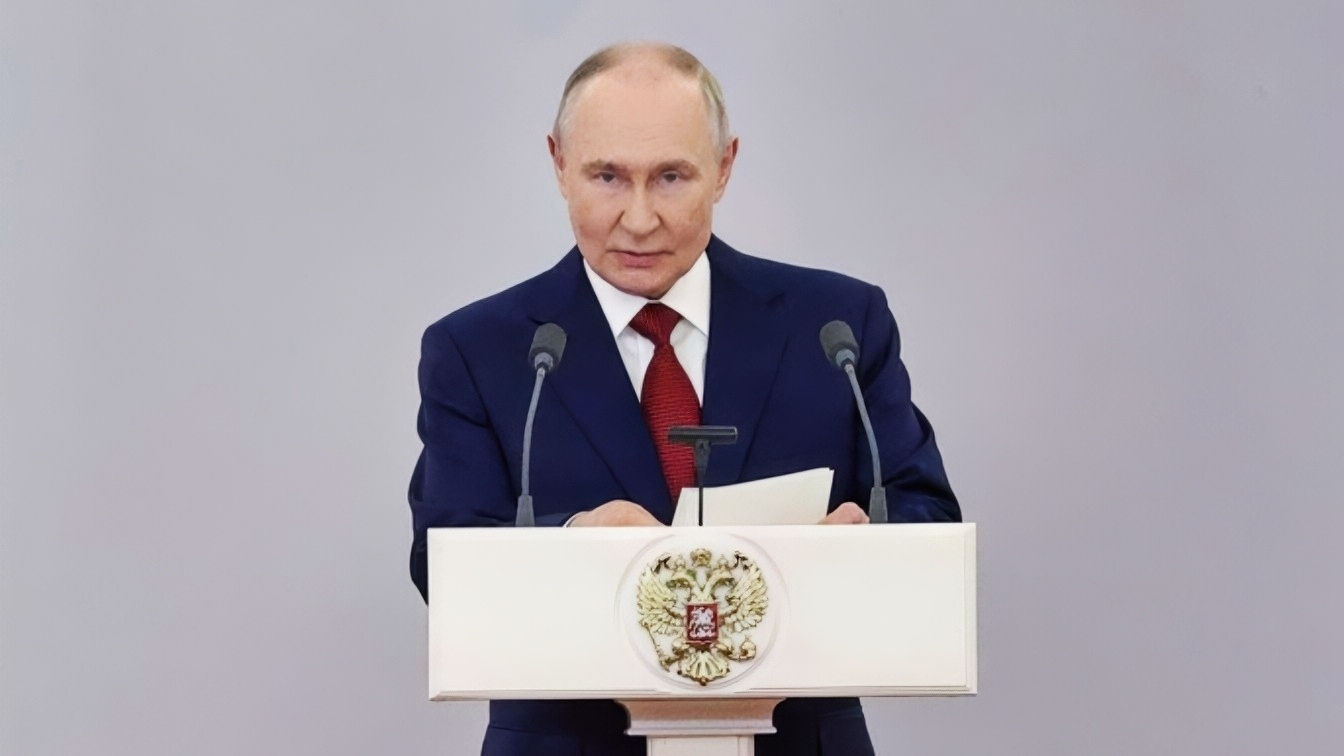
Putin Speaking in July 2026 Creative Commons Photo
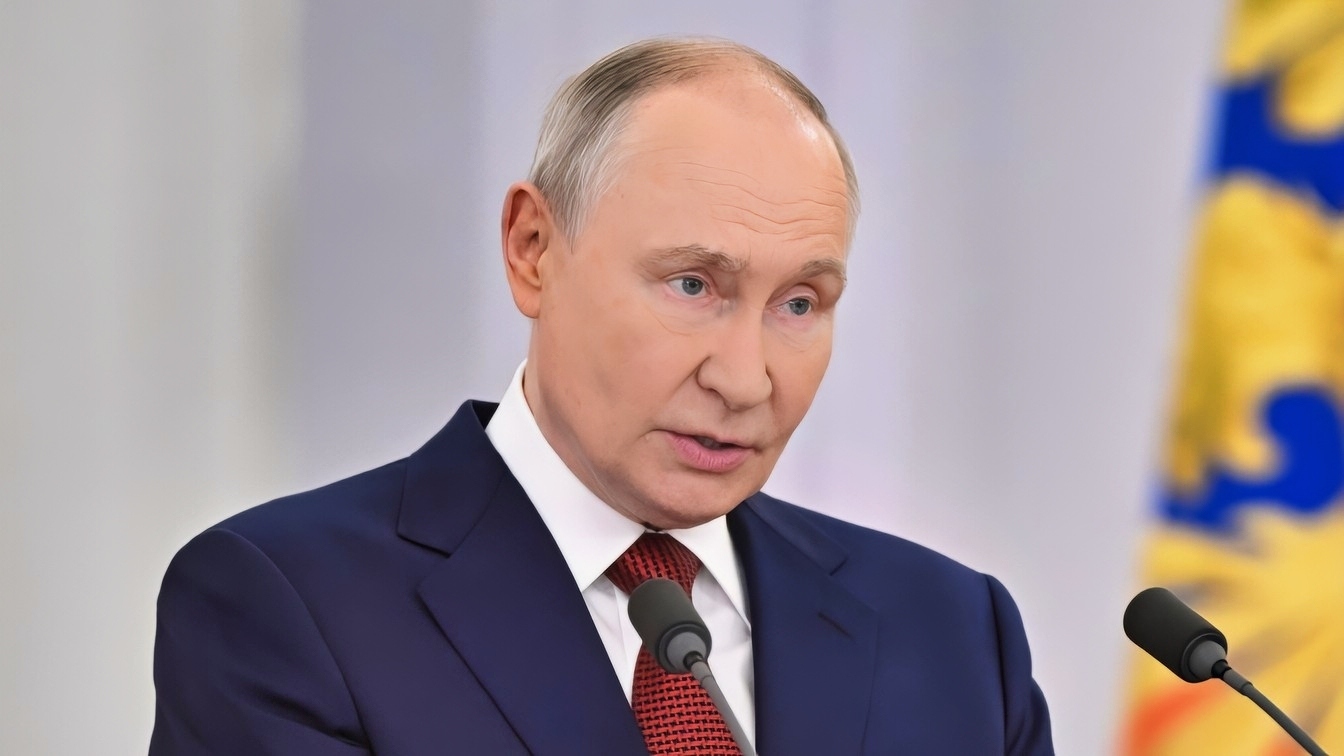
Putin in July of 2026 Creative Commons Photo
Klepach’s warning to those present was that Russia is “falling behind” the rest of the world. “We are losing both technological and economic competition in the world. And, I have already said, we lose it not only to China and the United States, we [also] lose it to Ukraine in some way. The economy of Ukraine, of course, is partly destroyed, a demographic catastrophe. But, once again, the Ukrainian economy, despite everything, survives,” he explained.
“Of course, there is a huge financial help…With such assistance for military spending and their own expenses, it’s about 50 percent of our budget,” Klepach said. “We will not win the competition in this war of attrition. We have an illusion that everything will collapse there. It didn’t collapse and won’t collapse. Our costs are increasing,” Klepach continued.
Which Side Has More Lasting Power
Examined in the light of some of Putin’s more recent statements, Klepach’s removal may be less a case of his having offended Putin and more of the former KGB Lt. Col. wilfully denying reality.
Not only has Ukraine not collapsed, but it also continues to rack up military successes in strikes against Moscow’s military. Its army has killed so many Russian soldiers that volunteers and mercenaries from allied nations are being recruited from all over the world.
Russia continues to lose 30,000 or more soldiers per month, exceeding its replacement rate of about 27,000 new servicemen.
Putin nevertheless continues to make false claims that his army advances at every point on the front. In all actuality, by April 2026, Russia’s army had already recorded practically no territorial gains in Ukraine for the first time in two and a half years. This is according to an analysis of data developed by the Washington, DC-based Institute for the Study of War (ISW), conducted by Agence France-Presse.
If the situation in the field were not enough, there are other problems that continue to worsen inside Russia. “Putin’s leadership appears to be entering a grey zone of increasing vulnerability. Economic stress is high, elite pressures are rising, and discrepancies between official military, economic and social narratives and observable realities continue to widen,” opined an experienced expert forecaster on developments in Russia in the latest edition of the London-based Royal United Service Institute’s (RUSI) journal.
Fatal Choice
This puts Putin in an unenviable situation.
On the one hand, he can roll the dice and hope that Russia’s population can endure more suffering and for longer than Ukraine’s, as a recent article by Bloomberg suggests.
On the other hand, he can cut his losses and make a deal, get out of the conflict, and declare the whole war a bad idea to begin with.
Since he has shown no inclination to take the second option, it seems likely that he is instead ready to fight to the last Russian soldier in the field and the average citizen who is feeling the economic hardship.
When he said last month, “The people of Russia can never be broken” he was in essence saying “let the contest over suffering begin.” More than one war with Russia has shown that those who bet on the population’s will being broken ended up losing.
But the difference this time is that Ukraine is not Charles XII, Napoleon, or Hitler.
Ukraine is not the aggressor. It is not threatening Russia’s existence and never has. While the population has no love for the West, they also have no great love for Putin and his war.
Their support for its continuation is instead largely a product of an ingrained culture of victimhood in Russia that regards Ukraine as having been “stolen” from them and that its return to Moscow’s total dictatorial control is an almost messianic cause.
In the meantime, Russians live with severe labor shortages caused by hundreds of thousands of workers leaving the country or dying on the front. Runaway military spending has created inflationary spirals and deficits that hurt the average family.
Infrastructure pressures created by Ukraine’s drone war have led to domestic disruptions that are degrading local energy supplies and fuel distribution networks.
If Putin is predicting that his people can suffer much more than the population of Ukraine, he might still be correct in his assumption. But the trends to date are not running in his direction.
About the Author: Reuben F. Johnson
Reuben F. Johnson has thirty-six years of experience analyzing and reporting on foreign weapons systems, defense technologies, and international arms export policy. Johnson is the Director of Research at the Casimir Pulaski Foundation. He is also a survivor of the Russian invasion of Ukraine in February 2022. He worked for years in the American defense industry as a foreign technology analyst and later as a consultant for the U.S. Department of Defense, the Departments of the Navy and Air Force, and the governments of the United Kingdom and Australia. In 2022-2023, he won two awards in a row for his defense reporting. He holds a bachelor’s degree from DePauw University and a master’s degree from Miami University in Ohio, specializing in Soviet and Russian studies. He lives in Warsaw.


