
Summary and Key Points: At first glance, it was a display of raw power: in one night, Russia hurled 656 drones and 73 missiles at cities across Ukraine, one of its largest barrages of the war. But a growing chorus of European officials and Western spy chiefs reads it the opposite way — as a sign of weakness, even desperation. Four years into a war meant to last weeks, Russia has barely advanced past the lines it held in 2014, and one spy chief warns, “time is not in Russia’s favor.” Meanwhile, Ukraine, unable to match Moscow’s missiles, is flooding the skies with cheap drones and hitting bomber bases deep inside Russia. The barrage may say less about strength than about how the war is really going.
Are Russia’s Massive Missile Strikes Against Ukraine A Sign Of Weakness Or Strength?
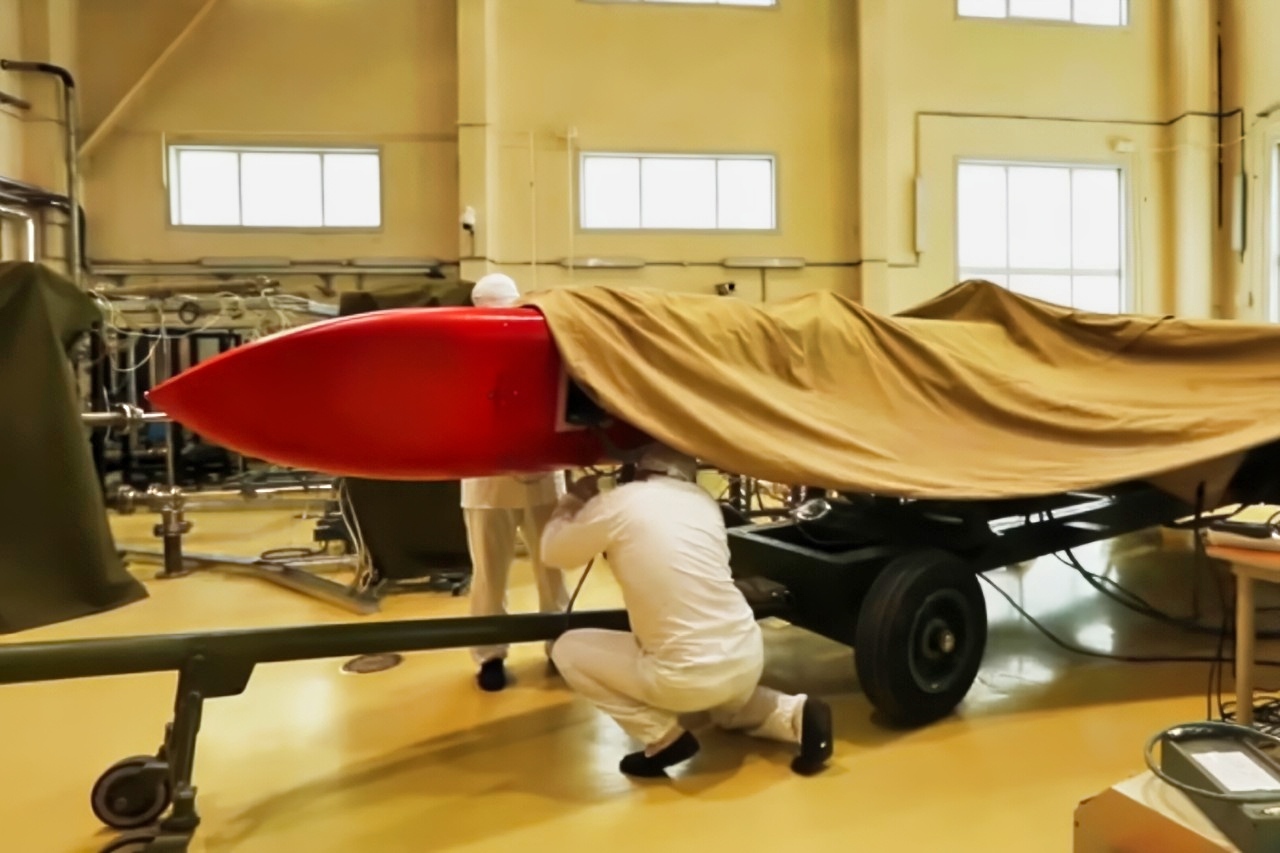
Skyfall Missile Russian Flying Chernobyl. Russian Government/Screenshot.
Following days of threats, Russia launched one of its biggest air attacks of the war against Ukraine on June 2. Reports described how 656 drones and 73 missiles were launched at targets across the country overnight, with the barrage striking Kyiv, Dnipro, Kharkiv, Poltava, and Zaporizhzhia. It follows Ukraine’s intensified campaign of drone strikes deep into Russian territory.
It would be easy to describe the intensified attacks as a demonstration of Russian strength, and in many ways it is. Russia has access to long-range missiles that can cause significant damage to major Ukrainian cities, and that’s precisely what happened last night.
But more than four years after launching its full-scale invasion, which was originally envisioned as a weeks-long “special military operation,” Moscow is still fighting. And now, European officials and analysts are warning that the strikes may be a sign of weakness.
For some analysts, the attacks could be a sign of growing desperation from Russia, as it relies more heavily on massive – and expensive – missile and drone barrages.
European Officials Say Russia Is Under Pressure
European officials are openly stating that Russia is under pressure, and that the strikes reflect that. European Union foreign policy chief Kaja Kallas, for example, argued earlier this year that Russia has paid an enormous price for very limited gains in Ukraine.
In February, she said Russia had advanced only slightly beyond the front lines established in 2014 despite years of fighting and massive casualties. She also dismissed the idea that Russia remains an unstoppable military power, arguing that the country’s economy has been substantially weakened.
“After more than a decade of a conflict, including four years of full-scale war in Ukraine, Russia has barely advanced beyond the 2014 lines,” Kallas said at the Munich Security Conference.
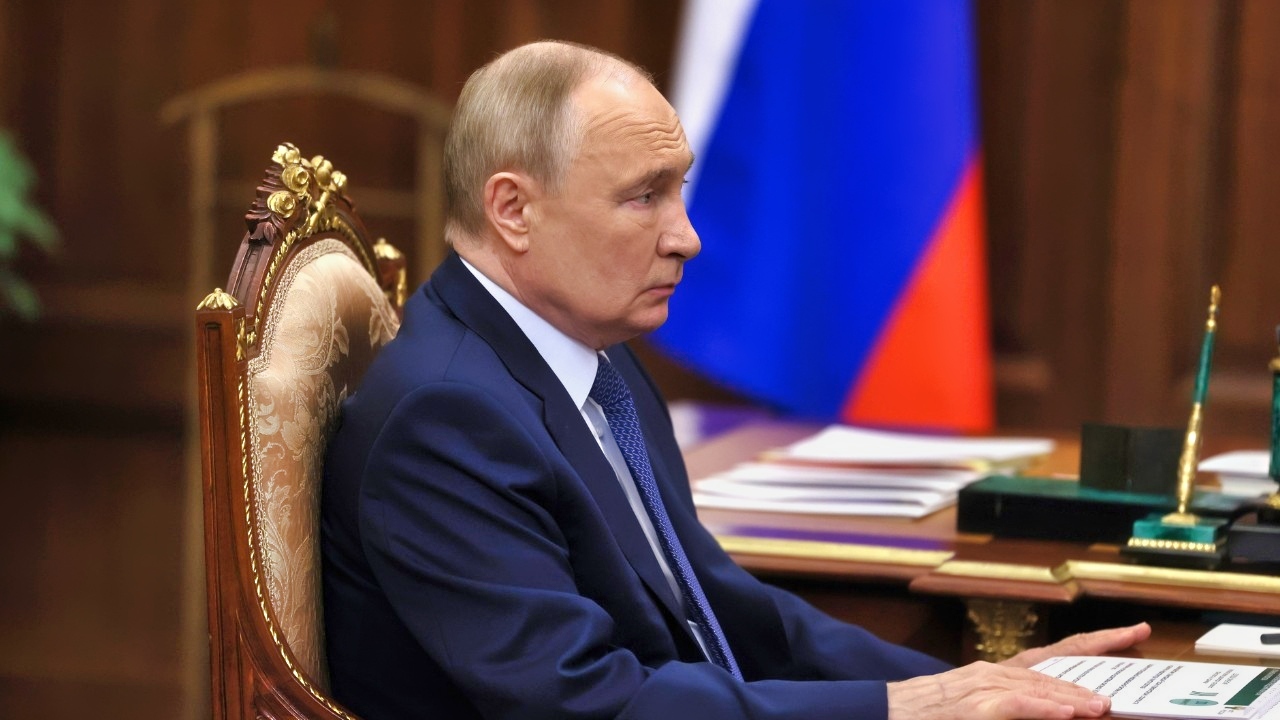
Putin in October 2024 Kremlin. Image Credit: Russian Government.
A press release from the European Council published April 23 also described how the 20th round of EU sanctions had hit Russia’s “energy revenues, military-industrial complex, trade and financial services.”
“Today’s package aims to further cripple Russia’s economy and war machine, and confirms the EU’s unwavering support for Ukraine and its people in resisting the Russian aggression and enduring the recent brutal campaign deliberately targeting civilian infrastructure, including energy,” the press release explains.
“The EU remains determined to maintain and increase pressure on Russia to stop its brutal war of aggression and engage in meaningful negotiations towards a just and lasting peace,” it continues.
Speaking to CNN in May 2026, the Director General of the Estonian Foreign Intelligence Service, Kaupo Rosin, said that “time is not in Russia’s favor.”
They aren’t the only ones recognizing it; Western governments, after all, continue to supply military equipment to Ukraine in the expectation that Russia will not simply win the war.
Their argument, though, is not that Russia is incapable of fighting, but that it is facing growing difficulties – and with that being the case, the escalating attacks seen in recent weeks and days could partly be a result of that growing pressure.
Russia Has Not Achieved Its Original Objectives
When the invasion of Ukraine began in 2022, the objective was to rapidly seize Kyiv, collapse the Ukrainian government, and force Ukraine into submission. Moscow intended to capture eastern Ukraine and incorporate it into Russian territory. None of those goals has been fully realized.
More than four years later, President Volodymyr Zelenskyy remains in office, and Kyiv, despite recent assaults, remains under Ukrainian control. Kyiv also continues to receive military, financial, and intelligence support from the United States and Europe. While Russia occupied substantial portions of Ukrainian territory, there has been no decisive political victory. And with the economy faltering, the pressure to make significant gains is only growing.

Two F-16 Vipers from the 314th Fighter Squadron at Holloman Air Force Base, New Mexico, fly next to a KC-135 Stratotanker from the 121st Air Refueling Wing at Rickenbacker Air National Guard Base, Columbus, Ohio, over New Mexico, Nov. 15, 2022. The 314th FS trains the next generation of F-16 Viper pilots over the Holloman and White Sands Missile training ranges. (U.S. Air Force photo by Airman 1st Class Antonio Salfran)
Russia may not technically be losing, but it isn’t winning either. Meanwhile, Ukraine seems to be getting better at causing damage using cheap drones.
Ukraine Is Bringing the War to Russia
The longer the war takes, the better Ukraine could get at causing damage using cheap drones and weapons. Kyiv cannot match Russia’s missile arsenal, but that arsenal is finite on both sides, and Ukraine is constantly increasing the number of cheap drones it can manufacture and deploy. Ukraine now manufactures millions of drones every year, allowing it to attack Russian military and economic infrastructure at relatively low cost. The problem is so bad for Russia that legislation has now been passed that permits private institutions to engage in air-defense roles across cities all over the country.
Ukrainian strikes have hit bomber bases and oil refineries, fuel depots and ammunition sites, and military-industrial facilities all over the country. Famously, Operation Spider’s Web struck airfields used by Russia’s long-range bomber fleet. The trajectory suggests that Ukraine will only get better at striking higher-value targets, and Russia has a choice: hit back harder or come to the table.
About the Author: Jack Buckby
Jack Buckby is a British researcher and analyst specializing in defense and national security, based in New York. His work focuses on military capability, procurement, and strategic competition, producing and editing analysis for policy and defense audiences. He brings extensive editorial experience, with a career output spanning over 1,000 articles at 19FortyFive and National Security Journal, and has previously authored books and papers on extremism and deradicalization.


