

Key Points and Summary – Russia’s PAK DA flying-wing bomber is sliding right, likely into the 2030s.
-Five brakes stand out: bomber-scale stealth coatings that demand flawless seams and materials; engine uncertainty for long-range, quiet, efficient thrust; competing programs (Su-57/Su-75) and wartime needs draining talent and factory time; sanctions choking microelectronics, software, and tooling; and tight finances as Moscow replaces battlefield losses and nurses oil-price swings.
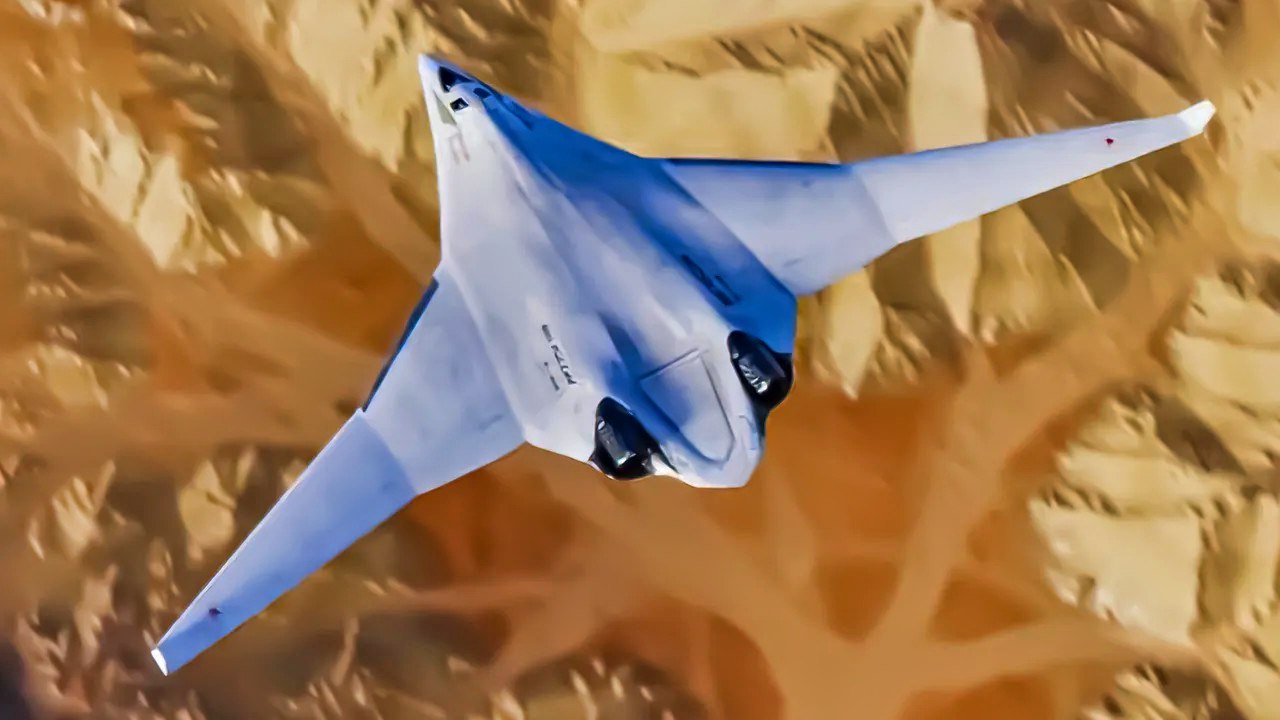
PAK DA Russian Bomber. Image Credit: Creative Commons.

PAK DA bomber artist rendition.
-Add unclear doctrine—standoff conventional strikes vs. nuclear deterrence—and the path narrows further.
-Upgrading Tu-160s may prove the near-term stopgap, while PAK DA risks becoming an expensive promise deferred by physics, supply chains, and budgets.
Five Reasons Russia’s Next-Generation PAK DA Bomber Is Delayed
Like the Chinese, the Russians want a high-flying long-range stealth bomber. Vladimir Putin’s air force and aerospace industry are working on the PAK DA flying-wing, radar-evading strike airplane.
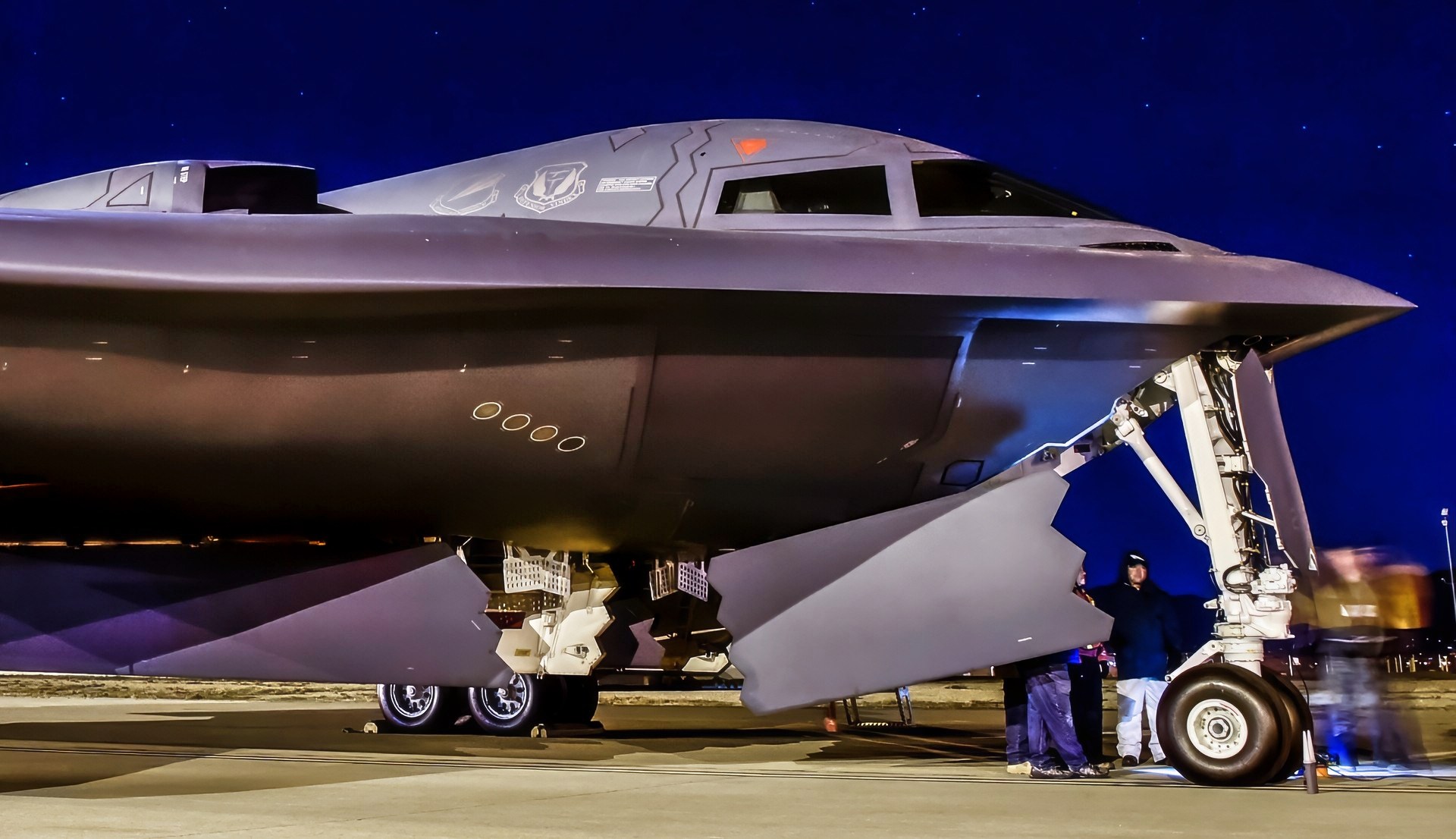
Like the Chinese H-20, the PAK DA is modeled on the American B-2 Spirit stealth bomber. But there have been ample delays in the PAK DA program.
The Russians just can’t seem to get it right, and there are five reasons for this.
Stealth coatings can be difficult to integrate on a large airplane.
The Russians do not have the experience that the Americans have.
The country’s engineers and designers are capable, but they are used to producing non-stealth fighters and bombers.
Meanwhile, stealthy warplanes like the Su-57 Felon and Su-75 Checkmate have undergone lengthy development and have not been particularly successful in combat or on the export market.
The PAK DA was supposed to fly this year, but that was considered an optimistic timeline. It will likely not enter active duty until the 2030s instead of 2027 as planned.
What Should the Aerial Combat Strategy Be?
There are five reasons the PAK DA has been delayed, and this is problematic for the Russian war effort. First, Russia faces many different priorities regarding tactics and procedures.
The air force never attained air dominance over Ukraine.

PAK DA Bomber from Russia. Image Credit: Creative Commons.
The Ukrainian air defenses, especially those loaned by the United States, such as the Patriot surface-to-air missile defenders, have been highly effective. Russia has been forced to fly many of its strike airplanes over Russian airspace and launch stand-off missiles and glide bombs. Can a new bomber supplement this activity, or must it be a strategic tool for nuclear strike only?
Defense Acquisition Priorities Are Not Clear
Second, there is the problem of competing priorities.
Should the air force focus on making more conventional fighters and bombers?
This would give the air force added firepower.
Or should it focus on stealth bombers with a heavy payload and nuclear capability?
The Russians want to achieve both objectives, but time, money, and resources are running short. The country may have to pick one over the other.
The PAK DA must compete with the development efforts of the Su-57 Felon and Su-75 Checkmate. These programs have attracted a large number of the best engineers and designers in the Russian aerospace industry.
There seems to be a shortage of manpower to install intricate stealth coatings and advanced components for stealth on a bomber.
The PAK DA will need a completely smooth fuselage with no outward seams or gaps. Low observability for such a large airplane is difficult.
Russia is likely using lessons learned from the production of the Su-57 to enhance the stealthiness of the PAK DA, but creating low-observable traits on smaller airplanes is easier than on large bombers.
To give you an idea of the size of the PAK DA, it may have a payload that is up to 30 or 35 tons.
That is more delivered firepower than the Chinese H-20, and even Xi Jinping’s best engineers and designers are having difficulty making the H-20 fully stealthy.
New Engines Are Needed, But Delays Plague the Effort
Third, is the engine development. The Russians are suffering from delays in the new engine that must power the PAK DA.
Testing so far hasn’t been great, and there are questions about the effectiveness of engineers and technicians who seem to be struggling. Can the aerospace workers transfer engines from other airplanes and create efficiencies and economies of scale for the PAK DA?
Or will they just take the powerplant from the Tu-160 bomber and reconfigure it? What is more likely is that this will be a completely new powerplant that must be efficient for the long hauls and strong enough to enable such a huge payload.
Sanctions Are Taking the Momentum Away
The fourth reason for the delays is the international sanctions. Stealth airplanes require the utmost in computer and software power, which requires microelectronics.
These are difficult to come by. How will the PAK DA be supplied with new components and an open architecture processor for upgrades when it’s finally flying? The sanctions problem could keep it on the ground forever. This lack of resources must frustrate engineers and technicians. Their hands are tied as the delays mount.
Somehow, the Russians must find substitutes for the missing components.
They could partner with the Chinese on the engines and other aspects of the airplane, but who wants to ask for favors from allies on such a marquee product with high levels of national prestige on the line?
A next-generation bomber in the fleet could give Putin’s defense industrial base a shot in the arm and be the subject of a propaganda effort to goose civilian morale, but with sanctions, this is elusive.
Where Is the Funding Going to Come From?
Finally, the Russians may not have the money to build the PAK DA. The treasury is bare due to the battlefield losses and the need to replace thousands of tanks and armored personnel carriers destroyed in the war.
Putin is also focused on the army’s manpower shortages.
The war is entering its fourth year with no end in sight, and resources are running thin. Oil revenues are down due to the international price of oil falling repeatedly.
Putin may decide to focus solely on the stealth fighters or upgrade the Tu-160, putting the PAK DA on the back burner.

Russian Air Force Bomber Tu-160. Image Credit: Creative Commons.

Tu-160 bomber. Image Credit: Creative Commons.
Russian air force generals must determine the best tactics, operations, and strategy for the PAK DA.
The higher-ups are unsure how to conduct the air war or how the PAK DA will fit into new aerial battle techniques.
Competing priorities are a problem in a time of austerity. The Su-57 and Su-75 programs need to be a main effort for the Russian aerospace industry, and the PAK DA might have to play second fiddle.
The new engine is questionable and is facing delays. This will make the entire program miss its timeline objectives. International sanctions are taking a tol,l and military budgets are stretched thin.
Russia still desires a new, next-generation stealth bomber for vanity and national prestige.
Putin loves his super weapons, but the aerospace industry may ultimately fail for the reasons above, and the PAK DA may never fly.
This would be a nail in the coffin for the Russian war machine that has struggled mightily against Ukraine.
Putin will be disappointed, and his nuclear strategy will be curtailed. It would be good for the United States and NATO if the PAK DA program dies on the vine.
About the Author: Brent M. Eastwood
Brent M. Eastwood, PhD is the author of Don’t Turn Your Back On the World: a Conservative Foreign Policy and Humans, Machines, and Data: Future Trends in Warfare plus two other books. Brent was the founder and CEO of a tech firm that predicted world events using artificial intelligence. He served as a legislative fellow for US Senator Tim Scott and advised the senator on defense and foreign policy issues. He has taught at American University, George Washington University, and George Mason University. Brent is a former US Army Infantry officer. He can be followed on X @BMEastwood.
More Military
‘Skipper, We Have Been Hit’: Tiny Nuclear Sub ‘Sank’ $4.5 Billion U.S. Navy Aircraft Carrier
China’s Military ‘Quantum Leap’ Doesn’t Add Up
Russia’s Air Defenses Are Springing Leaks—and Ukraine Is Exploiting Them
Japan Might Be Ready to Fight for Taiwan. Would America Do the Same?


