

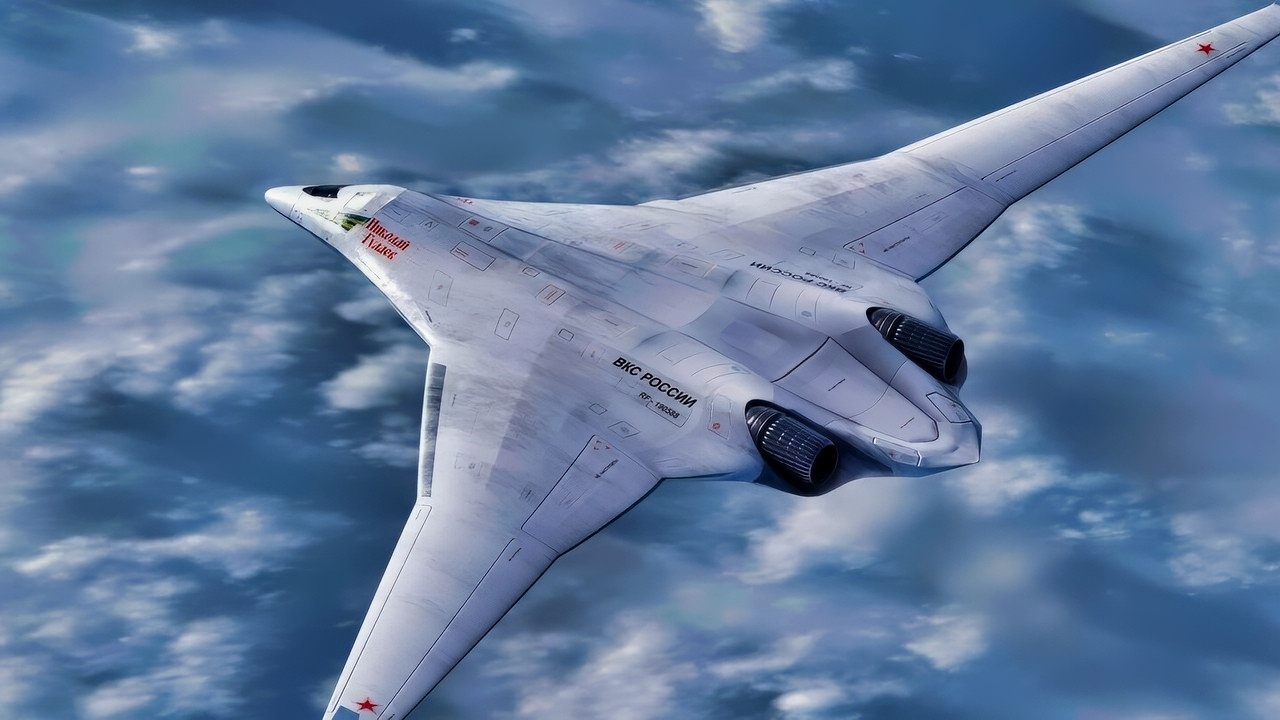
Key Points and Summary – Russia says it wants a new stealth bomber, the PAK DA, to complement or replace its aging Tu-95 “Bear” and non-stealth Tu-160 “Blackjack.”
-On paper, it’s a tailless, long-range flying wing meant to slip past modern defenses like America’s B-2A and B-21.
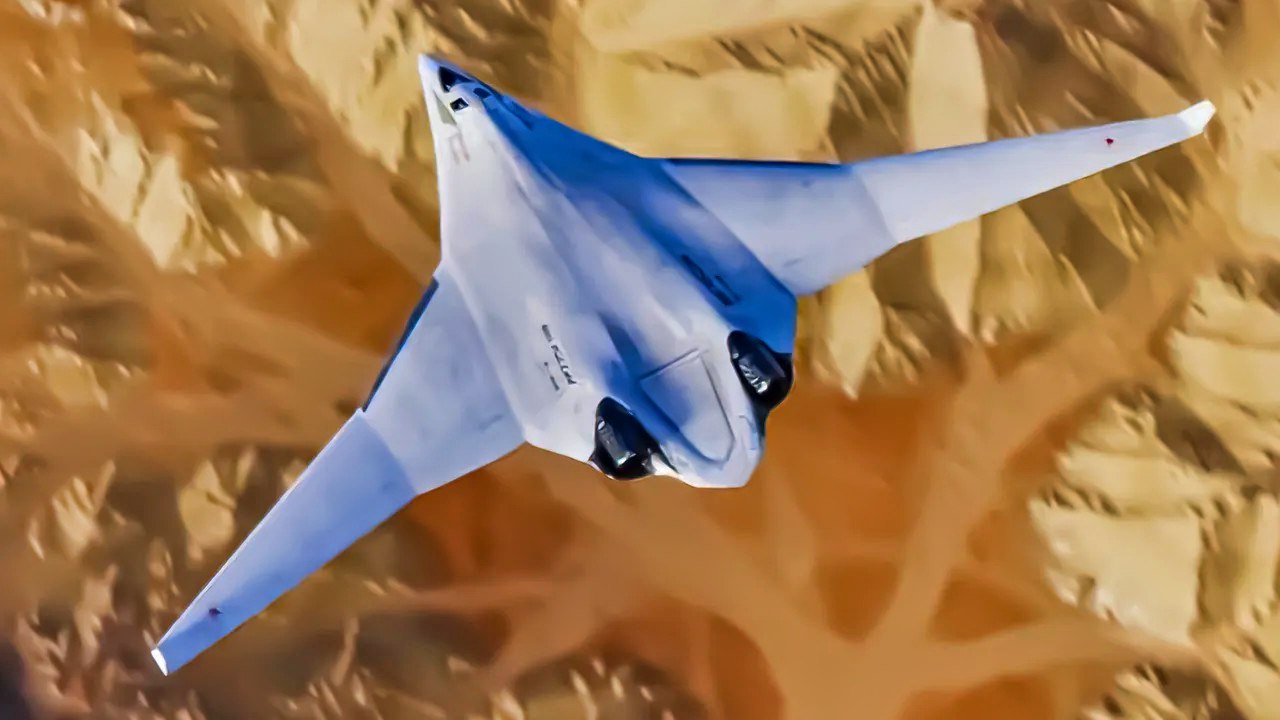
PAK DA Russian Bomber. Image Credit: Creative Commons.

PAK DA bomber artist rendition.
-In practice, the program is trapped in delays, engine and materials headaches, and a defense industry stretched by war and sanctions.
-Moscow is pouring resources into refurbishing Tu-160s and firing standoff missiles instead—cheaper, faster, and achievable.
-Even if a PAK DA prototype flies, building a reliable fleet in meaningful numbers looks unlikely this decade, leaving Russia behind the U.S. and China.
Russia’s PAK DA Dream: Can It Become Stealth Bomber Reality?
Modern air defenses are brutal. Russia’s Tu-95 is a Cold War icon, but it’s a propeller-driven cruise-missile truck from the 1950s.
The sleek Tu-160 is fast and carries a huge payload, but speed alone isn’t survivability in a world of networked radars and long-reach missiles. A stealthy, subsonic flying wing like the PAK DA (short for “Prospective Aviation Complex for Long-Range Aviation”) promises something different—quiet penetration at altitude, lower observability from every angle, and the ability to get closer to well-defended targets before releasing weapons.

PAK DA Bomber Russian Air Force. Image Credit: Creative Commons.
There’s also the prestige factor. The United States operates the B-2A today and is fielding the B-21 Raider. China is pressing ahead with its own H-20. Every other major power is converging on “quiet, tailless, and connected.”
If Russia can’t join that club, it risks conceding a visible slice of military status and, more practically, losing options in how it threatens distant targets.

PAK DA Bomber from Russia. Image Credit: Creative Commons.
The Pitch Versus The Reality
Concept art and offhand official statements have been consistent about the PAK DA’s broad strokes: a subsonic flying wing with internal weapons bays, long endurance, and a crew sized for complex missions. That’s the pitch.
The reality is that Russia’s bomber enterprise has been pulled in two directions: refurbish what exists (the Tu-95 and Tu-160) to keep missiles flying today, or build a new stealth jet that demands new engines, new materials, new processes—and years of testing.
Choosing both at once is how programs stall. Moscow has restarted Tu-160 production in modernized form and is upgrading older airframes. That work ties up the same plants, engineers, test infrastructure, and engine builders the PAK DA needs. It’s not an accident that the only visible progress in recent years is the “old made new,” not the “new from scratch.”

Tu-160M Bomber Air Force. Image Credit: Creative Commons.

Tu-160 Bomber from Russia. Image Credit: Creative Commons.
The Engine Is The Heart—And The Headache
You don’t get a stealth bomber without a reliable, fuel-efficient engine that also runs the jet’s huge electrical loads. Russia’s engine house, UEC-Kuznetsov, has struggled to modernize the NK-32 into the NK-32-02 for Tu-160M bombers.
Reports of bench-test failures, lawsuits over missed deadlines, and continued investment to fix production lines tell their own story: getting one big, efficient turbofan to behave has been hard enough on a bomber you already understand. A brand-new engine tailored for a flying-wing’s airflow and thermal needs is harder still.
Could a derivative powerplant—often referred to as “Izdeliye RF” in Russian reporting—work for the PAK DA?
Maybe. But “maybe” engines don’t build sortie rates. They produce hangar queens and missed training hours. Until Russia demonstrates a steady stream of mature engines for its Tu-160 fleet, it’s hard to believe it can feed a new stealth line at the same time.
The Invisible Work Is The Longest
Stealth isn’t just a shape—it’s a manufacturing religion. You need consistent, high-quality composite pre-pregs; ovens and autoclaves that cure giant skins without flaws; precision tooling for doors and edges; coatings that survive weather and maintenance; and a supply chain of sensors and processors that don’t fry under heat or brown out under load.
The United States learned those lessons over decades on the B-2, F-22, and F-35. China has been racing to absorb them on the J-20 and now its J-35 carrier fighter.
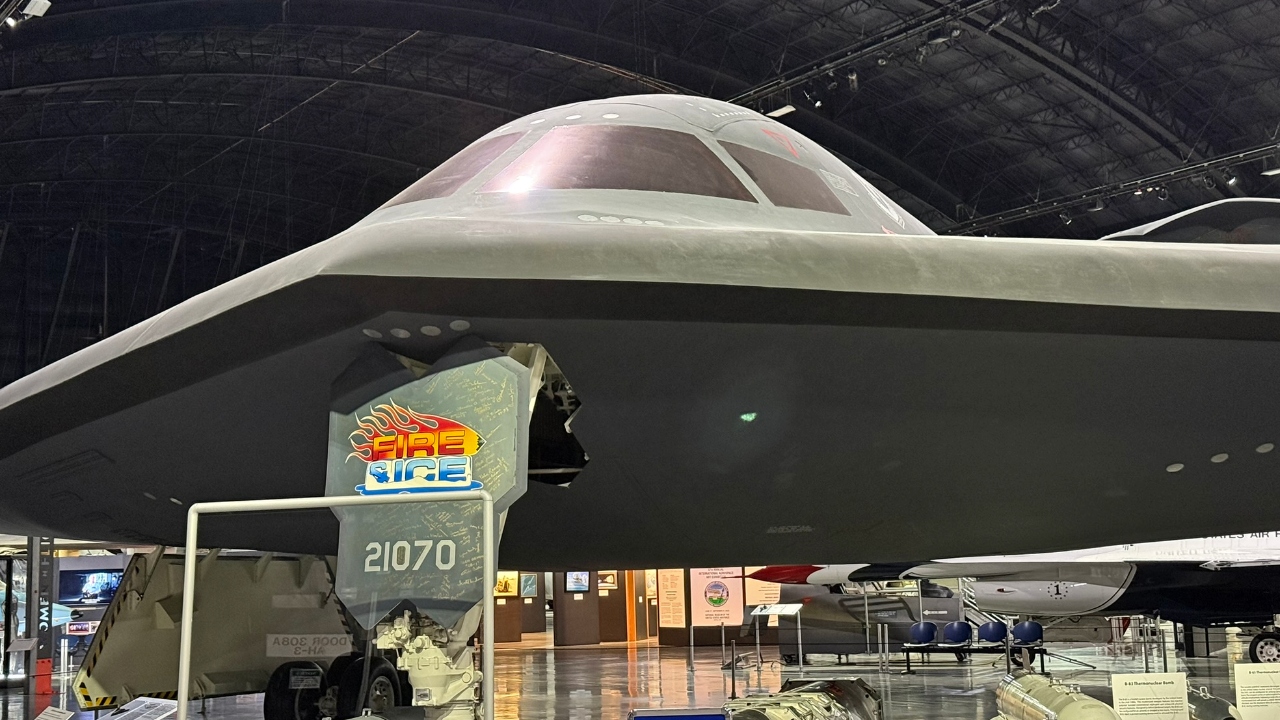
B-2 Bomber @ U.S. Air Force Museum. Image Credit: National Security Journal.
Russia is trying to step into this world while under the heaviest sanctions of its post-Soviet life. That means less access to specialized machine tools, microelectronics, and raw materials. Workarounds exist—gray routes for chips, domestic substitutes—but every workaround adds cost, friction, and time. The result isn’t zero progress; it’s slow progress, with more rework, more infant mortality in parts, and a longer path from “prototype” to “reliable fleet.”
War, Sanctions, And The PAK DA Bomber Math
The war in Ukraine changed Russia’s defense industrial base. Factories are busy, yes, but on artillery shells, drones, and consumables that matter tomorrow morning. Strategic aviation, meanwhile, has been losing aircraft to drone strikes on home soil, and repairing or replacing Soviet-era bombers is already a stretch.
When your Tu-95s and Tu-22Ms are getting hit on the ground, and your Tu-160M line is only trickling forward, it’s rational—if unglamorous—to put scarce rubles into what can fly this year.
Sanctions complicate everything from avionics to adhesives. Even when Russia finds back doors for electronics, delivery is slower and quality control is harder. Analysts who study sanctions evasion agree on the headline:
Russia can still get a lot of what it needs, but not in the volumes, timelines, or predictability that major aerospace programs require. That reality doesn’t kill PAK DA. It just keeps moving “operational” farther to the right on the calendar.

Tu-95 Bomber from Russia. Image Credit: Creative Commons.
What “Success” Would Even Look Like
Let’s say a PAK DA prototype appears for taxi tests. That would be a genuine achievement and the outcome of stubborn engineering. But a stealth bomber is a fleet, not a photo op. The hard part is repeatability: building ten that behave the same, then twenty, then keeping them available month after month with coatings intact, engines healthy, and software stable. It means training crews who can fly long, radio-quiet profiles and still coordinate complex strikes.
It means tankers and escorts and mission planning tools and test ranges that can measure a radar cross-section accurately and help crews fly to it.
This is where Russia’s track record gives pause. The Su-57 “Felon” stealth fighter exists—no one doubts that—but in small numbers and with a production tempo that has never matched the ambition.
If a smaller, simpler stealth airframe is still inching into service, a large flying-wing bomber will almost certainly take longer and cost more.
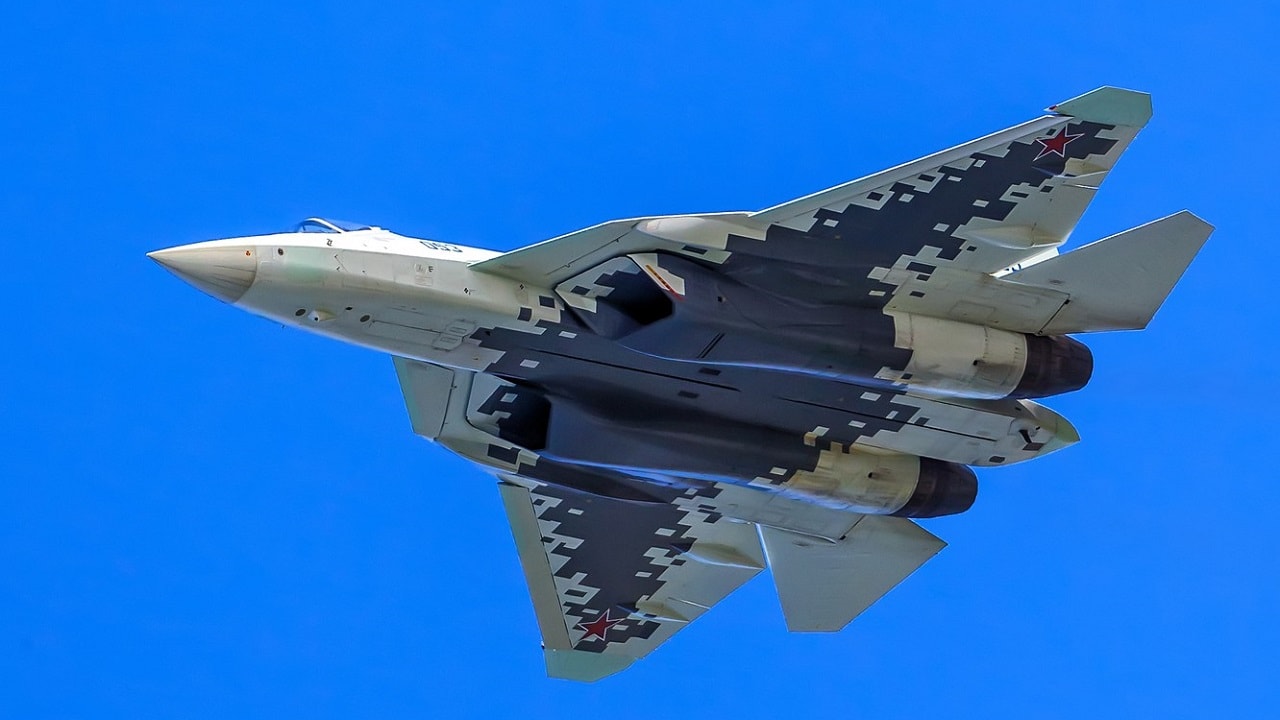
Su-57 Felon from Russian Air Force. Image Credit: Creative Commons.
Why The Stopgap Looks So Attractive
Meanwhile, the Tu-160M modernization checks boxes that matter in wartime: long range, a huge weapons bay, and compatibility with standoff cruise missiles. If your way of fighting emphasizes launching salvos from safe airspace, then survivability at the aircraft level matters less than the missiles you throw.
That’s how Russia has waged much of its long-range air campaign: fire Kh-101/102 cruise missiles from deep over Russia, let the weapons do the risky part, and keep the airframe out of harm’s way.
A stealth bomber would let you move the launch point closer and complicate defenses. But when the price tag is an all-new engine, new materials, new coatings, and a decade of debugging, decision-makers keep rediscovering the appeal of “more missiles on an existing truck.”
The Shadow Of The B-21 And The H-20
America’s B-21 is already flying test points. It will have its own birthing pains—every clean-sheet stealth aircraft does—but the trend line is clear: the U.S. will field a second stealth bomber fleet. China’s H-20 program is still a mystery in public, but the combination of its industrial scale, the experience gained on the J-20 and J-35 families, and the urgency of its regional ambitions all argue that something real is coming.

China’s H-20 Stealth Bomber. Image Credit: Creative Commons.
In that race, Russia is falling behind. It still has nuclear-armed missiles and a modernized Tu-160 line to project power. But in the club of nations that can build and sustain a low-observable long-range bomber at scale, Moscow risks remaining a spectator.
Could PAK DA Still Surprise?
Never say never. Russia retains skilled designers, veteran pilots, and a political leadership that prizes strategic aviation symbolism. A prototype could appear. Ground tests could leak. A slow, cautious flight program could begin. Each of those would be milestones worth treating seriously.
But a sober view says that time is now the PAK DA’s most dangerous opponent. Each year of delay is another year of sanctions digging deeper into supply chains, another year of budget pressure from the war, and another year where the Tu-160M line absorbs attention because it can produce airplanes you can actually fly.
The longer that cycle runs, the more the PAK DA risks becoming what so many Russian “nexts” have been: a program that exists, but not in the numbers or maturity that change outcomes.
What It Means For The Next Decade
In the near term, expect Russia to keep doing what it’s doing: protect and modernize the Tu-160M fleet, patch and upgrade the Tu-95s that remain, and prioritize long-range cruise missiles as the actual “effect” it wants at distance.
If the PAK DA surfaces, it will be framed as proof that Russia can do premier aerospace under pressure—and at some level, that will be true. But an operational squadron, a second squadron, and a steady drumbeat of sorties? That is a different standard, and it is the standard that matters in a world where the United States will field the B-21 and China is preparing its own stealth heavy.

A second B-21 Raider, the world’s sixth-generation stealth bomber, test aircraft arrives at Edwards Air Force Base, Calif., Sept. 11, 2025. The addition of the second test aircraft expands mission systems and weapons integration testing, advancing the program toward operational readiness. (Courtesy photo)

U.S. Air Force Airmen with the 912th Aircraft Maintenance Squadron prepare to recover the second B-21 Raider to arrive for test and evaluation at Edwards AFB, Calif., Sept. 11, 2025. The arrival of a second test aircraft provides maintainers valuable hands-on experience with tools, data and processes that will support future operational squadrons. (U.S Air Force photo by Kyle Brasier)
The irony is that Russia’s air force is proving a point against itself every month: you can achieve the long-range effects you care about without a stealth bomber—by building more missiles, tolerating attrition in old airframes, and optimizing for salvo size rather than platform survivability. That is not a recipe for prestige. It is, however, a recipe for results now. And it’s why the PAK DA may keep losing the budget argument to the weapons and airplanes that already exist.
The Bottom Line in 4 Words: It Might Not Happen
Russia wants what every great power wants from a heavy stealth bomber: options. The option to arrive unannounced. The option to strike first from closer in. The option to rattle defenses by simply being airborne.
On paper, the PAK DA offers all of that. In practice, Russia’s industry, sanctions environment, and wartime priorities keep pushing the future away from the present. The Tu-160M will keep flying. Cruise missiles will keep launching. The PAK DA will keep being promised.
Someday, a flying wing may roll down a runway at Kazan and lift into the air. The real question isn’t whether that day happens. It’s whether the second, tenth, and thirtieth airframes follow—and whether they’re flying often enough, and reliably enough, to matter.
Right now, that answer still looks like “not soon.”
About the Author: Harry J. Kazianis
Harry J. Kazianis (@Grecianformula) is Editor-In-Chief and President of National Security Journal. He was the former Senior Director of National Security Affairs at the Center for the National Interest (CFTNI), a foreign policy think tank founded by Richard Nixon based in Washington, DC. Harry has over a decade of experience in think tanks and national security publishing. His ideas have been published in the NY Times, The Washington Post, The Wall Street Journal, CNN, and many other outlets worldwide. He has held positions at CSIS, the Heritage Foundation, the University of Nottingham, and several other institutions related to national security research and studies. He is the former Executive Editor of the National Interest and the Diplomat. He holds a Master’s degree focusing on international affairs from Harvard University. Email Harry: [email protected].
More Military
China’s ‘Thousands of Missiles’ Have a Message for U.S. Navy Aircraft Carriers
Japan’s ‘Big Whale’ Taigei-Class AIP Submarine Has A Warning for China
China’s New J-35A Air Force Stealth Fighter Summed Up in 2 Words
The Mach 9.6 X-43A ‘Hypersonic Scramjet’ Has a Message for the U.S. Air Force
China’s Plan To Sink Navy Aircraft Carriers Comes Down to 2 Words


Krystal cane
October 26, 2025 at 10:36 pm
Four words? Donald Trump’s a pedo?
Paully
October 27, 2025 at 11:21 am
A copy of a B1..
Ho ho ho
November 1, 2025 at 5:30 am
Summmed in 4 ords: “it does not exist”