

Key Points and Summary – Europe’s simmering doubts about long-term dependence on the U.S. F-35 are giving Sweden’s fighter industry fresh momentum.
-Recent Gripen deals with Hungary, Brazil, and Colombia highlight Saab’s appeal as a capable, politically flexible alternative backed by local industry and jobs.
-That export push rests on a long tradition of Swedish aviation independence dating back to the odd-looking but highly successful Saab 29 “Flying Barrel,” which proved a small neutral state could build world-class jets.
-Today, as European governments prioritize sovereignty over software, supply chains, and upgrades, Sweden’s mix of competence and autonomy could become a major strategic selling point.
Sweden’s “Flying Barrel” Has a Message for the F-35 Era
Amidst growing murmurs throughout Europe about the future of dependence on American fighter jets – including the F-35 – Sweden’s fighter-jet industry is receiving growing international attention.
A series of Gripen export developments through Europe, Asia, and Latin America suggest that the United States’ dominance could soon be challenged; Hungary confirmed it would expand its fleet with four additional Gripen C/Ds in 2024, Brazil continues to receive deliveries of the next-generation Gripen E, and Saab recently signed a $3.6 billion deal with the Colombian government for 15 Gripen E/S.
We’re not talking F-35 numbers here, but it’s significant nonetheless. It’s a cluster of activity that has drawn fresh attention to Sweden’s long-standing ability to build competitive fighters despite its modest size.
And, to understand why this matters in the grand scheme of things, it helps to look back at Sweden’s history. The Saab 29 Tunnan is perhaps one of the best examples of how Sweden can succeed against the odds.
The Saab 29 Barrel Fighter That Shouldn’t Have Worked
When the Saab 29 first flew in 1949, few expected much from the jet – and it was in large part because of how it looked. The Tunnan has long been compared to a beer keg. Its stubby, rounded fuselage earned it the nickname “Flygande Tunnan” – or the “Flying Barrel” in the Swedish Air Force.
Yet that unconventional shape ultimately worked. It wasn’t an aesthetic mistake but a deliberate product of Sweden’s first attempt to integrate swept-wing aerodynamics into an aircraft, reflecting research traceable to German wartime studies seized after 1945.
Because early centrifugal-flow jet engines required a large internal volume for fuel and intake ducting, there was little other choice than to make the fuselage as large as possible – and designers simply settled on that fact as the cost of achieving new heights of aviation performance.
The result was one of the most surprisingly capable early jet fighters outside of the United States and the Soviet Union.
In 1954, the Tunnan also set a new world speed record on a closed circuit, averaging 977 km/h. And even despite that weird design, it proves highly maneuverable in service, too. It appears clumsy, but pilots reported that it was stable at high angles of attack, and performed well even in the harsh Nordic environment. It was so good, in fact, that Sweden produced more than 660 of the aircraft – a frankly extraordinary number for a nation (and industry) of its size.
Its combat deployment was impressive, too. During the United Nations’ Congo Crisis in the early 1960s, Swedish Tunnans flew ground-attack and reconnaissance missions for the UN Operation in the Congo, making the Saab 29 one of the few European-designed jets of its era to see combat under UN command.
It’s an impressive history, and a story that proved that a small neutral country like Sweden could design, mass-produce, and field world-class combat aircraft without reliance on U.S. or Soviet supply chains. And it’s something Sweden – and many European countries – are hoping can be recreated as we welcome in a new generation of fighter jets.
But that desire for independence is no longer only a Swedish ambition; it is increasingly a European one.
Europe Leans Toward Sovereign Systems
As governments look ahead to the next 30 years of airpower, several NATO states are now questioning whether the long-term costs, political constraints, and supply-chain dependencies of the F-35 program leave too little room for national autonomy.
The F-35’s mission-date files, software upgrades, and sustainment all remain under tight American control – a point of concern for countries seeking greater sovereignty over their systems. And it’s against this backdrop that Saab’s recent export momentum really matters.
The debate in Canada over the future of its F-35 fleet, and the possibility of operating a mixed F-35/Gripen fleet, is even more consequential. Swedish officials and Saab representatives are pushing hard to make the deal, promising to bring jobs to Canada’s manufacturing industry and establishing a domestic supply chain – something Saab has said could generate as many as 10,000 jobs within five years.
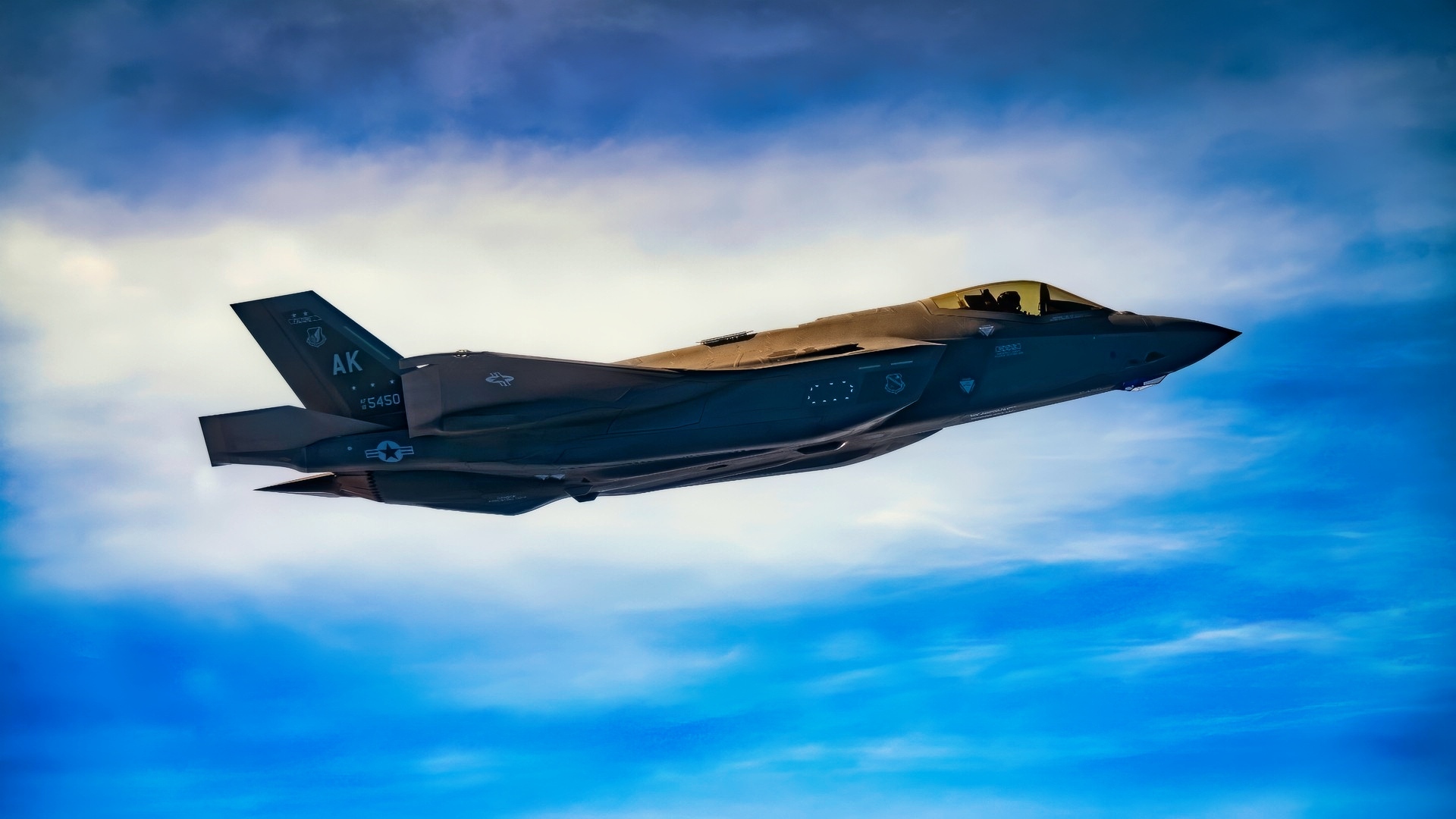
A U.S. Air Force F-35A Lightning assigned to the 356th Fighter Squadron, Eielson Air Force Base, Alaska, flies alongside of a U.S. Air Force KC-46A Pegasus assigned to the 77th Aerial Refueling Squadron, Seymour Johnson AFB, North Carolina, over the Pacific Ocean while enroute to the Singapore Airshow 2022, Feb. 11, 2022. The Singapore Airshow is the largest defense exhibition and biennial international tradeshow in the Pacific attracting thousands of participants from 50 countries. The U.S. Military is participating in Singapore Airshow 2022 by providing aerial demonstrations and static aircraft to demonstrate commitment and build upon partnerships with Singapore. (U.S. Air Force photo by Master Sgt. Richard P. Ebensberger)
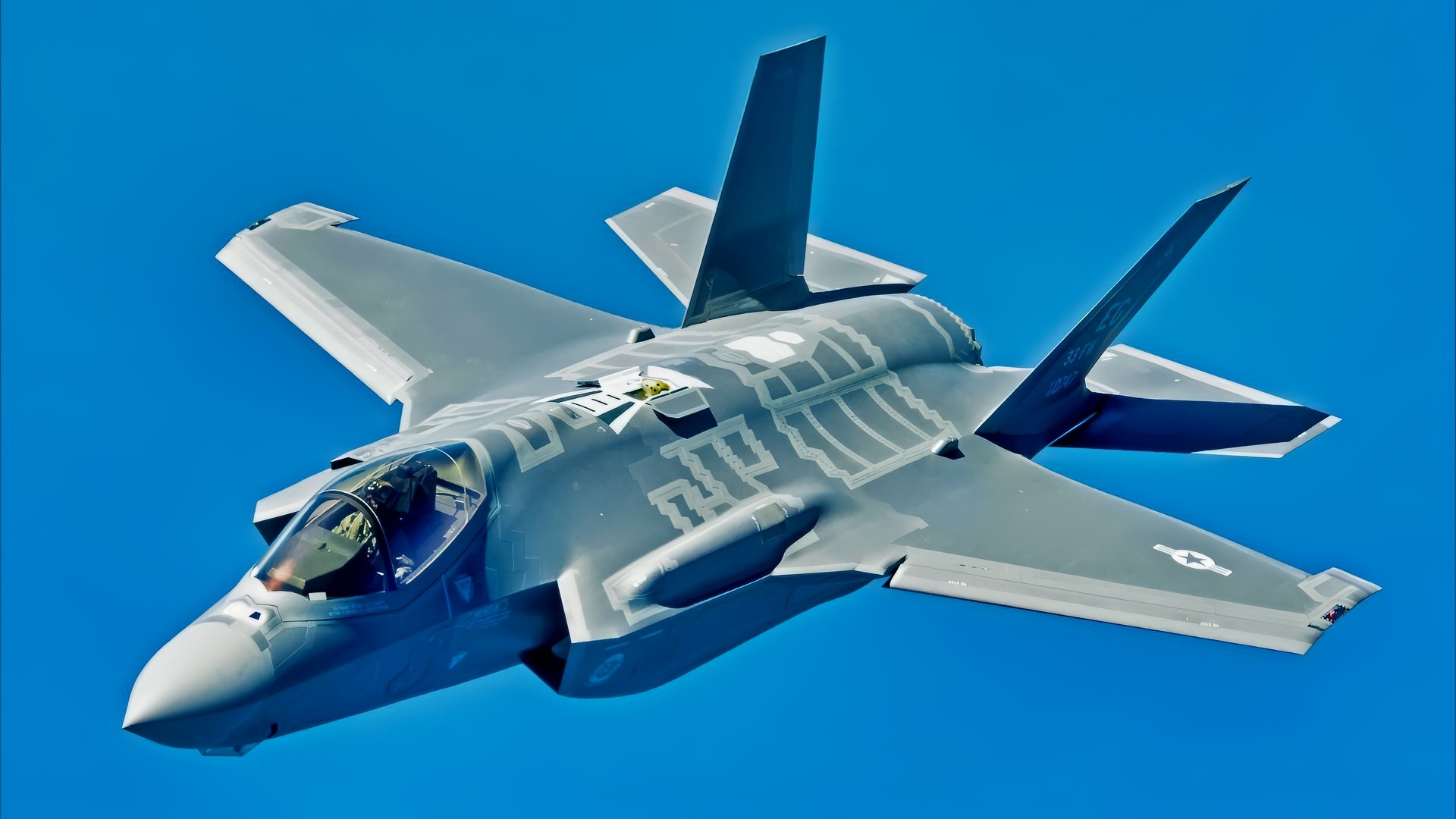
U.S. Air Force F-35A Lightning II Joint Strike Fighter pilots from the 58th Fighter Squadron, 33rd Fighter Wing, Eglin AFB, Fla., navigate their aircraft toward an Air Force Reserve KC-135 Stratotanker from the 336th Air Refueling Squadron, March ARB, Calif., May 16, 2013, off the coast of northwest Florida. The 33rd Fighter Wing is a joint graduate flying and maintenance training wing that trains Air Force, Marine, Navy and international partner operators and maintainers of the F-35 Lightning II. (U.S. Air Force photo by Master Sgt. John R. Nimmo, Sr./RELEASED)
And while it’s still perfectly possible that Saab will get the deal, Sweden is not without competition to dethrone the U.S. in the long run. France’s Dassault Rafale has become Europe’s other major non-U.S. competition, winning orders from Croatia, Greece, and the UAE, all the while positioning itself as a sovereignty-first alternative to American platforms.
It’s hard to say who will win, or even if sovereignty will be such an important political point that it will eventually trump the sheer power and superiority of American current- and next-generation systems.
But now may be the moment that Sweden’s long tradition of aviation independence and innovation – starting with the Flying Barrel – becomes one of its most substantial export advantages.
About the Author:
Jack Buckby is a British author, counter-extremism researcher, and journalist based in New York who writes frequently for National Security Journal. Reporting on the U.K., Europe, and the U.S., he works to analyze and understand left-wing and right-wing radicalization, and reports on Western governments’ approaches to the pressing issues of today. His books and research papers explore these themes and propose pragmatic solutions to our increasingly polarized society. His latest book is The Truth Teller: RFK Jr. and the Case for a Post-Partisan Presidency.


Jim cassano
November 26, 2025 at 1:57 pm
Another outstanding attribute of all the aircraft they designed is the very very few engineers they had to build state of the art vehicles. The only comparable example is Kelly Johnson’s Skunk Works.