


Most people picture Cold War Sweden as a quiet neutral nation, content to sit out the superpower drama. The reality was more ambitious. In the 1950s, Saab’s designers quietly drew up plans for a Mach 2+ delta-winged nuclear bomber called the Saab 36—a fighter-bomber that would have given Stockholm its own atomic strike capability and forced Washington and Moscow to take Swedish airspace seriously.
The aircraft never left the drawing board, but the concept reveals a Sweden far more aggressive than its peaceful reputation suggests—and a glimpse of how close the Nordic country came to joining the nuclear club.
The Saab 36 Bomber Explained
Saab is one of the most underrated aerospace companies in the world. Those Swedish designers and engineers almost always have interesting concepts, and they execute them like few other aviation firms. A high premium is placed on their creativity and ingenuity.
While neutral during the Cold War, Sweden is now a NATO member, but Saab often used the threat of the Soviet Union to advocate for better ways to protect the homeland.

Saab 32 Fighter. Image Credit: Creative Commons.
The Name Did Not Do the Program Justice
One interesting program the Swedes pursued was the development of a high-altitude, nuclear-weapon-equipped, plus-MACH-2 fighter-bomber in the 1950s.
This was called the Saab 36, and, admittedly, that was not an awe-inspiring moniker, but the concept was ahead of its time.
The Americans and Soviets, including NATO and Warsaw Pact members, took notice of the Swedes’ ideas and design influences. This could have changed the way nuclear delivery systems were handcrafted during the Cold War.
Give Sweden Some Respect
One of the problems Sweden faced at the time was that its airspace was used as a playpen by the Americans and Soviets. The United States would eventually fly over Sweden with the SR-71 Blackbird.
The Russians needed Swedish airspace to try to intercept those flights. Sweden was exposed, and its military needed to protect its borders and sovereignty. The Scandinavian country was concerned that neither side in the Cold War took it seriously.

Saab 37 Viggen Flying. Image Credit: Creative Commons.
Let’s Take the Defense Effort Up a Notch
Swedish military and political leaders became more ambitious with defense goals and objectives.
How could the country develop mere concepts into real-world military systems that could deter adversaries from flying over the country at will or even invading on the ground?
The Saab 36 would offer a delivery system for a nuclear weapon. That would prompt other countries to take notice and develop tactics, techniques, and procedures for the modern age, sending a message to the world that Sweden meant business.
Sweden and Saab Did Not Lack Imagination
Designers and engineers got to work on the Saab 36. The concept never left the drawing board, but it was a fascinating display of military brain power.
The airplane was to fly at dizzying heights and reach speeds of over MACH 2.
The name of the game was also long-range to make it a unique delivery vehicle – high-flying, fast, maneuverable, and able to venture outside Sweden’s borders to punish an adversary. This would give Sweden an entry into the nuclear age and make it one of the few countries that could deploy a weapon of mass destruction at will.
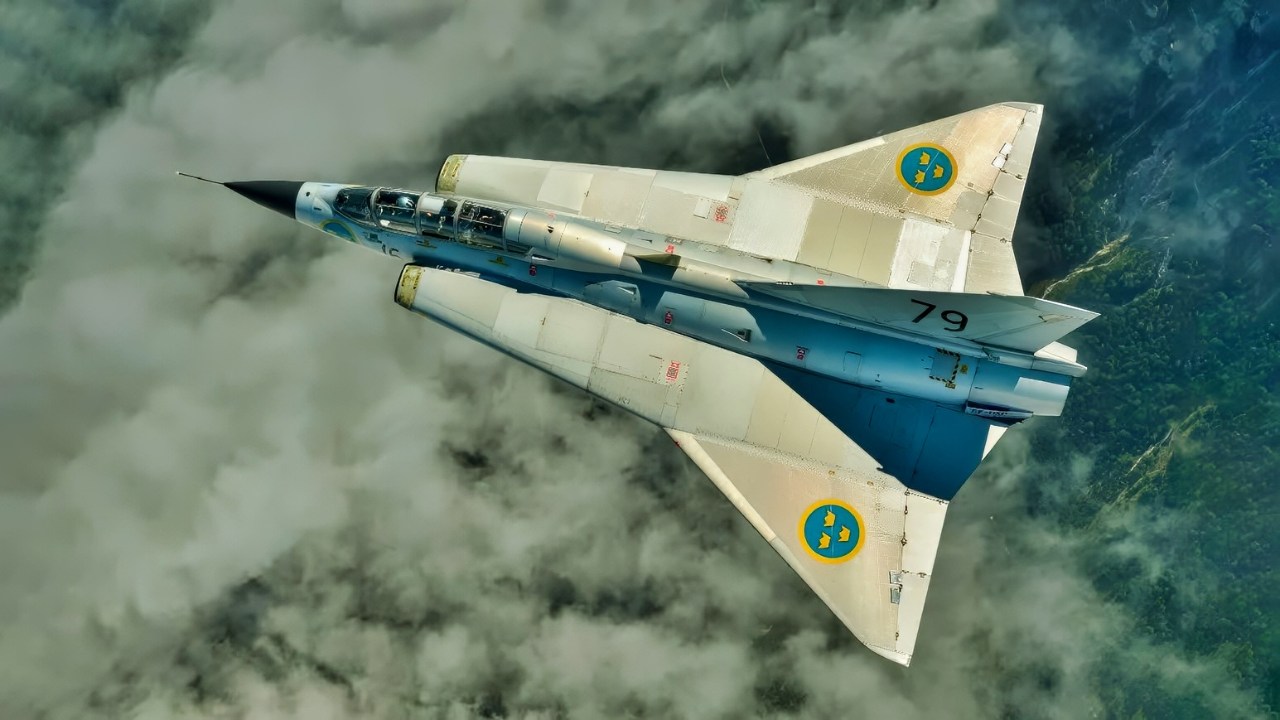
Saab 35 Draken Fighter from Sweden. Image Credit: Creative Commons.
There Was Inspiration From Both the Americans and the Soviets
The Saab 36 would have a large delta-wing design with two engines. One could compare the Saab 36 to the American B-58 Hustler or the Soviet Tu-22. The idea was for it to be dedicated to nuclear bomb delivery instead of a conventional strike.
Moving Beyond Vaporware
The issue for Sweden and Saab was not a shortage of engineering talent. The country had its share of aerospace nerds who could conjure up some of the best ideas in the business. But Sweden’s strength was not its military industrial complex.
Could its fledgling manufacturing base produce the airplane in numbers? This was a difficult question to answer, and it was one of the reasons the Saab 36 never entered active duty.
But no one in Sweden’s aerospace industry was deterred. The Saab 36 was to have “supersonic aerodynamics, structural materials, and engine performance,” as my colleague Harrison Kass described.
The Challenges Added Up
There were challenges with the Saab 36, though. The engines would need significant power and thrust to propel the large airplane. Thermal signatures would be immense, and it was unclear whether the fighter-bomber could avoid enemy air defenses given its high radar cross-section.
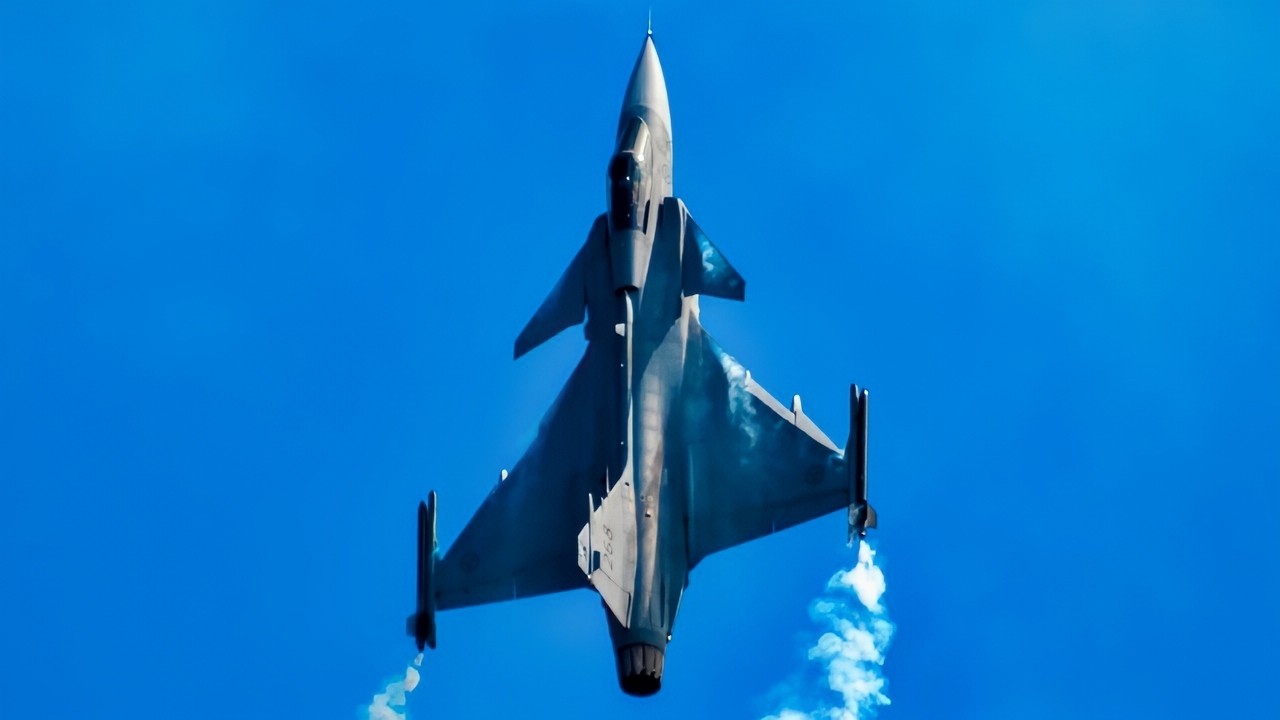
A Swedish Air Force Saab JAS 39 Gripen climbs during the 2019 Royal International Air Tattoo at RAF Fairford, England, July 20, 2019. This year, RIAT commemorated the 70th anniversary of NATO and highlighted the United States’ enduring commitment to its European allies. (U.S. Air Force photo by Tech Sgt. Aaron Thomasson)

Saab 29 Tunnan Fighter
Plus, the fuselage would need to be strong when engaging in plus-MACH 2 flight. Then there would need to be considerable investment in the program. This was a country, after all, that was dedicated to spending more on “butter” than on “guns.”
What Happened to the Saab 36?
Then there were other problems. Expenses crept up.
The airplane was too ambitious for serial production, and domestic political pressures were a negative influence. Sweden did not really need to be a global power, and the peaceful and neutral inclinations of its political leadership preferred not to pursue its own nuclear weapons.
The public was unsure whether the fighter-bomber was needed.
The airplane could have been used as an export model, but other NATO countries, such as France and the United Kingdom, did not need it. Like the United States, they preferred a future filled with submarine-launched nuclear missiles and ICBMs instead of aircraft delivery of WMDs.
Maybe Sweden Should Just Focus on Bread-and-Butter Fighter Jets?
Meanwhile, Saab made a strategic decision to reorient the company toward producing fighter jets, including the Viggen, Draken, and Gripen.
This was probably for the best, and the Saab 36 never made it through the defense acquisition “Valley of Death.”
But this showed that Sweden was once a somewhat aggressive middle power with nuclear ambitions.
This was a surprising leap for the Nordic country that many had long believed was always peaceful.
The Saab 36 died on the vine, but not before its design concepts were transferred to other programs.
The Swedes focused solely on fighters and left bomber development to other countries. The Saab 36 was a lesson in how too much ambition could doom a military hardware project.
About the Author: Brent M. Eastwood
Author of now over 3,000 articles on defense issues, Brent M. Eastwood, PhD, is the author of Don’t Turn Your Back On the World: A Conservative Foreign Policy and Humans, Machines, and Data: Future Trends in Warfare, plus two other books. Brent was the founder and CEO of a tech firm that predicted world events using artificial intelligence. He served as a legislative fellow for US Senator Tim Scott and advised the senator on defense and foreign policy issues. He has taught at American University, George Washington University, and George Mason University. Brent is a former US Army Infantry officer. He can be followed on X @BMEastwood.


