

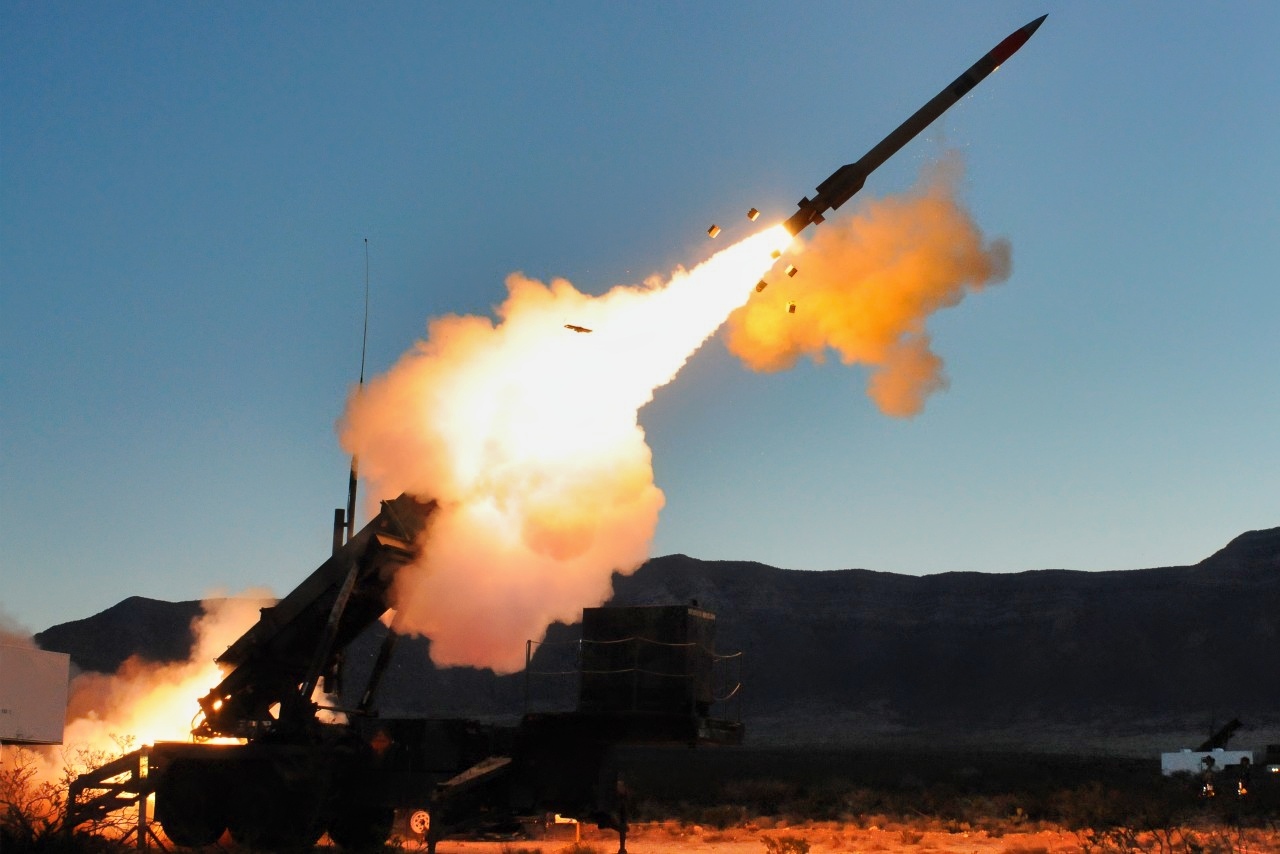
The world of Ukrainian missile defense advocates was euphoric when, during the early July NATO summit in Ankara, Turkey, U.S. President Donald Trump stated he was willing to give Kyiv “the blueprints” needed to build its own Patriot missiles.
But the sense of optimism has since faded due to US technology releaseability issues.
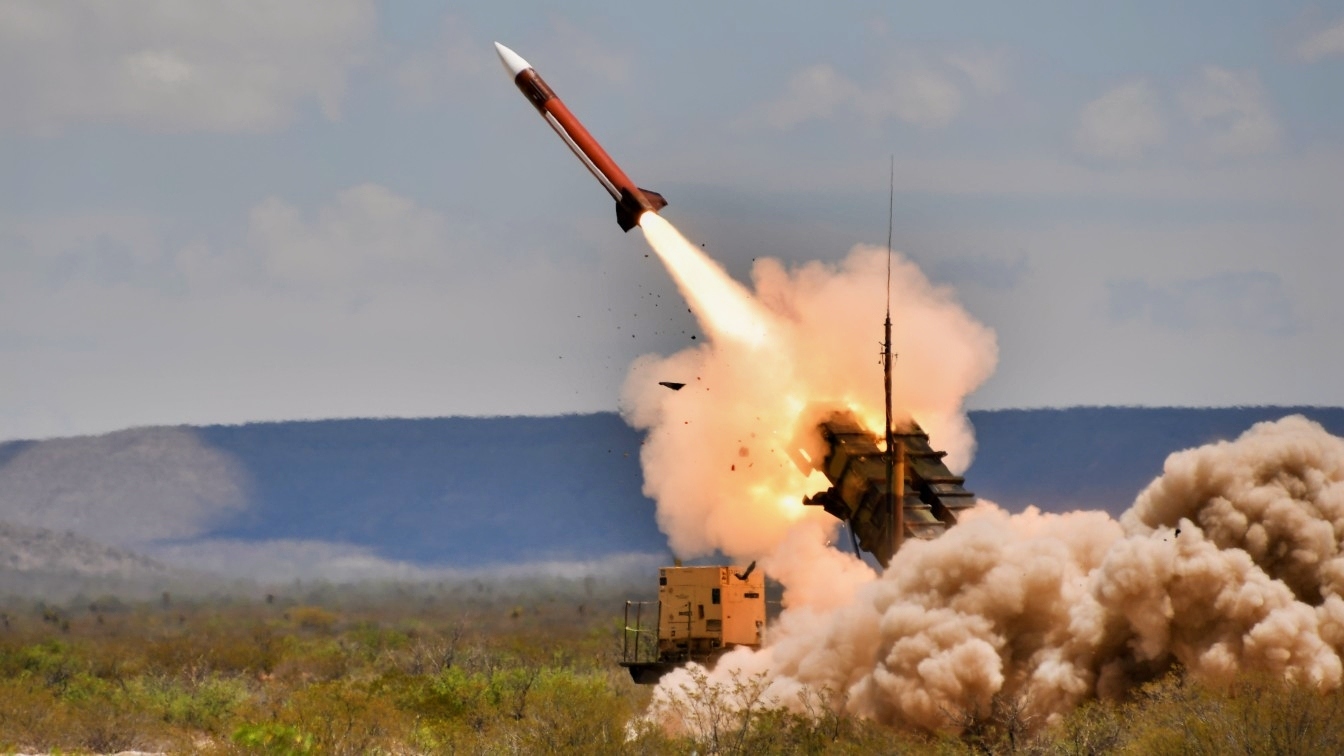
A MIM-104 Patriot Surface-to-Air Missile System assigned to the Fort Bliss, Texas-based 11th Air Defense Artillery Brigade fires as part of a bi-lateral live-fire exercise with military members from the Royal Netherlands Ground-based Air Defense Command at McGregor Range, N.M., May 11, 2024. The Patriot Missile System is a highly mobile air defense guided missile system designed to engage and intercept any aerial threats whether it be aircraft or tactical ballistic missiles under any weather conditions and in natural or induced environments. The command showcased its capabilities firing interceptors at simulated drone targets during the training event working with Dutch Allies.
(U.S. Army photo by Sgt. David Rincon)
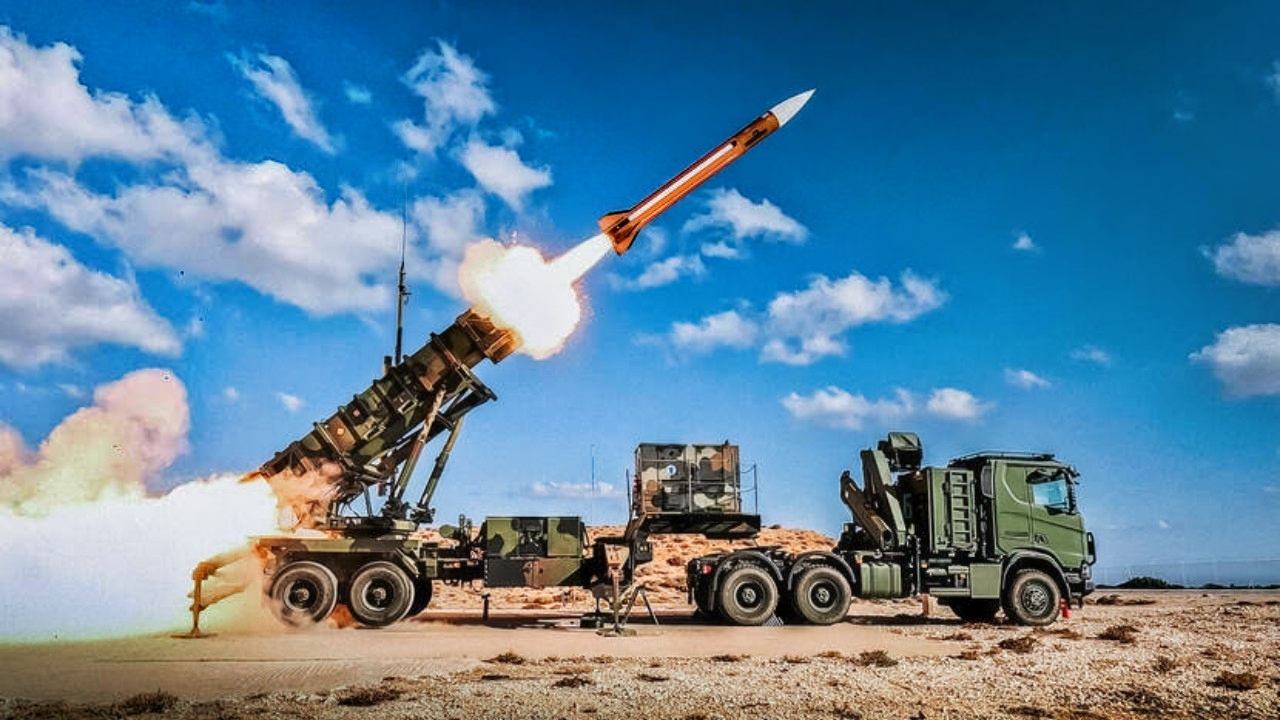
Patriot Missile Launch. Image Credit: Creative Commons.
“We understand the concerns that the US has with licensing Ukraine to build the more sensitive components for the Patriot – particularly the active-homing seeker,” said a Ukraine enterprise director who attended this week’s Space and Missile Defense symposium in Huntsville, Alabama, in comments to National Security Journal. “But we have our own active-homing seeker that we have tested and built working models of. So we do not need the US seeker, and thus this issue should be shelved as an issue in permitting us to make our own missiles.”
Back in July in Ankara, Trump told Ukraine President Volodymyr Zelensky, “We’re going to give a license to you to make Patriots,” which was the hope of almost all Ukrainians in the cities that are facing almost nightly missile and drone attacks.
The country has a considerable number of air defense systems that can be used to shoot down the comparatively slow-flying drones that Russia fires at Ukraine and some of the Russian cruise missiles.
But only the high-end missile of the different effectors that the US Patriot system can fire, the PAC-3 Missile Segment Enhancement (MSE), can take down Russian-made ballistic missiles.
The MSE is what is called a “Hit-to-Kill” or “HTK”. The earlier GEM-T missiles that the Patriot system fired for years (and still does) as part of its missile mix used a blast-fragmentation warhead that destroyed an incoming missile by exploding at a lethal distance, but again, this is not an optimal solution against a ballistic missile.
Not having enough MSEs is proving fatal to more Ukrainians each day.
In a missile attack last Wednesday, not a single one of the 24 ballistic missiles fired by Russia at the Kyiv region could be intercepted. The death toll from these attacks keeps rising.
Hitting a Bullet with a Bullet
HTK missiles achieve the complicated, higher-tech feat of “hitting a bullet with a bullet.” The MSE missile does not even have an explosive warhead because it does not need one.
The kinetic energy generated by two missiles colliding at the extreme closing speeds exceeding Mach 5 to Mach 10 (roughly 1.5 to 3.2+ kilometers per second) amounts to hundreds of megajoules.
It is the impact of the intercept, not a warhead, that completely vaporizes or structurally annihilates the incoming missile.
However, a long article in the London Daily Telegraph goes into granular level of detail on the many issues that must be resolved before Ukraine could begin building its own missiles.
This is a level of uncertainty that could not come at a worse time.
At a time when Ukraine’s supply of the MSE is down to zero, Russia is preparing for what has become a yearly event: another wintertime campaign of missile and drone strikes against the power-generating stations and electricity grids in Ukraine’s cities.
Moscow’s objective is to once again leave Ukrainians shivering from the cold in darkened apartments with no light, in addition to no heat.
The expectation is that the situation in Ukraine this winter could be even worse than it was last year.
It’s All in the Seeker
What caused the US to “walk back”, as it is being labeled, Trump’s promise of a month ago are the issues surrounding the MSE missile’s Ka-band active-homing radar seeker head.
As the Telegraph feature recounts, the seeker is so effective that during the 2003 Operation Iraqi Freedom, its manufacturer, Boeing, says the MSE models did not miss intercepting a single missile they were fired at.
The MSE is officially a Lockheed Martin product, but the seeker mounted beneath the radome in the nose section, made by Boeing, is the most sensitive technology housed in the entire interceptor missile.
The concern that has been raised about this technology is that if not properly safeguarded, it could fall into the hands of the Russians or their Chinese, Iranian, and North Korean allies, and its effectiveness compromised.
Ukraine is not being singled out for some manner of special punishment here.
The MSE is so sensitive that it has never been licensed for production by any of the countries that are Patriot users. Today, only two nations make any of the missiles that can be fired by the Patriot – long-time allies Germany and Japan –, but they build less-capable missiles used in the system, and neither has ever been offered the MSE’s Ka-band seeker for license production.
There are some solutions in the offing. Boeing announced today that it is going to build what it calls the Ultra Low-Cost Seeker (ULCS) and make it from off-the-shelf components.
But this component is still in development, and there is no concrete date for when it will be available for licensing.
“We have the solution now,” said the Ukrainian firm that spoke to National Security Journal. “What we need is a facility outside of Ukraine – someplace in a NATO nation where Russia would not attack it – where we can begin production. It is the best solution to what is now Ukraine’s greatest air defense dilemma.”
About the Author: Reuben F. Johnson
Reuben F. Johnson has thirty-six years of experience analyzing and reporting on foreign weapons systems, defense technologies, and international arms export policy. Johnson is the Director of Research at the Casimir Pulaski Foundation. He is also a survivor of the Russian invasion of Ukraine in February 2022. He worked for years in the American defense industry as a foreign technology analyst and later as a consultant for the U.S. Department of Defense, the Departments of the Navy and Air Force, and the governments of the United Kingdom and Australia. In 2022-2023, he won two awards in a row for his defense reporting. He holds a bachelor’s degree from DePauw University and a master’s degree from Miami University in Ohio, specializing in Soviet and Russian studies. He lives in Warsaw.


