

Russia is ramping up its use of North Korean ballistic missiles in its missile attacks. On Monday, the Russians carried out an attack on the city of Zaporizhzhia, which utilized two North Korean Kn-23 (Hwasong-11A) missiles. Moscow has used missiles in some of its prior attacks on Kyiv in the past month. Previously, it was reported that North Korea planned to transfer at least 120 ballistic missiles to Russia along with six launcher platforms and its own personnel. At the same time, Ukraine’s intelligence agency reports that the Russians are also massively scaling up production of their own missiles across the board amidst air defense shortages throughout Ukraine.
Russia and Ukraine Trading More Blows

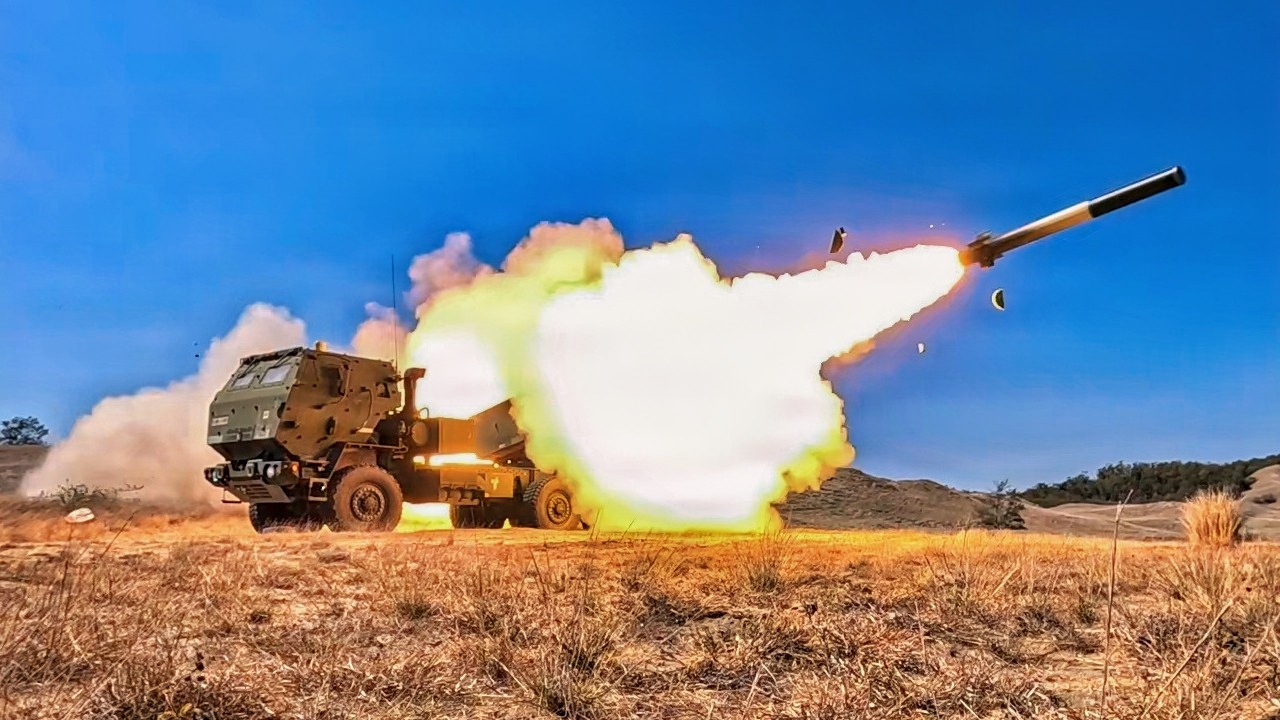
Hypersonic Missile. Image Credit: U.S. Military.

Typhon Hypersonic Missile. Image Credit: YouTube Screenshot.
Last night, Russia launched a missile attack against Zaporizhzhia.
This attack was much smaller than the attacks on Kyiv—using only six ballistic missiles—and, according to regional authorities, the targets were industrial centers and non-residential buildings. According to initial reports, the attack killed at least six people and left another 19 injured.
Additionally, Zelenskyy and various OSINT reports indicated that the attack used North Korean-made ballistic missiles, likely Kn-23s, during the attack. “Every step Russia takes – increasing ballistic missile production, bringing in North Korean equipment, preparing for mobilization – all of this shows that Moscow is preparing not for peace, but for escalation,” Zelenskyy wrote on social media.
Meanwhile, the Ukrainians carried out a few attacks over the past few days. In Tartarstan, a Ukrainian drone strike hit the Nizhnekamsk petrochemical plant, killing around 13 and injuring another 75, according to regional authorities.
At the same time, in the Tyumen region, an industrial facility was damaged by “falling debris” from intercepted drones, resulting in a fire. According to the Russian Ministry of Defense, more than 450 drones were intercepted over Russian territory overnight. According to Ukraine, the facilities were used to manufacture weapons to support Moscow’s war effort. As the war in Ukraine continues to escalate, civilians on both sides increasingly find themselves in the crosshairs with no end in sight.
North Korea’s Increasing Involvement in Ukraine
President Zelenskyy also reported that Pyongyang was increasing its concentration of troops inside Russian territory, claiming that around 30,000-50,000 troops may be on Russian soil already.
“A decision has been made for 30,000 to 50,000 North Koreans to be deployed on the territory of Russia,” the Ukrainian President wrote. “They are studying this war. If we are talking about crises and escalation in another region – in the Pacific – which could pose a threat to other Asian countries, then North Korea will certainly gain experience in modern warfare under Russia.” As of yet, there has been no independent confirmation of these claims, but Zelenskyy is absolutely correct in saying that the North Koreans have gained valuable experience because of their involvement with Russia in Ukraine.
Previously, Ukrainian intelligence reported that Pyongyang and Moscow intended to deploy a whole missile unit to Russian territory, comprised of around 90 North Korean personnel along with six launcher platforms and up to 120 ballistic missiles.
According to Andrii Cherniak of Ukraine’s Main Directorate of Intelligence, Russia plans to base the unit in the Voronezh region, where it will be integrated into the 112th Missile Brigade. Reports of North Korean activity in Russia have increased dramatically from Kyiv over the past month amidst fears of wider escalation from Moscow. Again, despite the numerous claims, there has yet to be any proof that Russia intends to use North Korean troops on Ukrainian soil.
Russian Missile Production Increasing
Although Moscow has been increasing its reliance on North Korean Missiles, the Russians have also dramatically ramped up production of their own missiles. According to Vadym Skibitskyi, Deputy Head of Defense Intelligence of Ukraine, Moscow is increasing its missile production capabilities, often exceeding its monthly targets. “According to data from Defense Intelligence of Ukraine, the July production target for Kh-101 missiles was 140% fulfilled, for Kalibr missiles 111%, and for Kh-35 cruise missiles 200%,” Skibitskyi said in an interview with RBC-Ukraine. He added that, as of August, production of missiles like the Zircon and P-800 Oniks has already exceeded their annual targets.
To put those figures in concrete terms, the Russians produced 87 Kh-101 cruise missiles, 29 Kaliber cruise missiles, and 65 Iskander ballistic missiles in July.
Meanwhile, Russia has produced around 33 Zircon hypersonic missiles and 60 P-800 Oniks missiles in 2026 so far, both exceeding their annual production goals. Additionally, Skibitskyi reported that the Russians plan to produce a record 11,000 Geran drones of all types, with a particular emphasis on jet-powered Geran-4/5s. Interestingly, the Deputy Chief also reported that Russia has suspended production of Kinzhal hypersonic missiles and Kh-32 cruise missiles due to their low accuracy.
Instead, Moscow is reportedly focusing on cheaper, more reliable missiles such as the Iskander ballistic missile. This claim cannot be confirmed, but it would explain why the Kinzhal has been missing from Russia’s recent missile attacks.
About the Author: Isaac Seitz
Isaac Seitz, a Defense Columnist, graduated from Patrick Henry College’s Strategic Intelligence and National Security program. He has also studied Russian at Middlebury Language Schools and has worked as an intelligence Analyst in the private sector.


