

In classic Russian fashion, Moscow has long relied upon its strategic depth when fighting the Ukraine War to insulate its people from the negative effects of the war.
That buffer is now eroding, and a sustained Ukrainian long-range drone campaign targeting Russia’s oil refining sector has evolved into a nationwide fuel crisis inside Russia that increasingly harms the daily lives and prosperity of ordinary Russians.
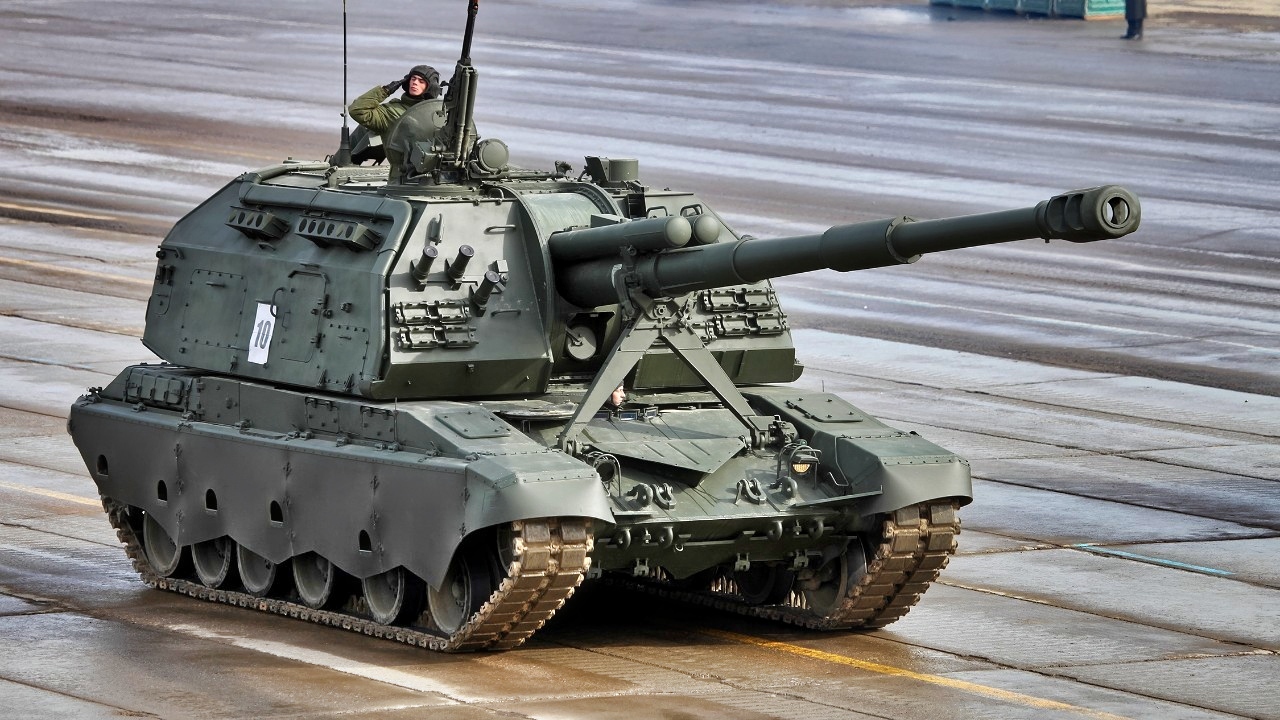
Msta-S Russian Army. Image Credit: Creative Commons.

MSTA-S Russian Army. Image Credit: Creative Commons.
Ukraine’s drone attacks on Russia’s hinterland are proving more impactful than expected, causing long lines at gas stations and rising prices across Russia, highlighting their strategic significance.
According to Reuters, Russian gasoline production fell to around 65 percent of normal seasonal consumption levels after repeated Ukrainian strikes forced multiple refineries to reduce or halt operations.
Those attacks have considerably complicated Russia’s ability to conduct warfare as well as provide domestic tranquility for its people.
Agriculture and Fuel Supplies Feel Kyiv’s Squeeze
Then there are the ongoing Ukrainian disruptions of Russian agriculture. Wheat shipments have been aggressively targeted in the Sea of Azov.
Diesel shortages are complicating the harvesting operations during one of the key planting seasons.
Farmers have already claimed that paying sharply rising prices for diesel fuel, a key input for agriculture, while spending hours queued at refueling stations, has driven up the cost of everything inside Russia that touches that food supply chain.
The Kremlin responded by prioritizing politically and economically critical regions.
In a stunning move, Russian authorities are redirecting fuel from Siberian refineries toward Moscow while increasing imports from Belarus and even arranging additional fuel deliveries from India.
Moscow’s status as Russia’s political and financial center makes maintaining stable supplies there a significant government priority.
Ukraine isn’t trying to destroy all Russian refineries.
Kyiv is simply trying to put Russia in an unfortunate cycle of repair, redistribution, and emergency that reduces available supplies and forces Moscow to reallocate finite resources.
In theory, these actions by the Russian state should engender antipathy from the Russian people who are being squeezed and, if all goes according to plan, Moscow would then feel real political pressure at home to end the war forthwith.
Global Markets Burn
Yet, the effects of these attacks by Ukraine against Russian energy producers and refiners are not isolated to Russia.
Regardless of how one feels about the Russian Federation, the fact is that Russia is a primary contributor to the global energy market.
As Russian refining capacity declines because of these Ukrainian attacks, Moscow is forced to restrict diesel exports, contributing to tighter global diesel markets and increasing oil prices worldwide, underscoring the broader economic risks for the global audience.
Russian officials argue that the domestic fuel market is slowly stabilizing.
At the same time, Russian leaders quietly acknowledge that there are real disparities in the supply throughout the country.
Emergency redistribution efforts eased shortages for a time, but they have not restored the refining capacity that Ukraine persistently targets.
A War of Endurance
While Ukraine’s drone strategy has been effective short-term, Russia is already considering escalation, with no clear evidence yet that Kyiv can sustain mass long-range drone production for this war.
Nevertheless, at least for now, Kyiv is effectively maintaining pressure on Russia’s refining sector, meaning Moscow will continue making a painful choice between devoting more of its finite resources to defending Russian infrastructure or accepting disruptions and fighting through them.
Right now, the fuel shortages appearing across Russia’s hinterlands indicate that Ukraine’s strategy is succeeding more than its previous mission of damaging individual refineries.
These attacks by Ukraine appear to be steadily transforming Russia’s energy system into another front in the war, where every disruption carries grave military and political consequences–as well as global economic risks.
It’s increasingly a game of chicken. No one knows who will blink first.
About the Author: Brandon J. Weichert
Brandon J. Weichert is Senior National Security Editor. He also manages The Weichert Brief on Substack. Weichert also hosts “National Security Talk” on Rumble. He is the author of four bestselling national security books, the most recent of which is A Disaster of Our Own Making: How the West Lost Ukraine (Encounter Books). Follow him via Twitter/X @WeTheBrandon.


