

Three oil tankers have reportedly exploded and caught fire in the Strait of Hormuz over the past 24 hours after striking naval mines, according to an announcement from the Islamic Revolutionary Guard Corps (IRGC) on Thursday, October 29.
The Iranian military claimed the vessels tried to leave the Persian Gulf via an unauthorized route on the strait’s southern side, ignoring warnings from Iranian naval forces.
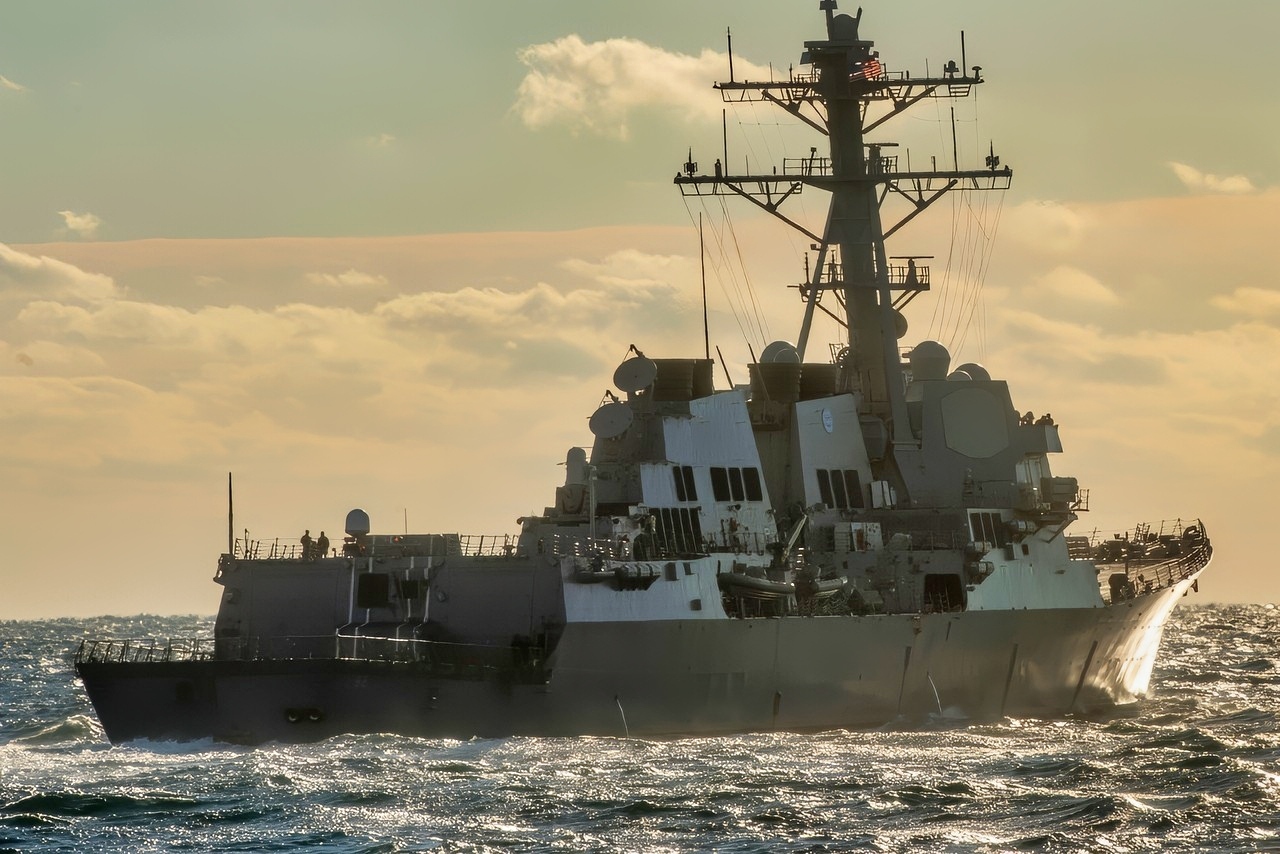
The Arleigh Burke-class guided-missile destroyer USS Lassen (DDG 82) moves into position for an underway exercise with the British Royal Navy aircraft carrier HMS Queen Elizabeth (R08) and Pre-Commissioning Unit (PCU) Michael Monsoor (DDG 1001). The future USS Michael Monsoor is the second ship in the Zumwalt-class of guided-missile destroyers. (Photo by Mass Communication Specialist 1st Class John Philip Wagner, Jr./Released)
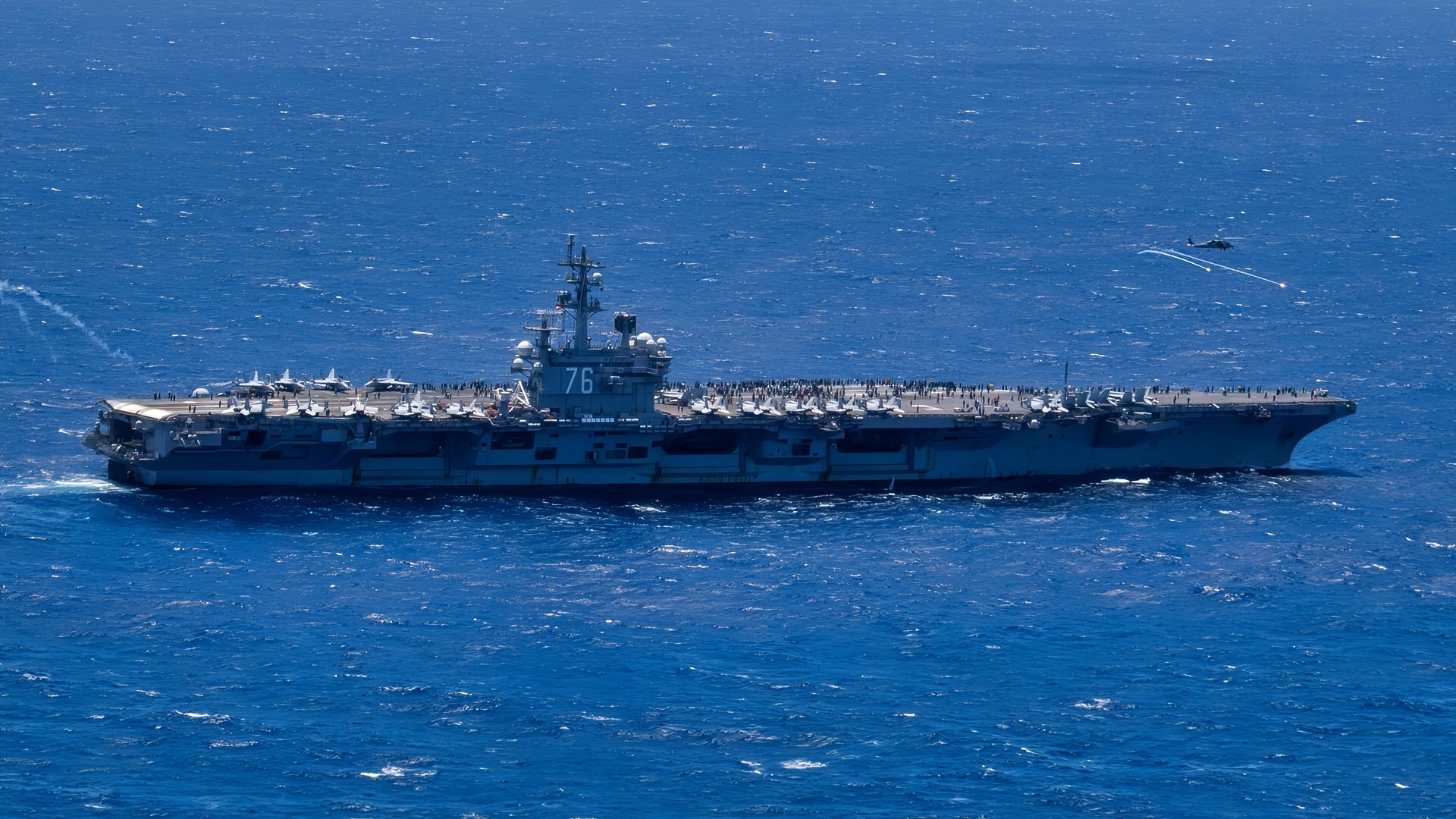
(July 3, 2024) An MH-60R Sea Hawk helicopter, attached to the Saberhawks of Helicopter Maritime Strike Squadron (HSM) 77, launches flares near the U.S. Navy’s only forward-deployed aircraft carrier, USS Ronald Reagan (CVN 76) during air combat-skills practice in the Pacific Ocean, July 3. HSM 77’s missions include surface warfare, anti-submarine warfare and a variety of support roles for Ronald Reagan and Carrier Strike Group 5. Ronald Reagan, the flagship of Carrier Strike Group 5, provides a combat-ready force that protects and defends the United States, and supports alliances, partnerships and collective maritime interests in the Indo-Pacific region. (U.S. Navy photo by Mass Communication Specialist 2nd Class Charlotte Dudenhoeffer)
The announcement comes just one day after the U.S. military warned commercial vessels to avoid unnecessary journeys through the waterway and the Gulf of Oman more generally.
It comes amid intensifying attacks by Iranian forces against shipping and preparations for a possible fresh round of strikes against Iran following the November 3 midterm elections.
The claims from Iran have not been independently verified, and U.S. President Donald Trump has previously indicated that the regime in Tehran is simply making up instances of ships being struck.
But Britain’s maritime security agency confirmed on Thursday that a separate vessel reported seeing a ship on fire near the Omani coast.
Iran Says Three Tankers Hit Mines
According to a statement published by Iran’s state media on October 29, the IRGC Navy claimed three oil tankers tried to navigate through a restricted passage without authorization from Iranian authorities.
The Iranian military said that the ships had disabled their radar and navigation equipment and ignored instructions to change course before striking the mines.
The vessels then allegedly caught fire and were reportedly abandoned off the southern coast of the strait.
Iranian officials have not publicly identified the vessels, their owners, or the countries whose flags they were flying.
They also did not provide any information about the crews or confirm if anyone had been killed or injured.
The IRGC continues to warn that so-called “unauthorized” routes are still mined and insists that shipping operators are responsible for the consequences of ignoring Tehran’s instructions.
British Maritime Agency Confirms Vessel On Fire
The United Kingdom Maritime Trade Operations Agency (UKMTO) also confirmed on October 29 that a vessel was seen on fire about nine nautical miles north of Khasab, Oman.
A captain of another vessel moving through the region provided the report.
UKMTO did not, however, establish what had caused the fire or if it was connected to the three reported incidents.
Vanguard, a maritime security company, also reported that an unidentified projectile struck a tanker, which is now largely submerged, while another vessel was reportedly nearby and assisting the crew.
Those accounts raise questions, but still do not confirm Iran’s reports. The condition of the crew remained unknown, and there has been no official assessment of the damage or any possible pollution.
U.S. Also Warns Ships to Avoid Hormuz
The United States also recently warned ships to avoid the Strait of Hormuz where possible.
U.S. Naval Forces Central Command (NAVCENT) issued the warning on October 28, saying vessels could face delays as U.S. forces continue to enforce the naval blockade against Iranian ports and ships carrying prohibited cargo or attempting to facilitate trade with Iran.
The warning comes after several weeks of increasingly severe Iranian attacks on ships, despite a partial recovery in commercial traffic at the end of September and in early October.
But despite the risks, tankers are still moving through the Persian Gulf, including vessels carrying cargo to the Gulf of Oman for transfer to other vessels.
October: The Worst Month for Iranian Attacks
October has been the worst month for Iranian attacks on commercial ships in the Strait of Hormuz since the war began, according to data from the Washington Institute for Near East Policy.
Noam Raydan, a senior fellow at the institute, said 28 attacks were recorded in October alone, bringing the total number of reported since the war began on February 28 to 113.
The International Maritime Organization (IMO) has also recorded 120 incidents since the war began. Those figures include attacks that damaged more than 30 very large crude carriers (VLCCs), 11 of which were hit during the last month.
The damaged vessels could cause serious and additional disruption to the global oil trade, as they account for around 3.5% of the world’s total supertanker fleet.
12 ships were also attacked between October 5 and 11, according to a USNI News report on October 22.
It marked the worst week for commercial shipping since the war began.
As Washington prepares for the resumption of military strikes against Iran shortly after the November 3 midterm elections, attacks on commercial shipping could soon intensify, with Iran threatening to respond if the U.S. and Israel resume their campaign.
About the Author: Jack Buckby
Jack Buckby is a British researcher and analyst specializing in defense and national security, based in New York. His work focuses on military capability, procurement, and strategic competition, and he produces and edits analysis for policy and defense audiences. He brings extensive editorial experience, with a career output spanning over 1,000 articles at National Security Journal, and has previously authored books and papers on extremism and deradicalization.


