

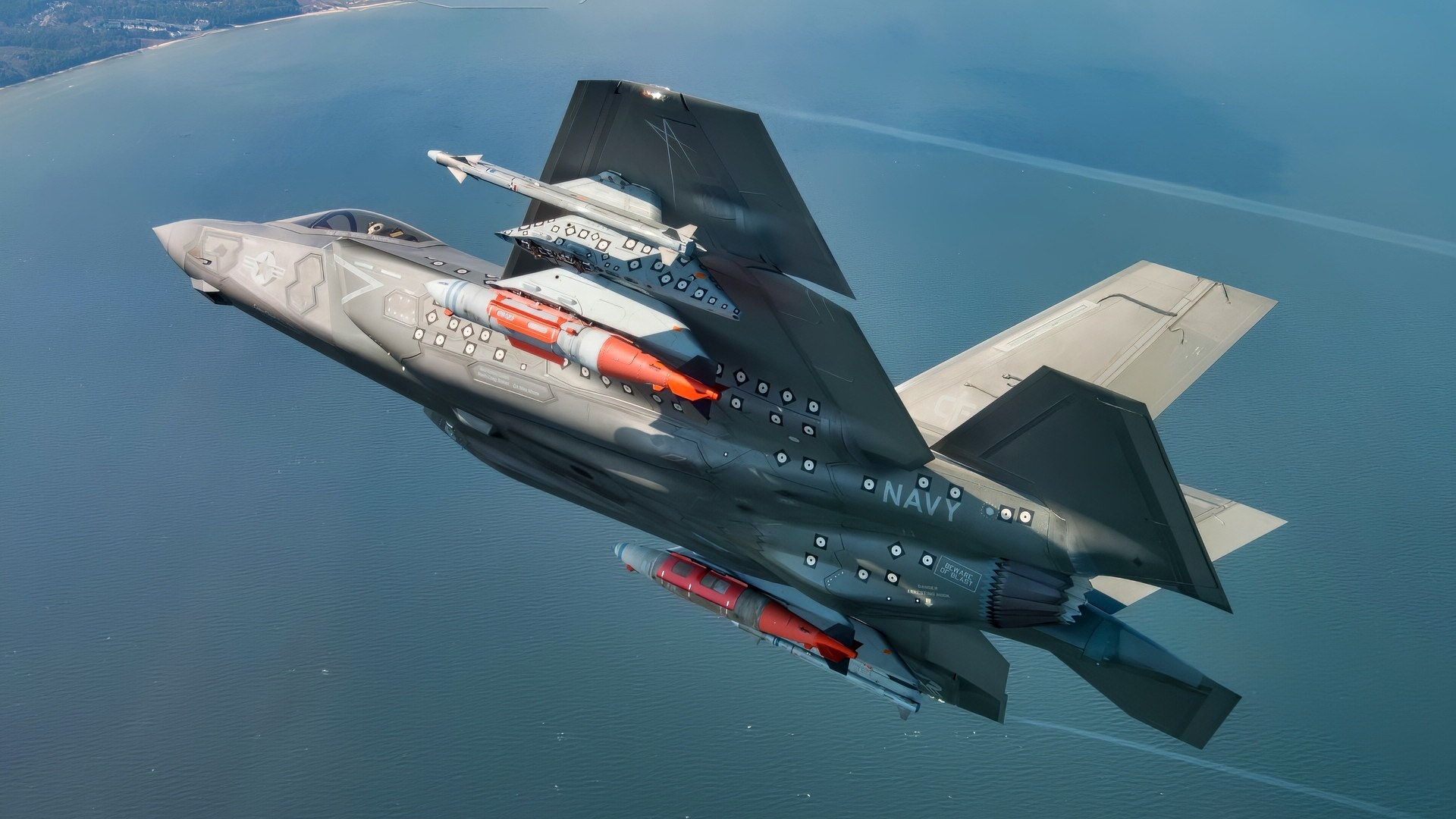
The $13 billion USS Gerald R. Ford (CVN-78) cannot safely operate Lockheed Martin F-35C Lightning II fighters because the aircraft carrier’s flight deck was designed before the F-35C’s final heat specifications existed. The Pentagon calls it a synchronization gap. The Ford’s design was frozen on August 11, 2005, when the first steel was cut. The F-35C’s exhaust plume runs at 3,600 degrees Fahrenheit — hot enough to warp the carrier’s standard flight deck plating. The Ford also lacks the Operational Data Integrated Network (ODIN) the F-35C requires for maintenance and mission data updates. The F-35 program has cost American taxpayers over $1 trillion in 20 years.
The F-35C Can’t Fly on USS Gerald R. Ford Aircraft Carrier
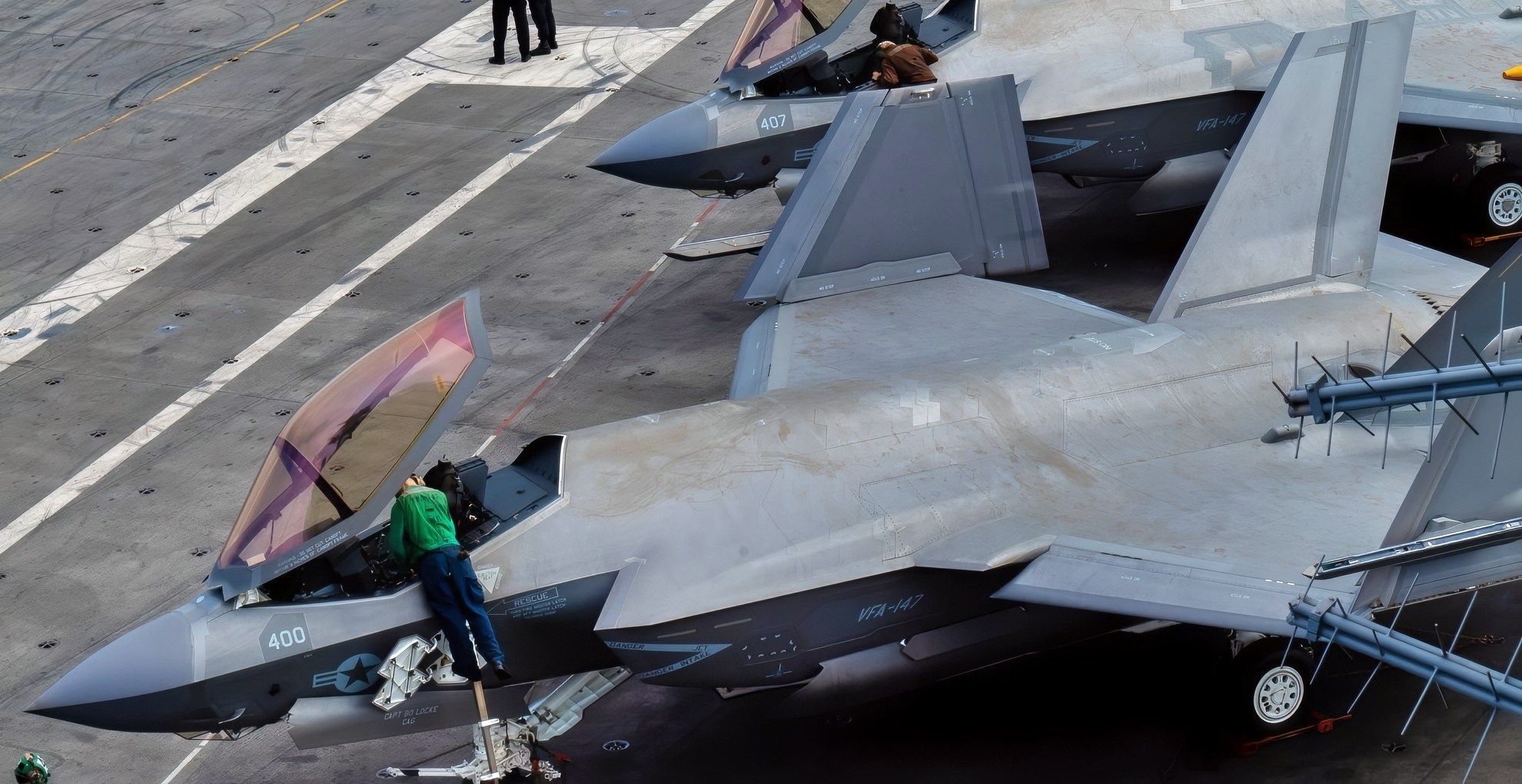
SOUTH CHINA SEA (Jan. 15, 2022) Sailors preform pre-flight checks on several F-35C Lightning II’s, assigned to the “Argonauts” of Strike Fighter Squadron (VFA) 147, on the flight deck of Nimitz-class aircraft carrier USS Carl Vinson (CVN 70), Jan. 14, 2022. Carl Vinson Carrier Strike Group is on a scheduled deployment in the U.S. 7th Fleet area of operations to enhance interoperability through alliances and partnerships while serving as a ready-response force in support of a free and open Indo-Pacific region. (U.S. Navy photo by Mass Communication Specialist Seaman Apprentice Derek Kelley)

PHILIPPINE SEA (Dec. 11, 2023) An F-35C Lightning II, assigned to the “War Hawks” of Strike Fighter Squadron (VFA) 97, recovers aboard Nimitz-class aircraft carrier USS Carl Vinson (CVN 70). Vinson, the flagship of Carrier Strike Group ONE, is deployed to the U.S. 7th Fleet area of operations in support of a free and open Indo-Pacific. (U.S. Navy photo by Mass Communication Specialist 2nd Class Benjamin Ringers)
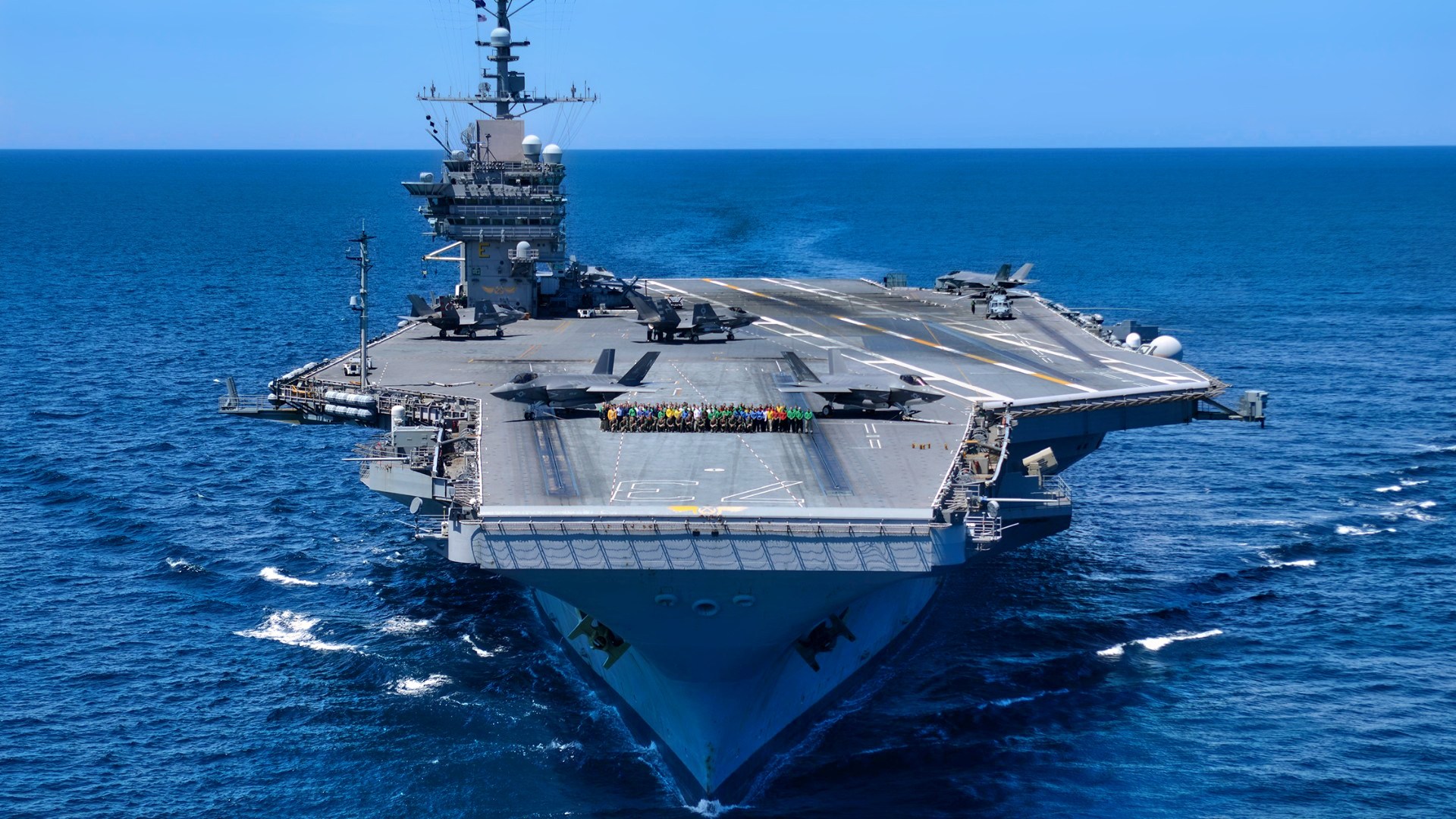
ATLANTIC OCEAN (Aug. 16, 2016) Sailors assigned to the Grim Reapers of Strike Fighter Squadron (VFA) 101, the Navy’s F-35C Fleet replacement squadron, pose on the flight deck of the aircraft carrier USS George Washington (CVN 73) during an aerial photo exercise. VFA-101 aircraft and pilots are conducting initial qualifications aboard George Washington in the Atlantic Ocean. The F-35C is expected to be Fleet operational in 2018. (U.S. Navy photo by Mass Communication Specialist Seaman Apprentice Krystofer Belknap)
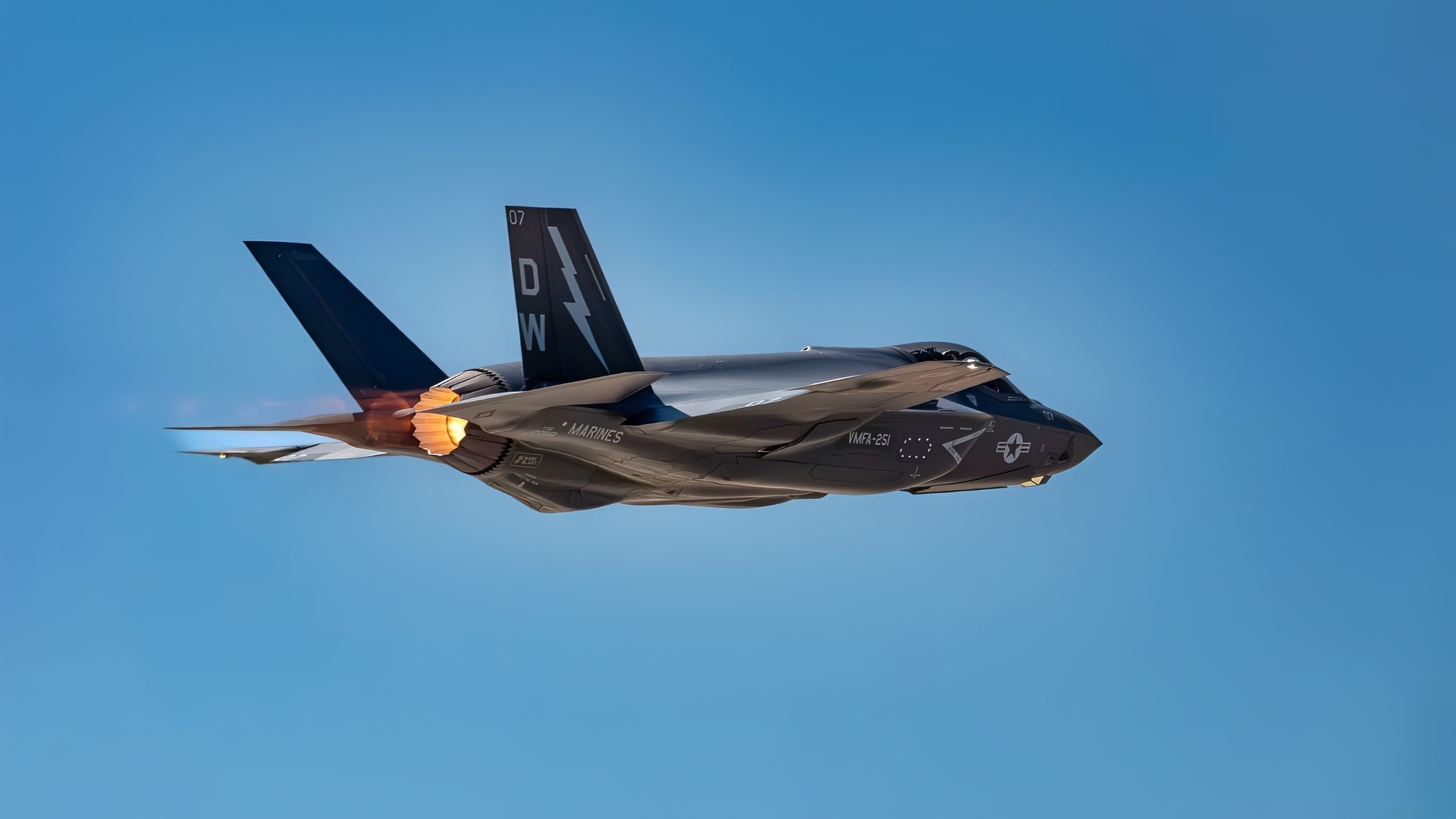
A U.S. Marine Corps F-35C Lightning II assigned to Marine Fighter Attack Squadron 251 (VMFA-251), Marine Corps Air Station Cherry Point, North Carolina, takes off for a mission in support of Red Flag-Nellis Marine Fighter Attack Squadron 251 (VMFA-251), 2nd Marine Aircraft Wing, Marine Corps Air Station Cherry Point, North Carolina 25-3 from Nellis Air Force Base, Nevada, July 22, 2025. Red Flag, strengthens join-force readiness through integration in realistic combat scenarios, enhancing interoperability and rapid-response capabilities. (U.S. Air Force photo by William R. Lewis)
The $13 billion USS Gerald R. Ford (CVN-78) cannot safely operate Lockheed Martin F-35C Lightning II fighters because the aircraft carrier’s flight deck was designed before the F-35C’s final heat specifications existed. The Pentagon calls it a “synchronization gap.”
The F-35C and Ford-Class Aircraft Carrier: Not Compatible
The United States military is the most powerful conventional force on Earth. By nature an expeditionary force, Americans fight well beyond their borders. Given that the force is all-volunteer, the US military’s numbers are finite.
To make up for that, the US military has developed key systems and technologies to augment the force’s ability to overwhelm distant foes’ defenses.
One such platform that the United States Navy relies upon for power projection is the aircraft carrier. While the Navy has had carriers in its fleet for nearly a century, their capabilities have evolved significantly.
Ford-Class: Locked in 2005, Obsolete by Deployment
In the early 2000s, the Navy assessed they needed to expand its ability to project power. The legendary Nimitz-class aircraft carriers were aging. So, work began on the Nimitz’s replacement at that time. The first steel cut for what would become the new Ford-class aircraft carrier occurred on August 11, 2005.
At that time, the design for the USS Gerald R. Ford was “frozen.”
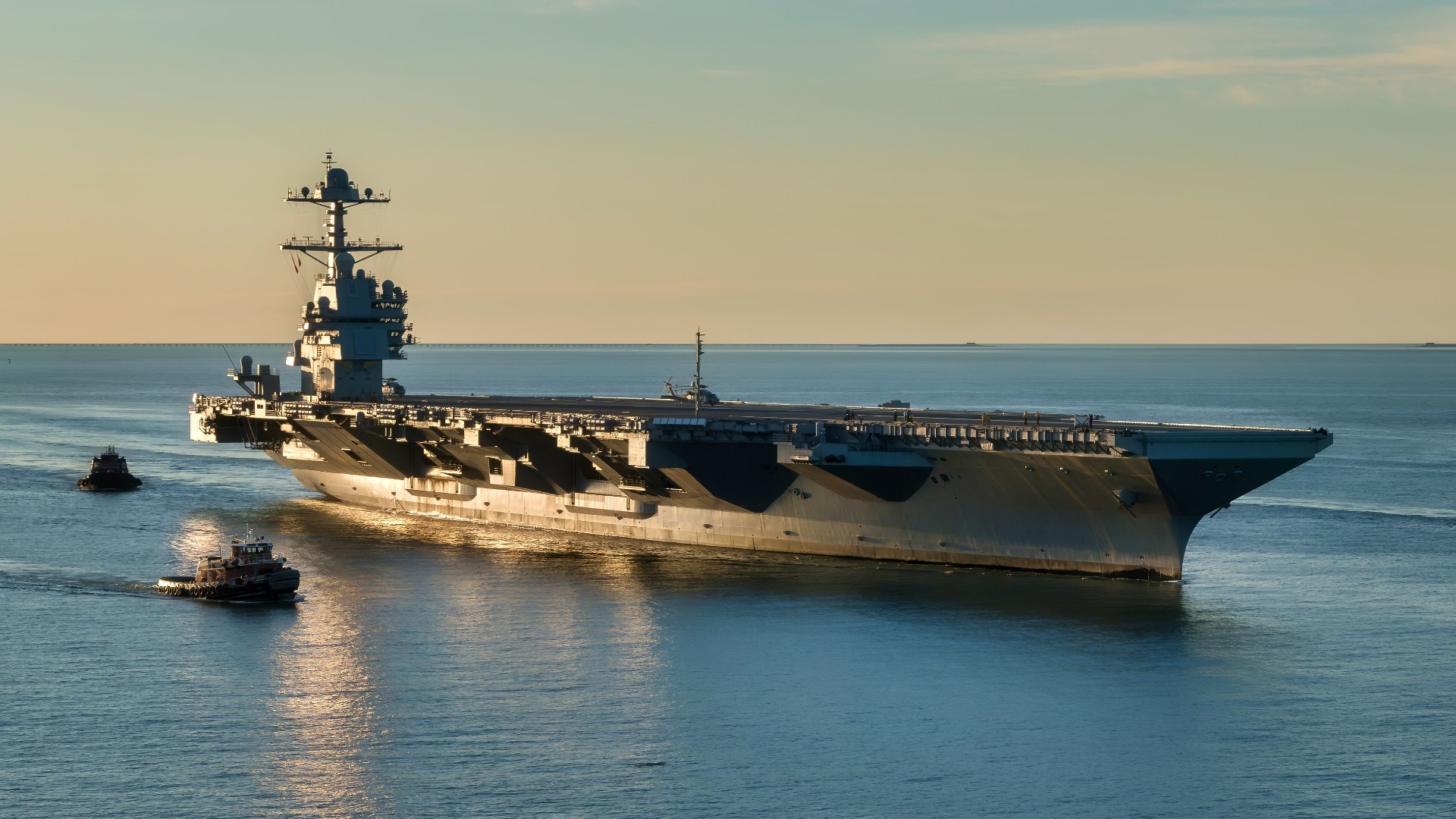
(April 14, 2017) The aircraft carrier Pre-Commissioning Unit (PCU) USS Gerald R. Ford (CVN 78) pulls into Naval Station Norfolk for the first time. The first-of-class ship – the first new U.S. aircraft carrier design in 40 years – spent several days conducting builder’s sea trails, a comprehensive test of many of the ship’s key systems and technologies. (U.S. Navy photo by Matt Hildreth courtesy of Huntington Ingalls Industries/Released)
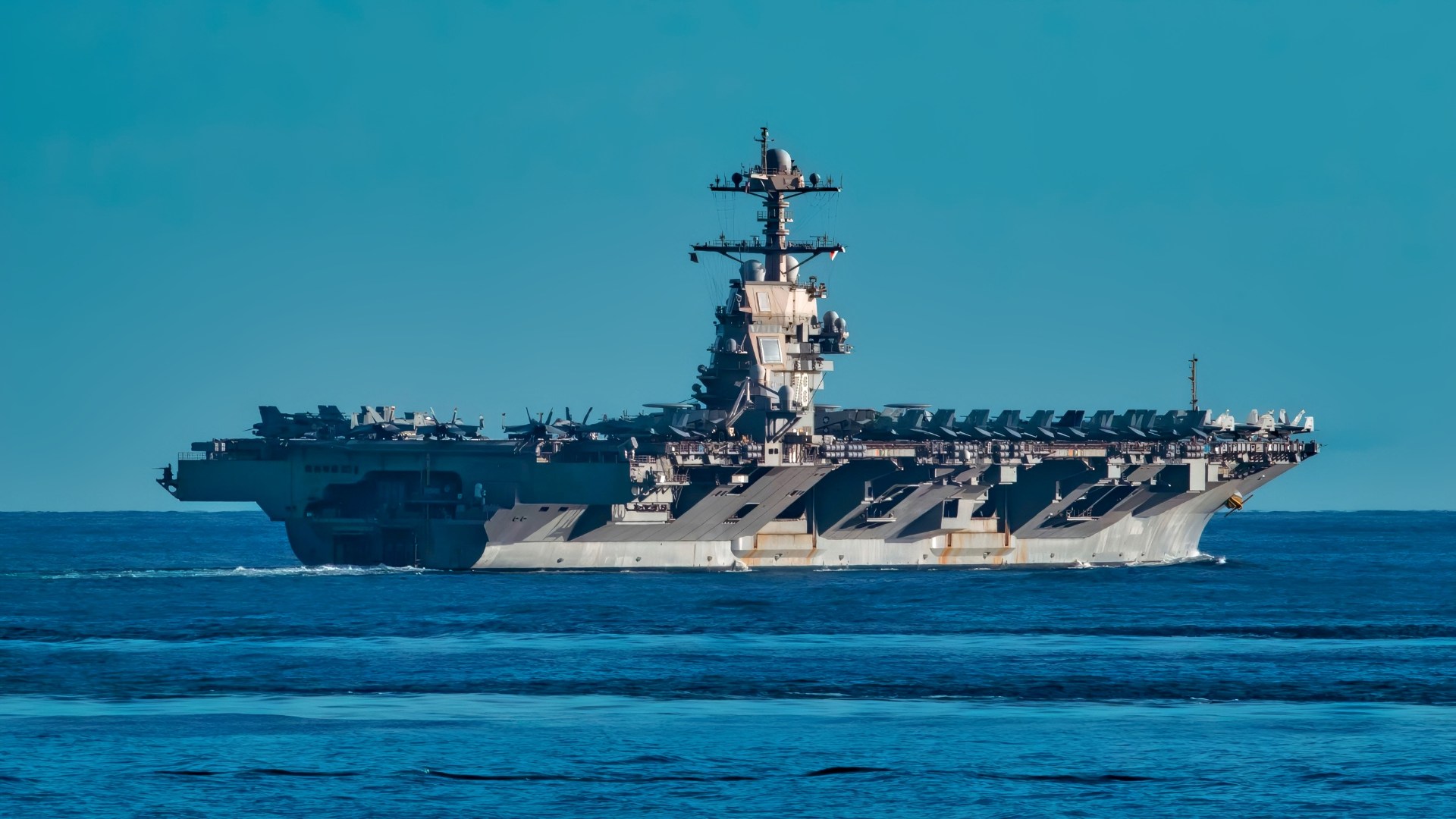
The Arleigh Burke-class guided-missile destroyer USS Winston S. Churchill (DDG 81) sails alongside the world’s largest aircraft carrier the USS Gerald R. Ford (CVN 78), Sep. 24, 2025. Winston S. Churchill, as part of Carrier Strike Group 12, is on a scheduled deployment in the U.S. 6th Fleet area of operation to support the warfighting effectiveness, lethality and readiness of U.S. Naval Forces, Europe-Africa, and defend U.S. Allied and partner interest in the region. (U.S. Navy photo by Mass Communication Specialist Seaman Hector Rodriguez)
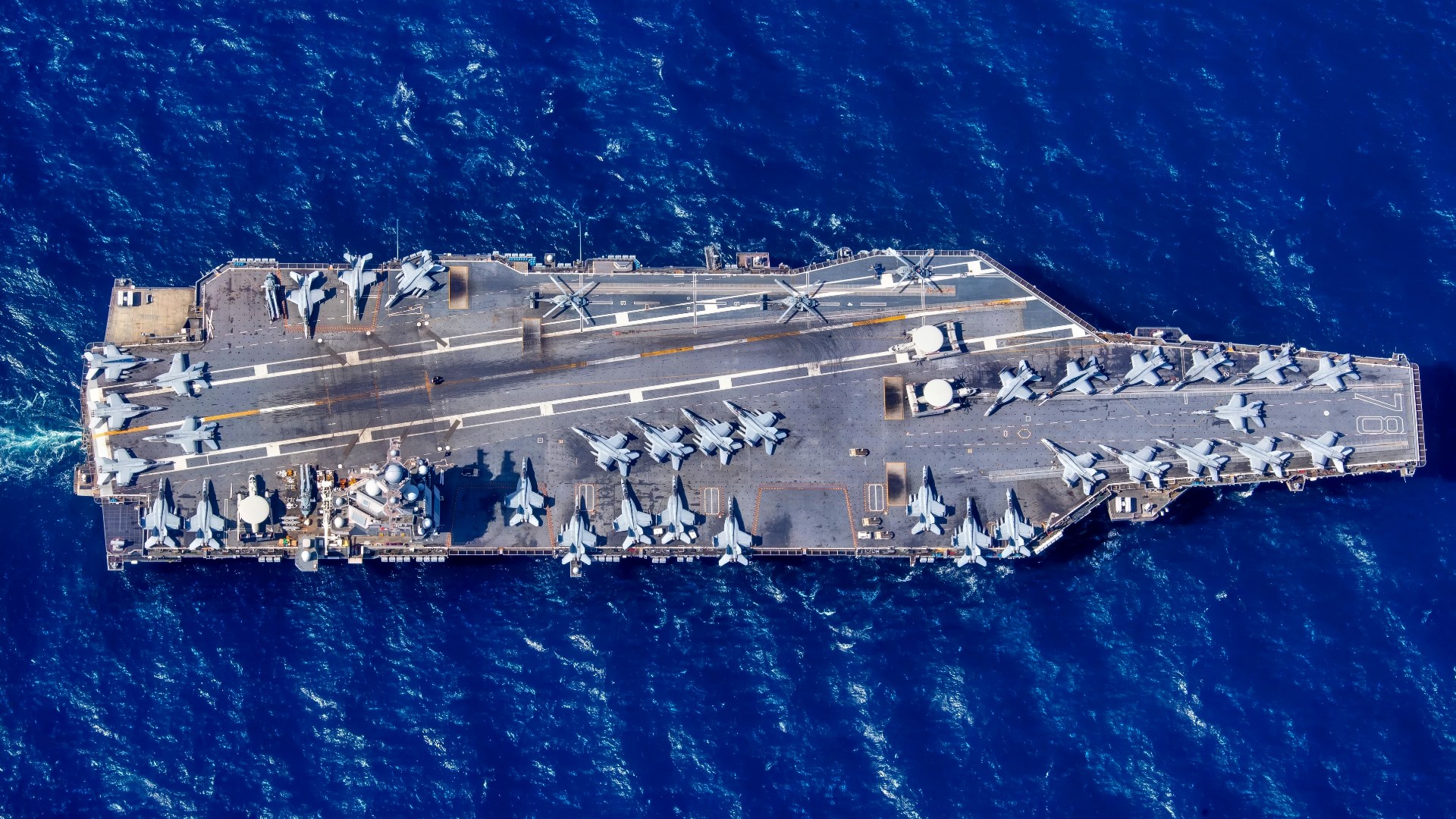
The first-in-class aircraft carrier USS Gerald R. Ford (CVN 78) transits the Atlantic Ocean, March 19, 2023. Ford is underway in the Atlantic Ocean executing its Composite Training Unit Exercise (COMPTUEX), an intense, multi-week exercise designed to fully integrate a carrier strike group as a cohesive, multi-mission fighting force and to test their ability to carry out sustained combat operations from the sea. As the first-in-class ship of Ford-class aircraft carriers, CVN 78 represents a generational leap in the U.S. Navy’s capacity to project power on a global scale. (U.S. Navy photo by Mass Communication Specialist 2nd Class Jackson Adkins)
With a design locked in 21 years ago, the new carrier would be unable to deploy America’s newest, primary warplane, the fifth-generation F-35 Lightning II multirole fighter.
That’s because the naval variant of the Lightning II, the F-35C, did not have its heat specifications finalized in 2005. Mismatched capabilities in defense procurement are known as a “synchronization gap.” Even though the Ford would not begin its first “service-retained” deployment until 2022, the Navy had locked in the ship’s design specifications earlier.
Locking in designs is unavoidable, especially for complex and expensive systems, given the Pentagon’s procurement process. That’s why there is even a fancy term, like “synchronization gap,” that Pentagon bureaucrats are ready to throw around whenever a problem arises, like the one the USS Gerald R. Ford is experiencing today.
Such a practice, of course, comes with profound complications if one advanced, expensive system still under development relies upon another costly and complex system still being built, as the F-35s were in 2005.
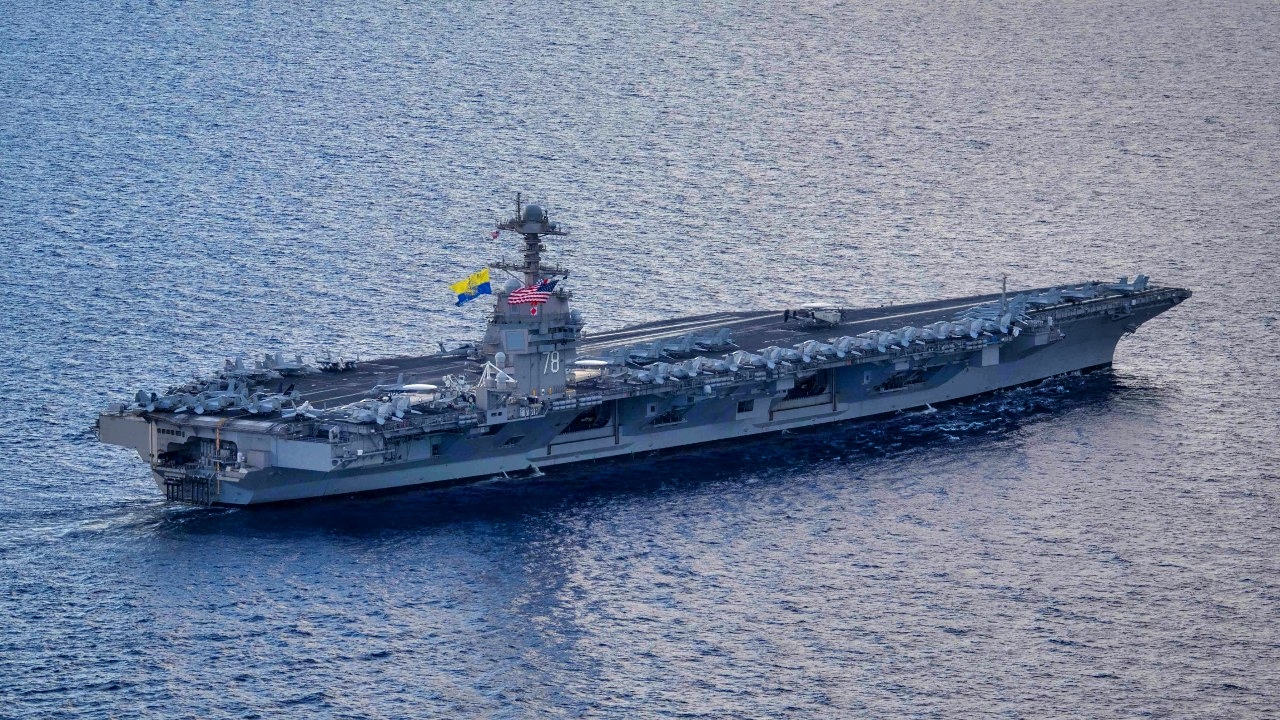
The world’s largest aircraft carrier USS Gerald R. Ford (CVN 78) sails in the Mediterranean Sea, Dec. 31, 2023. The U.S. maintains forward deployed, ready, and postured forces to deter aggression and support security and stability around the world. (U.S. Navy photo by Mass Communication Specialist 2nd Class Jacob Mattingly)
3,600-Degrees of Failure: Why the F-35C Burns the Deck
But this isn’t a minor problem because one of the biggest issues facing the US military today is that its readiness is always in doubt. And that condition persists, partly because the systems the force relies on to wage its wars are not fully prepared for the kind of battles the US military will face.
In the specific case of the USS Gerald R. Ford and its (lack of) F-35C fleet, this failure of proper procurement practices is unacceptable. After all, America’s newest aircraft carrier should have carried an airwing of its newest warplane, the F-35C.
Due to an oversight in the design of both the Ford and the F-35C, the ship’s flight deck cannot physically handle the F-35C’s extreme, 3,600-degree Fahrenheit temperatures.
Basically, carrier flight decks require jet blast deflectors and specific coatings that withstand the intense heat generated by jet blast. The flight deck cannot be scorched. It must remain clean and smooth as much as possible to avoid disruptions to what are likely to be high-intensity flight operations at any given time.
Since the final version of the F-35C has an exhaust plume significantly hotter than that of any carrier-based plane before it, the standard deck plating installed on the Ford quickly becomes warped. Plus, the F-35Cs require advanced maintenance systems, such as the Operational Data Integrated Network (ODIN), which, surprisingly, the USS Gerald R. Ford lacked.
And that’s truly shocking because, again, the Ford should have carried the new F-35Cs.
Systems That Didn’t Work When It Mattered
The Navy upgraded the Gerald R. Ford in real time to make it compatible with the F-35C. But those modifications are still ongoing. And this isn’t the only upgrade on the ship that the Navy has made since deploying the carrier. The Ford was originally to be deployed by 2017. There were so many problems and complications with the new Ford that the Defense Department pushed back its launch date.
Even with that delay, the Ford was not yet ready for deployment by 2022.
Indeed, the Navy sent the Ford on its “service-retained” deployment with key systems either not fully integrated into the ship or on the fritz, despite having enjoyed years of preparation time in the shipyard.
When the Ford initially deployed, it had problems with its aircraft elevators, its electromagnetic catapult system (EMALS), and its advanced arresting gear (AAG), all of which are vital for carrier flight operations–the only utility an aircraft carrier has for the Navy.
Now, Ford’s inability to carry the F-35Cs is the primary concern. Years later, when the carrier was supposed to be ready for battle. Today, the carrier is still not prepared. Only now is the Ford at the center of the battle, as the world clearly enters a major global conflict.
The Ford spearheaded the force that arrested Venezuelan strongman, President Nicolas Maduro, in January of this year. Then, the ship immediately redeployed to the Middle East, where it has become a source of both embarrassment and concern in the current Iran War. It is now home in Virginia.
And all this is compounded by the various problems of the F-35 Lightning II, which ran over-budget and far over-time, so much so that today America’s F-35 force has barely a 50 percent combat readiness rating.
The Bigger Problem: America’s Broken War Machine
The USS Gerald R. Ford cost US taxpayers $13 billion (plus hundreds of millions in upkeep), while the F-35 program has cost taxpayers more than $1 trillion over the last 20 years. Currently, these systems remain unprepared for battle. This condition cannot be allowed to persist. At some point, the entire situation leads to a greater failure in war.
If your force is predominantly an expeditionary military that relies on advanced systems, such as aircraft carriers and fifth-generation warplanes, as force multipliers, and those systems are both unsynchronized and chronically underperforming, the chances of military defeat increase exponentially.
What all these points point to is that there must be drastic acquisitions reform at the Pentagon that shuts down the legacy systems they’ve been blowing gobs of tax dollars on since the Cold War and instead reprioritizes smaller, nimbler, cheaper systems, such as drones, hypersonic weapons, and loads of missiles.
The age of the floating airbase is over. Ford’s inability to launch the F-35C is yet another sad reminder of how badly the Pentagon has missed the proverbial boat on the new revolution in military affairs.
About the Author: Brandon J. Weichert
Brandon J. Weichert is a Senior National Security Editor. Recently, Weichert became the editor of the “NatSec Guy” section at Emerald. TV. He was previously the senior national security editor at The National Interest. Weichert hosts The National Security Hour on iHeartRadio, where he discusses national security policy every Wednesday at 8 pm Eastern. He hosts a companion show on Rumble entitled “National Security Talk.” Weichert consults regularly with various government institutions and private organizations on geopolitical issues. His writings have appeared in numerous publications, among them Popular Mechanics, National Review, MSN, and The American Spectator. And his books include Winning Space: How America Remains a Superpower, Biohacked: China’s Race to Control Life, and The Shadow War: Iran’s Quest for Supremacy. Weichert’s newest book, A Disaster of Our Own Making: How the West Lost Ukraine, is available for purchase at any bookstore. Follow him via Twitter/X @WeTheBrandon.


