
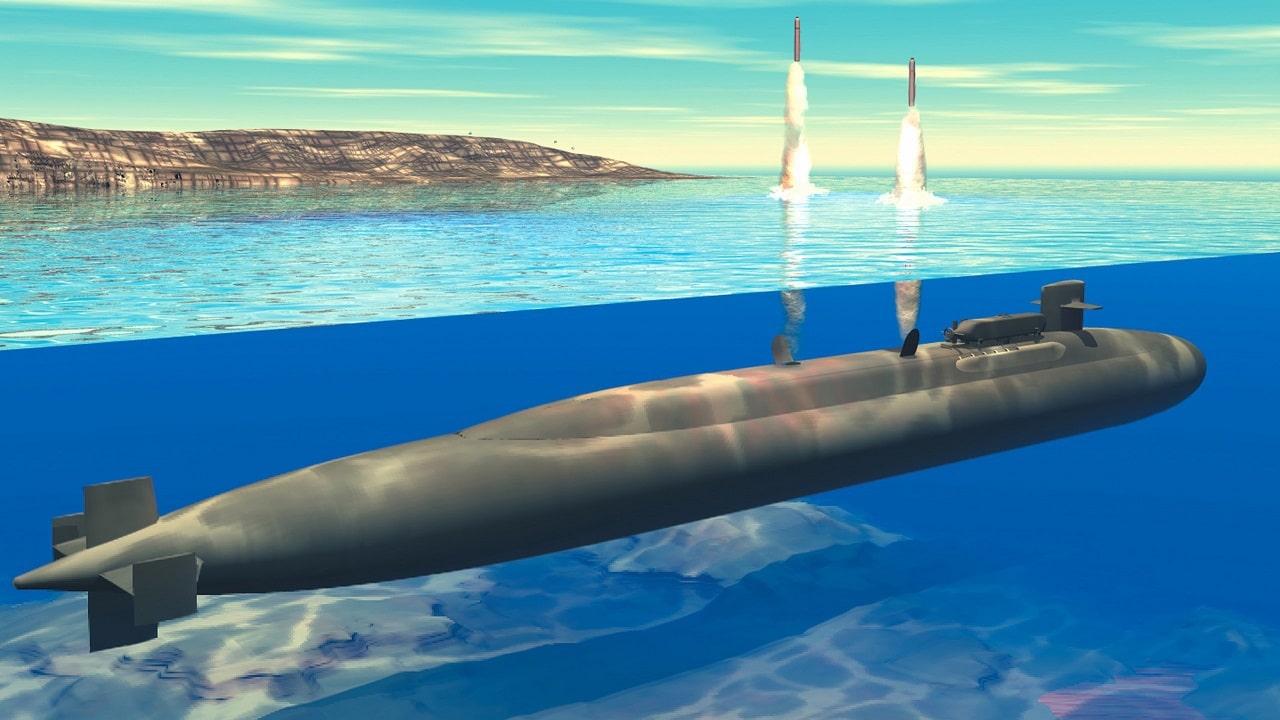
Key Points and Summary – The U.S. Navy’s USS Ohio, an Ohio-class SSGN, made a high-profile port call at Subic Bay as Washington tightens defense links with Manila amid rising China tensions.
-Once a ballistic-missile sub, Ohio now carries up to 154 Tomahawk cruise missiles and supports special operations—capabilities it highlighted in recent training with Marines using Combat Rubber Reconnaissance Craft.

SOUDA BAY, Greece (Sept. 7, 2019) The Ohio-class cruise missile submarine USS Florida (SSGN 728) arrives in Souda Bay, Greece, for a scheduled port visit, Sept. 7, 2019. NSA Souda Bay is an operational ashore base that enables U.S., allied, and partner nation forces to be where they are needed and when they are needed to ensure security and stability in Europe, Africa, and Southwest Asia. (Photo by Joel Diller/Released)
-The visit also served logistics: deep-water access, refit, and crew rest near the South China Sea.
-Above all, it was deliberate signaling: a visible reminder to Beijing that U.S. strike power can appear, disappear, and reappear close to contested waters—backed by growing U.S.–Philippine cooperation.
USS Ohio SSGN Surface Near China In Subic Bay
The U.S. Navy’s nuclear-powered submarine USS Ohio made a high-profile port call this week at Subic Bay in the Philippines. The news comes as Washington continues to reinforce its presence in the western Pacific amid China’s rapid bolstering of its military hardware and rising tensions in the region.
The Subic Bay, located on the west coast of Luxon Island and facing directly into the South China Sea, was once one of America’s largest overseas naval bases during the Cold War.
Although the Philippines closed the base in 1992, it remains a strategically valuable harbor and is increasingly used again for U.S. naval visits as defense ties between Washington and Manila tighten. The location of the bay allows U.S. forces to operate close to disputed waters where China makes a number of broad – and hotly contested – territorial claims.
The USS Ohio is an Ohio-class guided-missile submarine, and one of the largest in the U.S. fleet. Originally designed to carry nuclear ballistic missiles, the vessel was later converted to fire up to 154 Tomahawk cruise missiles – precision weapons that can strike targets on land from significant distances. The submarine is also capable of supporting special operations forces, making it a flexible tool for power projection. And certainly, that partly explains why the submarine was there.
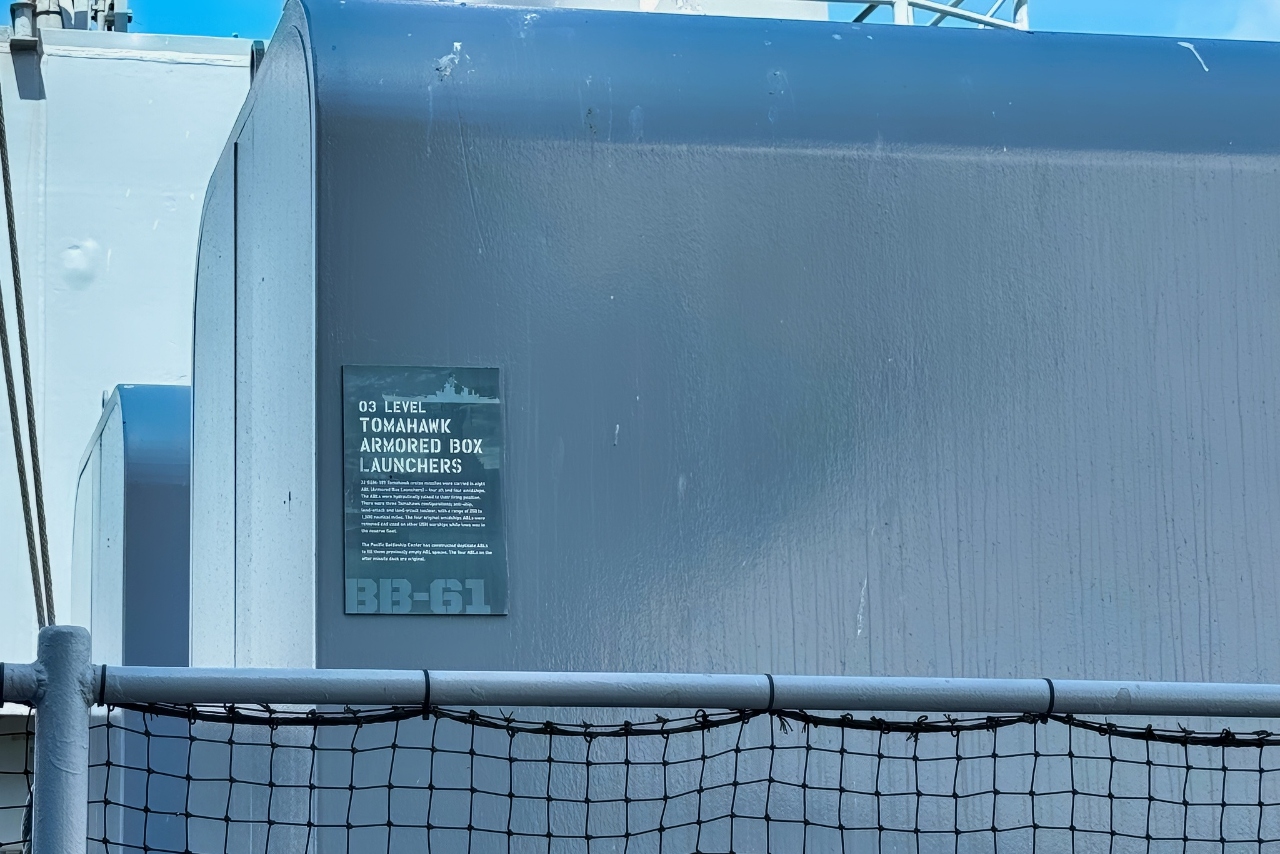
USS Iowa Tomahawk Box. National Security Journal Photo.
In a statement issued to Newsweek, Submarine Group Seven, the U.S. Navy command that’s responsible for submarine activity in the region, confirmed that Ohio was pierside at Subic Bay as part of a scheduled port visit.
News of the Ohio’s arrival first surfaced through open-source ship-tracking data that was shared on X and other social media outlets by defense analysts. The news follows reports from earlier this month when Ohio was photographed conducting training with the U.S. Marine Corps in the Philippine Sea, east of the Philippines.
Before its deployment around the Philippines, the Ohio also surfaced in Guam in April, and then in Brisbane, Australia, in July.
The U.S. Pacific Command (PACOM) media site published a photo gallery in early September showing the 3rd Reconnaissance Battalion and 3rd Marine Division conducting Combat Rubber Reconnaissance Craft training with USS Ohio in the Philippine Sea on September 3.
“The exercise is part of ongoing III Marine Expeditionary Force and U.S. 7th fleet efforts to provide flexible, forward-postured and quick-response options to combatant commanders,” a PACOM statement reads. “Ohio is operating in the 7th Fleet area of operations. 7th Fleet is the U.S. Navy’s largest forward-deployed numbered fleet, and routinely interacts with allies and partners in preserving a free and open Indo-Pacific region.”
Why the USS Ohio SSGN Submarine Was There
While the Ohio’s arrival at Subic Bay was described as “scheduled,” the timing and visibility of the deployment point to three broad reasons for its presence: training with Marines, sustaining logistics, and strategic signaling.
In the weeks leading up to the port call, the Ohio was photographed working alongside the U.S. Marine Corps. Marines practiced small-boat insertion and recovery drills using Combat Rubber Reconnaissance Craft – a rubber inflatable boat used by the U.S. Navy – launched directly from the submarine.
Exercises like these are critical for preparing for special operations scenarios where a submarine acts as a stealth platform for inserting reconnaissance teams close to contested shores. Practicing missions in the Philippine Sea, near one of the most contested maritime regions in the world – the South China Sea – reflects the necessity of the United States preparing for real-world contingencies.
In terms of logistics, the Subic May provides deep-water access, repair facilities, and resupply opportunities for Ohio. Although the U.S. lost its permanent base there, the return of American submarines and warships to the port reflects the renewed defense cooperation between Washington and Manila. For a submarine like Ohio, which spends months forward-deployed, port calls offer opportunities for crew to rest, and for coordination with regional allies. It also visibly anchors the U.S. Navy in a location that offers quick access to the South China Sea – which brings us to the matter of strategic signaling.
While Ohio is undoubtedly in the region for the reasons previously cited, it is also true that the submarine’s presence sends a message to Beijing. The Ohio-class SSGN can carry up to 154 Tomahawk cruise missiles – more than some entire fleets of ships – and can support special operations forces.
By surfacing in Subic Bay and conducting joint drills with Marines, the Navy is making that capability visible in a region where China has spent more than a decade building artificial islands, militarizing reefs, and asserting control over vast swaths of the South China Sea.
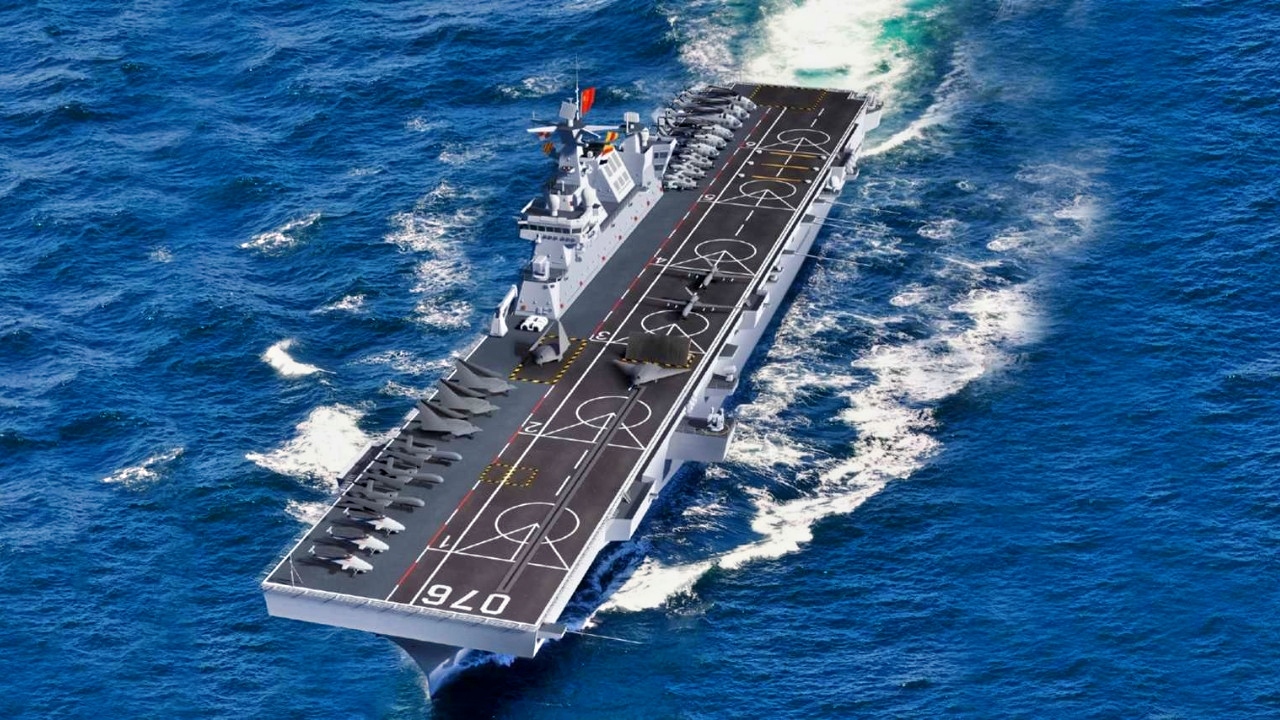
China Type 076 from Chinese Weibo Screenshot.
The Ohio-Class SSGN Means Detterence
For China, the appearance of an SSGN so close to its claimed waters is a reminder that the U.S. retains enormous strike power on its doorstep.
Unlike aircraft carriers, which are large and conspicuous, a submarine can disappear beneath the water and re-emerge anywhere.
Its visit signals not just solidarity with the Philippines but also deterrence. U.S. visibility in the region matters to Beijing, and it explains why port calls like this resonate far beyond the Philippines.
About the Author:
Jack Buckby is a British author, counter-extremism researcher, and journalist based in New York who writes frequently for National Security Journal. Reporting on the U.K., Europe, and the U.S., he works to analyze and understand left-wing and right-wing radicalization, and reports on Western governments’ approaches to the pressing issues of today. His books and research papers explore these themes and propose pragmatic solutions to our increasingly polarized society. His latest book is The Truth Teller: RFK Jr. and the Case for a Post-Partisan Presidency.
More Military
Mach 2.65 F-111 ‘Aardvark’ Strike Fighter Has a Message for the U.S. Military
Russia’s MiG-29 Fulcrum Fighter Has a Message for NATO
The X-40A Space Plane Has a Message for the U.S. Military
The Mach 6.7 X-15 Space Plane Has a Message for the U.S. Air Force


