

Summary and Key Points: It weighs 35 pounds, a single soldier can fire it, and it has terrorized the Russian air force across two wars and two generations. When the CIA slipped the FIM-92 Stinger to Afghan fighters in 1986, five missiles downed three Soviet gunships on the first outing — and within a year, half of Afghanistan’s sky was swept clear. Decades later, analysts wrote it off as obsolete. Then Russia invaded Ukraine, and the same missile, newly upgraded to kill drones, sent Russian helicopters fleeing for altitude all over again. How 1960s technology keeps humbling a superpower is the real story.
The Stinger Missile Can Even Beat Father Time

Su-25. Image Credit: Creative Commons.
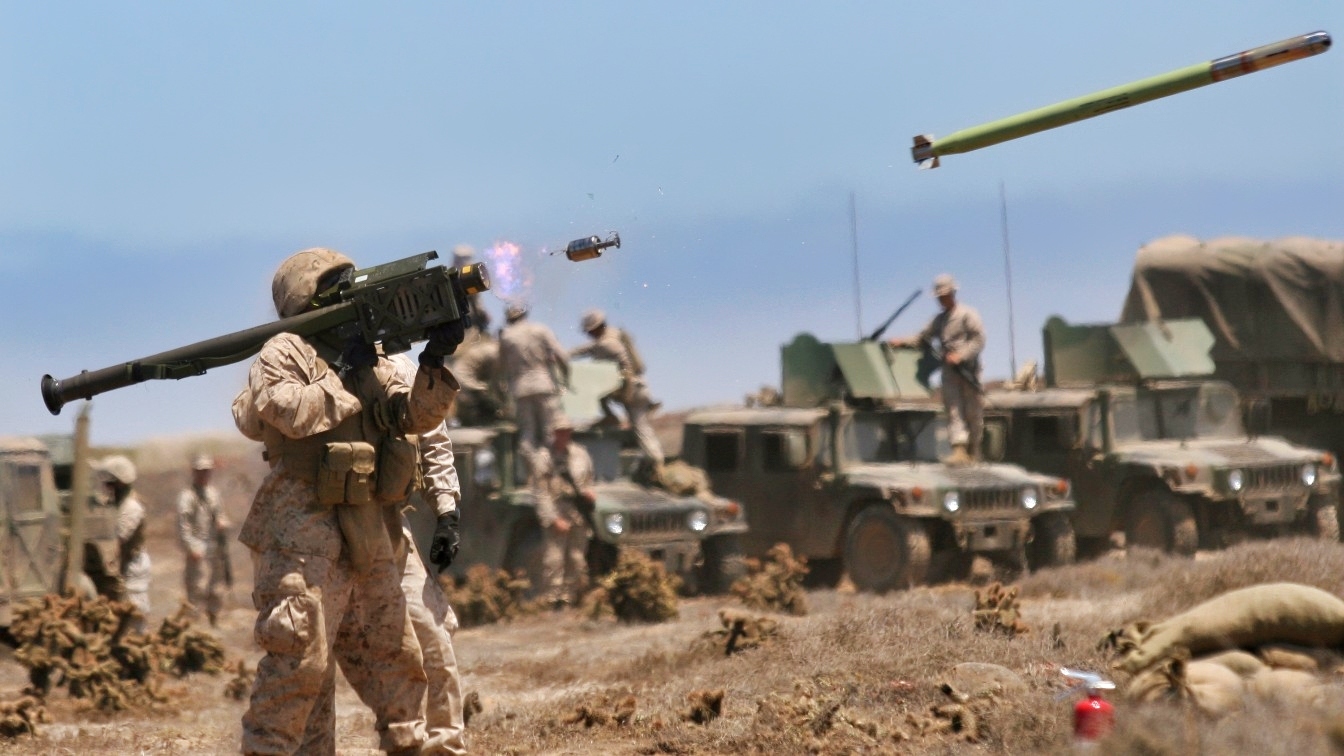
The FIM-92 Stinger is a lightweight, shoulder-fired, “fire-and-forget” surface-to-air missile (MANPADS) primarily used by infantry for short-range air defense.
Developed by the United States and manufactured by RTX (Raytheon), it is designed to engage low-flying aircraft, helicopters, and unmanned aerial systems (UAS).
The Stinger is a highly effective, man-portable infrared-guided missile capable of striking low-altitude targets up to 11,500 feet high and five miles away. It boasts a reliability rate of over 90 percent in training, proving exceptionally lethal against helicopters, drones, and slower, low-flying ground-attack aircraft.
Stingers have been extremely effective in two different wars, neither of which was being fought by the United States, but involved American allies or partners.
How The Stinger Missile Works
The development of the Stinger missile system began in the late 1960s, with the US Army awarding the contract for its design and production in 1972. After a series of tests, the missile entered service in 1981, replacing the less effective Redeye missile system.
Stingers are lightweight (35 pounds complete) and portable. They are reusable; each missile weighs 22 pounds. It can be operated by a single soldier, although Stingers are normally deployed in a two-man team.
Stingers use a passive infrared seeker. The infrared seeker can lock onto the heat the target is emitting. It is called a “passive” seeker because, unlike a radar-guided missile, it does not emit radio waves in order to “see” its target.
It is a “fire-and-forget” weapon, meaning it requires no input from the gunner once it’s fired. This allows them to take cover, move to another position, or engage another target.
To fire it, a soldier aims the missile at the target. Once the seeker locks on, it makes a distinctive noise. The soldier pulls the trigger, launching a small rocket that shoots the missile out of the launch tube and well clear of the soldier firing it.
The launch engine falls away, and the main solid-rocket engine ignites. This rocket propels the Stinger to approximately 1,500 miles per hour (2,400 kilometers per hour, Mach 2).
The Stinger missile can hit targets at an altitude of 11,500 feet (3,500 meters) and has a range of about 5 miles (8 kilometers).
Stingers Proved Their Worth In Afghanistan
The FIM-92 Stinger has earned its reputation as a battlefield equalizer. It became famous during the Soviet–Afghan War in the 1980s, where it inflicted heavy losses on Soviet aircraft, undermining Moscow’s ability to control the battlefield.
During the Soviet invasion of Afghanistan, Russian troops relied heavily on the Mi-24 Hind helicopter gunship. Soviet pilots called the Mi-24 the “flying tank,” a term historically used for the famous World War II Soviet Il-2 Shturmovik armored ground-attack aircraft.
The Mi-24 was popular with ground troops, since it could loiter on the battlefield and provide devastating close air support as needed.
The CIA began supplying Stingers to the Afghan mujahideen in 1986, despite some misgivings both in the Agency and with Pakistan that the weapons could be traced to both of them.
However, the Stinger was considered a perfect weapon against the Hind gunships, and in its first use in 1986, five Stingers were fired, shooting down three Hinds.
The Soviet Hinds quickly lost their ability to operate with impunity, and in just a year, by mid-1987, half of Afghanistan’s airspace was free from Soviet aircraft. Soviet losses were heavy, with at least 150 helicopters shot down. Some estimates had the losses as high as 500.
The vast amount of flares that the Hinds used against earlier supplied SA-7 MANPADS were found to be useless against the Stinger.
However, the Soviets reportedly captured 16 Stinger missiles in late 1987, developed countermeasures for the Hinds, and made them much more effective.
In 1988, the total number of Soviet aircraft losses numbered less than 50.
The Russian Invasion Of Ukraine 2022-Present
After the end of the Cold War, many military analysts considered the Stinger missile to be obsolete. But the US Army has upgraded the Stinger missile to improve guidance, fire it from Stryker vehicles, and add a “proximity” fuse to enable the weapon to kill small moving drones in addition to helicopters and lower-flying fixed-wing aircraft.
Following several upgrades, Stinger missiles can now target and destroy small drones using a new proximity fuze that detonates near the target. Because of these upgrades, the Stinger experienced a dramatic resurgence during the Russian invasion of Ukraine, which began in February 2022.
Early in the 2022 invasion, Ukrainian forces used thousands of Western-supplied Stingers to hammer low-altitude Russian paratrooper drops and deep-penetration helicopter raids around Kyiv. Germany sent 500 Stingers to Kyiv, while the US and other nations supplied another 1,500.
“Latvia supports Ukraine’s and Ukrainians’ efforts to protect their country, so we have sent a gift – the Stinger missile system, so that, if necessary, the Ukrainian armed forces can protect their citizens, schools, hospitals and kindergartens,” said Baiba Bļodniece, Latvia’s Parliamentary Secretary of the Ministry of Defense.
Like the Soviets before them in Afghanistan, Russian attack helicopters and low-flying jets were forced to operate much higher or stay clear of the immediate front lines out of fear of infrared-guided shoulder-fired missiles.
The Stinger may be 1960s technology, but it remains an effective weapon, and its use today shows that nearly 50 years after its first use in Afghanistan, the upgraded anti-aircraft missile still has a fearsome bite.
About the Author: Steve Balestrieri
Steve Balestrieri is a National Security Columnist. He served as a US Army Special Forces NCO and Warrant Officer. In addition to writing on defense, he covers the NFL for PatsFans.com and is a member of the Pro Football Writers of America (PFWA). His work was regularly featured in many military publications.


Greg
June 3, 2026 at 5:42 pm
Informative article however a discussion of the Cost of defense ratio to the Price of incoming Drones would be enlightening as it’s understood that there is also a price GAP of cheap drones to expensive defenses.
Meh
June 3, 2026 at 10:24 pm
The only reason Bush and Blair invaded Iraq was so they could take focus and attention away from Afghanistan because they did not want the Taliban to be eliminated (the Taliban had unconditionally surrendered in Dec 2001 but Bush and Rumsfeld wouldn’t accept their surrender, and the Bush admin had OBL cornered in Tora Bora but they allowed the Pakistanis to safely evacuate OBL to Pakistan instead of the Bush admin killing or capturing OBL).
The defeat/elimination of the Taliban would have meant the end of Pakistan (the Afghan part of Pakistan re-joining Afghanistan, and the Indian part of Pakistan re-joining India with the support of the international community), which Bush and Blair opposed.
Within a month and a half of the Iraq invasion, the US and UK had achieved total victory, but Bush deliberately did things which led to an insurgency in Iraq, an insurgency he could have easily crushed anytime he wanted to within the first 2 and a half years of that war, but he deliberately allowed to fester.
For this reason, in people’s heart of hearts, people think the invasion of Iraq was the right thing to do, even though they may pretend otherwise. When they pretend otherwise, they are simply being disingenuous.
Regarding the first 4 years of the war of terror, journalists were totally complicit and they did not do their job of holding Bush to account by asking why America had not and is not crushing the terrorists already and why America is giving them breathing space to fester instead.
Meh
June 30, 2026 at 12:56 pm
I should have said 4 and a half years instead of 4.