

Key Points and Summary – A new rendering from Northrop Grumman has provided the first major clue about the potential design of the U.S. Navy’s next-generation F/A-XX fighter. The image reveals a sleek, stealthy aircraft that bears a strong resemblance to the company’s legendary YF-23 Black Widow II prototype from the 1990s.
-The F/A-XX is being designed with a long combat radius to allow aircraft carriers to operate safely outside the range of Chinese anti-ship missiles.

F/A-XX Handout Photo from Northrop Grumman.
-However, the program’s immense cost raises serious questions about whether the U.S. can afford to develop it alongside the Air Force’s F-47.
YF-23 Reboot? We May Know What the United States Navy’s F/A-XX Fighter Looks Like
The US Navy needs a sixth-generation fighter jet. After all, the US Air Force has the F-47 NGAD in development, and the Navy doesn’t want to be left in the lurch and would love its own newfangled next-generation F/A-XX.
To be sure, the maritime branch has the fifth-generation F-35C carrier-borne stealth Lightning II. It is now flying regularly from aircraft carriers by naval and marine aviators. That’s a plus. But just how will the F/A-XX be designed?
We’ll investigate that for you. One of the competitors for the F/A-XX award is Northrop Grumman, and the defense behemoth has just dropped a big clue on its notional design for the sixth-generation naval fighter. A rendering of the F/A-XX appeared on the “Naval Aviation” page of the Northrop Grumman website with the caption of “Project Power Anywhere.”
It’s not a Full-size Graphic
Only about half the airplane is visible as it sits on a carrier flight deck. There is no view of the wings or most of the fuselage. The nose looks sleek and pointed with recessed outlets toward the rear of the graphic.
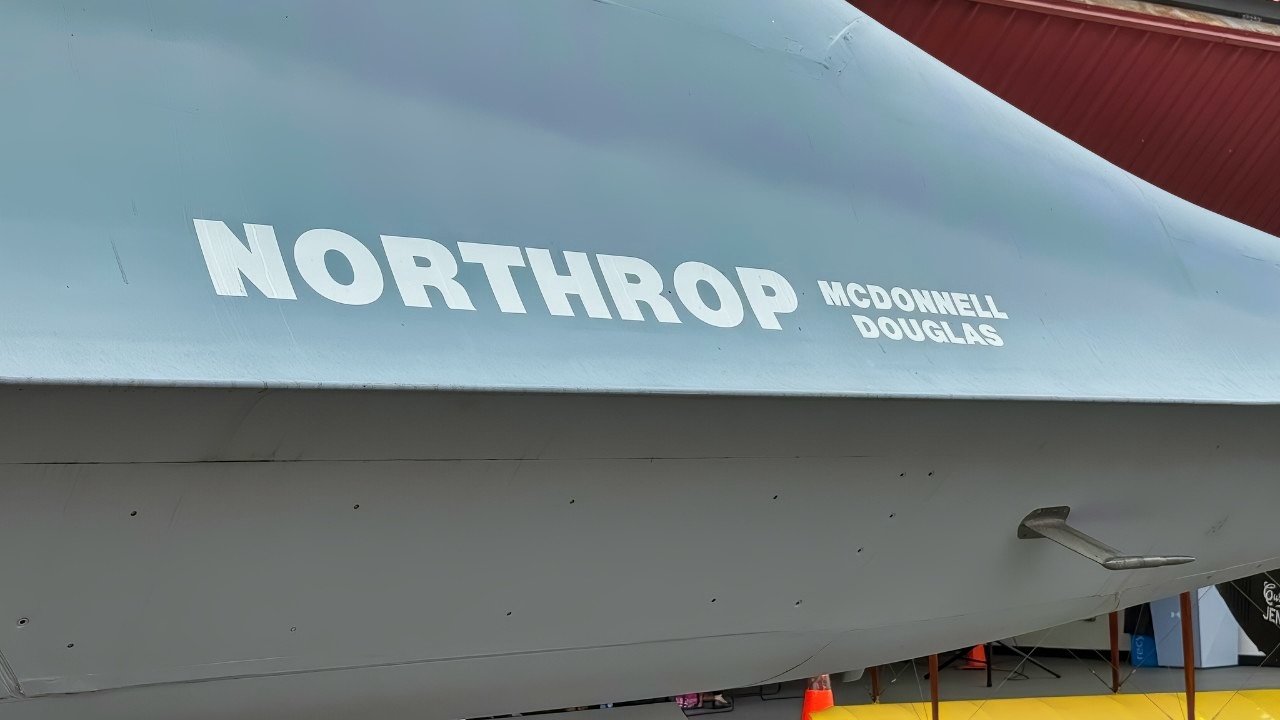
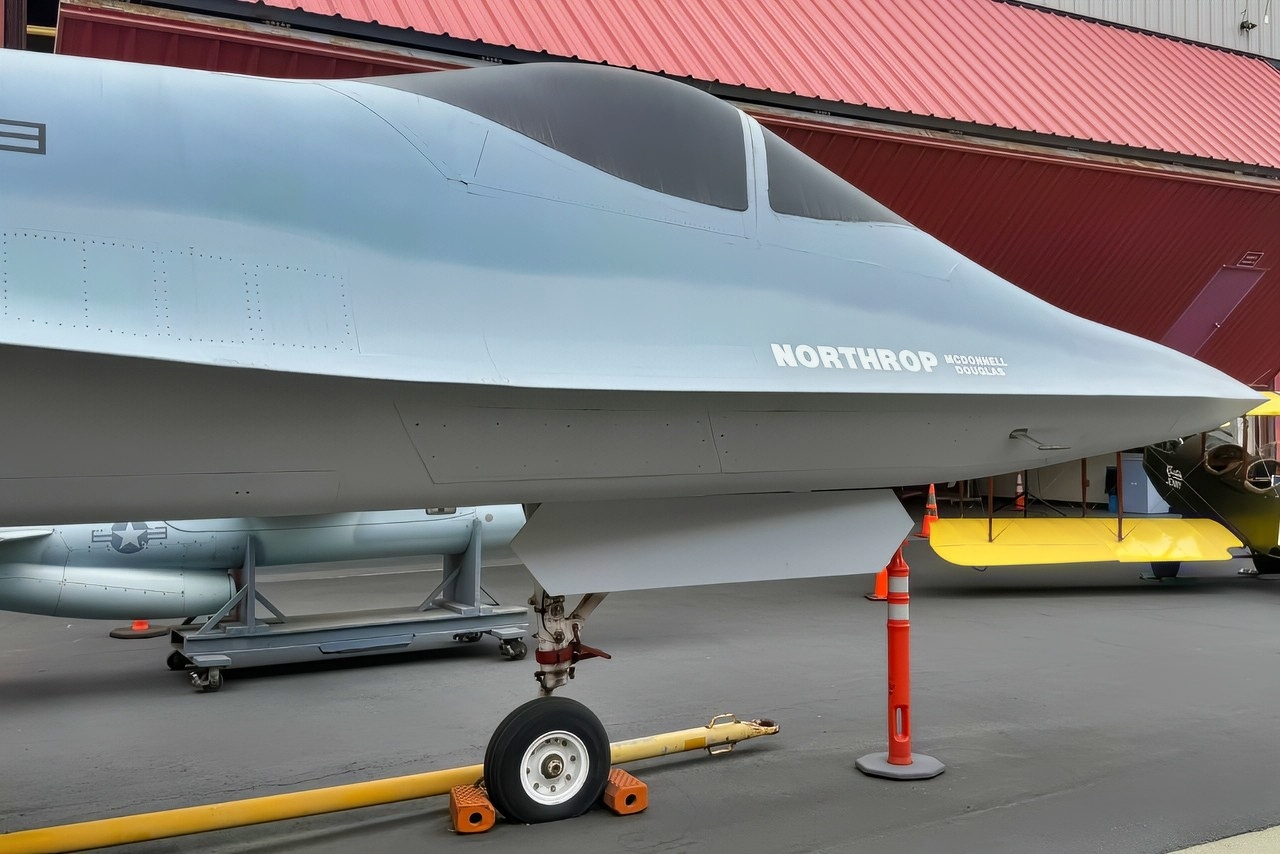
YF-23 Side Profile. Image Credit: National Security Journal.
Design DNA from the YF-23
What jumps out at you is that the rendering of the F/A-XX resembles the YF-23 Black Widow II fighter jet with that heavily pointed nose. The YF-23, which lost out to the F-22, was also produced by Northrop Grumman.
The F/A-XX graphic has a hard-to-miss chine with blended wings set into the front fuselage. That shape gives it the impression that the F/A-XX will be ultra-stealthy with air intakes from the top.
F/A-XX: Looks Large Enough to Be Dangerous
The rendering depicts a large airplane with ample space for armaments and fuel. That would be a plus as the F/A-XX needs to have a high range to keep carriers out of the combat radius of China’s ship-killing missiles.
The F/A-XX must also have heavy landing gear to allow it to land on carriers, and the rendering appears to reveal this trait.
The F/A-XX will have 25 percent more range than the F-35C, or about 837 nautical miles. This needs to be better, or the F/A-XX will not be worth the time and money to produce. Twenty-five percent is not that much. Northrop is likely aware of this and will design its entry accordingly.
Navy’s New Stealth Tanker Drone Will Play an Important Role
The F/A-XX must then be refueled in air, and the new stealth tanker drone, the MQ-25 Stingray, will soon enter full-time service on aircraft carriers. That’s a great development for the F/A-XX concept. If the next-generation airplane does not have enough combat radius, the Chinese would still have the upper hand.
The new airplane should have the best electronic warfare (EW) capabilities in the business. That could mean that the EA-18G Growler EW bird could be replaced. The F/A-XX will take over duties from the F/A-18 E/F Super Hornet, which is a great fighter, but is not stealthy.

YF-23 Black Widow Fighter in California. Image Credit: National Security Journal/Harry J. Kazianis.
AI: The Pilot’s Best Friend in the Cockpit
Like the F-47, the F/A-XX will feature artificial intelligence in the cockpit, and perhaps even quantum computing, should that technology of ultra-quick processing become available within the next ten years. It would be beneficial if the F/A-XX could control a flight of Loyal Wingman drones, enhancing firepower, intelligence, and reconnaissance capabilities, including battle damage assessment (BDA).
Speaking of BDA, the F/A-XX should be able to carry nuclear-tipped hypersonic missiles. This strategic aspect of the airplane would mean a significant leap forward for the US nuclear triad. When evaluating a nuclear strike or an attack on Russian or Chinese nuclear infrastructure, the Navy will need ample amounts of BDA to determine how effective the first strike was and if a follow-on conventional or nuclear attack is needed on hardened ICBM sites.
However, all of these features cost real money. The F/A-XX will be extremely expensive, and there is some question as to whether the Department of Defense can afford the F-47 and the new naval fighter. One idea is for the new airplanes to share engines and the same Collaborative Combat Aircraft (the manned-unmanned teaming feature denoted above).
The two airplanes could also share stealth coatings and other radar-evasive construction techniques. This makes sense, too. What if the Navy just accepted that the Air Force F-47 NGAD be “navalized” like the F-35?

YF-23 at Western Museum of Flight. Image Credit: Harry J. Kazianis/National Security Journal.
Some of the naval brass and various aviators might recoil at having the F-47 just become carrier-capable, but the Navy may have to bite the bullet and acquiesce.
The F/A-XX and the F-47 NGAD will be dramatically improved airplanes over existing fighters. We may not need two separate programs, but the competition will be fierce with mega-dollars on the line. Clues about the airplanes will also be revealed by Members of Congress and the Congressional Research Service (CRS).
You can read one CRS product here about the F-47 NGAD. The analysts at CRS produce outstanding papers about future arms systems. We will be on the lookout for more of those studies.
In the meantime, we’ll peruse the various defense contractor websites for additional renderings. The F/A-XX has an interesting future, and we’ll know more about what is in store as the final contract award approaches.
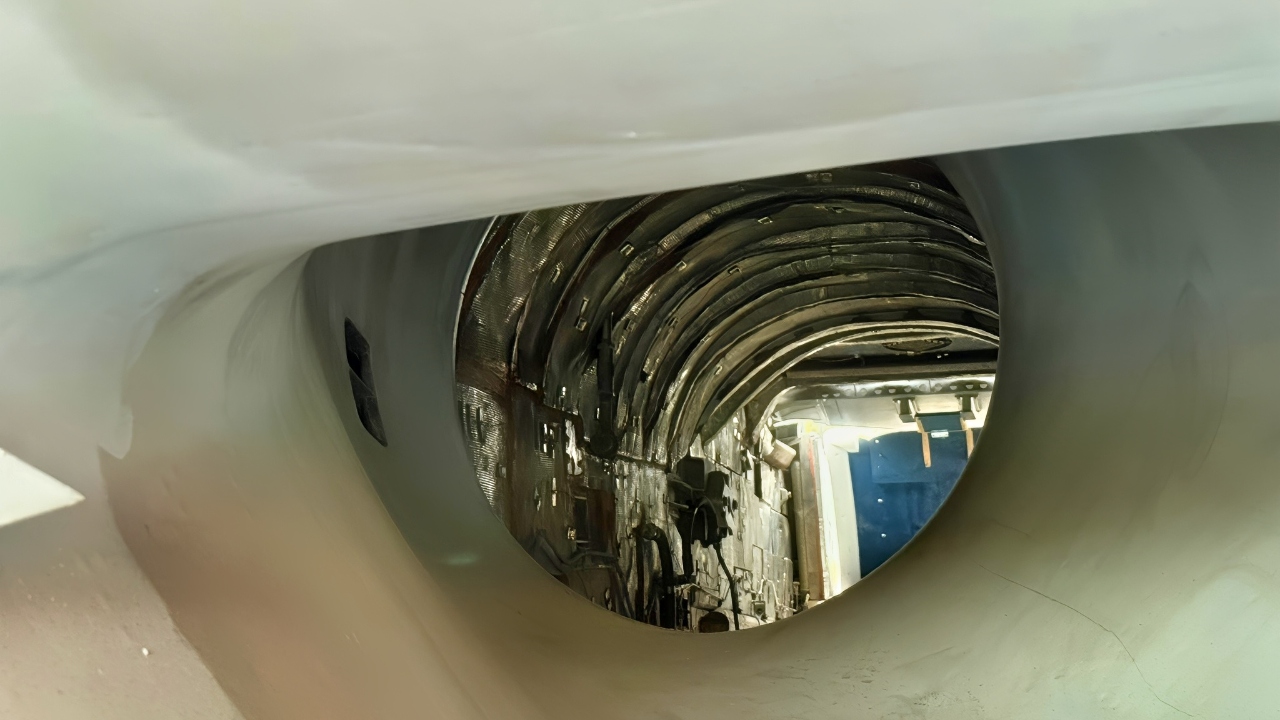
This photo was taken looking inside a YF-23A Black Widow II where the engine was removed. Photo: National Security Journal.
About the Author: Dr. Brent M. Eastwood
Brent M. Eastwood, PhD is the author of Don’t Turn Your Back On the World: a Conservative Foreign Policy and Humans, Machines, and Data: Future Trends in Warfare plus two other books. Brent was the founder and CEO of a tech firm that predicted world events using artificial intelligence. He served as a legislative fellow for US Senator Tim Scott and advised the senator on defense and foreign policy issues. He has taught at American University, George Washington University, and George Mason University. Brent is a former US Army Infantry officer. He can be followed on X @BMEastwood.
Military Affairs
China’s Stealth Air Force Has 1 Mission


