


Key Points and Summary – Russia unveiled the Su-75 “Checkmate” as a bargain F-35 rival that would restore its status as a top-tier fighter power and reignite exports.
-Instead, sanctions, war-driven industrial collapse, and chronic underinvestment have left the jet stuck on the drawing board, much like the T-14 Armata.

Su-75 Checkmate and Su-57. Image Credit: Creative Commons.
-With factories focused on sustaining legacy fleets and producing drones and munitions for Ukraine, there is no realistic path to serial Su-75 production.
-Export customers see the risks and have stayed away. The Su-75 has become less a real program than a political performance, highlighting how far Russia’s aerospace ambitions have fallen.
Russia’s Su-75 Checkmate: A Bunch of Problems?
Russia loves rolling out the best and newest military hardware, even when the hardware itself is, at best, largely aspirational. Unveiled with Hollywood-like fanfare at MAKS 2021, the Su-75 Checkmate was presented as Moscow’s low-cost F-35, promising a capability sweet spot of stealth, sensor fusion, exportability, and a chance for Russia to break out of its growing isolation.
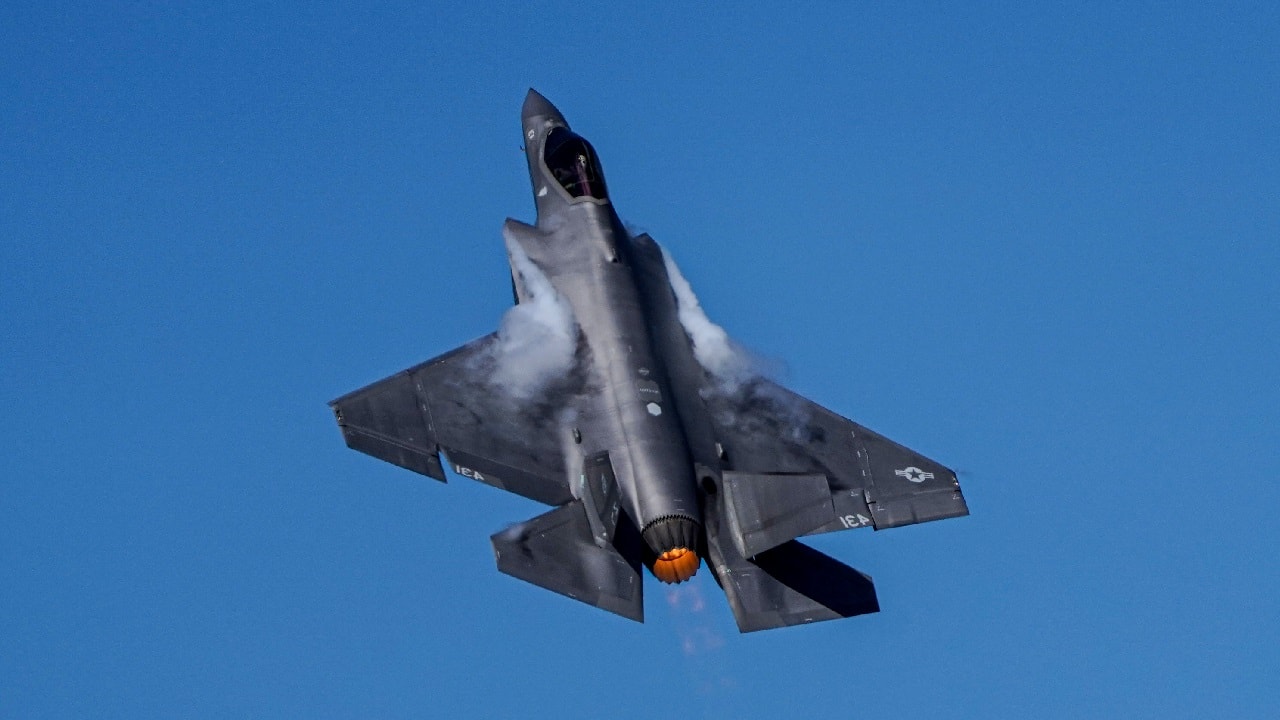
F-35 Fighter Heading Into the Sky. Image Credit: Creative Commons.
Well over four years later, and now deep into 2025, Checkmate remains resolutely notional, more brochure than aircraft, despite recent announcements of a prototype scheduled to fly “next year.”
It is not for lack of trying. The problem is that Russia’s military-industrial base has been ground down by sanctions, cannibalized for the Ukraine war, and strained to its limits by the competing demands of mobilization, equipping new formations, and keeping the war going.
A country forced to scrounge even for routine microelectronics and machining equipment via ever-more-complex sanctions-evasion networks is, in no meaningful sense, primed to introduce a next-generation fighter.
The Su-75 is less a development program than an act, a message to foreign audiences that Russia still has a seat at the elite aerospace table. It is a message belied by the facts on the ground.
What Russia Needed The Su-75 To Be
Russia needed Checkmate to do three things: reclaim some of its lost position in the global fighter market; signal that it could still innovate even under sanctions; and, for good measure, provide a framework for how cheaper mass production might work in a world of contested skies, artificial intelligence, and autonomous swarm tactics.
This all made perfect sense on paper. Rosoboronexport has seen its export market atrophy as war has exposed the vulnerabilities of Russian equipment. Legacy fighters are being shot down in numbers that would have been all but unthinkable a decade ago.
Russia’s aerospace sector is a place of talent exodus, supply chain disruption, and chronic underinvestment. The Su-75, at least in concept, was supposed to turn this dynamic on its head.
Momentum, though, requires metal, not just optimism. Hardware, in turn, needs an industrial base capable of churning out advanced composites, high-efficiency turbofans, secure avionics, and, above all, trusted software.
Russia lacks all of this at anything like the required scale. Ambition, in other words, has left the ground behind so thoroughly that the Su-75 has landed in the same twilight zone as the vaunted T-14 Armata: nominally real but operationally irrelevant, a strategic dead end.

T-14 Armata. Image Credit: Creative Commons.
The War Has Devoured The Future
The war in Ukraine has gobbled up Russian aerospace capacity. Resources once earmarked for advanced platforms are now being used to keep an aging Soviet-era fleet in the air. Factories that might once have been poised for next-generation work are busy churning out new batches and upgrades of Soviet-era designs and a trickle of Su-57s, not prototypes of an all-new stealth fighter.
Budgets that might once have helped fund the Su-75 demonstrator through the rigors of flight testing are now going toward glide bombs, drones, and cruise-missile stockpiles.
Even the Su-57—the program that was supposed to form the backbone of Russia’s fifth-generation capability—remains in boutique production.
In this context, the Su-75 is not just delayed. It is highly unlikely to progress beyond a token prototype on anything like the timeline Moscow is advertising. High-intensity war has a clarifying effect, and Russia’s priorities right now are about survivability, volume, and low-cost lethality—not a clean-sheet stealth jet that would require an ecosystem Russia can no longer command.
Export Markets Won’t Rescue Fantasy Programs
The notion persists that Russia could revive the Su-75 with outside help from export customers.
The answer, bluntly, is that there are no firm export orders for a plane that is not flying. Any nation that might have been tempted—India, Vietnam, the UAE—is now keenly aware of Russia’s manufacturing constraints and its technology gaps. They have seen the performance of Russian aircraft over Ukraine, and they have formed their own conclusions.
Nor, in a multipolar world of hedging rather than aligning, is advanced fighter procurement a market dominated by upfront price. It is about long-term sustainment and software sovereignty, and industrial partnership as a hedge.
Why would any state want to tie itself to an airframe that Russia cannot support in wartime and that Russia cannot produce in peacetime?
The Su-75 is a wager with nothing to win: high geopolitical risk, an uncertain delivery horizon, and a maintenance chain tied to an economy increasingly sanctioned and isolated from the world of high-end components.
Russia’s Real Innovation Story Is The Pivot To The Low End
Suppose there is a genuine Russian innovation story to emerge from the war. In that case, it has little to do with next-generation fighters and everything to do with drones, electronic warfare, and the renaissance of dumb munitions.
Moscow has doubled down on the logic of attrition: saturate, exhaust, and overwhelm. It is not the world in which a boutique stealth aircraft has much chance to succeed. It is the world in which swarming UAVs, loitering munitions, and ad hoc battlefield networks come to define the air domain.

Su-57 Felon Fighter Back in 2011. Image Credit: Creative Commons.
Viewed through that lens, the Su-75 is not just a stalled program. It is a relic of pre-war thinking, a vision of high-end airpower at exactly the moment that Russia is pivoting toward the low-cost, high-volume paradigm that the war in Ukraine has forced upon it.
A Program That Cannot Escape Its Own Shadow
We still hear from Russian officials that a flying prototype is just months away. A prototype, though, is not a program. Even if some form of airframe does take to the sky in some fashion, taking that prototype to serial production would require the sort of industrial scale that Russia does not have.
The Su-75, in this sense, is trapped in a strategic cul-de-sac: too expensive and too ambitious to cancel outright, too unrealistic to actually manifest.
What we are left with is an object lesson in political signaling. The plane is meant to project a modernity, competence, and intent. The longer that message is unfulfilled, the stronger the counter-message grows: Russia’s aerospace future is not limited by design but by capacity.
The Checkmate That Can’t Deliver a Check
The Su-75 was meant to be the piece that would shift the board. Instead, it is a sign that great-power ambition is a meaningless if you lack the industrial sinews to give it form.
Russia simply lacks the supply chains and technological depth to field a fifth-generation export fighter at scale in this decade and anything approaching a robust global Su-75 fleet in the 2030s belongs more to the marketing brief than to reality.
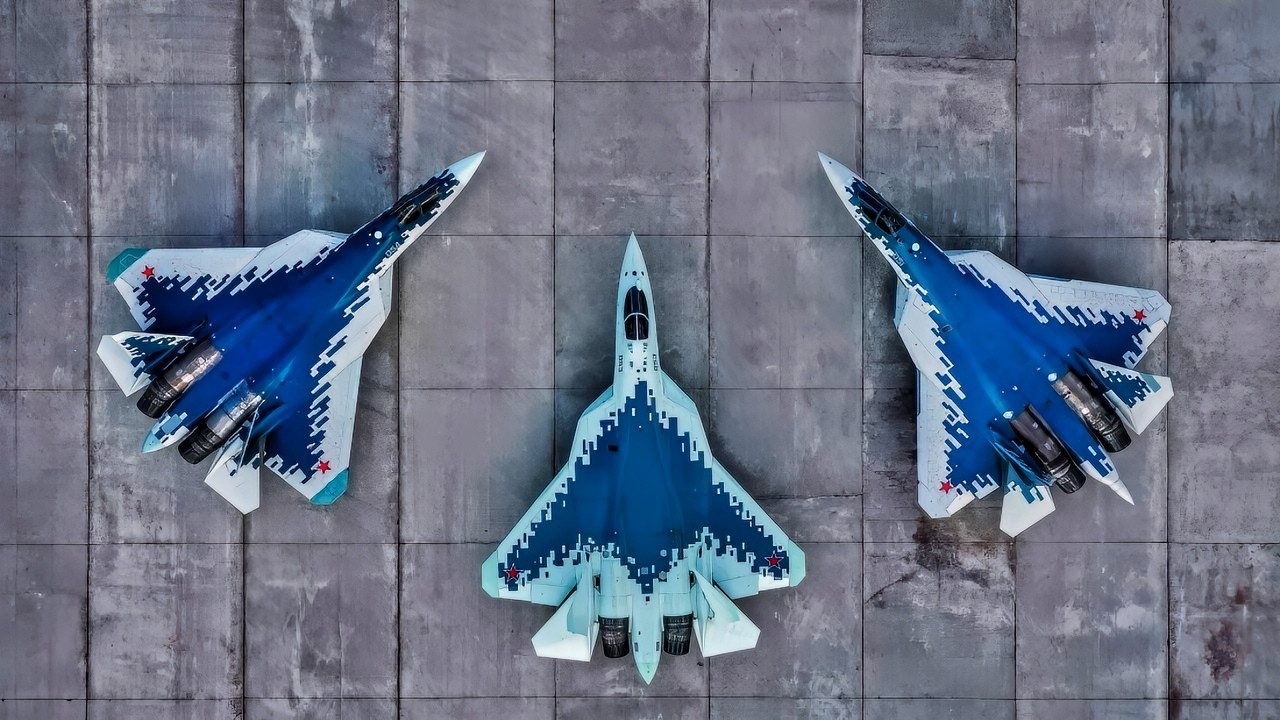
Su-57 Felon Screengrab from Russia. Image Credit: X Screengrab.
In this sense, the Su-75 is the perfect allegory for post-Ukraine Russia: bold on paper, brittle in practice, and trapped in a strategic landscape that penalizes illusion.
The plane may still have an appearance at airshows and exhibitions for years to come, but its real role has already been revealed.
It is not a prototype. It is a performance.
About the Author: Dr. Andrew Latham
Andrew Latham is a non-resident fellow at Defense Priorities and a professor of international relations and political theory at Macalester College in Saint Paul, MN. You can follow him on X: @aakatham. He writes a daily column for the National Security Journal.


Northpaw
December 4, 2025 at 9:45 pm
If I didn’t know any better, I might think the author was referring to the state of U.S. military aviation.
How many years behind schedule was the F-35? And how many problems has it had?
Meanwhile, the F-47 is already facing extensive delays. Who knows when we’ll see it?
At least Russia is fighting a large-scale conflict in Ukraine that diverts resources. What’s our excuse?
DH
December 5, 2025 at 10:37 am
Hey I usually dont do this I saw this article and the amount of lies and just sheer propaganda blew my mind. Im a former f16 pilot for the US and currently worth for a civilian aggressor air company for various nations. I never understood lying about stuff like this. Do you think if you lie hard enough it will make them come true. 99% of us pilots feel the exact same way I do. Its gotta be embarrassing to march out junk like this and with a straight face say this is factual. The global war on terror cost us trillions siphoning resources from R&D for 20 years thats why Russian missile, electronics warfare, and Air Defence are 10 years ahead of our capabilities. They spent that time building these systems with no western analogs
michael
December 9, 2025 at 11:41 am
Dear reader DH, Northpaw, you are 100% right. This gentleman, with Dr. degree is not at all a Mechanic Eng. not Pilot he even don’t watch the Aero Shows from India, Dubai etc.
As usual ” somebody” payed Dr. to write such article.Disimineation of such unprofessional narrative is used by propagandist from EU and NATO countries in Europe