
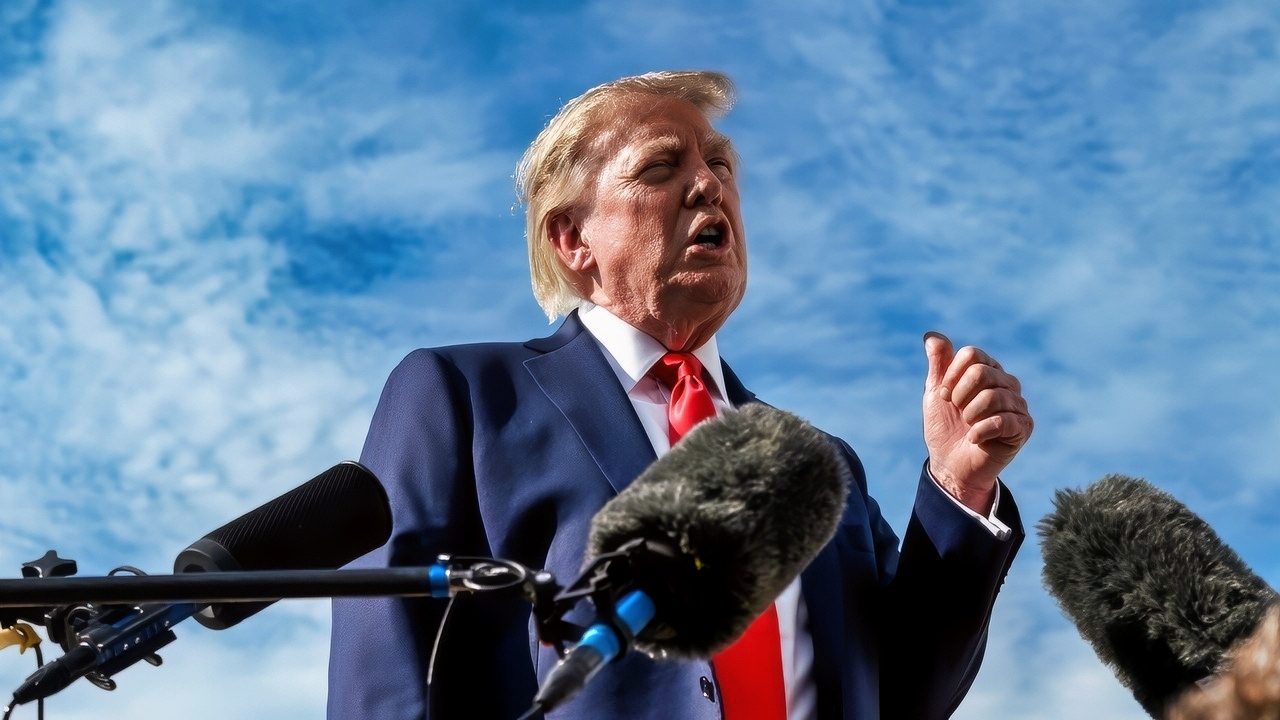
President Donald Trump said on Thursday that the U.S. is not currently engaged in discussions with Iran over an end to the war.
Trump’s comments come amid an increased economic campaign, with fresh sanctions announced earlier this week affecting countries that continue to trade with the Iranian regime.
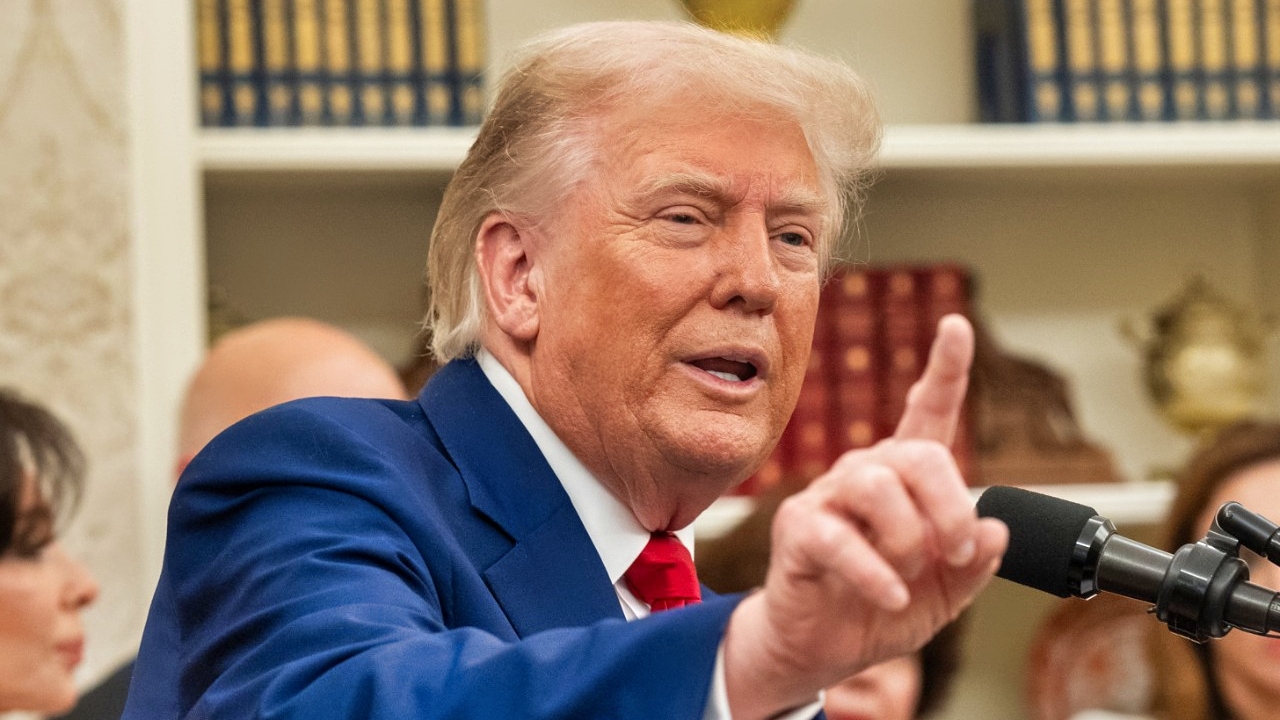
Donald Trump Pointing in Speech. Image Credit: White House.
“We don’t want to speak to them. We’re not looking to meet or anything,” Trump told reporters at the White House.
Days After D-Day
Treasury Secretary Scott Bessent announced new penalties on Monday, 24th August, targeting states that trade with Tehran. “At dawn begins an economic D-Day – the single greatest financial offensive ever marshaled against an adversary,” he wrote in the Financial Times on Monday. “Our objective is to sever every economic lifeline that sustains the tyrannical regime until Tehran stands alone.”
With Iran already under severe economic sanctions, the Trump administration is aiming to further cripple the Iranian economy by penalizing those who continue to trade with the Persian state.
The new measures have drawn criticism, however, amid concerns about China’s reaction as Trump seeks a more positive relationship with Xi Jinping ahead of the Chinese President’s visit to the White House next month. China is a major importer of Iranian oil, making up more than 80% of Iran’s total energy exports.
Trump refused to commit to sanctions on Chinese banks that continue to trade with Iran on Thursday afternoon. “Who said I’m not? You don’t know if I’m doing it … I don’t have to announce everything, do I?” Trump replied when pressed.

President Donald Trump gives remarks after presenting the newly-created “Medal of Sacrifice” to three fallen officers’ families from the Palm Beach County Sheriff’s Office, Monday, May 19, 2025, in the Oval Office. (Official White House Photo by Joyce N. Boghosian)
He was also asked about potential financial punishments on Russia, which has continued to trade with Iran throughout the six-month conflict.
The President said Russia had “behaved quite well”, particularly regarding the ongoing dispute over the Strait of Hormuz.
Economic Effects Remain to be Seen
Earlier on Thursday, White House Press Secretary Karoline Leavitt said the Trump administration’s economic campaign would continue until Tehran returned to the negotiating table.
“Now we have Operation Economic Outcast to destroy their economy,” she told Fox News. “No negotiations are happening right now, and this will continue until the President feels that maybe they come to the table in a meaningful way… He, of course, continues to retain all options on the table.”
Despite Monday’s announcement, the Treasury Department is yet to impose any penalties on countries that conduct business with Iran.
Efforts Elsewhere
While discussions between Washington and Tehran may be mute, the latter has engaged with mediators in the Middle East over the past few days.
In recent weeks, Iran and Omani leaders have discussed a proposal which would allow commercial shipping to pass through the Strait of Hormuz on a temporary basis.
Under the agreement, which is still to be finalized, traffic heading towards the Persian Gulf would be required to transit through Iranian waters, while outbound vessels would pass partially through both Iranian and Omani territory.
Qatar, a U.S. ally whose maritime exports require passage through the strait, has also ramped up mediation efforts.
On Thursday, Qatari Prime Minister Sheikh Mohammed bin Abdulrahman Al Thani met Iranian Foreign Minister Abbas Araghchi for talks in Tehran.
The two nations discussed the Iranian-Omani proposal to reopen the Strait of Hormuz, along with the free movement of shipping and regional stability.
Trump Refuses to Budge
Even though the Strait of Hormuz remains a key sticking point before Washington and Tehran can come to the negotiating table, Trump said this week that he is “not in a hurry” to find a permanent solution to the conflict, which is now entering its seventh month.
The two sides have conflicting views on the strait’s jurisdiction. Iran believes it has a right to decide what can and cannot transit through, while Trump has maintained that it’s an international waterway with no state able to dictate the terms of transit.
It’s created a major dilemma for those hoping for a permanent peace agreement in the near future. Trump’s demanding a full reopening of the strait before discussions can resume.
On the flip side, Tehran is insistent that a full cessation of hostilities, both military and economic, is required before commercial shipping can safely pass through.
With both sides at loggerheads over the issue – and Trump ramping up his economic campaign rather than withdrawing – it’s looking increasingly unlikely that a deal will be made anytime soon.
About the Author: Shay Bottomley
Shay Bottomley is a British journalist. He has written for the Western Standard, Business Insider, Maidenhead Advertiser, Slough Express, Windsor Express, Berkshire Live and Southend Echo.